Justice (Sandel) Ep 12, Same-Sex Marriage — notes and timestamps
Watch the video (55 min)
Watch the original video on YouTube
Episode 12 is the final pair of lectures in Michael Sandel’s Justice course, and the one where he argues for his own position. Part One asks whether justice can be tied to the good without collapsing into relativism, then opens a class debate on same-sex marriage. Part Two reads the Massachusetts Goodridge decision to show that neither side can stay neutral on the underlying moral questions, defends reasoning about the good through Rawls’s own method, and closes the course. It continues directly from the segregationist challenge at the end of Episode 11 and uses Aristotle’s idea of telos and honour from Episode 10. The course index lists every episode.
Key takeaways
- There are two ways to tie justice to the good. The relativist way makes justice mere convention; the non-relativist way grounds rights in the moral worth of the ends they serve (7:49).
- Sandel’s thesis: reasoning about the good is unavoidable in debates about justice, and the same-sex marriage debate is his test case (10:59).
- Marriage is about honour, not only permission. That is why neutral arguments push toward Kinsley’s proposal to take the state out of marriage altogether (35:46).
- The Goodridge court could not stay neutral: it ended up arguing that the purpose of marriage is committed partnership, not procreation (38:54).
- We can reason about the good the same way we reason about justice, by reflective equilibrium between cases and principles (42:00).
- Respect can mean engagement, not just setting others’ convictions aside (49:04).
Chapter notes
Part One
0:30 – 2:22 Where we left off: the segregationists
Sandel recaps the defence of loyalty and solidarity from the last lecture, and the counterexample that ended it: Southern segregationists appealing to their history and way of life. Is that a fatal objection to the narrative conception of the self? He announces that today he will argue for a position: there are obligations of solidarity, which suggests justice cannot be detached from the good, but he will distinguish two ways of linking them and defend only one.
2:22 – 6:16 What universalism costs
The liberal, voluntarist picture appeals partly because it is universal: we respect persons as persons, without prejudice. That led some students to argue that membership obligations must always be subordinate to universal duties. Sandel asks where that logic leads and finds the most honest answer in Montesquieu.
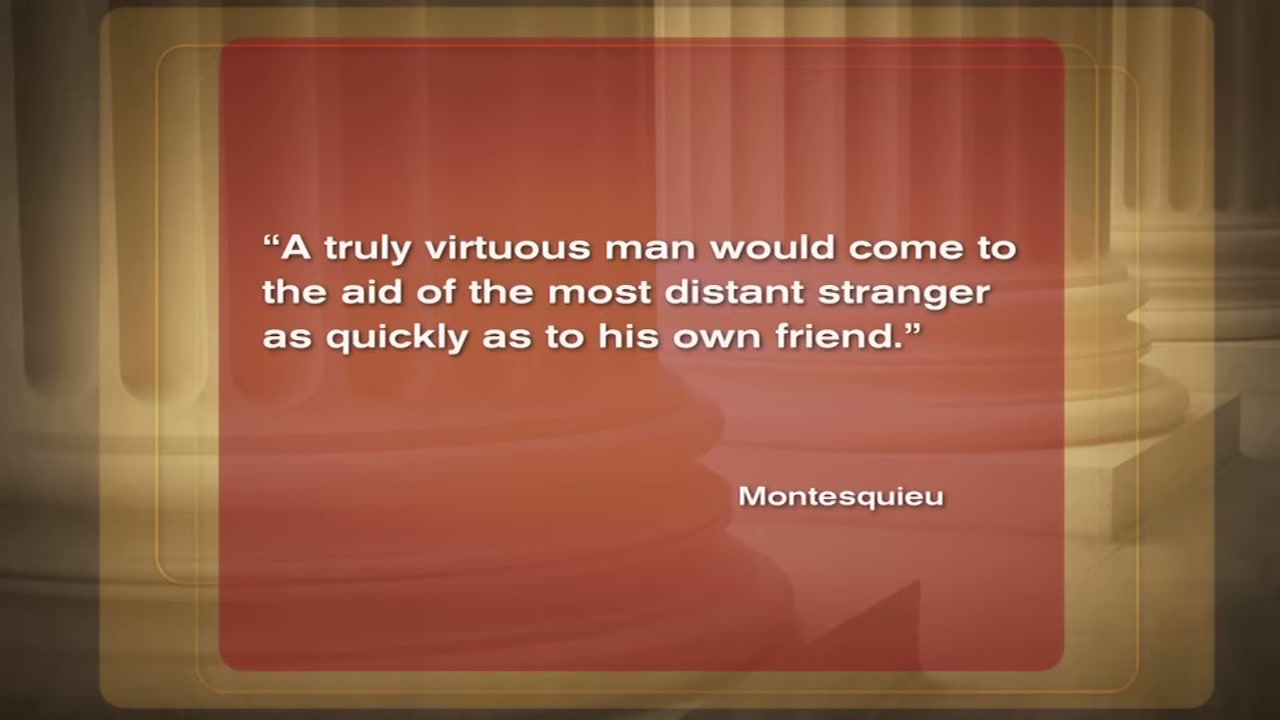
The problem with a world of universal friendliness and no friends is not just that it is unrealistic. It would be hard to recognise as a human world. We learn to love humanity through particular attachments, not in general. Sandel admits these are considerations, not knockdown arguments, and notes that moral philosophy rarely offers knockdown arguments.
6:16 – 10:59 Two ways to tie justice to the good
If you accept solidarity, are you committed to saying justice is whatever a tradition says it is, segregation included? Sandel separates two views:
| Relativist link | Non-relativist link | |
|---|---|---|
| Justice depends on | The values that happen to prevail in a community now | The moral worth or intrinsic good of the ends a right serves |
| Case for a right | It matches shared understandings | It honours or advances an important human good |
| Weakness | Justice becomes convention and loses its critical edge | We must reason about the good in a pluralist society |
The first leaves no answer to the segregationists. The second is not strictly communitarian, because it does not hand the definition of justice to any particular community. But it raises the hard question: how can we reason about the good when people disagree? Sandel first takes an easier question: is it unavoidable to argue about the good when we argue about justice? He says yes.
10:59 – 13:20 Same-sex marriage as the test
Same-sex marriage is a good test because it touches deeply contested moral and religious questions, which gives a strong incentive to find a way of settling the rights question without taking sides on them. If anywhere, neutrality should work here. The class starts with the case against.
13:20 – 18:43 The case against, and the procreation question
Mark, a Catholic, holds that sex has two purposes, procreation and the union of a man and a woman, and that marriage exists to honour them. Sandel sums this up as a view about the telos of sexuality and marriage. Ryan adds that homosexual couples should be free to live together, but the state need not encourage it.

Hannah challenges the procreation premise: what about an infertile couple, or other sexual acts that cannot produce children? Mark answers that sex has purposes beyond procreation, which is why older couples may marry. Steve then makes a useful distinction. Whether a practice is morally permissible is one question. Whether it fits the honour and recognition the state confers through marriage is another. Sandel highlights this point. It is exactly the honour-and-recognition dimension from Aristotle.
18:43 – 23:56 How far should recognition go, and should the state recognise marriage at all?
Sandel asks Hannah whether, as a legislator, she would let people marry themselves, or recognise consensual polygamous marriages. She says yes in principle to both. Victoria argues that the state should not impose one religion’s view of the purpose of marriage; it can recognise civil unions for anyone and leave “marriage” to religious communities. Cesan, one of a handful who voted for this option, says the state should not recognise any marriages.
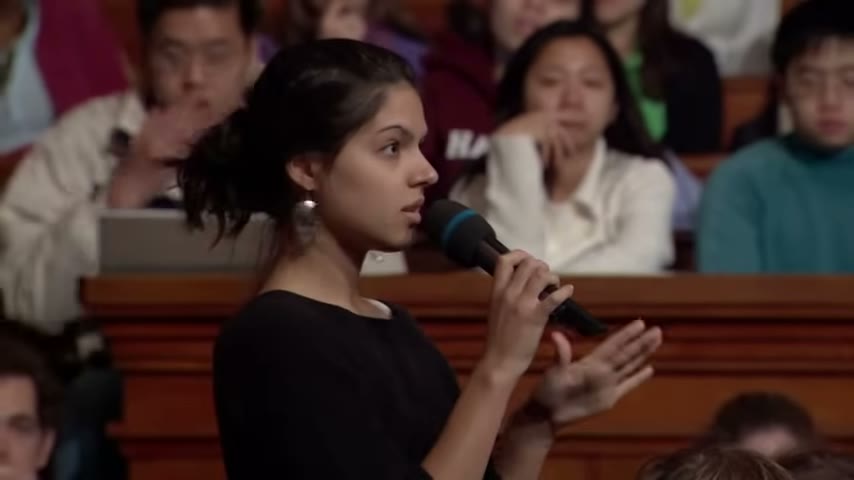
Sandel leaves the class with the question: unless you take Cesan’s position, can you decide the same-sex marriage question without taking a stand on the purpose of marriage?
Part Two
24:46 – 27:40 Recap: three positions
Sandel restates his two questions: is reasoning about the good life necessary for justice, and is it possible? He summarises the positions so far: those against same-sex marriage on procreation grounds, those for it who point out that infertile couples may marry, Victoria’s call for state neutrality, and the third option of taking government out of marriage altogether.
27:40 – 32:41 Andrea and Daniel: can law be neutral?
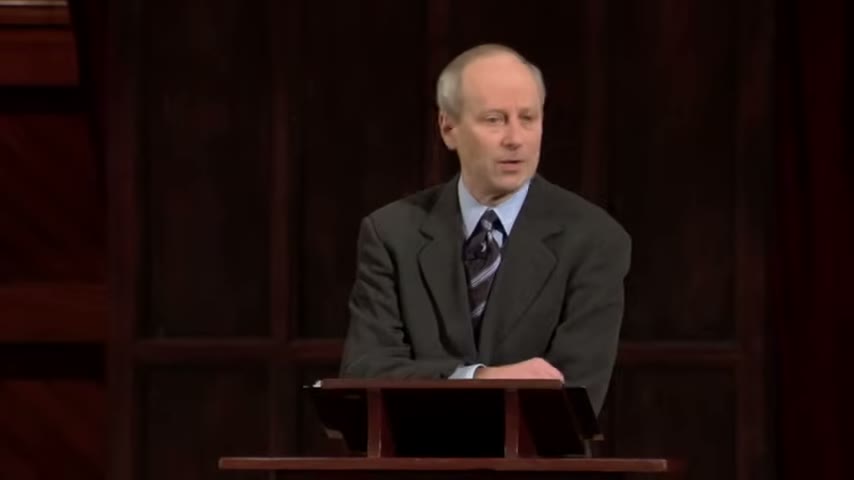
Andrea argues that neutrality is not possible, because people’s lives are embedded in their view of right and wrong. She draws the parallel with abortion: if you believe a fetus has a right to life, you cannot set that aside and let others do what you consider murder. As a Catholic, she supported same-sex marriage only after deciding for herself that homosexuality is not a sin. Daniel disagrees. He says he can think abortion is morally wrong and still be pro-choice, because banning it does not stop it, and he would not block consenting adults from marrying even if he disapproved. Andrea replies that legalising something is a collective statement that it is acceptable.
32:41 – 36:34 Goodridge, part one: the neutral strand, and Kinsley
The Massachusetts Supreme Judicial Court’s Goodridge decision required the state to extend marriage to same-sex couples. Sandel reads Chief Justice Margaret Marshall’s opinion as torn between Andrea and Daniel. It opens neutrally. Many people hold deep convictions on each side, neither of which answers the legal question, which concerns “respect for individual autonomy and equality under law” (34:12). What matters is the right to choose, not the moral worth of the choice.
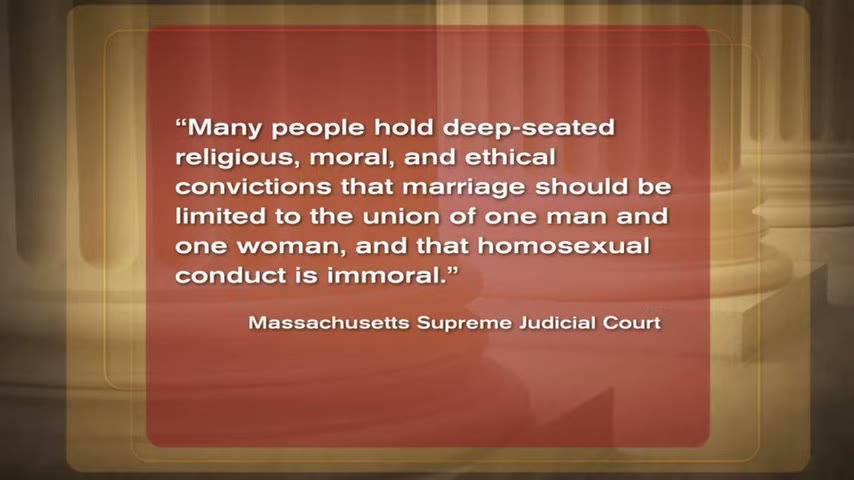
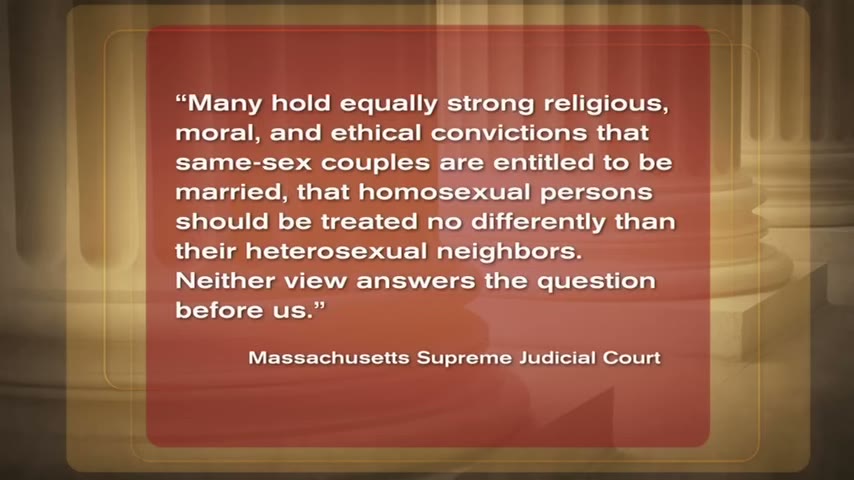
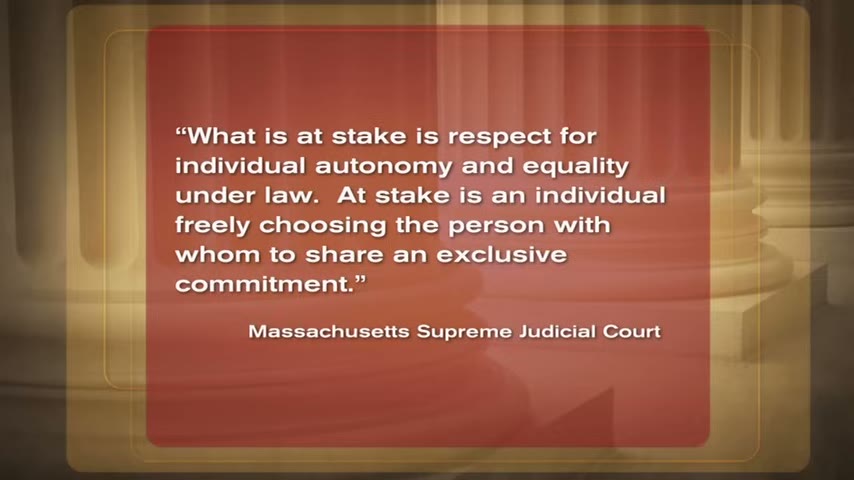
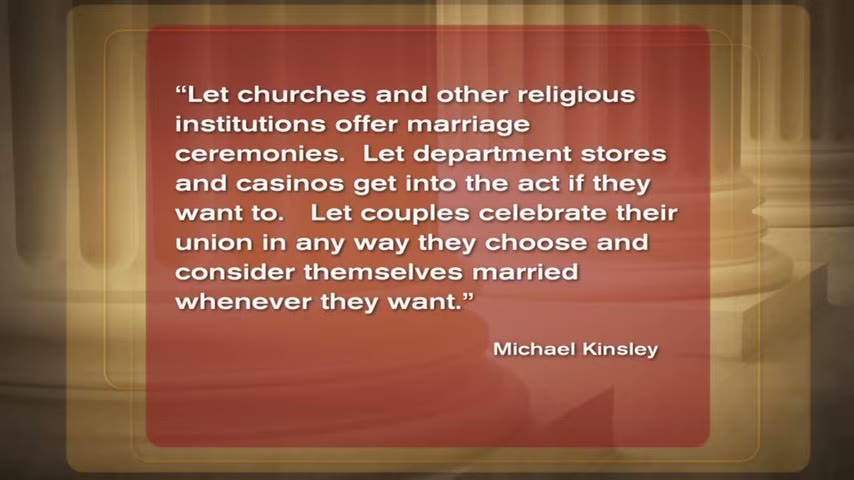
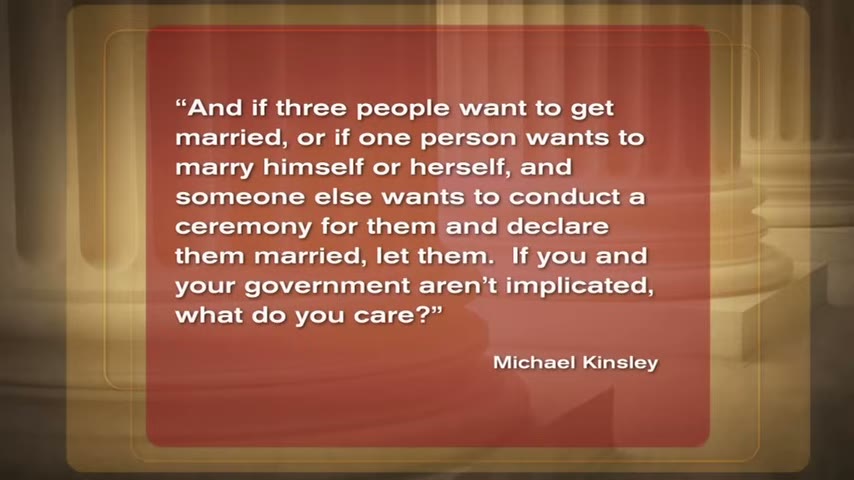
Sandel’s objection: if the state were truly neutral about intimate relationships, the consistent policy would be to stop recognising any of them. That is Michael Kinsley’s proposal to “disestablish” marriage: let churches, even department stores and casinos, offer ceremonies, and keep government out. The reason Kinsley’s view looks radical shows what the dispute is really about. Opponents of same-sex marriage object to the state’s stamp of approval. In Aristotle’s terms, the issue is the distribution of honour.
36:34 – 40:26 Goodridge, part two: marriage as public honour
The court did not take Kinsley’s route. It praised marriage as one of the community’s most cherished institutions and widened it.
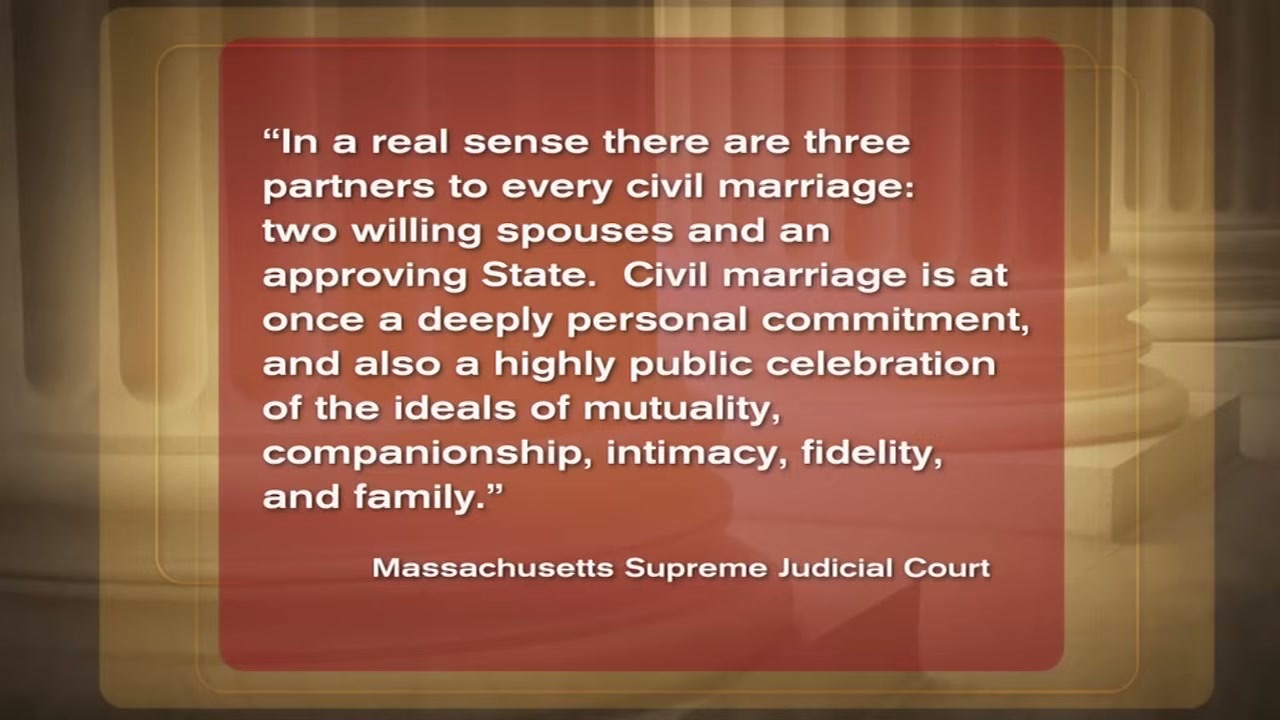
Having treated marriage as an honour, the court had to say what it honours. It rejected procreation as the main purpose: no one is asked about fertility before getting a licence, and people may marry on their deathbed.
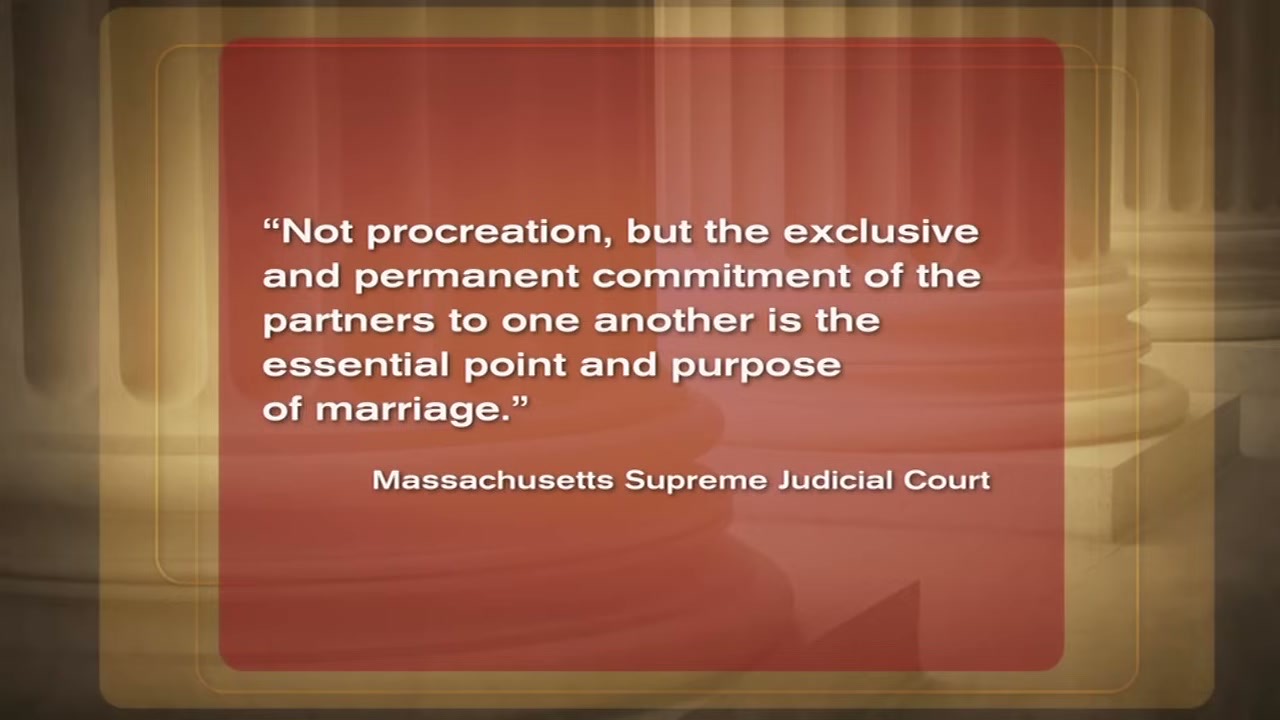
Sandel is careful to say this is not an argument for or against same-sex marriage. It is an argument against the claim that you can take either side while staying neutral on the moral and religious questions underneath.
40:26 – 44:20 Can we reason about the good? Reflective equilibrium
If reasoning about the good is unavoidable, is it possible? Not if it means a single rule you plug into every case. But that is not how the course itself has worked. Every debate moved back and forth between judgments about particular cases and the principles that make sense of them, revising each in the light of the other. This dialectical method goes back to Plato and Aristotle, and Rawls defends a version of it.
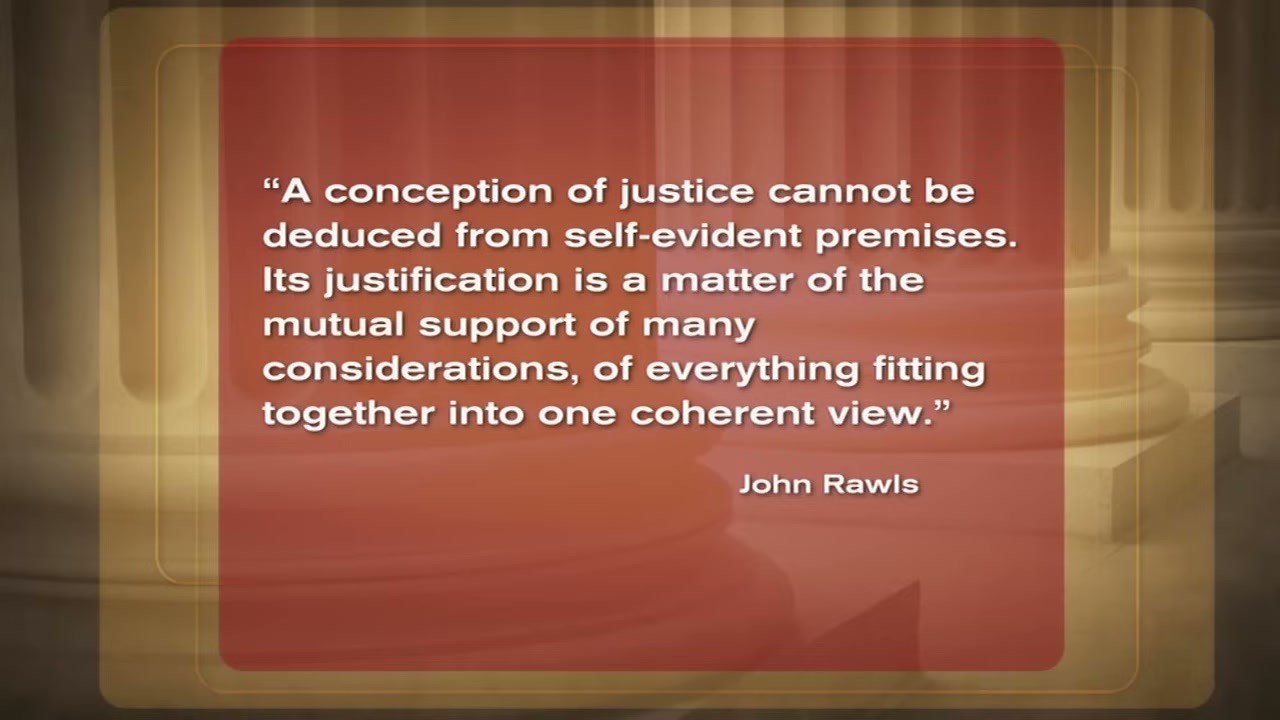
44:20 – 48:16 Reasonable pluralism, about the good and about justice
Rawls keeps the priority of the right over the good because of what he calls the fact of reasonable pluralism: conscientious people who reason well still disagree about morality and religion. Sandel grants that this is probably true. But he asks whether the same holds for justice. People reasonably disagree between libertarian and egalitarian theories, about free speech, about religious liberty, about Supreme Court nominees. He sees no difference in principle. In both domains we argue from cases, listen to others’ reasons, and sometimes change our minds. This is the core of his reply to Rawls: the argument that rules the good out of politics would rule out justice too.
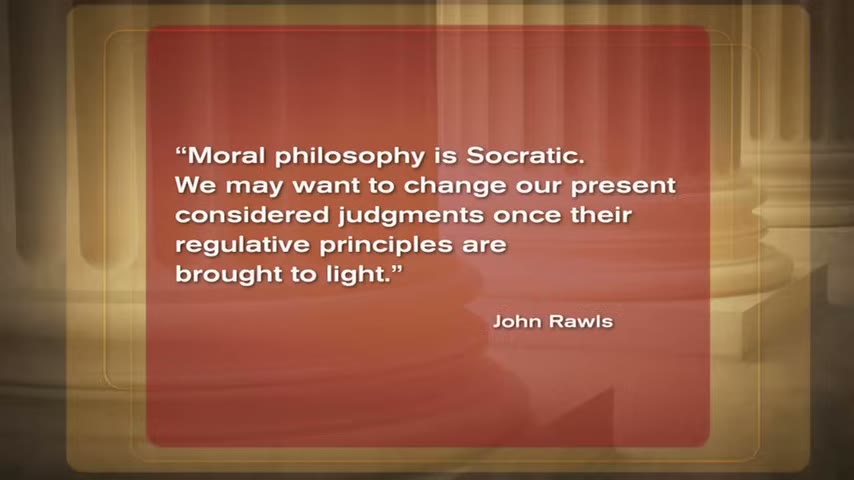
48:16 – 51:11 Two kinds of respect
The remaining liberal worry is how a society that argues about morality and religion can still respect citizens who disagree. On the liberal view, respect means setting their convictions aside for political purposes. Sandel proposes another: respect by engaging with them, sometimes challenging, sometimes listening and learning. He admits there is no guarantee this leads to agreement, or even to appreciation. Learning more about a doctrine may make you like it less. But he thinks a politics of moral engagement suits a pluralist society better.
51:11 – 53:50 Closing the course: the restlessness of reason
Sandel recalls his warning from the first lecture that philosophy makes the familiar strange and cannot be undone. The arguments go on, he says, because we live some answer to these questions every day, in public and private life. He ends with Kant’s image that skepticism is a resting place for reason but not a dwelling place, and says the course’s aim was to awaken “the restlessness of reason” (53:06).
Skip list
- 0:00 – 0:30 Funding credits.
- 24:07 – 24:46 Trailer for Part Two that previews the closing remarks.
- 53:50 – 55:11 Applause, website promo and closing credits.
Glossary
- Voluntarist conception of the person — the Kantian and Rawlsian view that our obligations come only from what we choose.
- Relativist vs. non-relativist link — tying justice to prevailing values versus tying it to the moral worth of the ends a right serves.
- Liberal neutrality — the idea that law should take no side on contested conceptions of the good life.
- Disestablishment of marriage — Kinsley’s proposal that the state stop recognising marriage and leave it to private bodies.
- Goodridge — the Massachusetts Supreme Judicial Court decision requiring the state to extend marriage to same-sex couples.
- Reflective equilibrium — Rawls’s method of adjusting principles and case judgments until they fit together.
- Reasonable pluralism — the fact that thoughtful people persistently disagree about morality and religion.
FAQ
What is Sandel's main argument in the final Justice lecture?
He argues that reasoning about the good life is unavoidable when we argue about justice and rights, and that it is possible to reason about the good by moving back and forth between particular cases and general principles. He uses the same-sex marriage debate as his test case.
How does Sandel read the Goodridge same-sex marriage decision?
He finds two strands in the Massachusetts court's opinion. One appeals to neutrality and individual autonomy; the other praises marriage as a public honour and argues its purpose is exclusive, permanent commitment rather than procreation. He concludes the court could not stay neutral.
What was Michael Kinsley's proposal on marriage?
Kinsley argued that if government must be neutral, it should get out of the business of recognising marriage at all and leave ceremonies to churches and other private bodies. Sandel calls this the consistent neutral position.
What is reflective equilibrium?
It is John Rawls's method of justifying a theory of justice by moving back and forth between considered judgments about particular cases and general principles, revising each in the light of the other until they fit together.
Studying another course? Paste its YouTube or Bilibili link on the home page to request a handout — or make your own with the desktop app (coming soon).