Justice (Sandel) Ep 8, What's a Fair Start? — notes and timestamps
Watch the video (55 min)
Watch the original video on YouTube
Episode 8 of Michael Sandel’s Justice course is the core lecture pair on John Rawls’s theory of distributive justice: how income, wealth and opportunities should be shared, and on what grounds. Part One sets out Rawls’s two principles and his “argument from moral arbitrariness”; Part Two tests the difference principle against three objections. No philosophy background is needed, but the episode builds directly on the hypothetical contract and veil of ignorance from Episode 7, and on the libertarian view from Episode 3. The course index lists every episode.
Key takeaways
- Two principles come out of the veil of ignorance: equal basic liberties first, then the difference principle, which allows only inequalities that help the least well-off (1:36).
- Rawls has a second, more direct argument: distribution should not rest on factors that are “arbitrary from a moral point of view”, and that reasoning pushes past both the free market and meritocracy (11:36).
- The difference principle does not level people down. The talented may use and profit from their gifts, but only on terms that also benefit those who lack them (17:48).
- Incentives are allowed when they help those at the bottom; the question is not whether the pie grows but who it grows for (32:07).
- Effort is not a clean basis for desert. Effort depends on upbringing, and what we actually reward is contribution, which depends on talent (41:38).
- Desert versus entitlement is the key distinction: you are entitled to what fair rules promise you, but you do not deserve a society that prizes your talents (44:46).
Chapter notes
Part One
0:33 – 7:00 The two principles behind the veil
Sandel recaps the setup: principles of justice are those people would choose in an “original position” of equality, behind a veil of ignorance that hides their class, health, family and talents. He then runs through what they would choose. They would reject utilitarianism, because nobody would risk ending up in a persecuted minority so the majority can be happier. That yields the first principle, equal basic liberties such as speech, assembly and conscience, which cannot be traded for economic gain.
On money, a strict equal split looks like the safe choice at first. Rawls’s point is that even someone at the bottom can do better under a qualified rule: the difference principle, which allows inequality only when it works to the advantage of the least well-off. Sandel’s test cases are Michael Jordan’s salary and Bill Gates’s fortune. Under this view they are not unjust in themselves; they are just only if they are part of a system that actually helps those at the bottom, for example because incentives draw the right people into the right jobs.

A useful way to hold the structure in your head: the first principle is a floor of rights that is never traded away, and the second is a filter that every inequality has to pass.
7:00 – 11:36 Why reason from the bottom? The merit challenge
A student, Mike, asks the obvious question: why should we assume people behind the veil would reason from the bottom rather than the top? He would pick a merit-based system that rewards effort, and points to Harvard’s own selective admissions as proof that striving matters. Kate replies that she cannot be sure her own efforts, rather than her advantages, got her here.
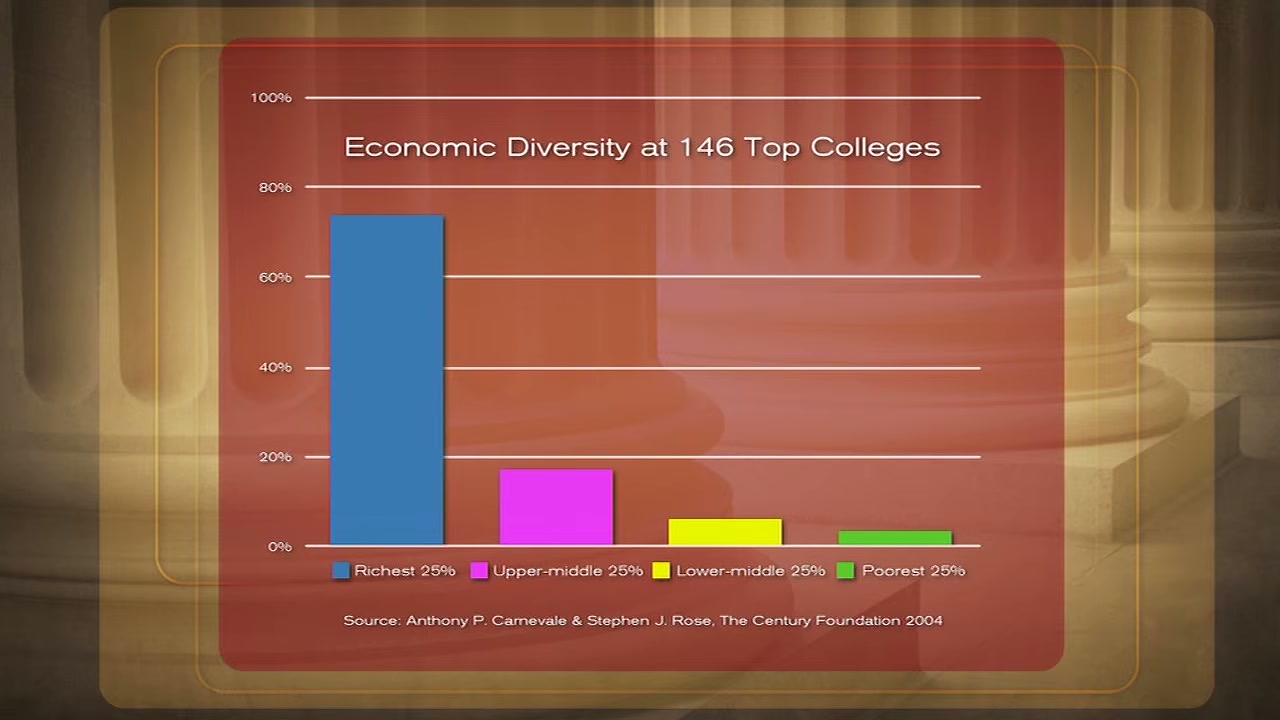
Sandel backs Kate’s worry with a statistic from a study of 146 selective colleges and universities: only about 3 percent of students come from the bottom quarter of the income scale, and over 70 percent from affluent families. The point is not that the students did not work hard. It is that the race they won did not start at the same line for everyone.
11:36 – 19:20 The argument from moral arbitrariness
Sandel notes that critics attack the veil argument by saying people might gamble on landing at the top. So he lays out Rawls’s second, independent argument, which works without any thought experiment. It runs through four systems, each fixing the flaw of the last:
| System | How shares are set | What is still arbitrary |
|---|---|---|
| Feudal aristocracy | By birth into a noble or peasant family | Everything: life prospects are fixed at birth |
| Libertarian (formal equality) | Free market; careers open to talents | Family wealth, schooling and support still decide who is ready to compete |
| Meritocratic (fair equality of opportunity) | Free market after schools, Head Start and similar programs equalise starting points | Natural talent: the fastest runners still win |
| Egalitarian (difference principle) | Talent is used, but its gains are shared on terms that help the least well-off | — |
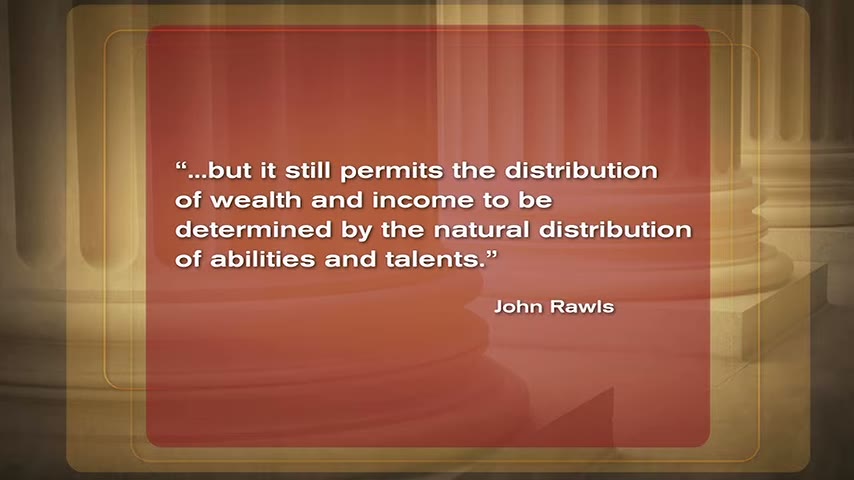
The race metaphor carries the argument. Once you agree that being born rich is not a fair reason to finish first, Rawls asks why being born fast is any better. Critics answer that the only fix is to handicap the fast runners, to make them “wear lead shoes” (17:39). Rawls’s answer is different: let the gifted run, even encourage them, but change the terms on which they keep the rewards. That is why taxing part of Jordan’s salary to help those without his skills fits the principle, while slowing Jordan down does not.
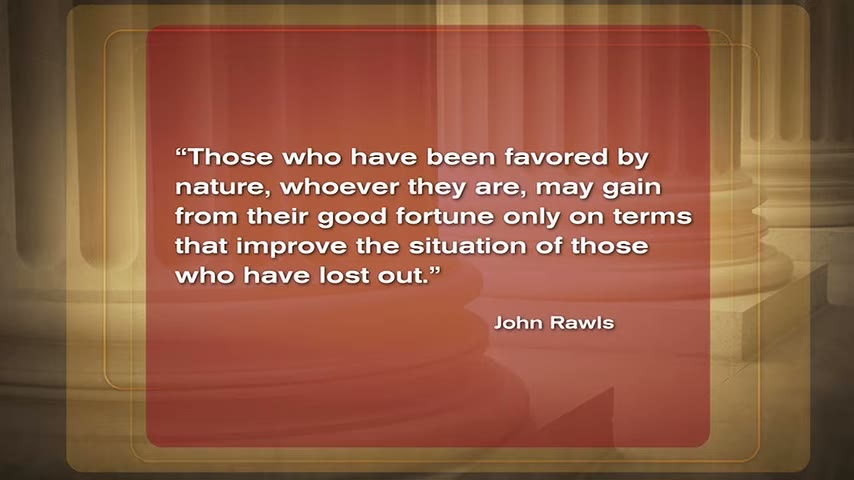
A common misreading is to treat Rawls as an equal-outcomes theorist. This section shows why that is wrong: he keeps markets and unequal pay, and moves the moral question to the rules that govern who benefits.
19:20 – 24:28 Incentives, effort and the birth-order poll
Students push back. Kate grants that natural talent is arbitrary but worries that correcting for it would kill incentives. Mike falls back on effort: people like Jordan worked very hard to reach the top. Sandel gives Rawls’s reply: even the willingness to work hard depends heavily on family circumstances we did not choose.
He tests that claim on the room. He asks the firstborn students to raise their hands, and most of the hall does; in Part Two he recalls the share as roughly 75 to 80 percent (25:06). Psychologists link birth order with striving, and nobody chooses their birth order. The lecture ends by turning the question back on the students: if their place at Harvard rests partly on such factors, what exactly do they deserve?

Part Two
25:06 – 31:56 Three theories and some real pay gaps
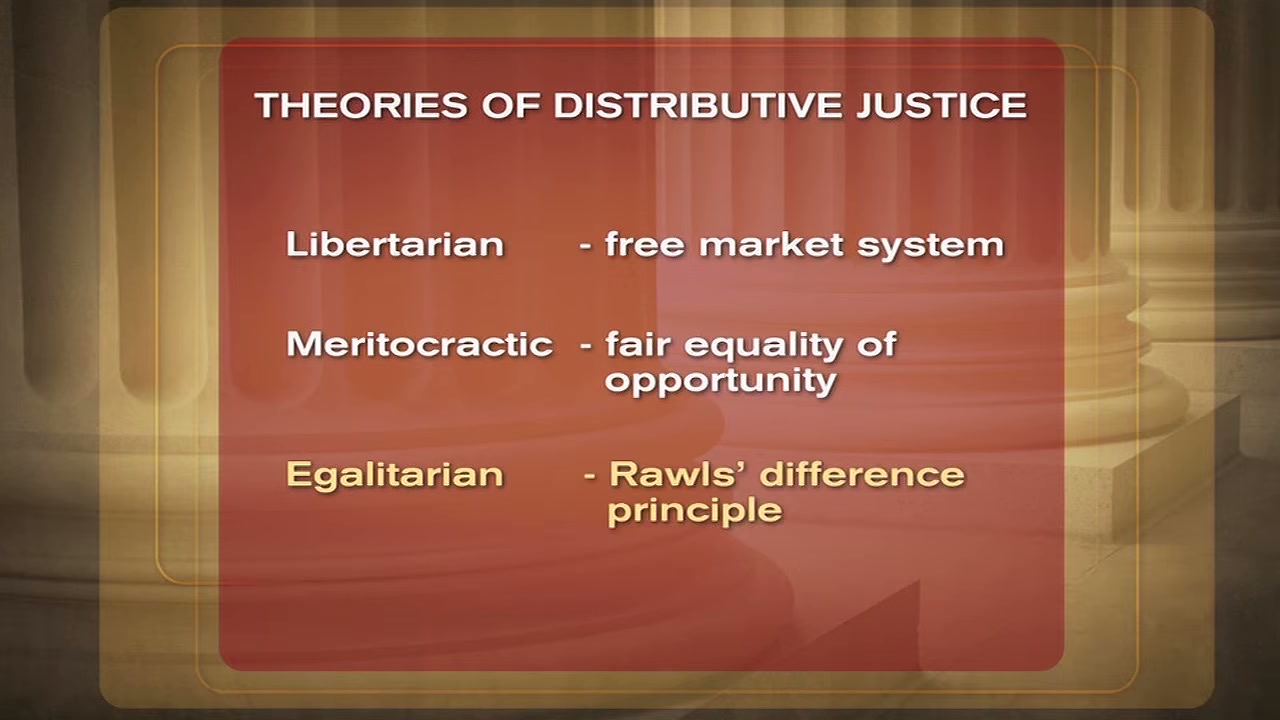
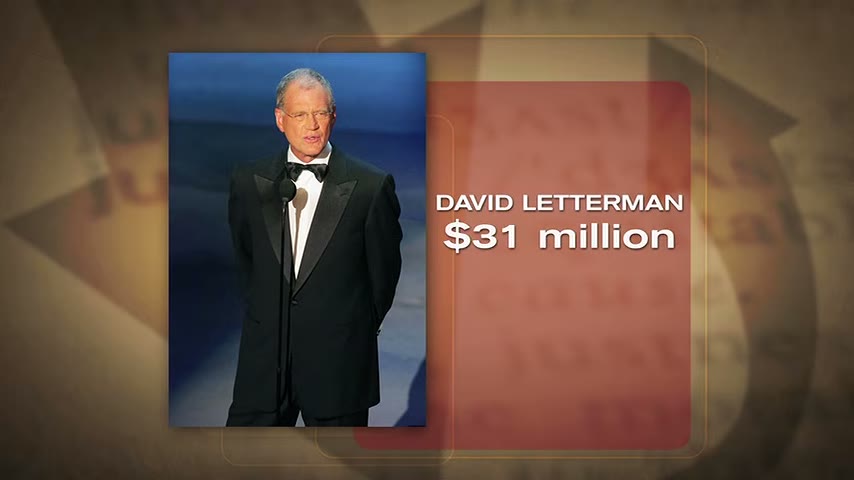
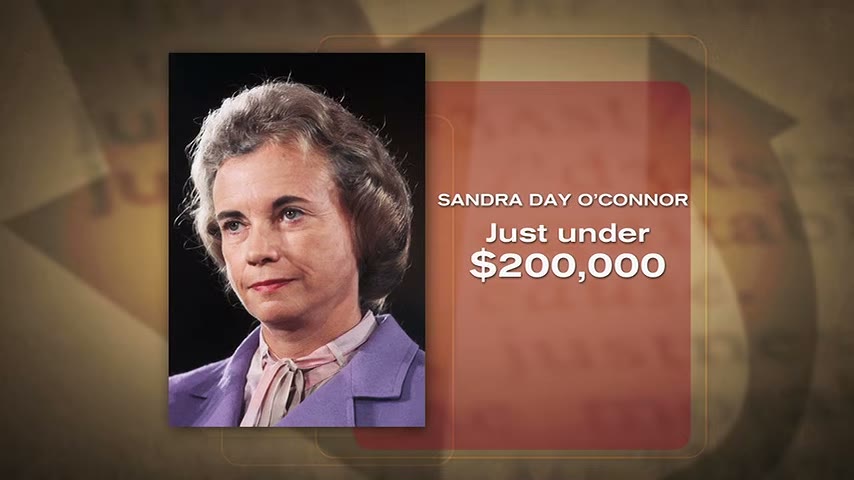
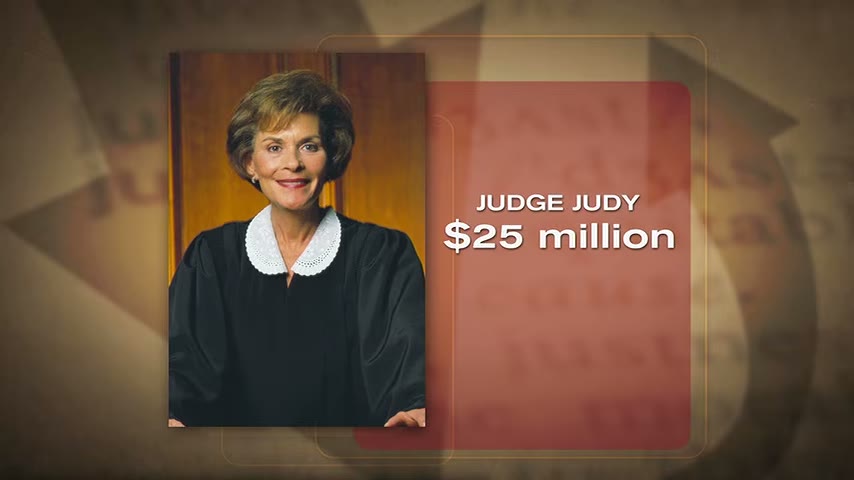
Sandel restates the three live theories: libertarian, meritocratic and egalitarian. He then makes the difference principle concrete with pay comparisons: an average school teacher at a little over $40,000 against David Letterman at $31 million, and a Supreme Court justice such as Sandra Day O’Connor at just under $200,000 against TV’s Judge Judy at $25 million.
The Rawlsian answer to “is that fair?” is always “it depends”. The gaps are acceptable only against a background system, mainly taxation, in which top earnings are partly used to benefit the least well-off. The pay gap itself is not the moral question; the institutions around it are.
32:07 – 35:20 Objection 1: What about incentives?
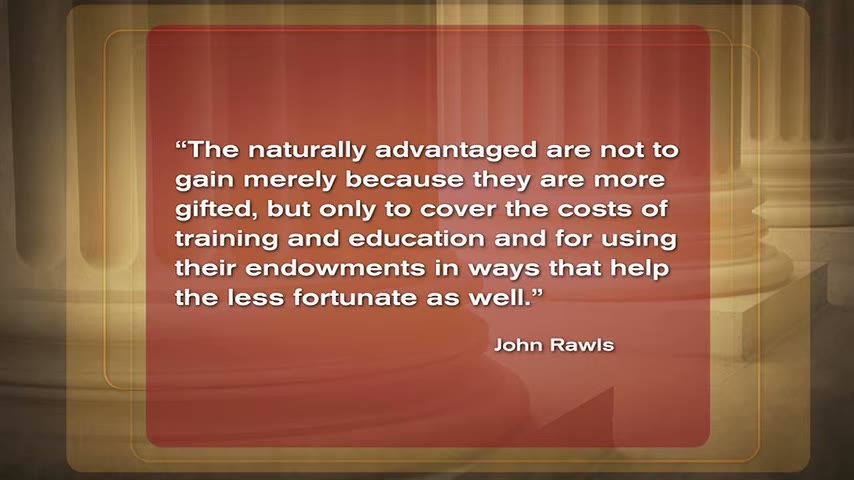
If top marginal tax rates reach 70, 80 or 90 percent, will Jordan stop playing or Letterman stop doing late-night comedy? A student, Tim, answers for Rawls: the principle already allows enough inequality to keep incentives working, but the right measure is the effect on the people at the bottom, not the size of the total economy. Sandel confirms this with Rawls’s own text from Section 17 of A Theory of Justice, which lets the naturally advantaged gain to cover training costs and to use their gifts in ways that help the less fortunate.
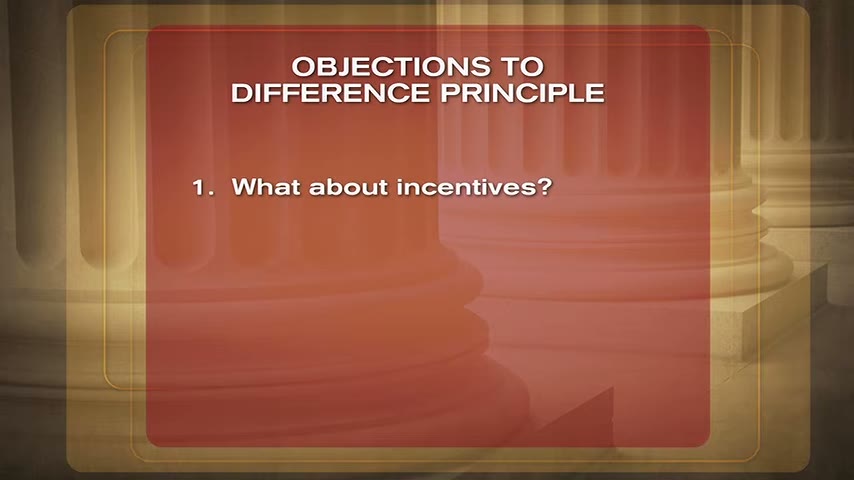
So the incentive objection is not a refutation; it is an input. It changes the tax rate the principle recommends, not the principle itself. Sandel treats the next two objections as the weightier ones.
35:20 – 41:30 Objection 2: The libertarian reply
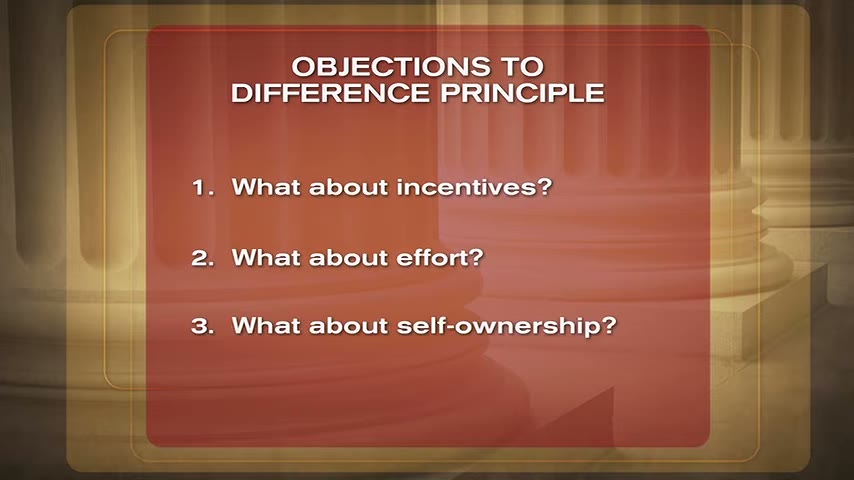
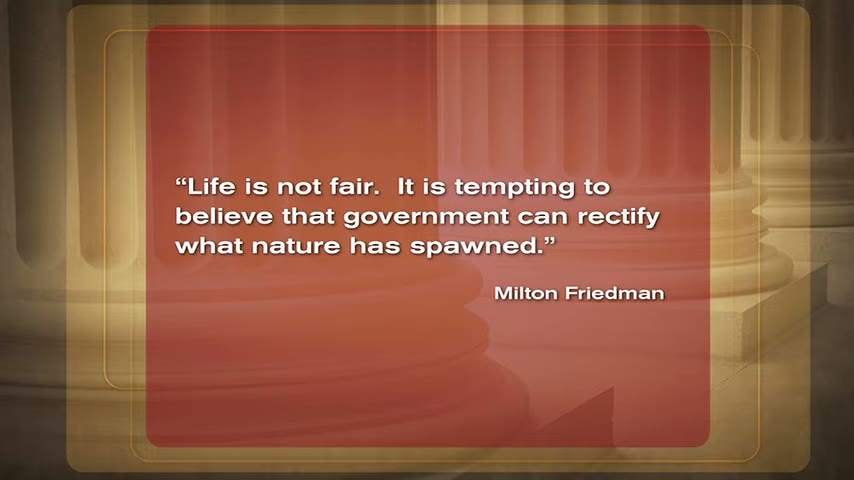
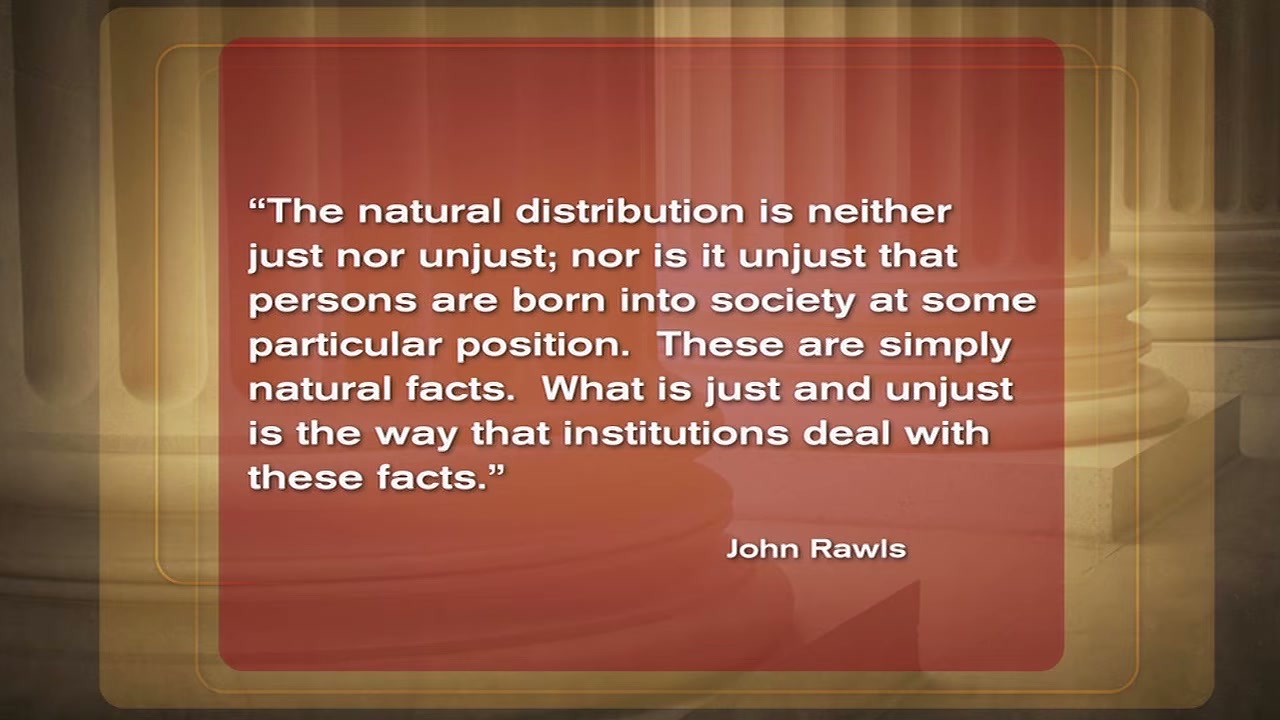
Sandel takes the libertarian objection in two forms. The weaker one is Milton Friedman’s, in Free to Choose: life is not fair, and trying to fix what nature hands out leads to a disastrous levelling of outcomes. Rawls’s reply is that nature’s distribution is just a fact. Only institutions can be just or unjust, by how they respond to it.
The stronger libertarian objection comes from Nozick’s idea of self-ownership (covered in Episode 3). If I own myself, I own my talents and what they earn, so taxing Letterman to fund schools against his will is coercion, even theft. Rawls does not meet this head-on. Sandel’s reading is that the difference principle implies we do not own ourselves in that complete sense. Basic liberties stay protected by the first principle, so the state cannot commandeer a life. What gives way is only the claim to a privileged share of what our talents earn in a market.
41:30 – 44:46 Objection 3: What about effort?
The meritocrat says that people who work hard deserve their rewards. Rawls has two replies. First, the birth-order point: the work ethic itself grows out of circumstances we did not choose. Second, nobody actually believes effort is what earns reward. Picture two construction workers. One is strong and puts up four walls in an hour without breaking a sweat. The other is weak and needs three days for the same work. No meritocrat would pay the weak worker more. What is really being rewarded is contribution, and contribution leads straight back to natural talent.

This second reply is the sharper one, because it does not depend on psychology. It shows that the meritocrat’s own judgments do not track effort.
44:46 – 53:30 Moral desert versus entitlement
Does this mean desert plays no part in Rawls? Here Sandel brings in the distinction the next episode depends on. In a game of pure chance, like a state lottery, the winner is entitled to the prize but did not deserve to win. In a game of skill, like the Red Sox winning the World Series, we can always ask a further question: did they deserve to win? That is desert, a standard that exists before the rules.
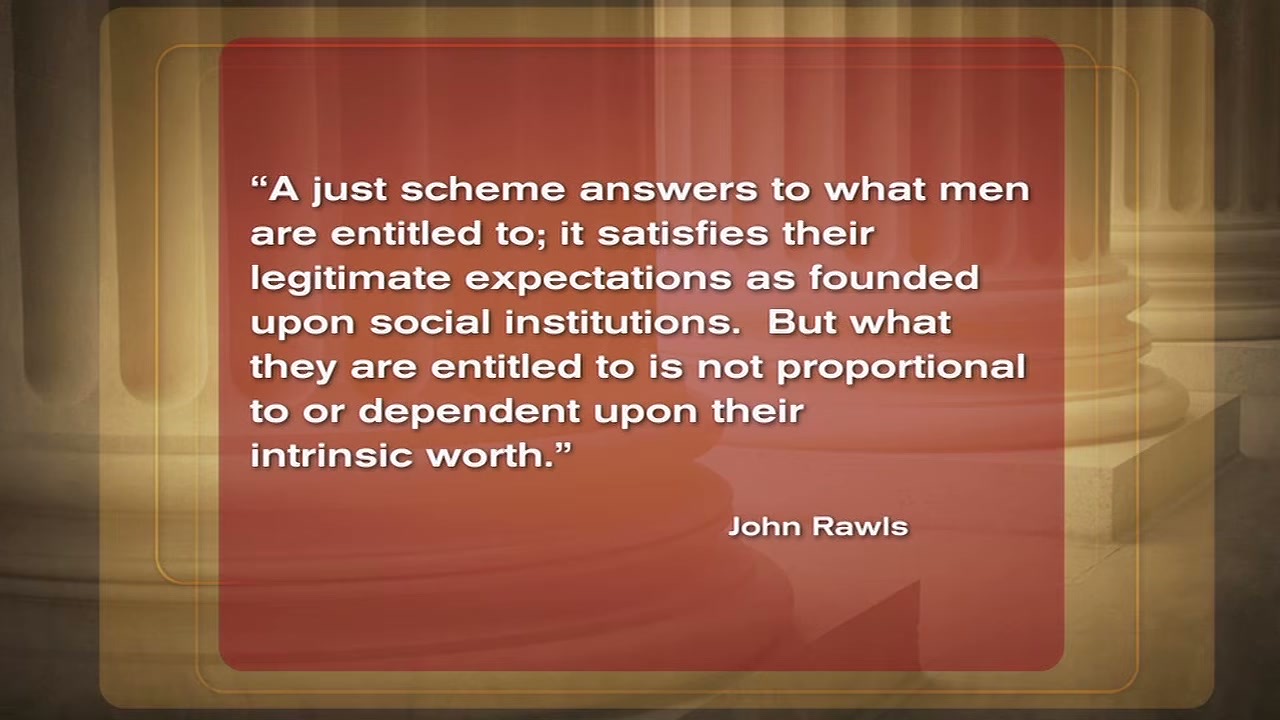
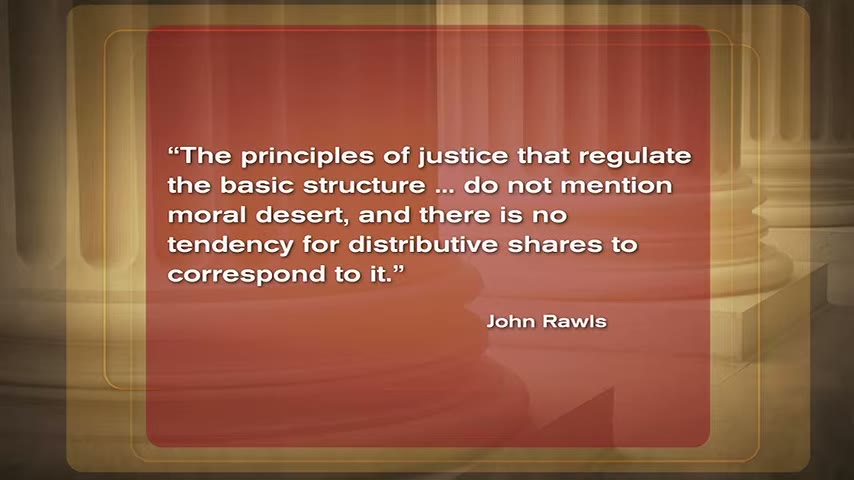
Rawls says distributive justice concerns entitlements, not desert. Sandel adds a second layer of luck beyond talent: living in a society that happens to value what you are good at. Letterman’s earnings depend on demand for a particular kind of joke. A capitalist society rewards entrepreneurial drive, a bureaucratic one rewards getting on with superiors, a mass democracy rewards looking good on television. In a hunting or warrior society our skills would earn less, yet we would be no less worthy. The same is true of people in our own society whose talents the market does not prize.
The lecture closes by applying this to college places. Are seats at elite universities rewards for the deserving, or entitlements justified only if they work to the advantage of those at the bottom? That question becomes the affirmative-action debate in Episode 9.

Skip list
- 0:00 – 0:33 Funding credits.
- 24:28 – 25:06 Trailer for Part Two that repeats the Judge Judy pay comparison.
- 29:24 – 31:13 The pay-gap guessing with the audience; the figures are summarised above.
- 53:40 – 55:07 Website promo and closing credits.
Glossary
- Original position / veil of ignorance — Rawls’s thought experiment: choose principles of justice without knowing your class, talents or other traits.
- Difference principle — social and economic inequalities are permitted only if they benefit the least well-off.
- Morally arbitrary — a factor no one can claim credit for, such as family background, natural talent or birth order.
- Formal equality of opportunity — careers open to all, with no legal barriers by birth.
- Fair equality of opportunity — starting points are actively equalised through education and similar programs; the basis of meritocracy.
- Self-ownership — the libertarian idea that each person owns their body, talents and the fruits of their labour.
- Moral desert — what someone deserves by a standard that exists before the rules of the game.
- Entitlement to legitimate expectations — what someone may claim because fair rules promised it.
FAQ
What is Rawls's difference principle?
It says social and economic inequalities are allowed only if they work to the benefit of the least well-off members of society. It does not demand equal incomes; it tests every inequality by what it does for the people at the bottom.
What does "morally arbitrary" mean in Sandel's lecture on Rawls?
A factor is morally arbitrary when nobody can claim credit for it, such as the family you were born into, your natural talents, or even your birth order. Rawls argues that shares of income and opportunity should not rest on such factors.
Does Rawls think people deserve what they earn?
Not in the sense of moral desert. Rawls separates desert from entitlement: you are entitled to what the fair rules of the game promise you, but you do not deserve to live in a society that happens to reward your particular talents.
How does Rawls answer the incentive objection?
He allows pay differences and lower tax rates when they are needed as incentives, but only if the resulting arrangement helps those at the bottom. The test is the effect on the least well-off, not the size of the total economic pie.
Studying another course? Paste its YouTube or Bilibili link on the home page to request a handout — or make your own with the desktop app (coming soon).