Justice (Sandel) Ep 7, A Lesson in Lying — notes and timestamps
Watch the video (55 min)
Watch the original video on YouTube
Episode 7 of Michael Sandel’s Harvard course finishes Kant and introduces John Rawls. Part One explains how Kant thinks morality is possible at all, then tests his ban on lying with the murderer at the door and with Bill Clinton’s carefully worded denials. Part Two moves to Kant’s political theory and asks what gives contracts, real or hypothetical, their moral force, preparing the way for Rawls’s veil of ignorance. Watch Episode 6 first; this lecture assumes the categorical imperative. For the full course map, see the course index.
Key takeaways
- Duty and autonomy are compatible because the moral law is one we give ourselves (1:56). Pure reason, shared by all, guarantees we all give ourselves the same law.
- Morality is possible because we see ourselves from two standpoints (5:00): as objects in the world of cause and effect and as free subjects. The gap between them is the gap between is and ought.
- Kant would not lie even to a murderer at the door (9:04). Sandel defends him with the misleading truth: technically true, still honoring the moral law.
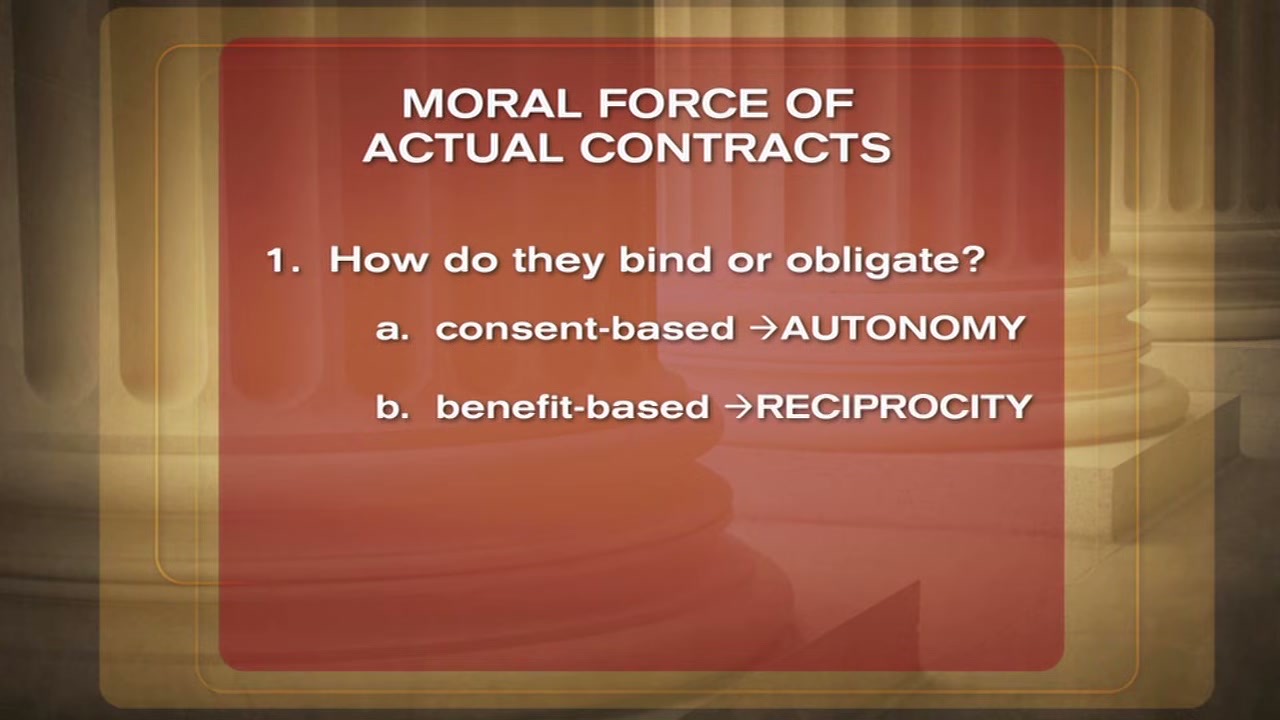
- Actual contracts bind in two ways: consent (autonomy) and benefit (reciprocity) (36:39).
- Consent is neither sufficient nor necessary for a fair obligation (37:58; 41:20), as the cases of the widow’s toilet repair and Hume’s painter show.
- A contract among equals, behind a veil of ignorance, is Rawls’s fix (52:19) for the ways real contracts fall short.
Chapter notes
0:34 – 4:35 Duty, autonomy and one moral law
Sandel asks the class to answer the remaining questions about Kant (0:34). How can duty and autonomy go together, when duty sounds like submission? Matt answers: acting from duty means following a moral law you impose on yourself. Kant’s version is that dignity comes not from being subject to the law but from being its author.
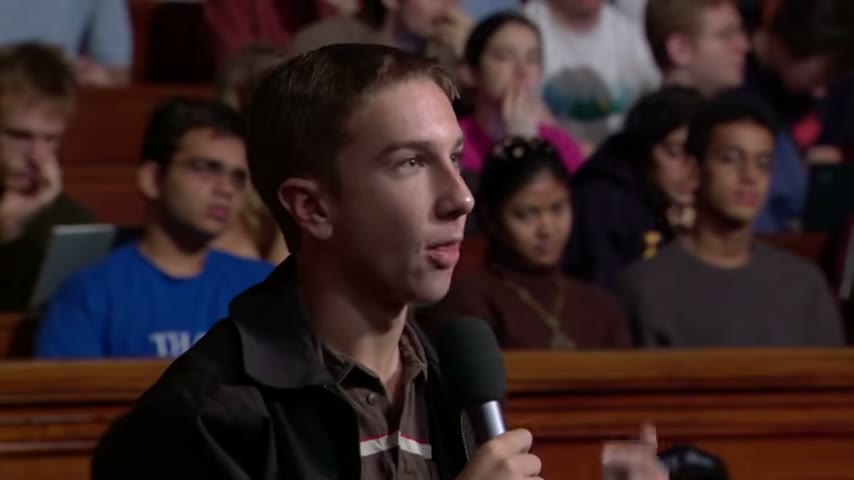
How many moral laws are there, then? Kelly says one: a law that depends on no subjective conditions holds for everyone. The one choosing is not Michael Sandel or Kelly as particular people, but pure reason, which works the same way in each of us.
4:35 – 9:04 Two standpoints: how is morality possible?
Kant’s third question is how a categorical imperative is possible at all. His answer is two standpoints. As an object of experience, I belong to the sensible world, where causes and the laws of nature determine everything. As a subject, I belong to an intelligible world, where I can act on a law I give myself. If we were only creatures of appetite, every choice would be heteronomous and freedom would be impossible.
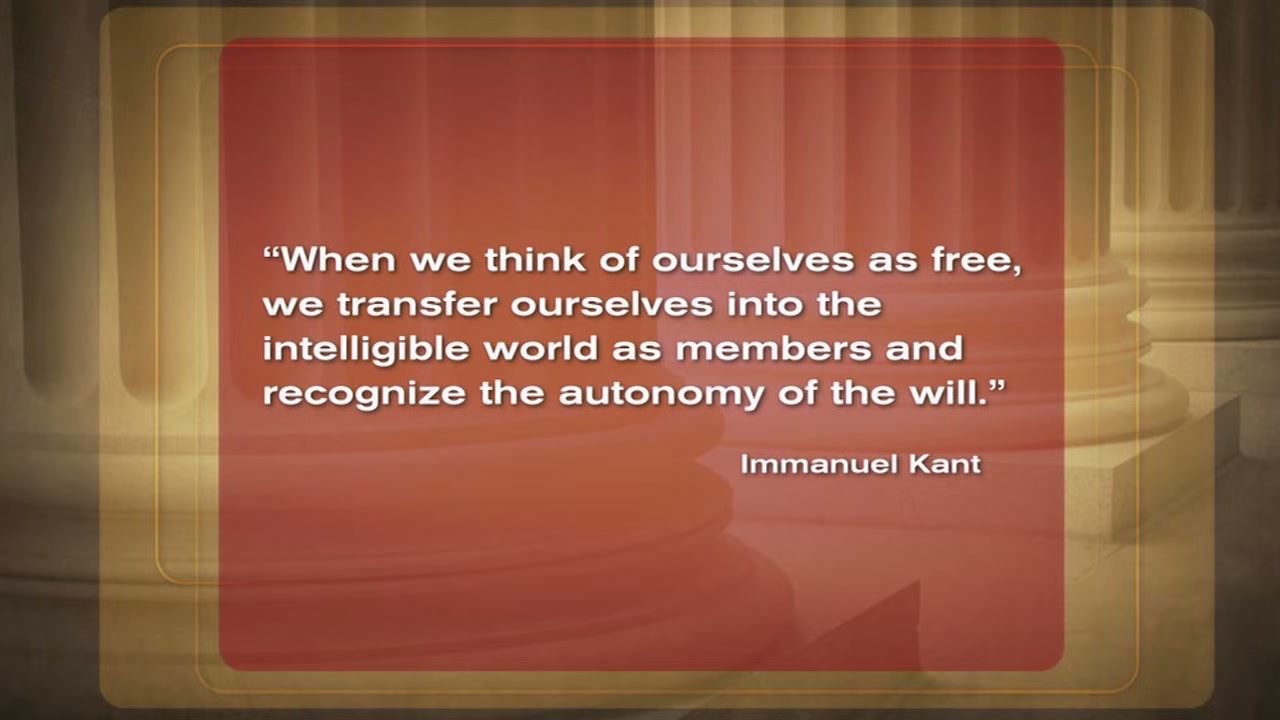
Because we live in both realms at once, there is always a possible gap between what we do and what we ought to do. Morality stands “at a certain distance” from the empirical world (8:33).
9:04 – 14:02 The murderer at the door
The hardest case for Kant (9:04): your friend is hiding in your house, and a murderer asks where he is. Benjamin Constant, responding to Kant, called an absolute ban on lying absurd here, since the murderer doesn’t deserve the truth. Kant held firm: once you allow consequences to make exceptions, you have given up the categorical imperative and become a consequentialist.
Sandel offers a defense “within the spirit” of Kant. Is there a way to avoid both lying and betraying your friend? John suggests saying “I don’t know where he is”, which is true if you aren’t looking at the closet at that moment and he might have left. It is a clever evasion: misleading, but strictly true. That raises the question of whether a lie and a misleading truth differ morally even when their consequences are the same. For Kant, who does not judge by consequences, they can.
14:02 – 17:40 White lies, an ugly tie and Bill Clinton
A white lie is a lie justified by its consequences, such as sparing feelings, so Kant cannot accept it. But a misleading truth may pass. Given an awful tie, you can’t say “it’s beautiful”, but you can say “I’ve never seen a tie like that before” (14:54).
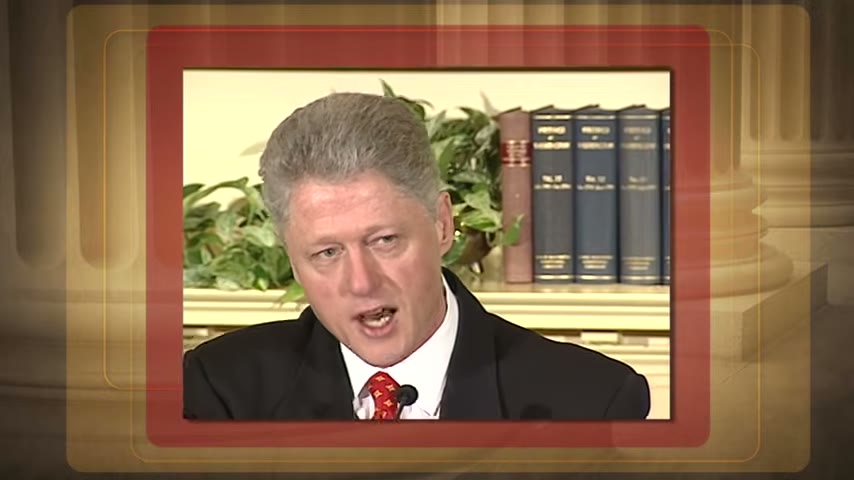
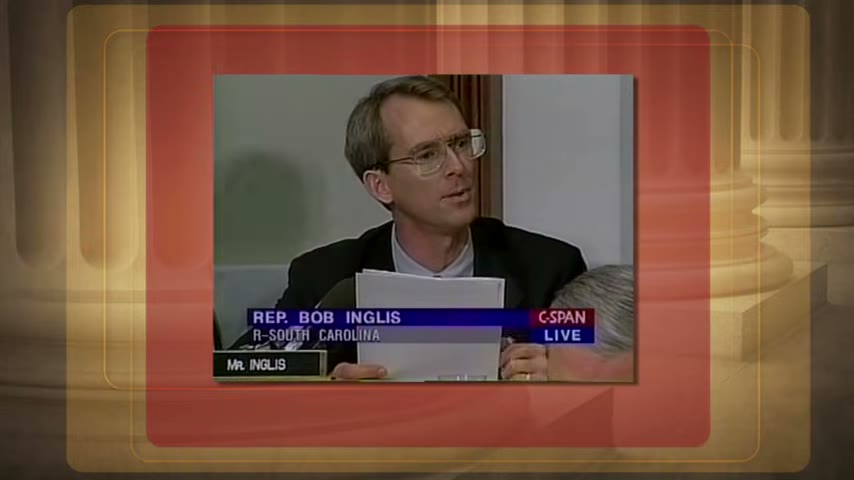
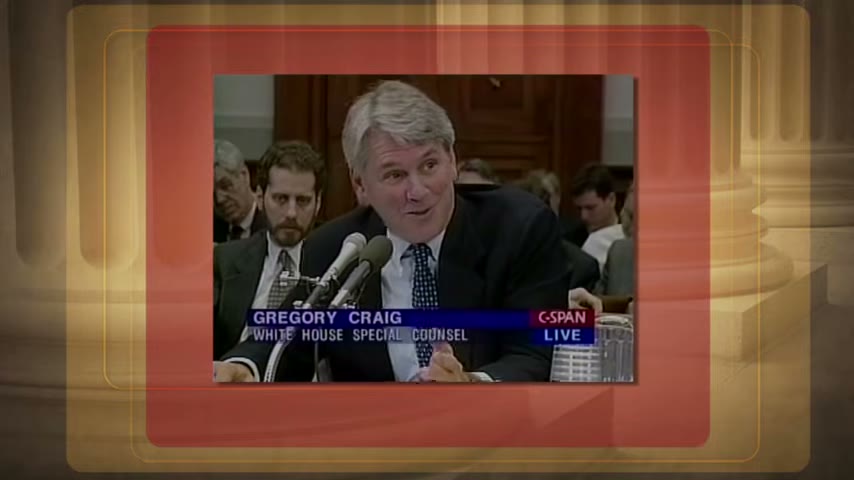
The famous political example: Bill Clinton’s denials in the Monica Lewinsky affair. Sandel plays his statement, “I did not have sexual relations with that woman, Miss Lewinsky” (16:20), and a clip from the impeachment hearings. Clinton’s lawyer tells a Republican congressman that the words were true under Clinton’s own definition, and admits the congressman will see that as hair-splitting. Was it just legal hair-splitting, or is there a real moral difference?
17:40 – 22:05 Diana, Wesley and homage to duty
- Diana defends the distinction. Calling them the same is a consequentialist argument; you told the truth and intended to be believed, which is not the same as lying.
- Wesley objects: Kant cares about motive, and the motive is the same in both cases, to mislead.
- Diana replies that the immediate motive is to be believed while telling the truth; deception is only the hoped-for result.
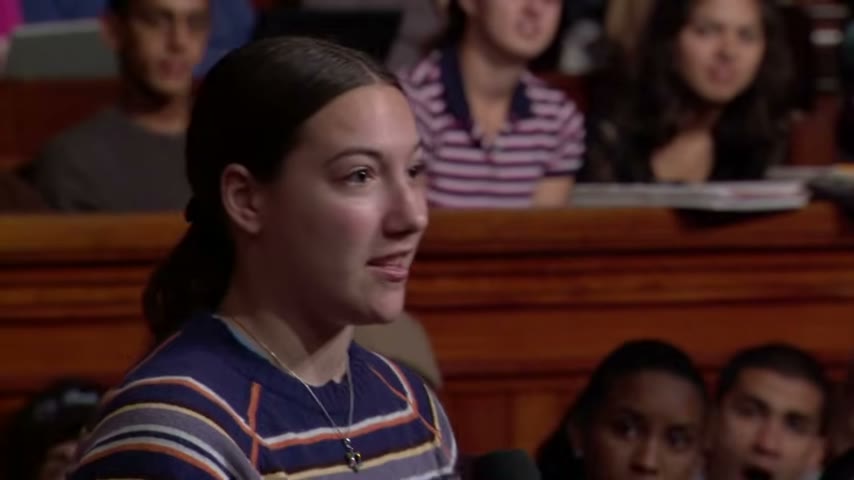
Sandel’s answer: the speaker hopes the listener will be misled, but cannot control that. What he can control is pursuing his aim within the moral law. A careful true evasion “pays a certain homage to duty” (20:16) that an outright lie does not. Clinton could have lied outright and didn’t. Wesley is not fully persuaded.
Our note: the distinction only matters if you accept that a moral act is judged by its form, not its effects. To a utilitarian, the tie answer and the Clinton answer are just lies with good wording.
22:59 – 25:51 Part Two: Kant’s hypothetical contract
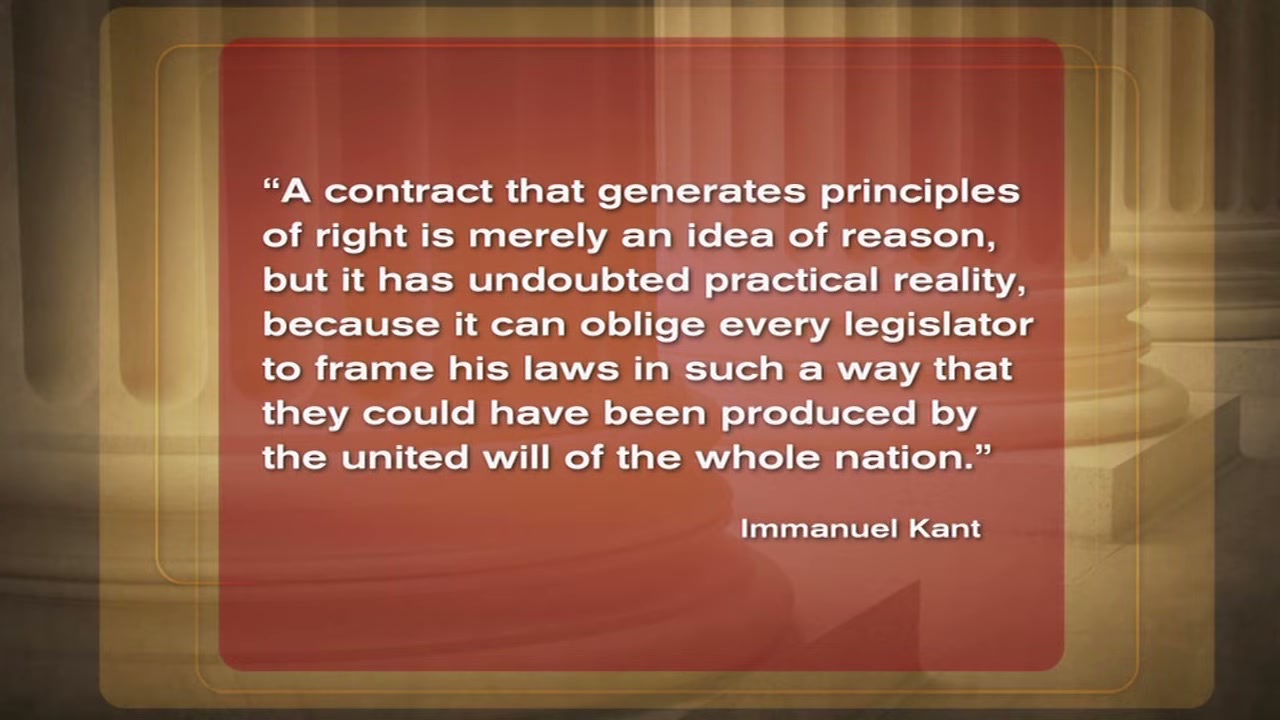
Kant’s political theory: just laws come from a social contract, but not a real one. Real people at a constitutional convention would differ in interests, bargaining power and knowledge, so the laws they produced would reflect those differences, not right.
25:51 – 29:28 Enter Rawls
John Rawls’s A Theory of Justice develops the same idea in detail. Rawls follows Kant in two ways. First, he rejects utilitarianism.
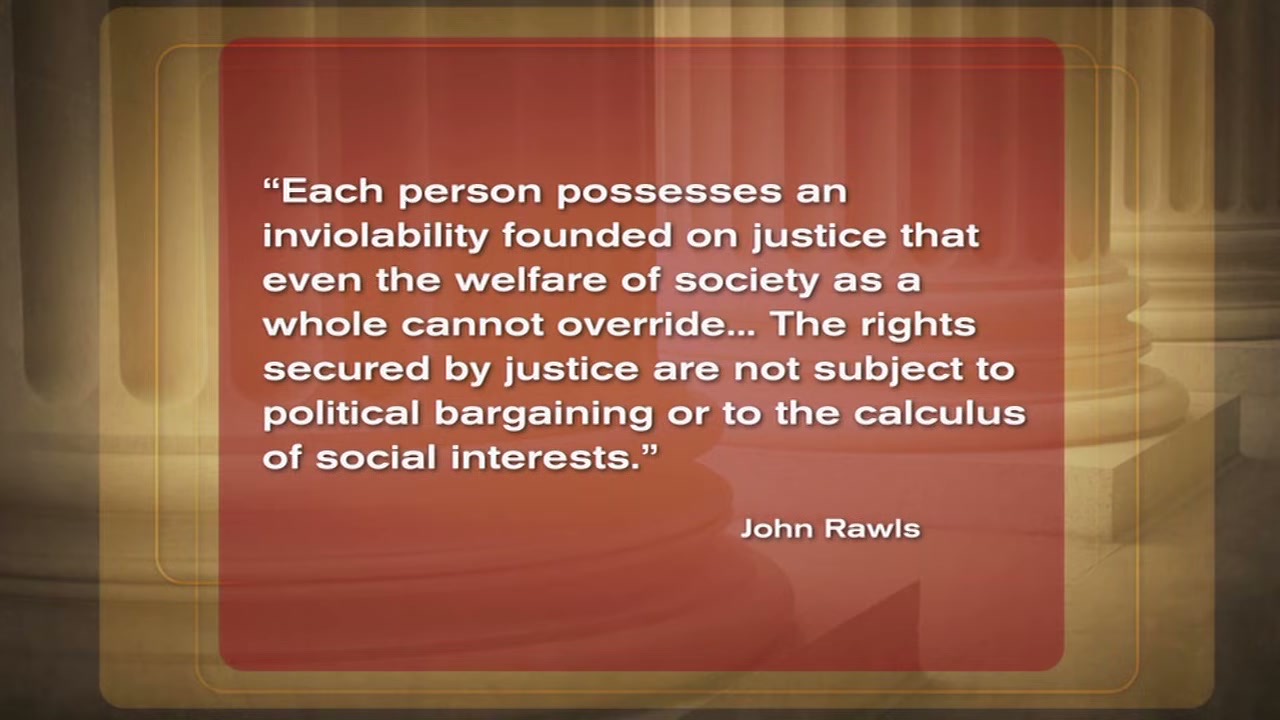
Second, he derives principles of justice from a hypothetical agreement. If we chose principles as we are, we would get a clash of interests: strong and weak, rich and poor. So imagine choosing in an original position of equality, behind a veil of ignorance that hides our class, strengths, weaknesses and health. Rawls says the principles chosen there would be just. Sandel leaves the content of those principles for the next lecture.
29:28 – 37:32 Lobsters: what makes an actual contract binding?
To judge whether a hypothetical contract is stronger or weaker than a real one, Sandel first asks two questions about actual contracts: how do they bind us, and do they make their terms fair? The second answer is no, not on their own. Any agreement can be unfair, and the Constitutional Convention was a real agreement that still produced a constitution permitting slavery to persist.
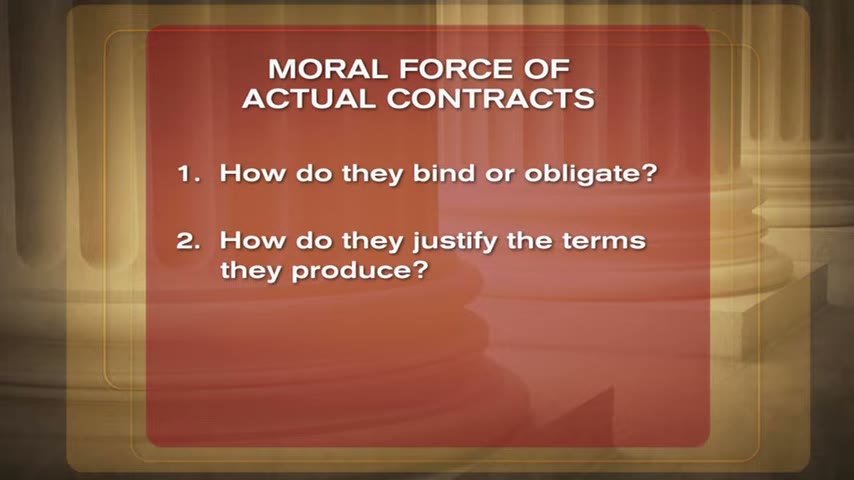
On the first question, Sandel uses a deal: $100 for 100 lobsters. If you deliver and I eat them and don’t pay, I owe you because I benefited. But if I cancel two minutes after agreeing, before you have done any work, do I still owe you? Julian says yes, but keeps pointing to effort and expectations, which is still the benefit side. Adam finds the other ground: backing out “cheapens the institution of contracts” (35:45), an obligation that comes from the agreement itself.
37:32 – 41:20 Consent is not sufficient
Sandel’s first claim: the fact of an agreement doesn’t make its terms fair. When his two sons were young and traded baseball cards, he required his approval of every trade, because the older one knew more about card values. A sharper case: Rose, an 84-year-old widow in Chicago, agreed to pay a dishonest contractor $50,000 to fix a leaky toilet. The scheme was discovered when she tried to withdraw $25,000 and a bank teller asked why (40:21). Nobody in the room defends that contract.
41:20 – 48:36 Consent is not necessary: Hume’s painter and Sam’s van
The stronger, more controversial claim: an obligation can arise from benefit alone, with no consent. David Hume, who had dismissed the original social contract as a philosophical fiction, faced a test of this at 62. A subtenant in his Edinburgh house had it repaired and painted, and the contractor sent Hume the bill. Hume refused: by that logic a painter could improve every house in Edinburgh and demand payment (43:33).
Sandel’s own version: his car broke down at a rest stop in Hammond, Indiana. A man from “Sam’s mobile repair” started work before any deal was made, found nothing wrong with the ignition, and demanded payment. Sandel refused and admits that if Sam had fixed the car he would have owed him, not because of an implied agreement but because of the benefit. Sam’s mistake was to infer an agreement from that.
Nate pushes back: benefits are subjective. What if the painter used a color Hume hated? So consent is necessary to know whether an exchange was fair. Sandel calls it a fair challenge.

49:02 – 51:22 The betrayal test
A thought experiment to separate the two strands (49:02). After 20 years of faithfulness, Sandel discovers his wife’s affair (he notes this part is “completely made up”). He has two grounds for outrage: she broke her promise (consent), and after all his faithfulness he deserved better (reciprocity). If the betrayal came on the honeymoon, before any history, only the first ground remains, which isolates pure consent. Each strand has independent moral force.
51:22 – 53:39 Why a hypothetical contract among equals
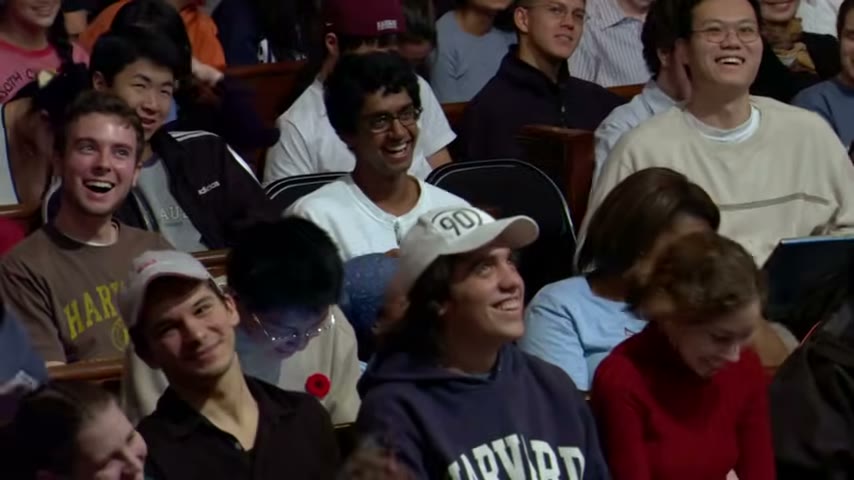
Real contracts can fail both ideals (51:22): autonomy fails when bargaining power is unequal, reciprocity when knowledge is unequal and the things exchanged aren’t of equal value. Now imagine a contract where both ideals are guaranteed: parties equal in power and knowledge, identically placed. That is Rawls’s veil of ignorance. For Kant and Rawls, a hypothetical contract among equals is the only way to arrive at principles of justice. Which principles come out of it is the question of Episode 8.
Skip list
- 0:00 – 0:34 Funding credits.
- 15:20 – 17:14 The Clinton footage itself; the exchange is summarized above.
- 22:34 – 22:59 A preview of the lobster discussion.
- 44:02 – 46:21 The full Sam’s mobile repair story; the conclusion at 46:21 is what matters.
- 53:39 – end Website promo and credits.
Glossary
- Sensible vs. intelligible world — Kant’s two standpoints: ourselves as objects governed by causes, and as rational subjects capable of freedom.
- Murderer at the door — the classic test of Kant’s absolute ban on lying, raised against him by Benjamin Constant.
- Misleading truth — a statement that is literally true but intended to leave a false impression.
- Hypothetical contract — an agreement people would make under fair conditions, used as a standard rather than a historical event.
- Veil of ignorance — Rawls’s device: choose principles of justice without knowing your own class, talents or circumstances.
- Original position — the imagined situation of equality behind the veil where principles of justice are chosen.
- Autonomy vs. reciprocity — the two sources of contractual obligation: self-imposed consent and the duty to repay benefits.
FAQ
Would Kant lie to a murderer at the door?
No. Kant held that lying is wrong even to a murderer asking where your friend is hiding, because making an exception for consequences abandons the categorical imperative. Sandel suggests a Kantian could instead give a true but misleading answer.
Is there a moral difference between a lie and a misleading truth?
On Sandel's reading of Kant, yes. Both may aim to mislead, but the careful true statement still respects the moral law against lying, while the outright lie does not. Sandel uses Bill Clinton's denials about Monica Lewinsky to test the idea.
How do actual contracts create obligations, according to Sandel?
In two ways. Consent creates an obligation you impose on yourself, which reflects the ideal of autonomy. Receiving a benefit from someone's work creates an obligation to repay, which reflects the ideal of reciprocity. The two can come apart.
Why does Rawls use a hypothetical contract instead of a real one?
Real agreements can be unfair because the parties differ in bargaining power and knowledge. Behind Rawls's veil of ignorance no one knows their own position, so the parties are equal, and the principles they would choose would be fair.
Studying another course? Paste its YouTube or Bilibili link on the home page to request a handout — or make your own with the desktop app (coming soon).