Justice (Sandel) Ep 10, The Good Citizen — notes and timestamps
Watch the video (55 min)
Watch the original video on YouTube
Episode 10 of Michael Sandel’s Justice course is the main lecture pair on Aristotle. Part One shows how his teleological reasoning works on two cases: who should rule in a political community, and whether a disabled golfer has a right to ride a cart on the PGA Tour. Part Two finishes the golf case, takes up Aristotle’s notorious defence of slavery, and sets up the big objection that teleology leaves no room for freedom. It assumes you have seen the flute example and the definition of telos at the end of Episode 9. The course index lists every episode.
Key takeaways
- Arguments about justice are often arguments about purpose and honour at the same time. That is the claim Sandel tests through two examples (2:23).
- For Aristotle politics exists for the good life, so office and honour should go to those with the most civic virtue (5:32).
- Virtue is learned by practice, like flute playing or cooking, which is why we need to take part in politics to become fully human (13:15).
- Casey Martin’s right to a cart depends on whether walking is essential to golf, and that question is also about whether golf is honoured as athletic (17:57).
- Aristotle’s defence of slavery fails by his own standard of fit, so it does not by itself discredit teleological reasoning (42:14).
- The real challenge is freedom: if justice means fitting people to roles, what is left of the right to choose our own ends (40:28)?
Chapter notes
Part One
0:30 – 4:44 Teleology and honour
Sandel restates the contrast: Kant and Rawls separate questions of justice from questions of virtue and desert, while Aristotle holds that justice means giving people what they deserve, which requires reasoning about the purpose of social practices. He adds a new element. When we argue about the purpose of a practice, we are often also arguing about which qualities it should honour. He will show this through two examples: how political office should be distributed, and the golfer Casey Martin.
4:44 – 8:38 What politics is for
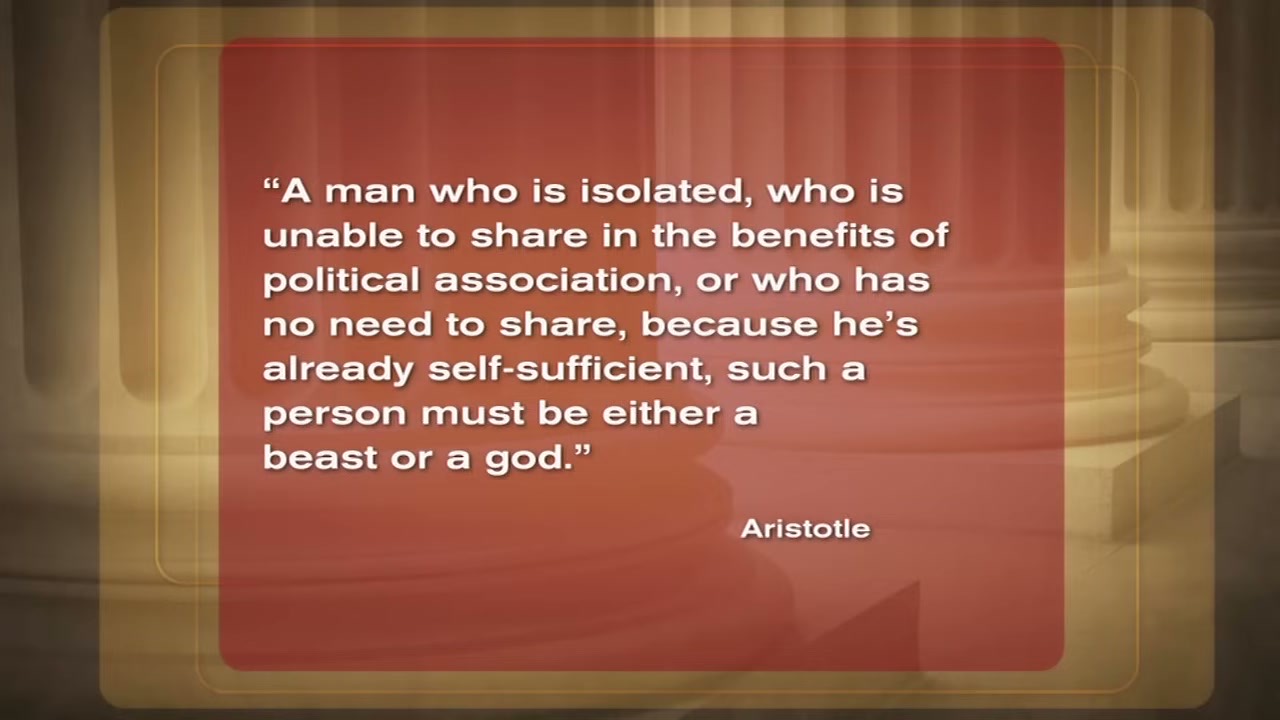
Modern debates about distributive justice are mostly about income, wealth and opportunity. Aristotle’s were about offices and honours: who should rule and who should be a citizen. To answer, he first asks what politics is for. His answer, in Book III of the Politics, is that the political community exists for the good life: not just survival, trade or mutual security, but the cultivation of good character.
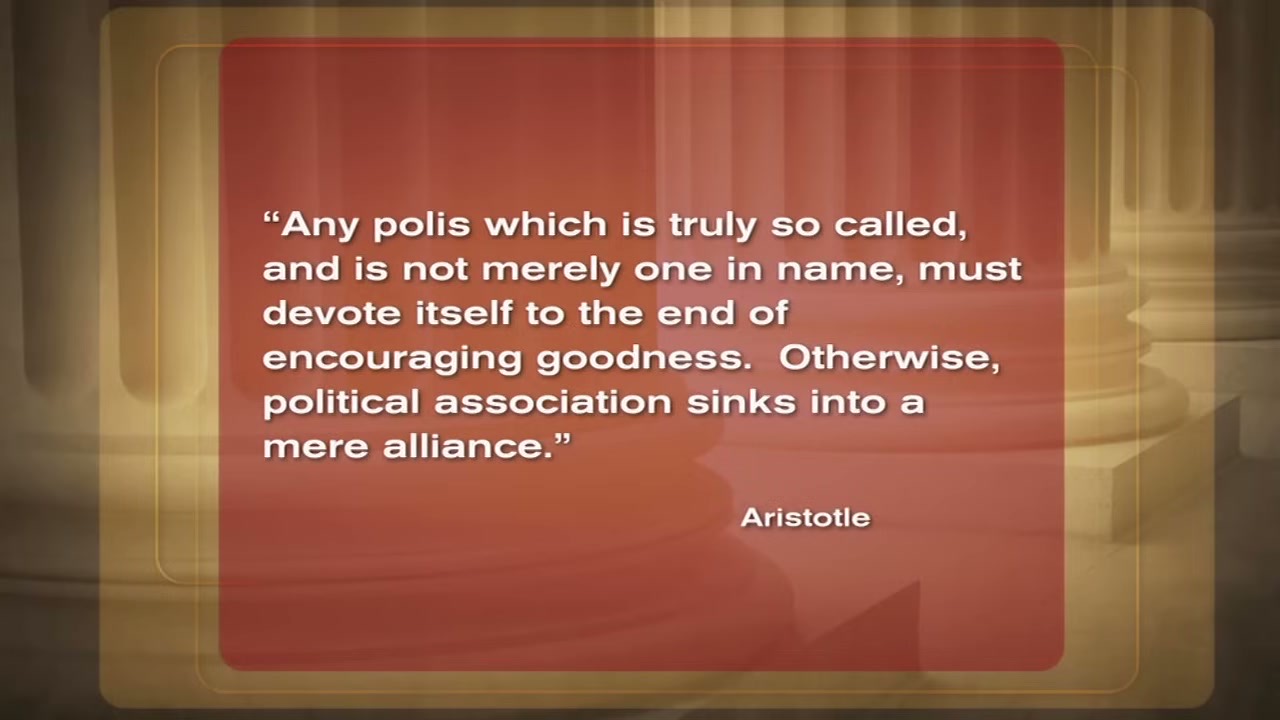
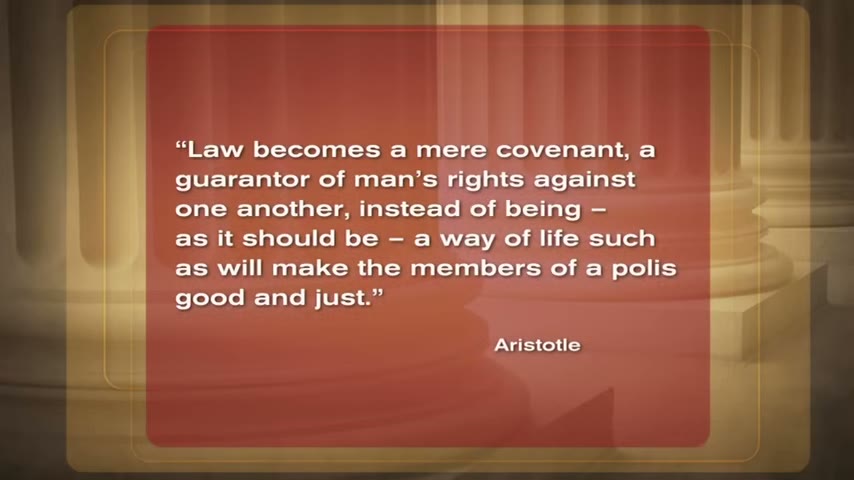
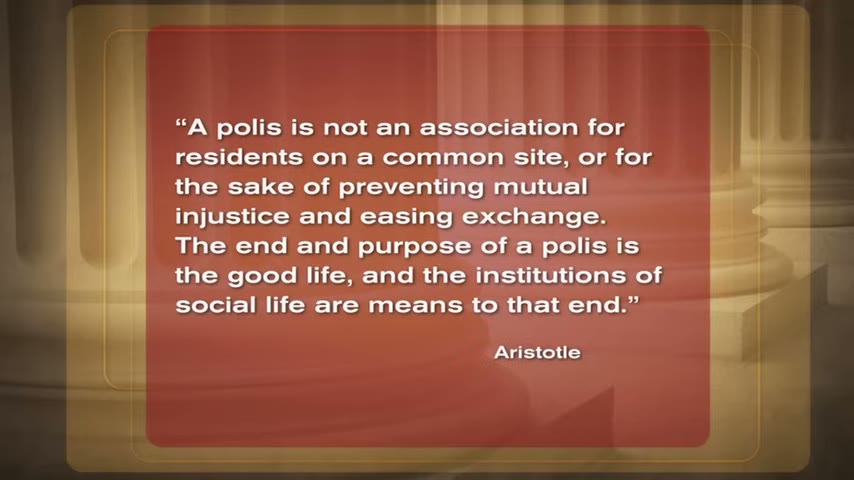
From that purpose he derives his principle of distribution. Those who contribute most to an association aimed at the good life, that is, those with the greatest civic virtue, should have the largest share of rule and honour. The principle is not about wealth, numbers or birth, each of which would fit a different idea of what a city is for.
8:38 – 12:29 Why we need politics to be fully human
Why should taking part in politics be essential to a good life? Couldn’t people live decent lives privately? In Book I Aristotle says humans are by nature political. Our distinctive capacity is language, which he understands as the ability to deliberate about just and unjust, right and wrong. We fully exercise it only by deliberating with fellow citizens. In that sense the political community is prior to the individual, not in time but in purpose.
12:29 – 16:18 Virtue is learned by doing
Why not just learn good principles from a book or a lecture? Aristotle’s reply, from the Nicomachean Ethics, is that virtue is acquired like a skill. Nobody becomes a fine flute player, a great chef or a good comedian by reading the rules. What these skills share is the ability to discern the particular features of a situation, which no rule can fully spell out. Moral virtue is the same, and civic virtue in particular is learned only by deliberating among equals. That is why Aristotle thinks we cannot realise our nature outside a polis.
This also explains the conception of happiness Sandel mentions: not a balance of pleasure over pain, as for the utilitarians in Episode 2, but an activity of the soul in accordance with virtue.
16:18 – 17:57 Pericles and the honorific dimension
So people like Pericles, with the most practical wisdom and civic virtue, should have the most office and influence. One reason is consequences: they will govern well. But Aristotle has a further reason. Part of the point of politics is to single out and honour those who have the relevant excellence. Distribution here has two sides: who gets the job, and whose virtues the community publicly recognises.
17:57 – 26:53 Casey Martin and the golf cart
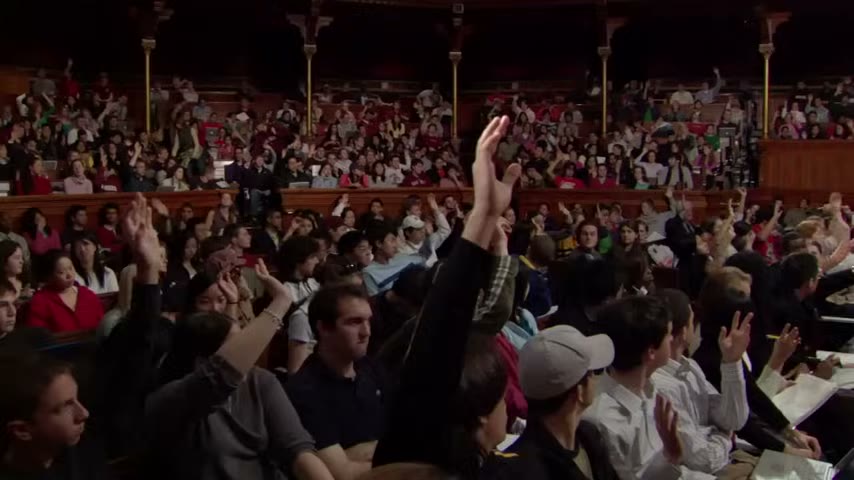
Casey Martin was a golfer good enough to compete at the top level, but a rare circulatory condition in his leg made walking the course painful and risky. He asked to use a cart in professional tournaments. The PGA refused, and he sued under the Americans with Disabilities Act, in a case that reached the Supreme Court. Most of the class sides with Martin.
- Tom: walking the course is intrinsic to golf at the professional level; being unable to walk is being unable to perform part of the sport.
- Michael, a golfer who usually rides a cart, agrees that walking makes the game much harder.
- Reva: Martin still walks about a mile and suffers more fatigue than healthy players. Carts are allowed on the senior tour, the Nike tour and in many college events, so walking is not essential.
- David: competition exists to separate the best from the second best, and you cannot change the rules for one player.


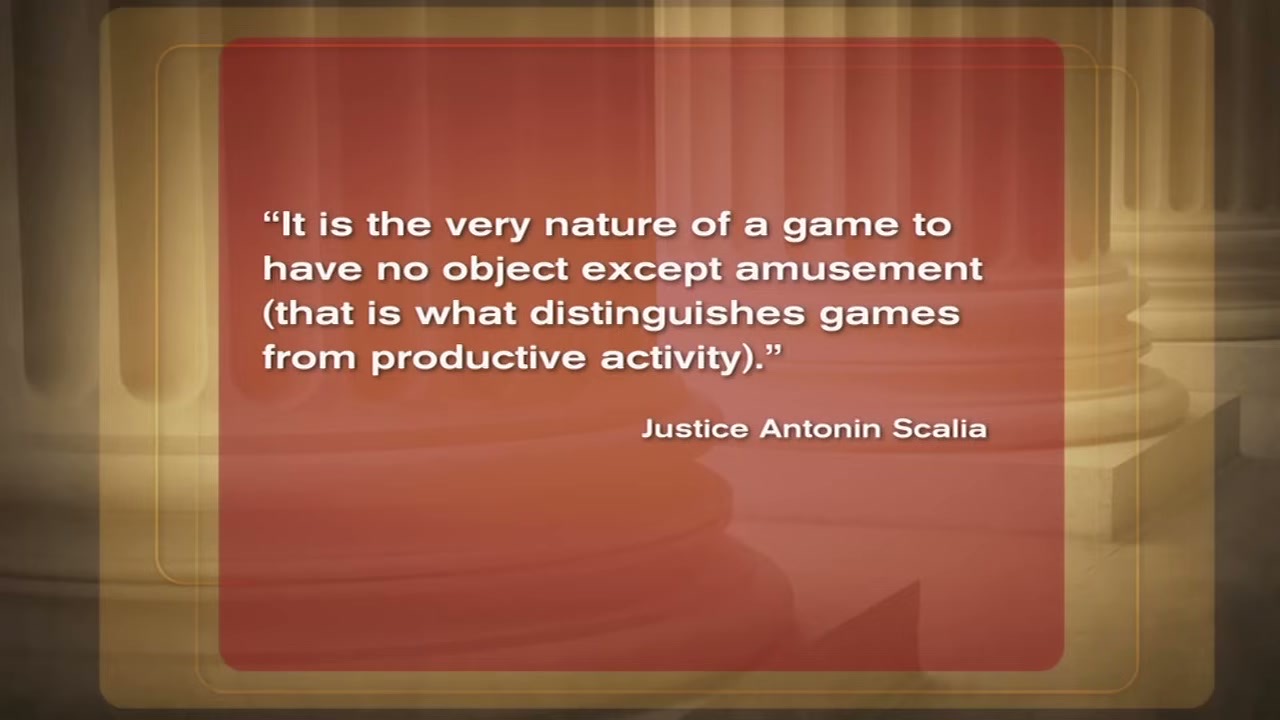
The Court sided with Martin, citing testimony that walking a course burns about as many calories as are in a Big Mac. Justice Scalia dissented: games exist only for amusement, so it is not the Court’s job to define the essential nature of golf. Sandel suggests what lies underneath. If golf can be played without walking, is it an athletic competition at all, or more like billiards, a game of skill where the ball also sits still? Top golfers may have a stake in golf being honoured as athletic.
Part Two
27:38 – 29:38 Justice as fit
Sandel restates Aristotle’s approach in a new phrase: justice is a matter of fit, matching persons and their virtues to the appropriate roles. He will finish the golf case and then turn to a more serious application, slavery.
29:38 – 33:32 Carts for everyone?
Jenny proposes a fix: let every golfer choose a cart, so Martin gets no special advantage. Da replies that this would spoil the spirit of the game, like allowing every Olympic swimmer to wear flippers. Jenny answers that the point of golf is swinging the club, which is also what the Court said. Michael holds that the PGA Tour is the pinnacle of the sport, and that a player who cannot walk the course should play in some other competition.

The useful observation is that Jenny’s solution is fair in a narrow sense, the same rules for everyone, yet nobody is satisfied. That shows the disagreement is not about equal treatment but about what golf is.
33:32 – 36:38 Two morals: purpose and honour
Sandel draws two lessons. First, as Aristotle predicts, whether Martin has a right depends on settling what is essential to golf. Second, the debate is about honour. Martin wants to compete for the honour of winning the top tournaments. Great golfers such as Jack Nicklaus and Tom Kite testified against the cart, and Sandel suspects they would also reject Jenny’s carts for everyone. If carts were normal, golf would look less like an athletic contest. The fight over walking is partly a fight over what kind of excellence golf honours.
36:38 – 39:43 Scalia, Twain and the difference between sport and spectacle
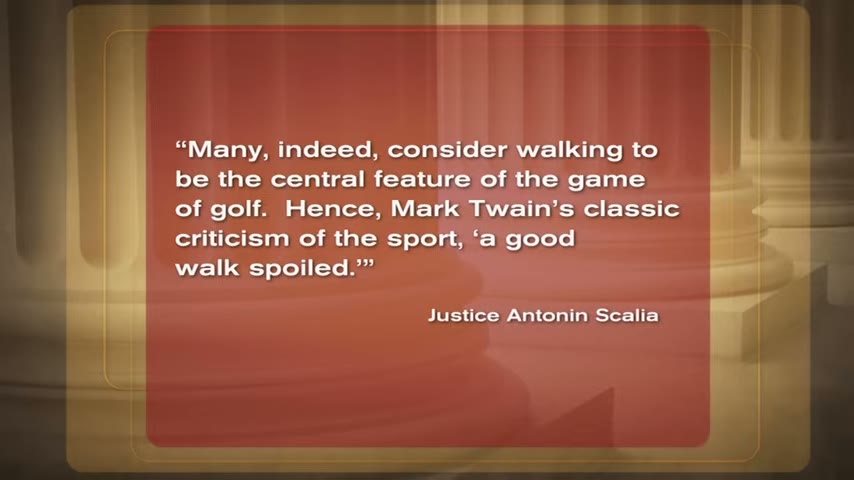
Scalia called the question silly and beyond the Court’s competence, and he took an openly anti-Aristotelian view of games.
Scalia even quoted Mark Twain’s line that golf is “a good walk spoiled”. Sandel’s answer: a sport differs from a mere spectacle because it calls forth and honours certain excellences, and fans watch to appreciate them, not only to be amused. That is why arguments about what is essential to a sport make sense, whether or not a court should settle them.
39:43 – 47:34 The freedom objection and Aristotle on slavery
If justice is fitting people to roles, where is the room for freedom to choose one’s own roles? Rawls rejects teleological theories for exactly this reason. Before facing that objection, Sandel takes Aristotle’s worst application. Aristotle defended slavery. He argued that slavery was necessary, because someone had to do menial work so that citizens had time to deliberate, and that some people were by nature fitted to be slaves. Sandel calls the second claim deplorable.
Aristotle himself saw a problem. Many slaves in Athens were not “natural” slaves but captives of war, there by bad luck. By his own standard that is a misfit, and therefore unjust. Coercion is the symptom: if you have to force someone into a role, that is good evidence the role does not fit them. Sandel concludes that the slavery example does not show teleological reasoning is wrong in principle, since Aristotle’s own terms explain what is wrong with his application.
47:34 – 53:54 Objections from the class, and two big questions
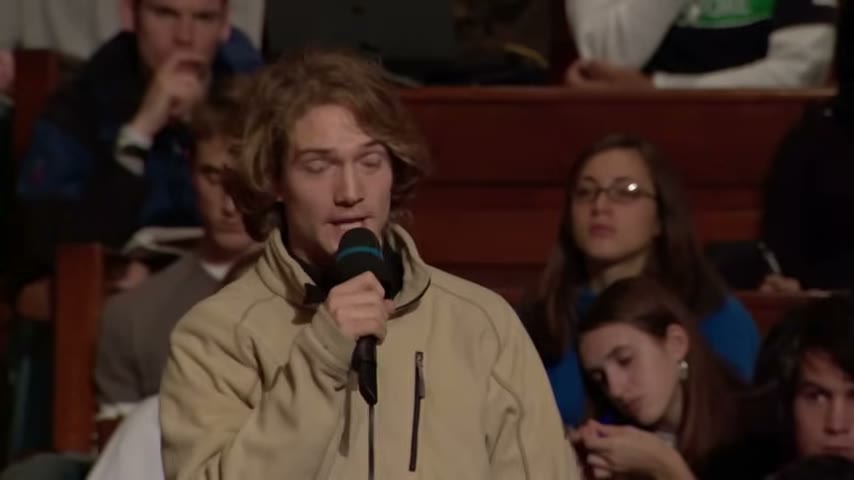
Students object. One mocks the idea of a person being cut out for a role: someone who walks and talks like a pirate belongs on a pirate ship, not in investment banking. Mary Kate says she might be the best janitor in the world and still want to do something else. Patrick says that if the class could not agree whether walking is essential to golf, it will never agree on the purposes of political life, so justice cannot rest on them.
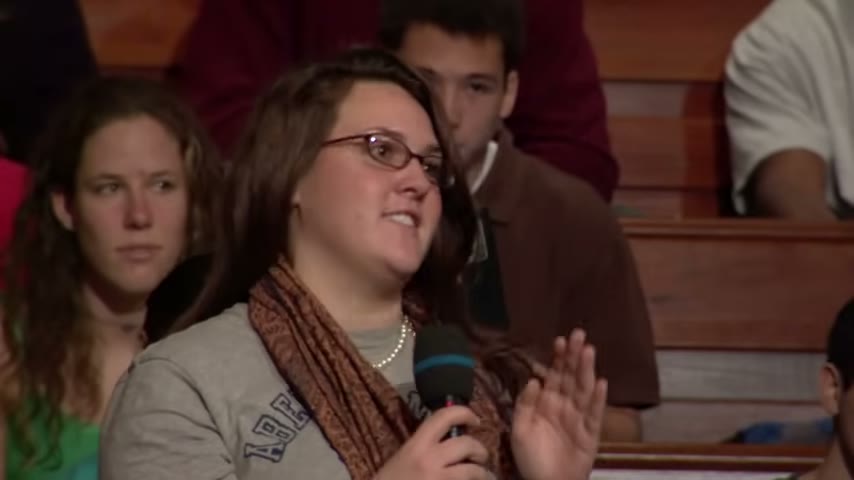
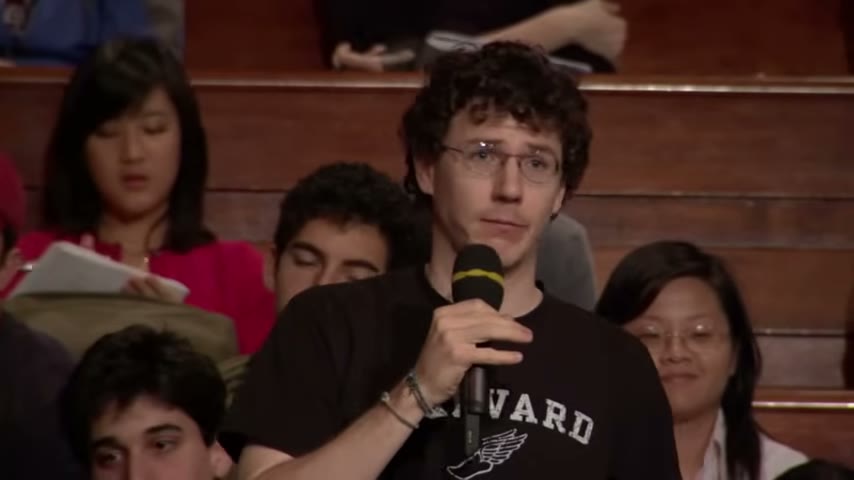
Sandel says Patrick’s worry is the starting point of much modern political theory. Kant and Rawls conclude that, because people in pluralist societies disagree about the good life, justice should provide a framework of rights neutral among conceptions of the good. Mary Kate’s point is about freedom: being free means being independent of roles handed down by family or society. Deciding between Aristotle and the Kantian liberals requires two questions, which frame Episode 11: is the right prior to the good, and what does it mean to be a free person?
Skip list
- 0:00 – 0:30 Funding credits.
- 20:54 – 21:52 Joking about which students are real golfers.
- 26:53 – 27:38 Trailer for Part Two (the pirate objection, which appears in full at 47:34).
- 53:54 – 55:08 Website promo and closing credits.
Glossary
- Polis — the Greek city-state; for Aristotle, a political community aimed at the good life.
- Teleological reasoning — reasoning about justice from the purpose (telos) of a practice or institution.
- Honorific dimension — the part of a distributive question that is about which excellences a community recognises and rewards.
- Civic virtue — the practical wisdom and character needed to deliberate well with fellow citizens about the common good.
- Justice as fit — Aristotle’s idea that justice matches persons and their virtues to the roles that suit them.
- Priority of the right over the good — the liberal view that principles of justice should not depend on any particular conception of the good life.
FAQ
What is the purpose of politics according to Aristotle?
For Aristotle, politics exists to make the good life possible and to cultivate the virtue of citizens, not just to provide security or ease trade. That is why he thinks the citizens with the most civic virtue should have the greatest share of office and honour.
What was the Casey Martin case?
Casey Martin, a professional golfer with a circulatory condition in his leg, asked to use a golf cart on the PGA Tour. The PGA refused, and he sued under the Americans with Disabilities Act. The Supreme Court ruled the PGA had to accommodate him, with Justice Scalia dissenting.
Why does Sandel use the golf-cart case to explain Aristotle?
Deciding whether Martin has a right to a cart turns on whether walking is essential to golf, a question about the purpose of the game. It is also a question about honour: whether golf is recognised as an athletic competition.
Does Aristotle's defence of slavery refute teleological reasoning?
Sandel argues it does not. By Aristotle's own standard of fit, slavery was unjust for people who were enslaved by capture rather than by nature, and the need for coercion is itself a sign that a role does not fit.
Studying another course? Paste its YouTube or Bilibili link on the home page to request a handout — or make your own with the desktop app (coming soon).