Justice (Sandel) Ep 1, The Moral Side of Murder — notes and timestamps
Watch the video (55 min)
Watch the original video on YouTube
Episode 1 of Michael Sandel’s Harvard course is where the whole series starts, and it holds two lectures. Part One is the famous trolley-problem lecture: a run of hypothetical cases that pulls apart two ways of thinking about right and wrong, followed by Sandel’s warning about what studying philosophy does to you. Part Two introduces Bentham’s utilitarianism and tests it on a real case, a 19th-century shipwreck in which three sailors killed and ate the cabin boy. No background is needed. The next lecture, Episode 2, picks up straight from the lifeboat. For the full course map, see the course index.
Key takeaways
- The same principle gets opposite verdicts in two similar cases (5:22). Nearly everyone would steer the trolley to kill one instead of five; most would refuse to push a man off a bridge to get the same result.
- That gap reveals two families of moral reasoning (13:49). Consequentialist reasoning judges acts by their results; categorical reasoning says some acts are wrong in themselves. The course is built around the contrast.
- Moral argument moves back and forth between cases and principles (24:56). A judgment about a case suggests a principle; a new case puts the principle under pressure, and you revise one or the other.
- Philosophy works by making the familiar strange, and that carries risks (18:03). Sandel warns it may make you a worse citizen before it makes you a better one.
- Skepticism is not an option, because we live some answer to these questions every day (22:52).
- Dudley and Stephens tests utilitarianism on a real killing (29:15). A sizable majority votes guilty, but adding consent or a lottery wins over more of the class.
- The lecture ends with three questions the course must answer (50:47): where rights come from, why a fair procedure justifies its outcome, and what moral work consent does.
Chapter notes
0:37 – 4:21 The runaway trolley
Sandel opens with a story rather than a definition. You are driving a trolley at sixty miles an hour; the brakes fail; five workers are on the track ahead. The steering still works, and a side track holds just one worker. Should you turn?
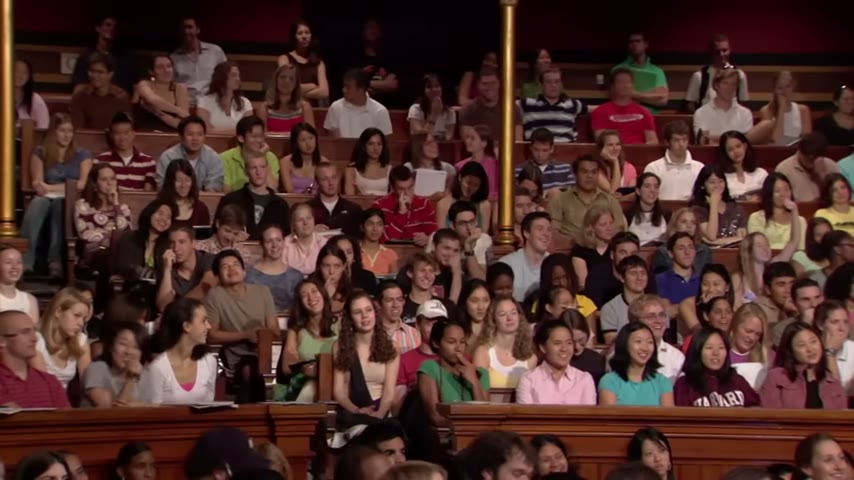
A poll: a handful would go straight, the vast majority would turn. The reasons offered:
- The majority: it can’t be right to kill five when you could kill only one instead.
- A second student compares the passengers on 9/11 who brought their plane down in a Pennsylvania field: we call them heroes because they chose fewer deaths over more (2:47).
- A dissenter says the same “sacrifice some to save more” logic has been used to justify genocide and totalitarianism. Pressed, he accepts that he would hit the five.
Sandel states the principle the majority seems to hold: better that one should die so that five should live.
4:21 – 10:01 The man on the bridge
Now you are not the driver but a bystander on a bridge above the track. The same five workers are about to die. Next to you, leaning over the rail, is a very heavy man. One shove would send him onto the track; his body would stop the trolley; he would die and the five would live. Most students would not push (5:22).
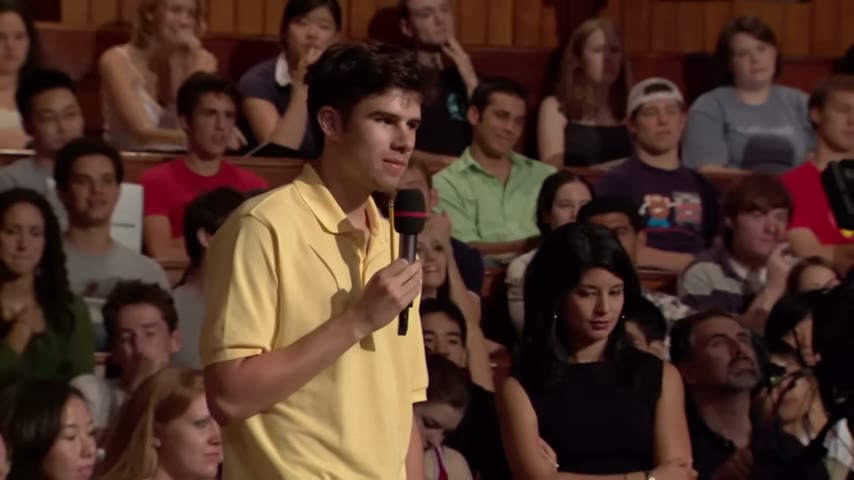
So what happened to the principle? Sandel asks students who turned the trolley but won’t push to explain the difference:
- First answer: the man on the bridge was never part of the situation, while the driver and both sets of workers already were. Sandel replies that the worker on the side track didn’t choose to die either.
- Second answer: in the first case the runaway trolley does the killing and you make a split-second choice; pushing the man is murder that you fully control (7:26). A third student replies that turning is just as conscious a choice, so either way you choose who dies.
- Andrew tries again: pushing someone with your own hands is different from steering something that will cause a death, though he admits it “doesn’t really sound right” said aloud. Sandel tests it: what if the man stood on a trap door you could open by turning a wheel (8:59)? Andrew says that still seems more wrong, unless the trolley itself tripped the trap.
Our note: the switch and bridge cases come from the philosophers Philippa Foot and Judith Jarvis Thomson, which is why the literature calls this “the trolley problem”. Sandel doesn’t name them here. What matters for the course is the method: change one detail, hold the numbers fixed, and see which part of your reasoning moves.
10:01 – 12:44 The two doctors
Sandel moves the same structure into a hospital.
- Emergency room: six victims of a trolley wreck arrive. You can save the one severely injured patient or the five with moderate injuries, not both. Almost everyone saves the five, for the same one-versus-five reason.
- Transplant surgeon: five patients will die without a heart, a lung, a kidney, a liver and a pancreas. A healthy man is napping in the next room after a checkup (11:06). Nearly no one would take his organs. One student in the balcony offers a way out: wait for the first of the five to die and use his organs for the other four. Sandel calls it a great idea, except that it wrecks the philosophical point.
The pattern repeats: the first version of each story is decided by numbers, the second by something about the act itself.
12:44 – 15:54 Two kinds of moral reasoning
Sandel steps back and names what the class has been doing.
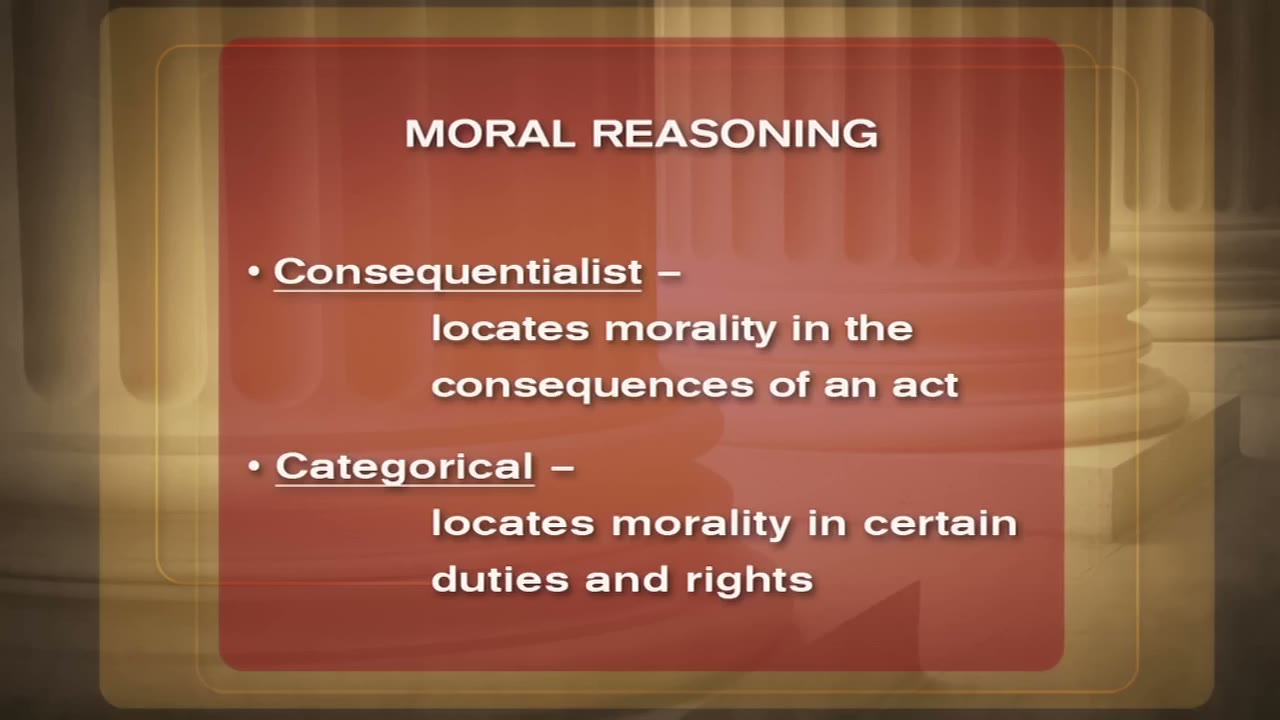
| Consequentialist reasoning | Categorical reasoning | |
|---|---|---|
| Where it locates morality | In the results of an act, the state of the world it brings about | In the act itself: certain duties and rights hold regardless of results |
| What it said in the cases | Turn the trolley; save the five patients | Don’t push the man; don’t take the healthy man’s organs |
| Main theory in the course | Utilitarianism, from Jeremy Bentham, the 18th-century English philosopher | Immanuel Kant, the 18th-century German philosopher |
The point is not that one column is right. Most students used both, in different cases, without noticing the switch (14:20). The course will assess both and consider others.
15:54 – 17:31 What the course will do
The syllabus pairs great books, by Aristotle, Locke, Kant, Mill and others, with live controversies: equality and inequality, affirmative action, free speech versus hate speech, same-sex marriage, military conscription. The controversies are not there to liven up the books; they show what the books have at stake in everyday and political life, and each is meant to illuminate the other.
17:31 – 21:48 The risks of philosophy
Sandel then issues a warning. The course is hard because it teaches what you already know: it takes familiar, unquestioned beliefs and makes them strange, as the trolley cases just did. Philosophy changes how you see rather than giving you new facts, and once the familiar turns strange it does not return. Self-knowledge, he says, is like lost innocence: it can’t be unthought (18:33).
The political risk is subtler. It would be easy to promise that philosophy makes you a better citizen. Sandel says it may make you a worse one, at least at first, because it distances you from settled conventions. He cites Plato’s Gorgias, where Callicles tells Socrates philosophy is a pretty toy in moderation but ruin if pursued too far (20:42). Sandel’s paraphrase: quit philosophizing, get real, go to business school. He grants Callicles had a point.
21:48 – 23:55 Skepticism is no dwelling place
The typical way to dodge these risks is skepticism: if Aristotle, Locke, Kant and Mill never settled these questions, who are we, in Sanders Theatre for one semester, to try? Maybe everyone just has their own principles.
Sandel’s reply: the questions have persisted because, though impossible to settle in one sense, they are unavoidable in another. We live some answer to them every day (22:52). He quotes Kant: skepticism is “a resting place for human reason” but “no dwelling place for permanent settlement” (23:23). The aim of the course is to awaken the restlessness of reason and see where it leads.
24:25 – 27:06 Part Two: what the trolley cases showed
The second lecture opens with a recap that doubles as a method statement. Two things came out of the trolley discussion:
- How we argued. We started from judgments about particular cases, tried to state the principles behind them, then met new cases that forced us to revise one or the other. There is a built-in pressure to bring case judgments and principles into line (25:30).
- What we argued. Sometimes morality seemed to lie in consequences, sometimes in the character of the act itself.
Our note: this back-and-forth is what John Rawls later named reflective equilibrium. The term comes up in the course’s Rawls lectures; Sandel describes the method here without naming it.
27:06 – 29:15 Bentham’s principle of utility
Bentham gave utilitarianism its first systematic form. The argument in three steps:
- All human beings are governed by two sovereign masters, pain and pleasure (28:11).
- So morality should be based on them, both in private life and in lawmaking.
- The right thing to do, individually or collectively, is to maximize utility: the balance of pleasure over pain, happiness over suffering. The slogan is “the greatest good for the greatest number”.
Sandel calls the idea simple and intuitively appealing, then tests it on a real case instead of another hypothetical.
29:15 – 33:58 The Queen v. Dudley and Stephens: the facts
A 19th-century English case still debated in law schools. The facts were not in dispute:
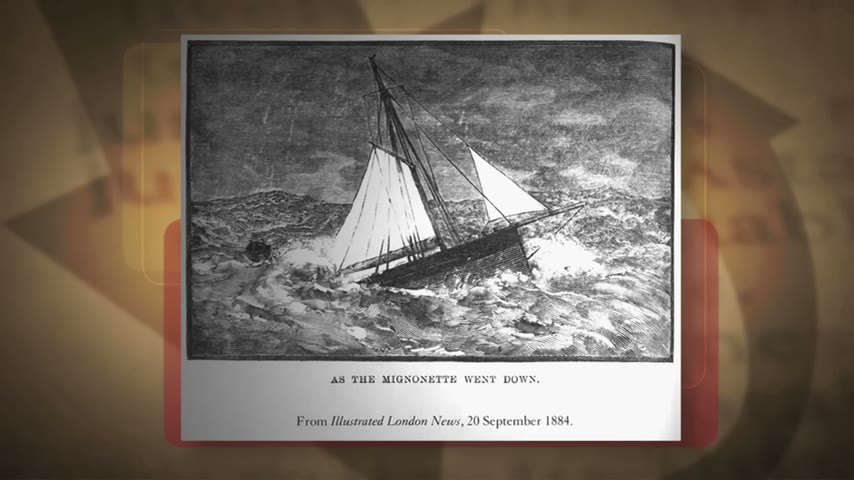
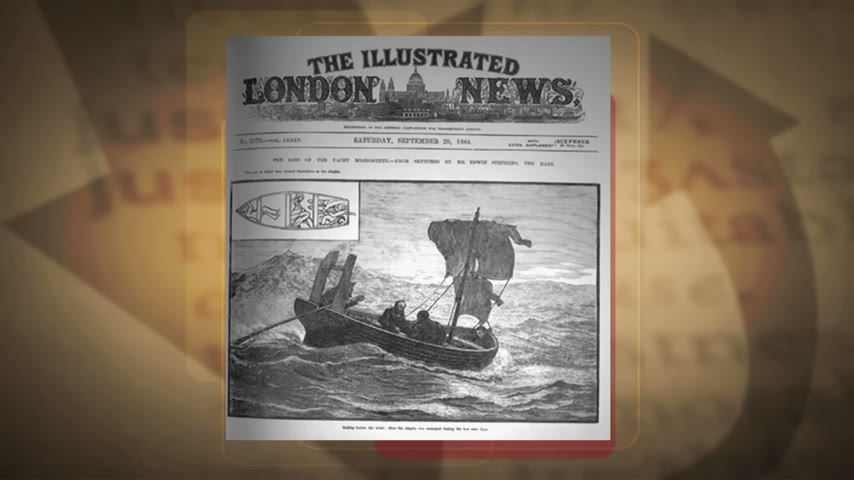
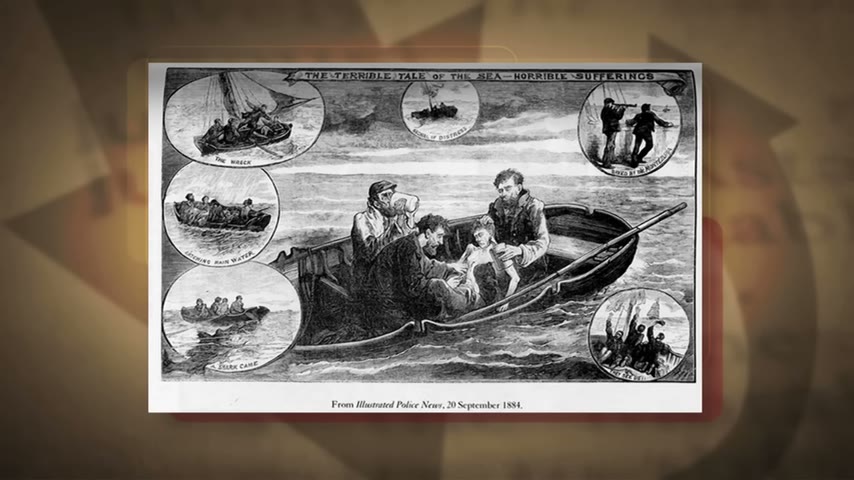
- The yacht Mignonette sank in the South Atlantic, 1,300 miles from the Cape. Four crew reached a lifeboat: Dudley the captain, Stephens the first mate, Brooks a sailor, and Richard Parker, the cabin boy, 17, an orphan on his first long voyage.
- Their food was two cans of preserved turnips, and they had no fresh water. A turtle kept them going for a few days; then eight days with nothing.
- Parker drank seawater against the others’ advice and fell ill. On the 19th day Dudley proposed drawing lots for who would die; Brooks refused, and no lots were drawn (31:52).
- The next day Dudley told Brooks to look away, said a prayer and killed Parker with a penknife. All three, Brooks included, fed on the body for four days.
- A German ship rescued them. Dudley’s diary records it as a ship appearing “as we were having our breakfast” (33:27).
- Back in Falmouth, Brooks turned state’s witness. Dudley and Stephens pleaded necessity: better that one die so three can survive. The prosecutor’s answer: murder is murder.
33:58 – 37:09 The vote and the defense
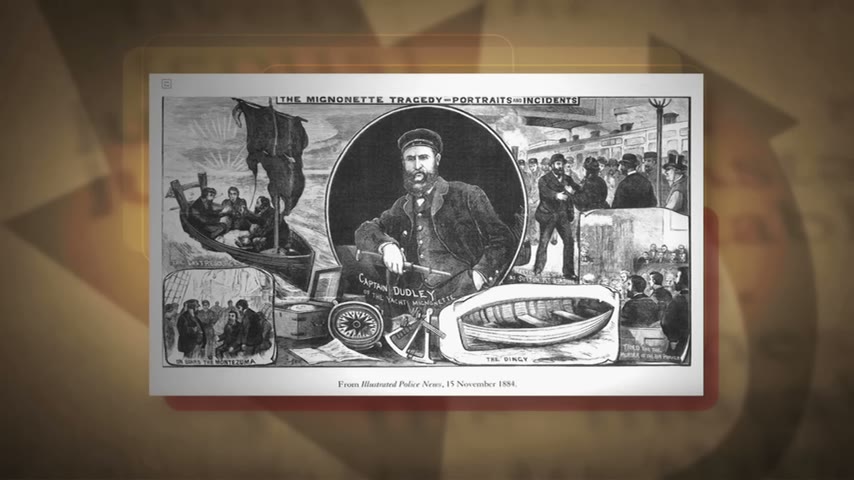
Sandel sets the law aside and asks the class, as a jury, whether the killing was morally permissible. A sizable majority says it was wrong. He starts with the minority:
- The first defender actually thinks the act was morally reprehensible, but argues that extreme necessity can remove guilt in the legal sense.
- Marcus gives the blunt version: after nineteen days without food, you do what you have to do to survive (35:34). He adds a consequences argument: the survivors might go home and do great good. A classmate asks what if they turned out to be assassins; Marcus concedes he would want to know who they killed.
37:09 – 38:45 The prosecution
A student notes that starvation might have impaired their judgment, which is a defense argument, not a moral justification. Britt gives the categorical answer: no situation allows human beings to take other people’s lives into their own hands (37:40).
38:45 – 42:53 What if Parker had consented?
Kathleen asks whether it would change things if they had asked Parker’s consent. Sandel acts it out: Dudley, knife in hand, asking a half-conscious Parker to be a martyr. Kathleen herself still thinks it would be wrong, but some hands go up for consent making it justified (39:47).
- A consent supporter says it would count only if the idea was Parker’s own. Three against one, anything else would be pressured, coerced consent.
- An objector says killing Parker was pointless anyway, since no one knew when rescue would come; the logic would have them pick off the weakest one by one. Even with consent, the student adds, cannibalism is wrong, though framed as a personal opinion. Sandel pushes back on the idea that it’s just opinion: let’s hear the disagreements and see whether reasons can persuade.
42:53 – 46:08 The lottery and fair procedure
What if they had held Dudley’s lottery and Parker had lost? More hands go up (43:23).
- Matt: the crime lies in deciding that their lives mattered more than his. A lottery everyone agreed to is like all of them offering themselves; grotesque, but permissible. Sandel sums up: for Matt the problem is not the cannibalism but the lack of due process.
- A second student stresses that Parker was never consulted and didn’t know the discussion was happening. Sandel asks: what if Parker agreed to the lottery, lost, and then changed his mind? The answer: that it is like a verbal contract; you can’t go back on it.
46:08 – 50:16 Wrong even with consent
Sandel counts up: about 20 percent, led by Marcus, think the act was permissible as it happened; more would accept it with consent or a lottery. He then asks for those who think it wrong even then.
- One student, leaning categorical, could accept a lottery where the loser takes his own life, but thinks consent under those conditions is still coerced, and is also struck by the lack of remorse in Dudley’s breakfast line (47:10).
- Another says murder is murder in every case. Sandel tests this with Bentham: the three had wives and children at home, Parker had no one, and the London press of the time sympathized with the survivors (48:43). The student replies that people on the street corner also kill to feed their families, and we don’t excuse them. Raise the stakes to three hundred or three thousand lives? Still the same. Then, Sandel points out, Bentham must be wrong. The student accepts that.
50:16 – 53:25 Three questions to investigate
Sandel sorts what the class said. The defense rested on necessity and on the idea that numbers and wider effects matter, including the families back home; a happiness calculation might favor the killing. Against it came three objections, each leaving a question:
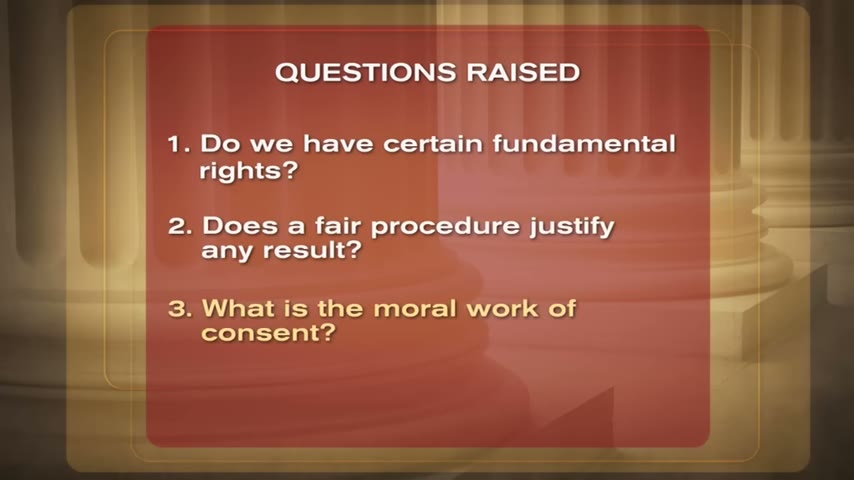
- The categorical objection (“murder is murder”). Question: why is it categorically wrong? If cabin boys have fundamental rights, where do those rights come from, if not from the larger welfare (51:19)?
- The fair-procedure objection (Matt). Not quite categorical: everyone counts equally, but one may still be sacrificed. Question: why does agreeing to a fair procedure justify whatever result it produces?
- The consent objection (Kathleen). Question: what moral work does consent do, if it can turn a wrongful killing into a permissible one (52:54)?
To answer them, the class starts reading Bentham and Mill next time, which is where Episode 2 begins.
Our note: in the real case the court rejected the necessity defense and sentenced Dudley and Stephens to death; the sentence was commuted to six months in prison. Sandel doesn’t give the verdict in this lecture, so the class debate is about moral permissibility, not the law. Also notice that question 3 runs through the whole course: it returns with Locke in Episode 4 and with paid soldiers and surrogacy in Episode 5.
Skip list
- 0:00 – 0:37 Funding credits.
- 12:10 – 12:44 The balcony show of hands and the four-organs aside; the point is summarized above.
- 15:54 – 17:31 The syllabus overview, if you only want the arguments.
- 23:55 – 24:25 A preview clip of Marcus from later in Part Two, before the second lecture restarts.
- 53:25 – end Website promo and credits.
Glossary
- Trolley problem — a family of thought experiments that hold the numbers fixed (one dies, five live) while changing how the death comes about.
- Consequentialist moral reasoning — locating the morality of an act in its results, the state of the world it brings about.
- Categorical moral reasoning — locating morality in absolute duties and rights that hold regardless of consequences.
- Utilitarianism — Bentham’s theory that the right act or law maximizes utility, the balance of pleasure over pain.
- Necessity defense — the plea, made by Dudley and Stephens, that dire circumstances justified or excused an otherwise criminal act.
- Consent — agreement by the person affected; Part Two asks whether it can make a killing permissible and when it is really free rather than coerced.
- Skepticism — here, the view that because moral questions are never settled, there is no way to reason about them; Sandel calls it an evasion.
FAQ
How does Sandel present the trolley problem in the first Justice lecture?
A trolley with failed brakes is heading for five workers. As the driver you can steer onto a side track where it will kill one worker instead. Almost the whole class would turn. Sandel then changes one detail at a time, a bystander on a bridge, a doctor, a transplant surgeon, to see whether the principle behind that answer survives.
Why will most students turn the trolley but not push the man off the bridge?
The numbers are the same, one dies so five live, but pushing feels like killing someone with your own hands, and it drags in a bystander who was never part of the situation. Andrew, the student who defends the difference, admits he can't fully state it. Sandel's point is that the reluctance shows a second kind of moral reasoning at work.
What is the difference between consequentialist and categorical moral reasoning?
Consequentialist reasoning judges an act by the state of the world it produces, so saving five at the cost of one is right. Categorical reasoning says some acts, like killing an innocent person, are wrong in themselves whatever the results. Sandel names Bentham's utilitarianism as the main example of the first and Kant as the main philosopher of the second.
What happened in the Dudley and Stephens lifeboat case?
After the yacht Mignonette sank, four crew drifted in a lifeboat. After 19 days with almost no food or water, the captain, Dudley, killed the sick 17-year-old cabin boy, Richard Parker, and the three survivors ate him until they were rescued. Dudley and Stephens were tried for murder and pleaded necessity.
What questions does episode 1 leave open for the rest of the course?
Three: if murder is categorically wrong, where do rights come from if not from overall welfare? Why should agreeing to a fair procedure, such as a lottery, justify whatever result it produces? And what moral work does consent do, if it can make killing permissible?
Studying another course? Paste its YouTube or Bilibili link on the home page to request a handout — or make your own with the desktop app (coming soon).