Justice (Sandel) Ep 2, Price Tag on Life — notes and timestamps
Watch the video (55 min)
Watch the original video on YouTube
Episode 2 of Michael Sandel’s Harvard course holds two lectures. Part One sets out Jeremy Bentham’s principle of utility, then tests it on real cost-benefit studies that put a dollar figure on human life. Part Two collects the class’s objections and brings in John Stuart Mill, who tries to answer them without leaving utilitarianism. It is for anyone starting moral or political philosophy, and you need no background beyond the trolley and lifeboat cases from Episode 01, “The Moral Side of Murder”. For the full course map, see the course index.
Key takeaways
- Utilitarianism in one line: maximize the balance of pleasure over pain, summed over everyone (1:27). Bentham treats a community as just the sum of its members, so lawmakers should add up benefits and subtract costs.
- Cost-benefit analysis is utilitarianism at work, and it has to price life (3:36). The Philip Morris study and the Ford Pinto memo show what happens when it does.
- Two objections come out of the class debate (19:28): utility can override individual rights, and not all values can be converted into one currency.
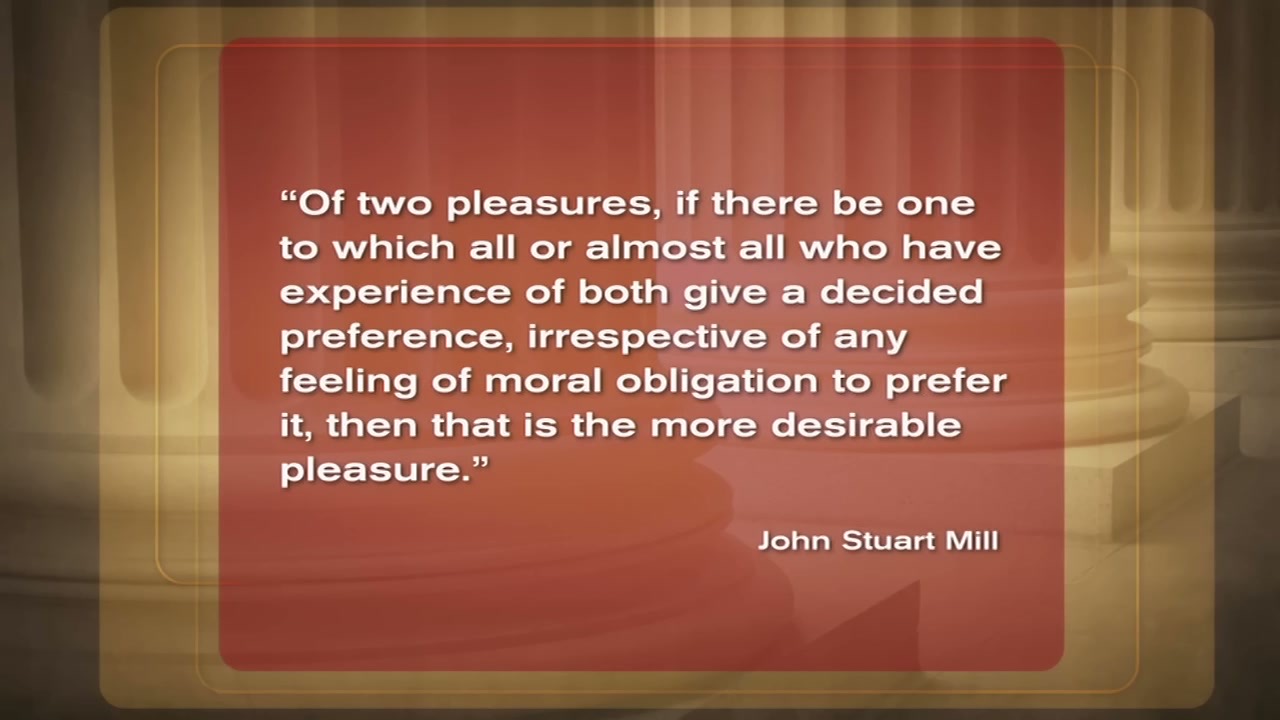
- Bentham refuses to rank pleasures; Mill says we can (31:26). Mill’s test is what people who have experienced both would prefer.
- The Shakespeare vs. Simpsons experiment puts pressure on Mill’s test (40:55). Many students prefer the Simpsons but still rank Shakespeare higher, which is hard to explain using preferences alone.
- Mill defends rights on utilitarian grounds, as long-run social utility (49:39). Sandel asks whether he quietly steps outside utilitarianism to do it.
Chapter notes
0:32 – 3:36 Bentham’s principle of utility
Sandel picks up from the lifeboat case (Dudley and Stephens) and states Bentham’s argument as a chain. Pain and pleasure govern all of us. So any moral system has to take them into account. The best way to do that is to maximize: the greatest good for the greatest number. Bentham applies the same rule to individuals and to legislators, because a community is only “the sum of the individuals who comprise it” (2:19).
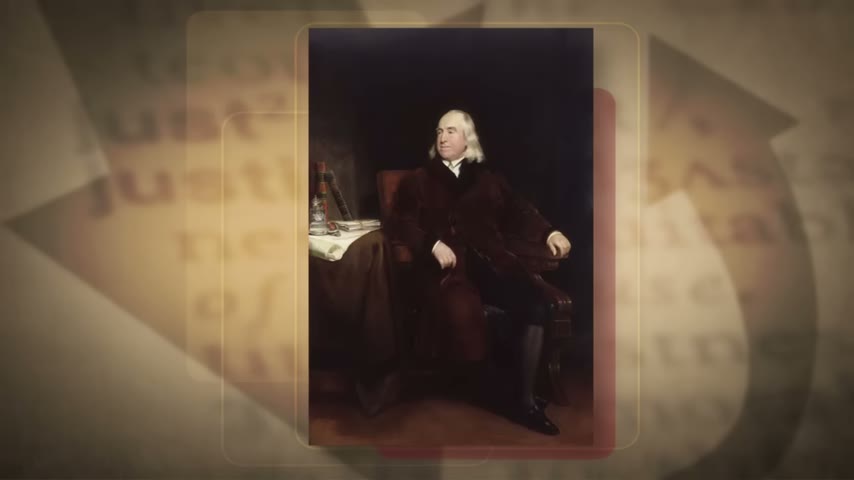
The individualist step matters later. If society is just a sum, nothing stops one person’s loss from being cancelled by others’ gains. Every objection in this episode presses on that point.
3:36 – 9:09 Two cost-benefit studies: smoking and the Ford Pinto
Cost-benefit analysis is how governments and companies apply Bentham today. Everything is turned into money so it can be added up. Sandel gives two examples.
The first is a study commissioned by Philip Morris on smoking in the Czech Republic. It counted the health-care costs of smoking against tax revenue and the savings when smokers die early: less pension, health care and elderly housing. The result was a net gain to public finances.
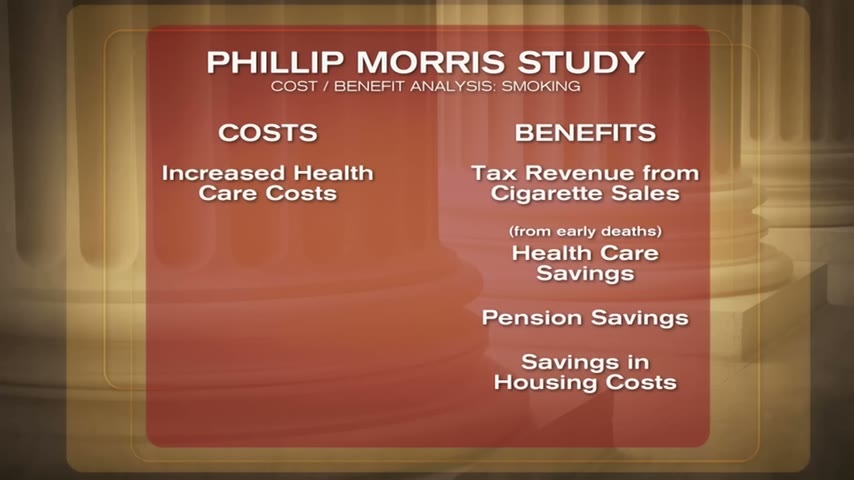
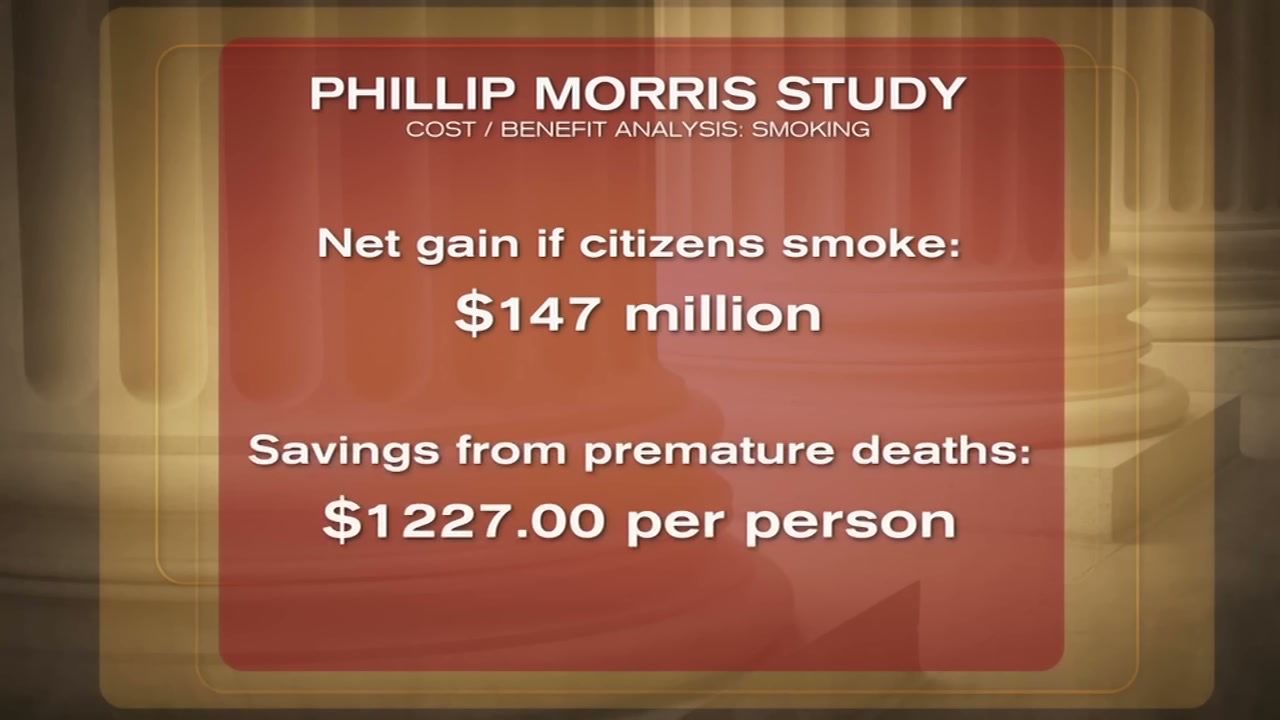
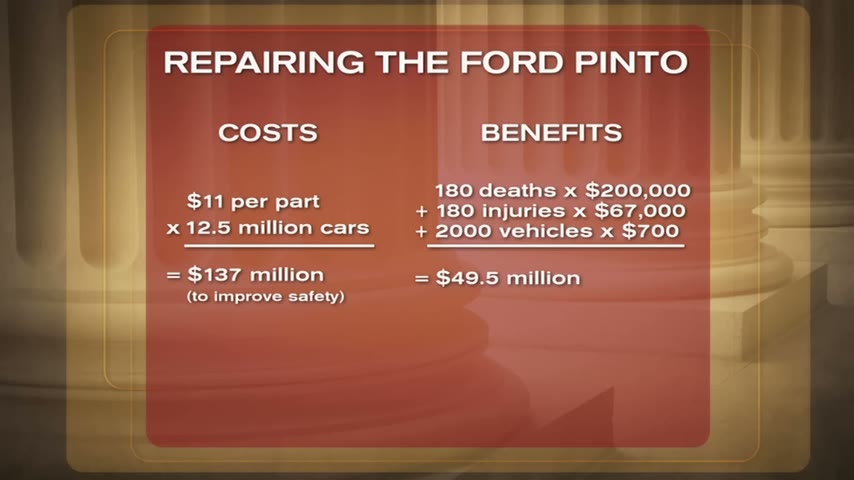
A defender of utilitarianism can say this was a bad calculation, because it left out the value of the lives lost. So Sandel turns to a case that did price life: the Ford Pinto. Ford knew a rear collision could make the fuel tank explode. The fix cost $11 a car, $137 million in total. Ford set that against 180 deaths at $200,000 each, 180 injuries and 2,000 burned vehicles, a total of $49.5 million in benefits, and skipped the fix (8:13). The jury was appalled.
9:09 – 15:00 Can you put a number on a life?
The class splits three ways, and the split is the lesson (9:09):
- Julie: the figure is not too low; it is a mistake to set any figure at all. A human life cannot be expressed in money.

- Voitek: we have to use some number, because decisions get made anyway. Adjust for inflation, say $2 million.
- Raul: without cost-benefit analysis firms fail and everyone is worse off. He backs the Harvard Center for Risk Analysis finding that the benefits of phoning while driving roughly offset the deaths it causes. Asked for his own price of a life, he guesses about $1 million.

Our note: Julie’s position is the deeper challenge. Voitek and Raul argue about the price; Julie argues about whether there should be a price at all. That difference is the commensurability question that returns in Part Two.
15:00 – 19:28 The minority objection and the Colosseum
A show of hands finds more supporters than critics of utilitarianism. Anna raises the first objection: being in the minority should not make your needs count for less. Youngda replies that minority preferences are counted, with the same weight per person; there are just fewer of them.

Anna points back to the lifeboat: the cabin boy had as much right to live as the others. Sandel then gives the sharpest test. If enough Romans enjoy watching Christians thrown to lions, their combined pleasure eventually outweighs the victims’ pain (18:33). Youngda doubts any modern policymaker would add it up that way. Sandel’s point is that the theory allows it, whatever policymakers would actually do.
19:28 – 24:16 Thorndike’s price list for unpleasant experiences
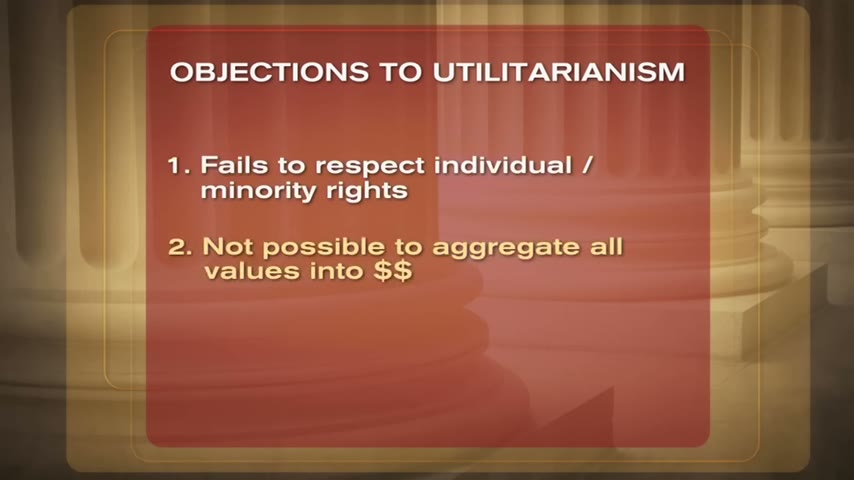
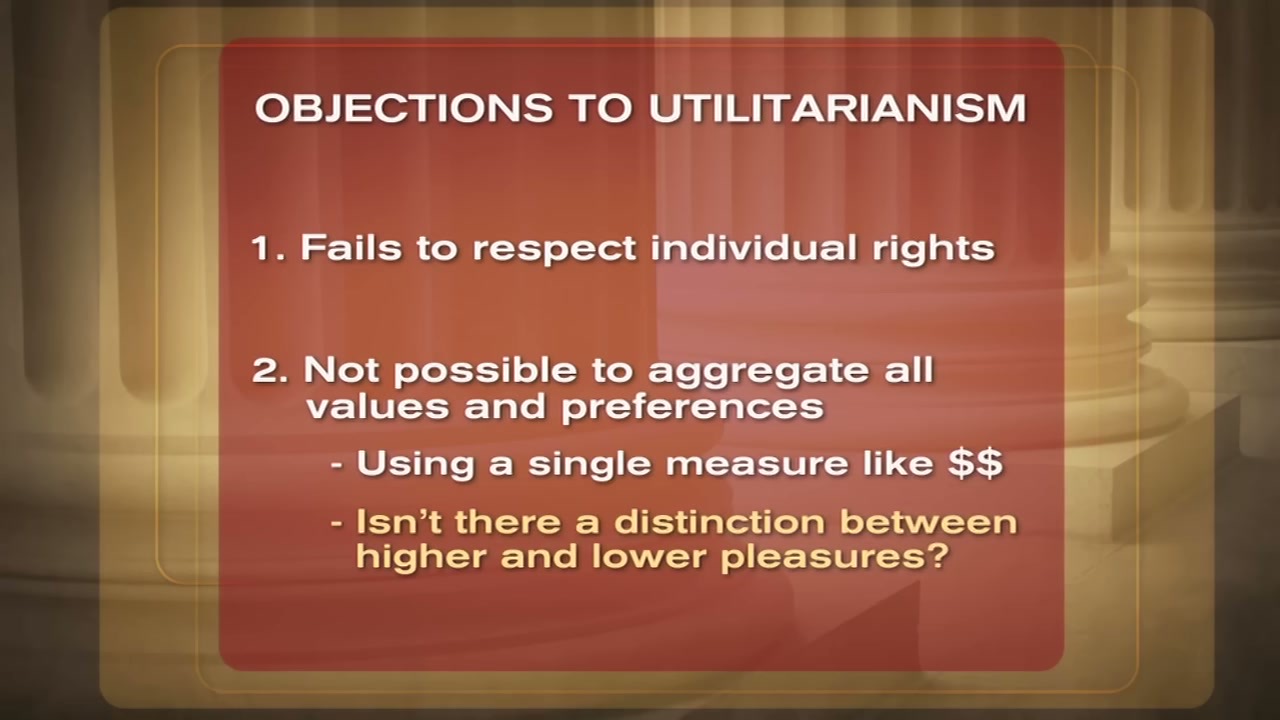
Sandel names the two objections that will structure the rest of the episode: (1) utilitarianism fails to respect individual rights; (2) it may be impossible to aggregate all values in one measure.
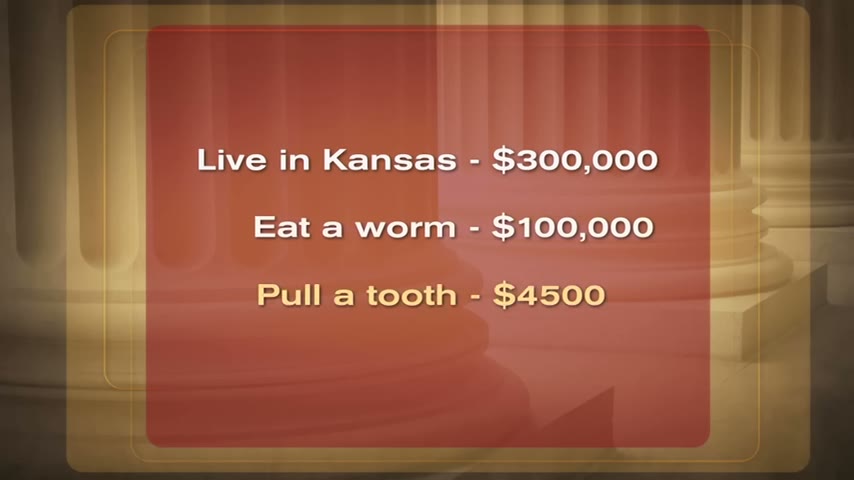
To test the second, he describes a 1930s survey by the psychologist Edward Thorndike. Young people on relief were asked how much they would need to be paid to have a tooth pulled, eat a live earthworm, or live the rest of their life on a farm in Kansas. Kansas came out most expensive, at $300,000, and the tooth cheapest, at $4,500 (21:44). Thorndike concluded that anything wanted exists in some amount and can be measured. Sandel leaves the class with the opposite reading: the absurd list may show that the things we value do not share a single scale.
24:44 – 30:09 Part Two: rights, torture and “fifty pence a night”
The second lecture restates both objections. For rights, Sandel offers the ticking-bomb case: a suspect captured on September 10 who knows about an attack that will kill thousands. Is torture justified, or is there a categorical duty to respect the individual? He leaves it open and links it back to the trolley and organ-transplant cases.
For commensurability, he tells a story from his graduate years at Oxford. Older faculty at St. Anne’s College opposed overnight male guests on moral grounds but argued in utilitarian terms: more hot water, worn mattresses. The compromise was three overnight guests a week at fifty pence each, and the next day’s headline read “St. Anne’s girls, fifty pence a night” (29:15). Translating a view about virtue into costs turned it into a price, and the result was absurd.

30:09 – 33:38 Should all pleasures count the same?
The second objection has a further part. Even if values could share one scale, should every preference count equally, whatever it is for?
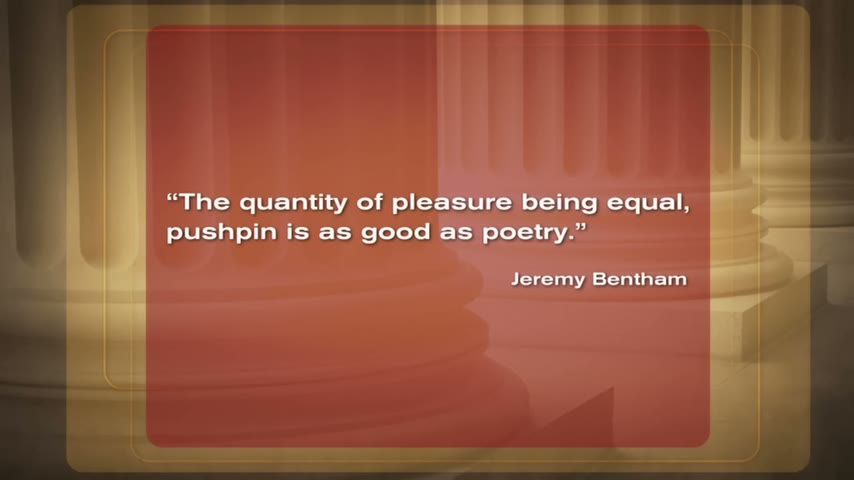
Bentham counts only intensity and duration: “the quantity of pleasure being equal, pushpin is as good as poetry” (31:26). Sandel grants that refusing to judge is attractive. Who is to say Mozart beats Madonna or ballet beats bowling? But the Romans in the Colosseum suggest that some pleasures are degrading and maybe should not be counted at all.
33:38 – 38:11 Mill’s test for higher pleasures
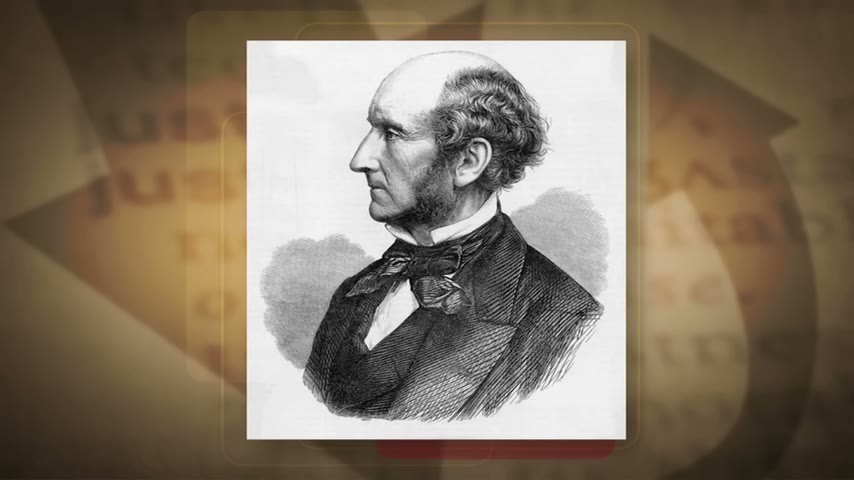
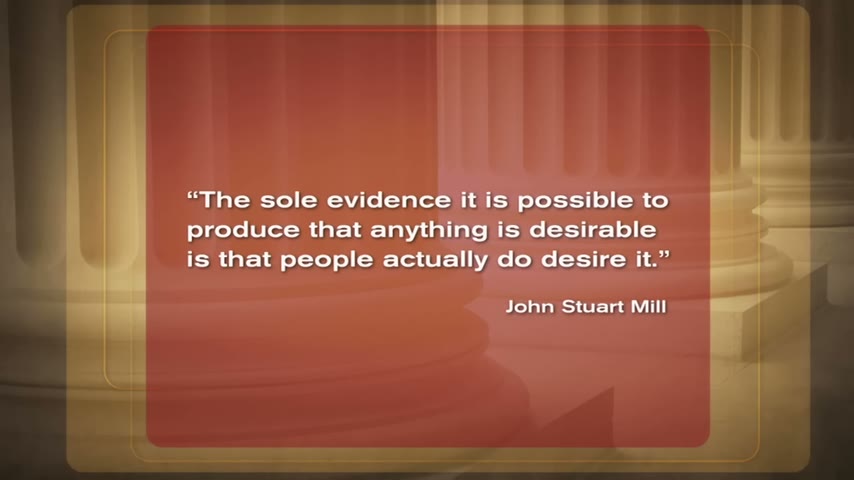
John Stuart Mill was raised by a father who followed Bentham, and he wanted to make utilitarianism more humane. He keeps Bentham’s premise. In Mill’s words, the only evidence that something is desirable is “that people actually do desire it” (35:52). He cannot appeal to an outside standard of worth, so his test stays inside actual preferences.
38:11 – 47:51 The experiment: Hamlet, Fear Factor, The Simpsons
Sandel plays three clips: a Hamlet soliloquy, a Fear Factor trailer and a scene from The Simpsons. Most students enjoyed The Simpsons most, but most also rank Shakespeare as the higher experience (41:22). That gap is a problem for Mill, whose test is supposed to read “higher” off what experienced people prefer.



The students’ replies cover the main options:
- Nate takes Bentham’s side: if something is good because it is pleasurable, why rank it by someone else’s standard?
- Aneesha suspects the Shakespeare vote reflects what teachers and culture say is great, not real preference.
- Joe saves Mill by changing the time frame. He enjoyed The Simpsons more today but would pick Shakespeare for a lifetime. He adds the lab rat that stimulated its pleasure centre until it died: intense, but not what anyone would choose for a whole life.

- A final student argues that if good means whatever people prefer, some society will prefer The Simpsons, and appreciating Shakespeare takes education. Sandel answers that Mill agrees: higher pleasures require cultivation, but once cultivated people prefer them.
Our reading: Joe’s answer is the strongest, but it changes the question from “which do you enjoy?” to “which would you choose for your life?” The second question is already partly about what is worth having, which is the outside standard Mill said he would not use.
47:51 – 49:11 Better Socrates dissatisfied
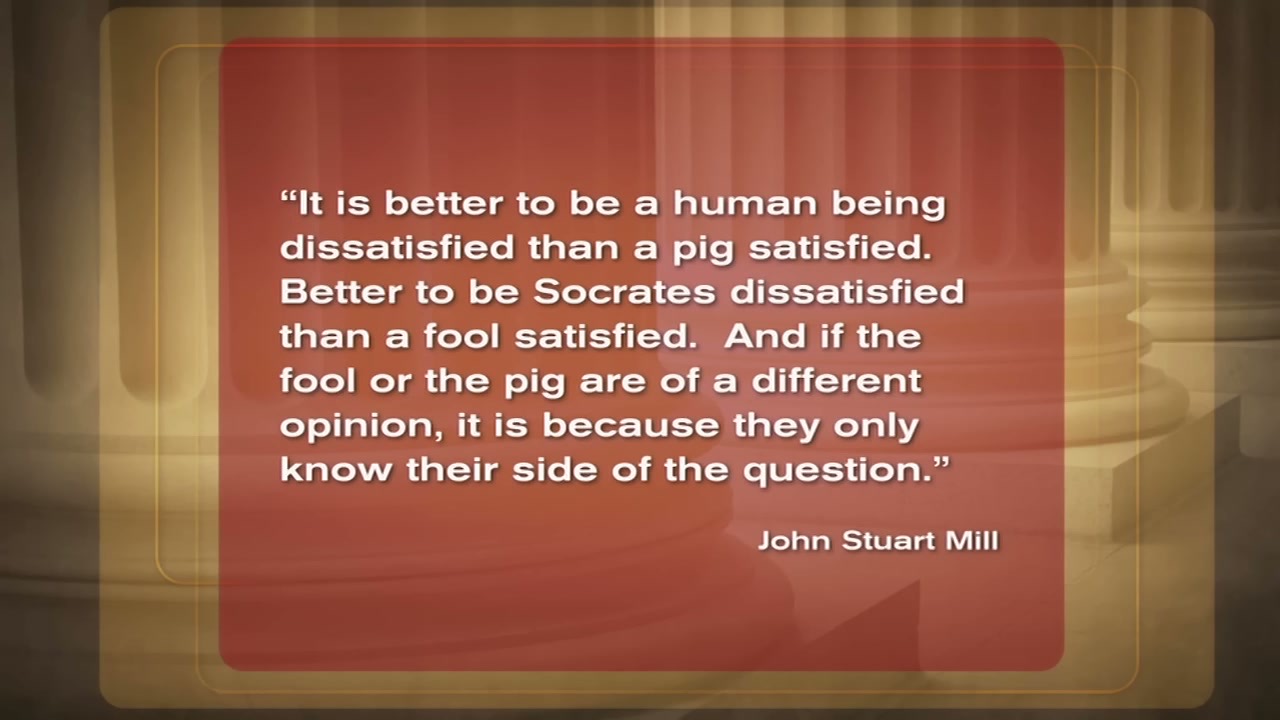
Mill admits we often choose the couch and the beer over the museum, out of laziness. He says we still know the Rembrandt is the higher pleasure because it engages our higher faculties.
49:11 – 51:47 Mill on justice and rights
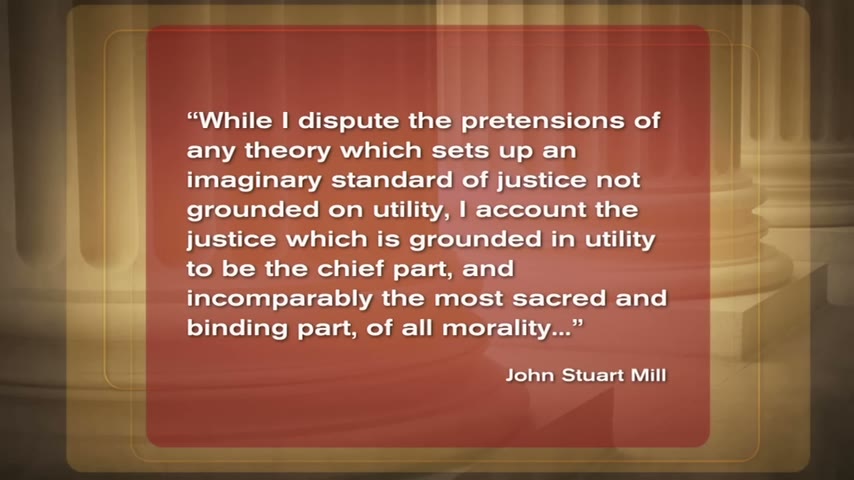
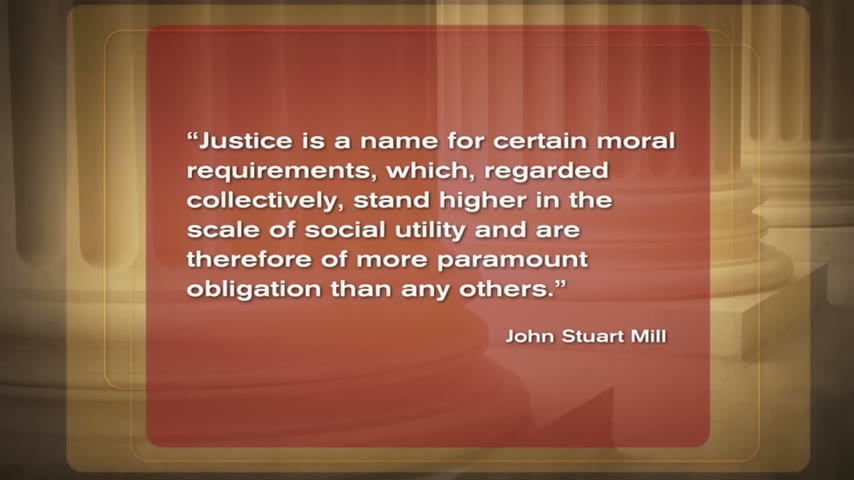
Mill’s answer to the rights objection follows the same pattern. In chapter 5 of Utilitarianism he calls justice the chief and most binding part of morality, but grounds it in utility. Justice names the requirements that “stand higher in the scale of social utility” (50:05). Respecting rights pays off in the long run for humanity as a whole.
Sandel’s closing question: is Mill really still a utilitarian here, or is he relying on ideas of dignity he has not admitted? Answering it means looking at non-utilitarian theories of rights, which is where Episode 3 begins.
51:47 – 54:00 Coda: Bentham’s auto-icon
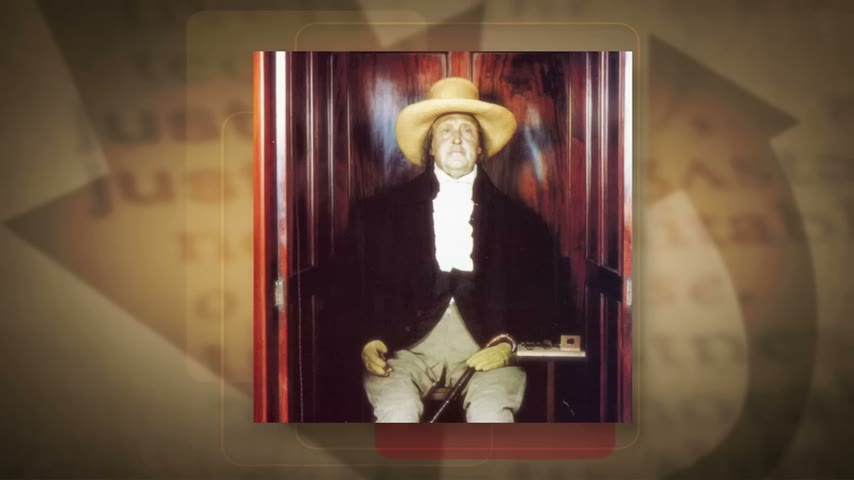
Bentham left his body to be preserved and displayed at University College London, on the grounds that a dead philosopher is most useful as an inspiration (51:47). Sandel shows the result, wax head included, and says the minutes record him as “present but not voting”.

Skip list
- 0:00 – 0:32 Funding credits.
- 24:00 – 24:44 A preview clip of the Part Two poll, then the restart; nothing new.
- 38:39 – 40:55 The three entertainment clips themselves. Watch only if you want to vote along.
- 51:47 – 53:40 The Bentham auto-icon story. Fun, but it carries no argument.
- 54:00 – end Website promo and closing credits.
Glossary
- Utilitarianism — the view that the right act or law is the one that produces the greatest total balance of pleasure over pain.
- Utility — Bentham’s name for whatever produces pleasure or prevents pain; the quantity to be maximized.
- Cost-benefit analysis — putting money values on all the gains and losses of a policy and choosing the option with the best net total.
- Commensurability — the assumption that all values can be measured on a single common scale and traded against each other.
- Higher vs. lower pleasures — Mill’s distinction between pleasures of the intellect and imagination and mere bodily or idle ones.
- Competent judges test — Mill’s rule that the higher pleasure is the one preferred by those who have experienced both.
FAQ
What are the two objections to utilitarianism in Sandel's episode 2?
First, maximizing total happiness can trample individual or minority rights, as in the Romans feeding Christians to lions. Second, it assumes every value can be converted into one common measure, usually dollars, so that it can be added up.
Why does the Ford Pinto case come up in a philosophy lecture?
Ford compared the cost of a fuel-tank fix with a dollar value for the deaths and injuries it would prevent, and decided not to install it. Sandel uses it to ask whether cost-benefit analysis is just bad arithmetic or the wrong way to think about human life altogether.
How does John Stuart Mill distinguish higher from lower pleasures?
Mill's test is preference among the experienced: of two pleasures, the higher one is the one that nearly everyone who has tried both would choose. He stays inside utilitarianism, since the test still rests on what people actually desire.
Does Mill think justice can override utility?
Not exactly. Mill calls justice the most sacred and binding part of morality, but he grounds it in utility: respecting rights makes society better off in the long run. Sandel asks whether that reason is really strong enough to explain why rights matter.
Studying another course? Paste its YouTube or Bilibili link on the home page to request a handout — or make your own with the desktop app (coming soon).