Justice (Sandel) Ep 5, Hired Guns — notes and timestamps
Watch the video (55 min)
Watch the original video on YouTube
Episode 5 of Michael Sandel’s Harvard course asks what consent can justify when things are bought and sold. Part One tests it on military service: a Civil War draft you could buy your way out of, compared with today’s paid volunteer army. Part Two turns to markets in reproduction: egg and sperm donation and the Baby M surrogacy case. It follows from the end of Episode 4, where Locke’s consent turned out to justify both taxation and conscription. For the full course map, see the course index.
Key takeaways
- For Locke, the consent that matters is joining society, not agreeing to each law (1:22). A sergeant may order a soldier to his death but may not take a penny of his pay.
- Most students back a paid army but reject the Civil War buyout (8:59). Emily’s challenge is to explain the difference in principle.
- The market argument, followed to the end, leads to mercenaries; the patriotism argument leads to conscription (22:07).
- There are two separate objections to markets (23:52): choices made under unfair background conditions aren’t truly free, and some goods are corrupted by being bought and sold.
- The Baby M court used both (46:39): the mother could not give informed consent before birth, and there are things money can’t buy.
- Elizabeth Anderson names the second objection: some goods are properly valued through love, respect or honor, not use (51:00).
Chapter notes
0:30 – 4:30 Locke’s consent: powerful but non-arbitrary
Sandel closes the Locke discussion. Taxation needs consent, but not each individual’s at the time of the tax: the consent is the original agreement to join society and be bound by the majority. The same holds for life. Locke says a sergeant can order a soldier toward a cannon where he will almost certainly die, and a general can execute a deserter, but neither can take a penny of the soldier’s money (2:43), because that has nothing to do with legitimate military authority. Consent, then, makes government powerful; the only limit is that it rule by general laws, not arbitrarily. That raises the question of why consent carries so much moral weight.
4:30 – 9:27 Three ways to fill an army, and the Civil War system
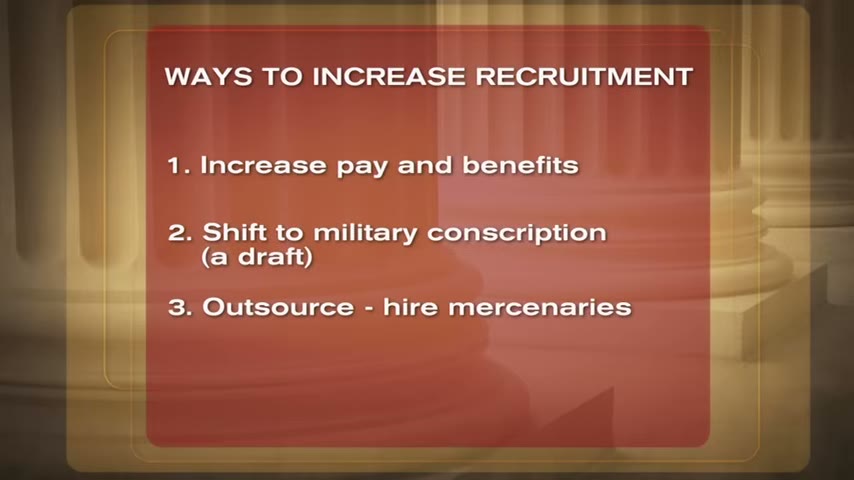
The US is missing its recruitment targets for the Iraq war. Sandel offers three fixes: raise pay and benefits, draft by lottery, or hire foreign mercenaries. A huge majority picks higher pay; about a dozen pick conscription; two or three dozen pick outsourcing.

He then describes the Union’s Civil War system: conscription with a buyout. Drafted men could hire a substitute, and newspapers carried ads offering several hundred dollars or more. Andrew Carnegie reportedly hired one for less than he spent on cigars in a year (8:32). Most of the class calls the system unjust.
9:27 – 16:54 Coercion: is a paid choice really free?
- Liz: paying a substitute puts a price on human life, which the class found troubling in Episode 2.
- Jason: the substitute sets his own price on his own risk; if he accepts, it’s his free choice.
- Sam and Raul: for Carnegie the fee is trivial, but a poor laborer is effectively coerced by his circumstances. Raul calls it coercion of the worst kind, because it falls disproportionately on one part of society.
- Emily turns the argument around (12:59). Pay and benefits in the volunteer army work the same way: recruits come disproportionately from poorer backgrounds and certain regions. If the Civil War buyout is coercive, so is the volunteer army.
Sandel takes a show of hands on who has served or has a sibling who has served, as a rough check on Emily’s point. The challenge stands: doesn’t the volunteer army simply make the buyout universal?
16:54 – 22:59 Patriotism vs. the market
Defenders try to separate the two systems. One says the government hires everyone at the same pay, while in the Civil War individuals hired each other at different prices. Emily answers that a volunteer army lets most citizens ignore a war entirely; a draft makes everyone share responsibility, and she leans toward conscription.
Jackie argues that volunteers serve out of patriotism first and pay second, and that motivated soldiers fight better. Phillip, who favored outsourcing, says mercenaries can do the job just as well. Jackie replies that someone who loves the country will take risks a hired soldier won’t.

Sandel shows both positions lead further than their holders want (22:33). If expanding market choice is the reason to prefer a paid army, the same logic leads to a mercenary army. If patriotism should count for more than money, that points back to conscription, a civic duty. Our note: the “volunteer” army sits in an unstable middle, defended with market reasons and praised in patriotic terms.
22:59 – 26:33 Two objections, two questions
Sandel separates what the class has found (22:59):
- The coercion / fairness objection (Sam and Raul): under severe inequality, choices to sell your labor may not be free. Question: which background inequalities undermine consent?
- The civic obligation objection (Jackie): military service is not just another paid job. Question: what do citizens owe, and does that obligation come only from consent?
These two lines of argument recur in every later market case in the course.
27:30 – 33:01 Part Two: markets in eggs and sperm
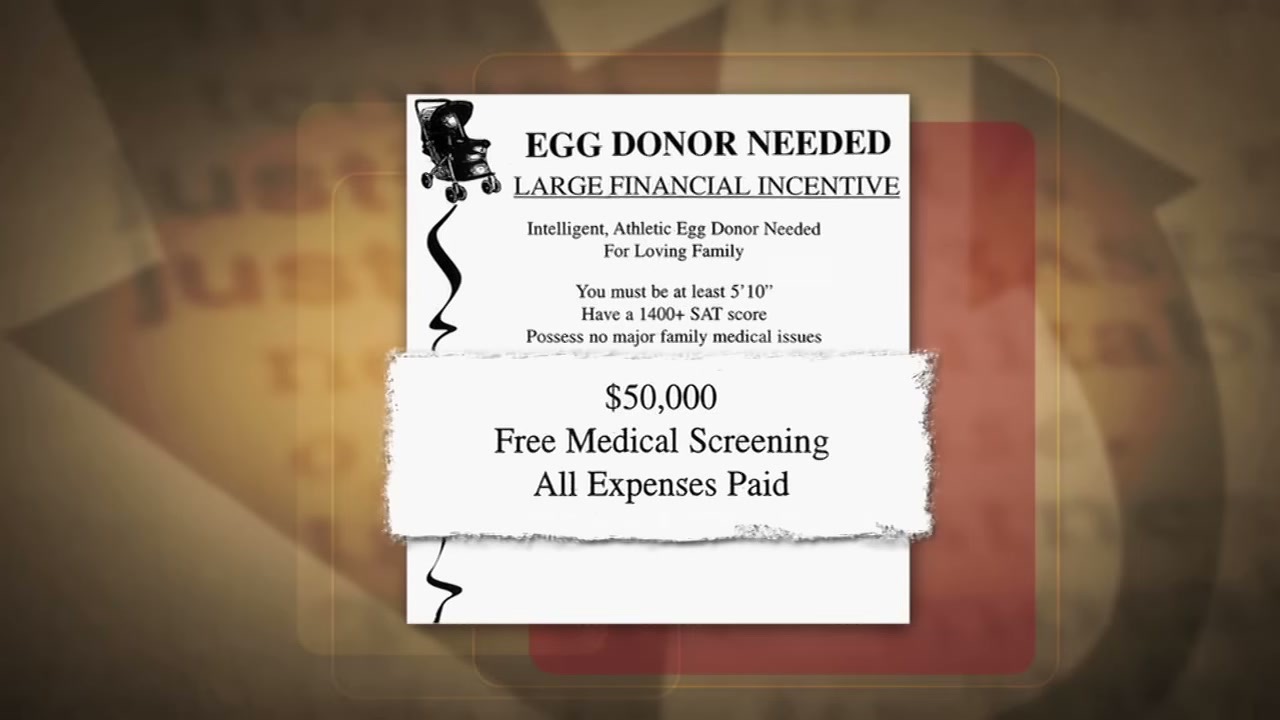
An ad in the Harvard Crimson asked for an egg donor who was intelligent, athletic, at least 5’10” with a 1400+ SAT.
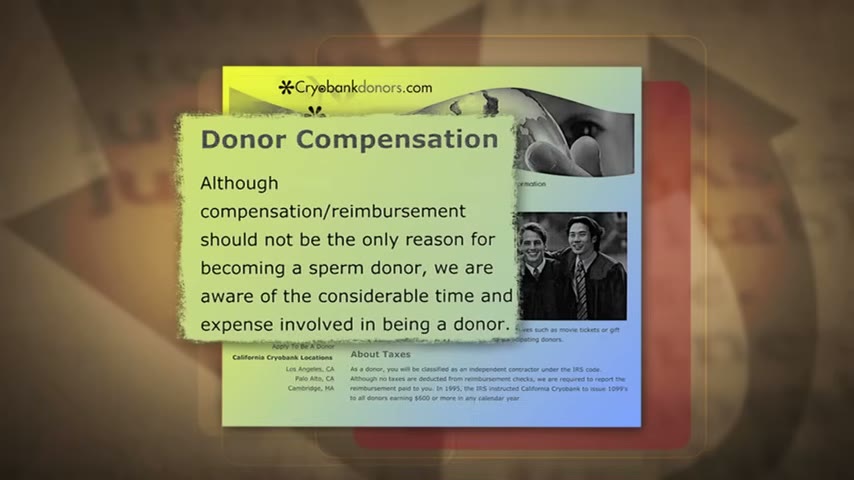
The male side is cheaper. California Cryobank, a for-profit sperm bank with offices near Harvard/MIT and Stanford, paid $75 per specimen, up to $900 a month, and accepted fewer than 5% of applicants. Its head said they recruit the traits customers want, and if customers wanted high-school dropouts they would supply them (32:06).
33:01 – 35:16 The Baby M case
William and Elizabeth Stern wanted a child but pregnancy would be a medical risk for Mrs. Stern (33:01). Through an infertility clinic they contracted with Mary Beth Whitehead: a $10,000 fee plus expenses, artificial insemination with William Stern’s sperm, and handover of the baby at birth. After the birth Whitehead changed her mind and wanted to keep the child. Sandel sets aside the law and asks the moral question. A majority would enforce the contract.

35:16 – 44:56 Debate: a deal is a deal?
- Patrick: a binding contract between informed adults who knew the terms; a promise should be kept.
- Evan Wilson: the mother could not know before the child existed how she would feel, so she lacked the relevant information.
- Anna: the child has a right to its biological mother; the natural bond is stronger than a contract.
- Kathleen: her change of feelings is irrelevant, as with a parent who regrets giving a child up for adoption. It was a voluntary trade-off.
- Andrew: some areas markets shouldn’t enter. Surrogacy “smacks a little bit of dealing in human beings”, close to baby selling (40:05). He would allow surrogacy but not court enforcement.

Andrew’s challenge to the defenders: should you be able to bid for a baby put up for adoption? The defender isn’t sure. Vivian adds a personal example: her brother donated sperm and feels curiosity, not love, toward the resulting daughter, so a mother’s nine months and a donor’s visit are “unequal services”.
44:56 – 47:57 What the courts said
Sandel sorts the objections into the same two families as Part One. Consent can be tainted by coercion or by lack of information. And there is the separate dehumanization objection.
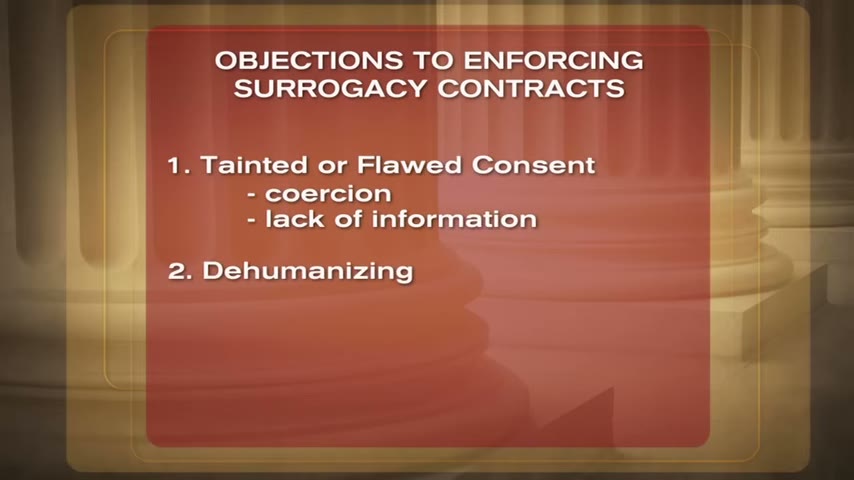
The lower court enforced the contract: equal bargaining power, a price agreed, no force. The New Jersey Supreme Court voided it, gave custody to William Stern in the child’s interest, restored Whitehead’s rights and left visitation to lower courts. It gave both reasons.
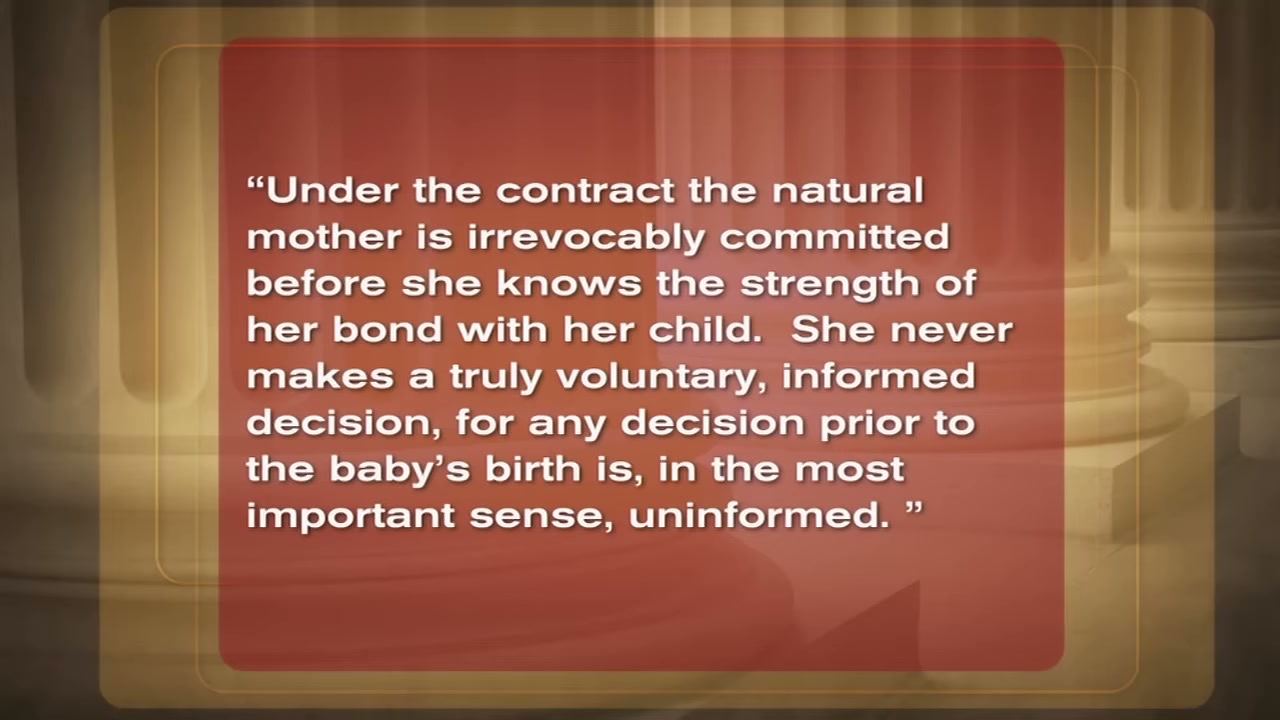
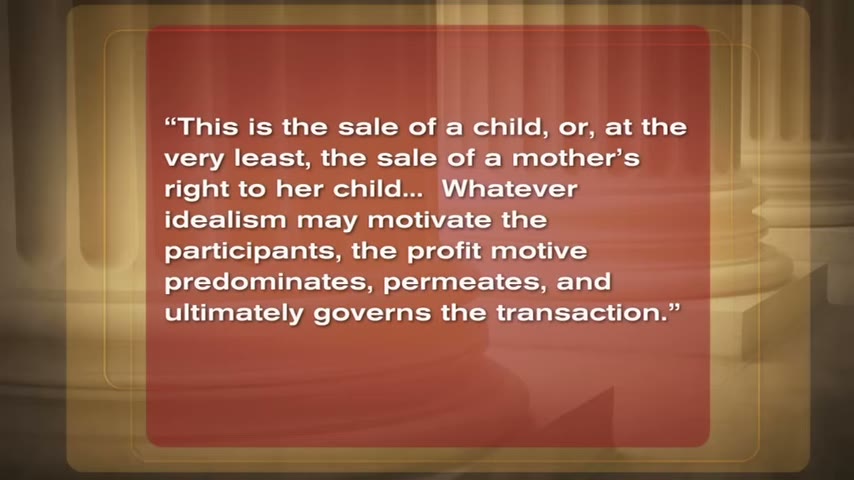
The second reason went further: whatever the participants’ motives, profit governed the deal, which amounted to the sale of a child or of a mother’s right to her child, and there are some things “money can’t buy” (47:57).
47:57 – 53:40 Anderson: the right way to value a good
The second objection is harder to state. Sandel turns to the philosopher Elizabeth Anderson.
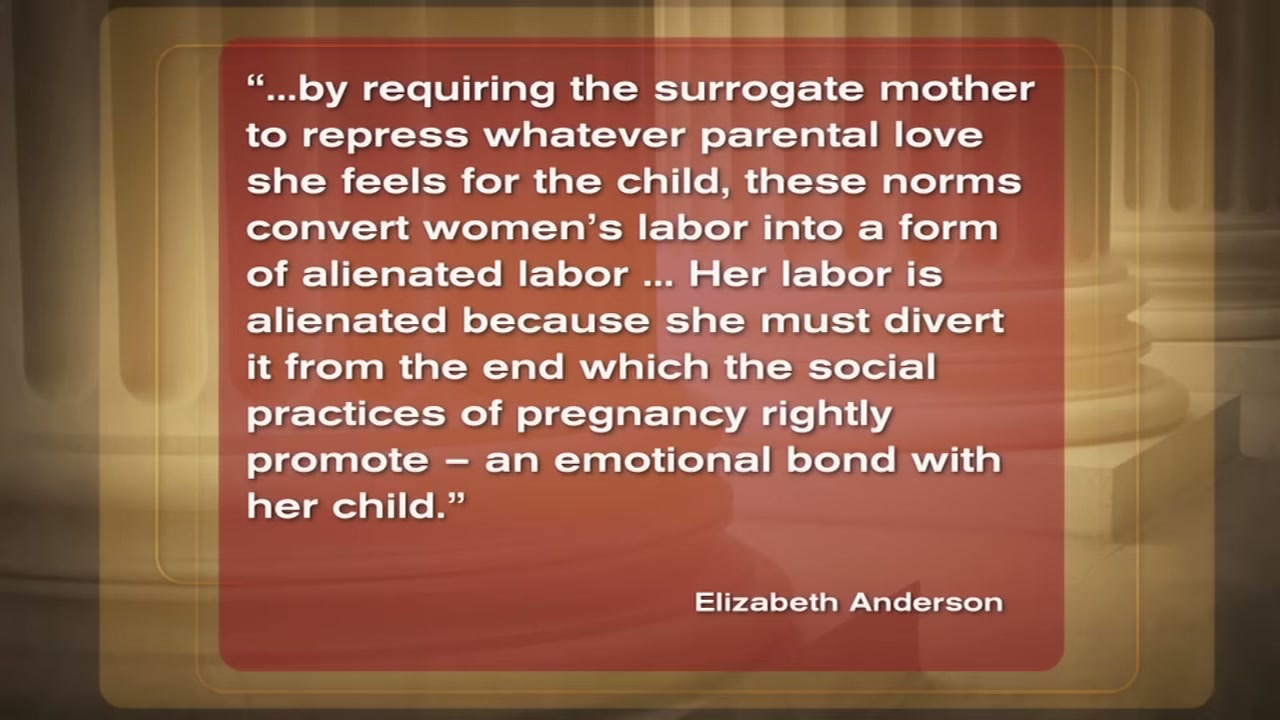
Her general claim: use is only one way of valuing things. Respect, appreciation, love, honor, awe and sanctity are others, and some goods are degraded when treated only as objects of use. Sandel links this back to the utilitarianism debate: is use the only proper way to treat life, military service and childbearing?
He closes with a Virginia fertility doctor, Cecil Jacobson, who secretly used his own sperm for his patients. You can condemn him for lack of consent, but the columnist Ellen Goodman found a deeper point: fatherhood should be something you do, not something you donate (53:15).
Our note: keep the two objections separate. The consent objection can be fixed with better information and less inequality. The corruption objection cannot: it says some goods should not be sold even under ideal conditions.
Skip list
- 0:00 – 0:30 Funding credits.
- 15:06 – 15:36 The show of hands about family military service.
- 27:08 – 27:30 A preview of Andrew’s challenge, which plays in full at 41:48.
- 42:39 – 44:28 Vivian’s anecdote about her brother; the point is summarized above.
- 53:40 – end Website promo and credits.
Glossary
- Hybrid (buyout) system — the Civil War arrangement: conscription, but a drafted man could pay a substitute to serve.
- All-volunteer army — a military filled by paid recruitment instead of a draft; Sandel calls it a paid army.
- Tainted consent — agreement that is not fully free, because of coercion from background inequality or a lack of relevant information.
- Civic obligation — a duty owed as a citizen, possibly arising without any act of consent.
- Commercial surrogacy — a contract to bear a child for pay and hand it over at birth.
- Commodification — treating a good as something to buy and sell, and the argument that doing so can degrade it.
- Alienated labor — Anderson’s term for work cut off from the end it should serve, here a mother’s bond with her child.
FAQ
Why does Sandel compare the Civil War draft to today's volunteer army?
During the Civil War a drafted man could pay a substitute to serve for him, and most students call that unjust. A student, Emily, points out that a paid volunteer army does the same thing on a bigger scale: people with fewer options do the fighting for pay.
What are the two objections to letting markets allocate things like military service or childbearing?
The first is that consent may be tainted, either by coercion from background inequality or by a lack of relevant information. The second is that some goods are degraded when they are bought and sold, because they should be valued in ways other than use.
What happened in the Baby M case?
Mary Beth Whitehead agreed to bear a child for William and Elizabeth Stern for a $10,000 fee, then wanted to keep the baby. The lower court enforced the contract; the New Jersey Supreme Court voided it, gave custody to William Stern, and restored Whitehead's rights as a mother, citing uninformed consent and the sale of a child.
What is Elizabeth Anderson's argument against commercial surrogacy?
Anderson argues a surrogacy contract makes the mother suppress any love she feels for the child, turning her labor into alienated labor. More generally, she says some goods should be valued through respect, love or honor rather than treated as objects of use.
Studying another course? Paste its YouTube or Bilibili link on the home page to request a handout — or make your own with the desktop app (coming soon).