Crash Course US History #9, Where US Politics Came From — notes and timestamps
 0:08
 0:11
 0:45
 0:55
 1:00
 1:03
 1:05
 1:08
 1:20
 1:33
 1:35
 1:43
 1:53
 1:59
 2:11
 2:19
 2:24
 2:30
 2:35
 2:47
 2:54
 2:58
 3:05
 3:11
 3:20
 3:28
 4:04
 4:18
 4:23
 4:28
 4:30
 4:33
 4:41
 5:10
 5:25
 5:35
 5:40
 5:49
 5:55
 6:02
 6:06
 6:16
 6:23
 6:26
 6:28
 6:57
 7:06
 7:11
 7:25
 7:42
 7:46
 7:47
 7:51
 8:02
 8:13
 8:16
 8:21
 8:26
 8:34
 8:49
 8:51
 9:11
 9:25
 9:36
 9:59
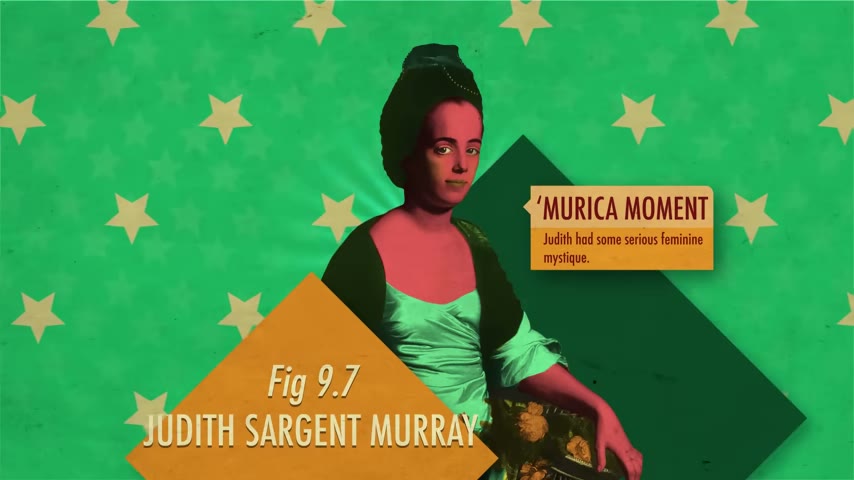 10:28
 10:35
 10:53
 10:58
 11:12
 11:35
 11:40
 11:56
 11:59
 12:11
 12:38
Watch the video (14 min)
Watch the original video on YouTube
The full transcript isn't available yet.
Episode 9 of John Green’s Crash Course US History picks up right after the Constitution is ratified and asks the next question: what kind of country should the United States be? Green’s answer is that two men gave two very different replies. Alexander Hamilton imagined a trading, manufacturing nation run by a strong government and an educated elite. Thomas Jefferson imagined a nation of small farmers with as little central government as possible. Their supporters became the first American political parties, even though the founders had hoped to avoid parties altogether. The episode follows that fight through Washington’s two terms and John Adams’s one, from Hamilton’s financial plan and the Whiskey Rebellion to the Jay Treaty, the XYZ Affair and the Alien and Sedition Acts. These notes follow the episode’s order, mark the jokes, and add short corrections where the quick version leaves something out. Episode 8 (the Constitution and the Federalist Papers) is useful background.
Key takeaways
- American politics was divided almost from the start. The founders disliked parties, but within a few years of the Constitution two organized sides had formed (0:00).
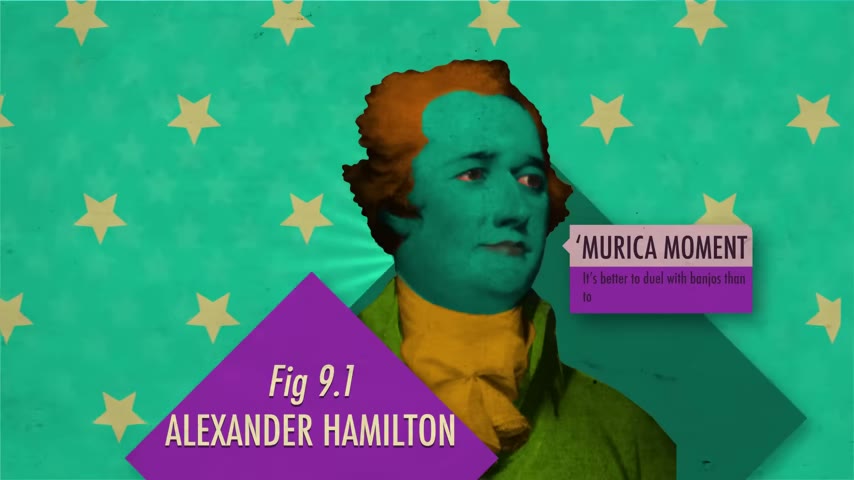
- Hamilton’s America was commercial and industrial, with a strong federal government, rule by the “rich and well-born”, and close ties to Britain (1:00).
- Jefferson’s America was a republic of small farmers with a small, local government, more trust in ordinary voters, and sympathy for France (2:07).
- “More democratic” is complicated. Jefferson’s Republicans championed free speech and the common man, but many owned slaves, and many cheered the French Revolution even during the Terror (3:31).
- Hamilton’s financial plan built the new government’s credit: paying the war debts, assuming state debts, a national bank, a whiskey tax and a tariff. Republicans said much of it was not in the Constitution (5:08).
- Foreign policy split the parties too. Federalists leaned toward Britain, Republicans toward France, and both Genêt’s privateers and the Jay Treaty became party fights (7:32).
- Under Adams, fear of France led to the Alien and Sedition Acts, and the Kentucky and Virginia Resolutions raised the idea that states could reject federal laws, an idea that returns before the Civil War (11:17).
Chapter notes
0:00 – 1:00 Politics, the real national pastime
Green opens by saying that now there is a Constitution, the course is finally “United States” history. The subject of the day is the national pastime, which is not baseball, football or eating but politics. His point is serious under the jokes: American politics has been a contest between opposing sides almost from the beginning, even though many founders thought organized parties were dangerous and hoped the new republic would do without them. Last episode’s argument, the Constitution against the Articles of Confederation, was the first big fight. As soon as it was settled, a deeper one began over what the country should become.
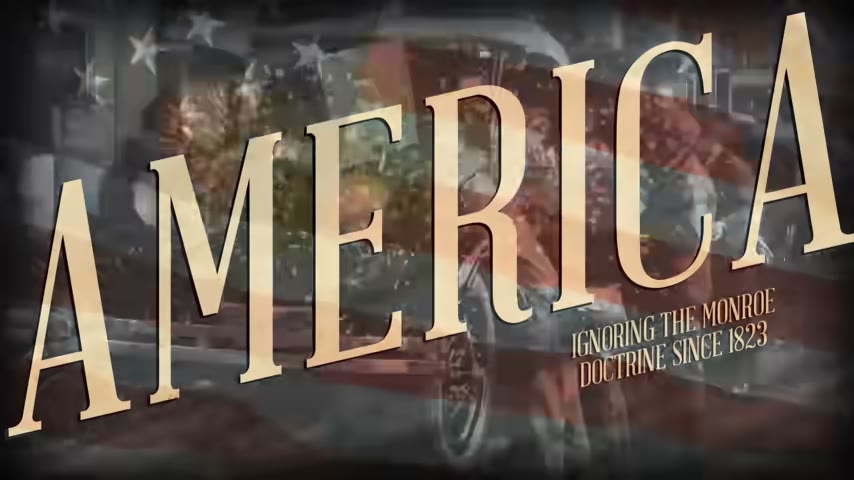
“Me from the past” then pipes up that the US is supposed to be the world’s policeman, and Green tells him that does not start until 1823. That is a joke with a misleading label. The Monroe Doctrine of 1823 told European powers not to start new colonies or interfere in the Western Hemisphere; it said nothing about policing the rest of the world, and the United States had little power to enforce it at the time.
1:00 – 2:07 Hamilton’s America
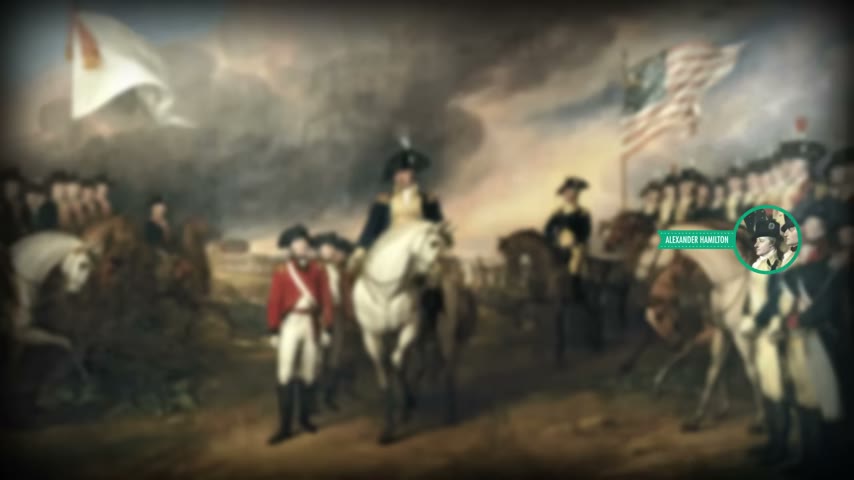
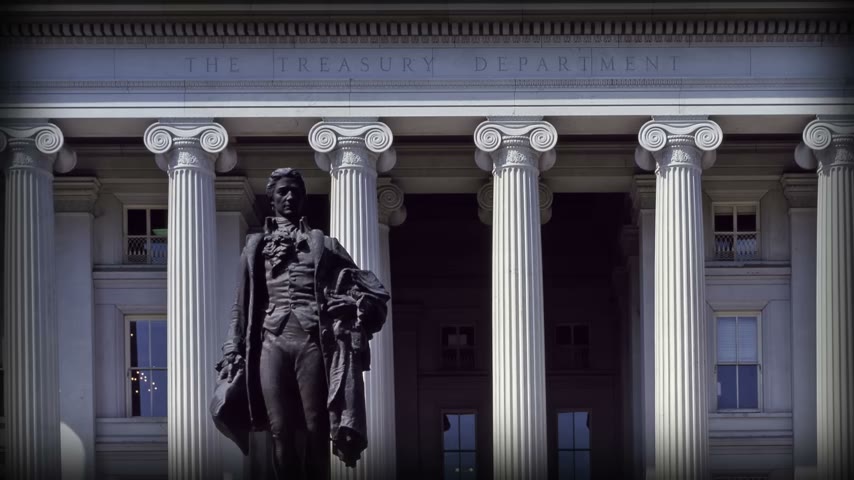
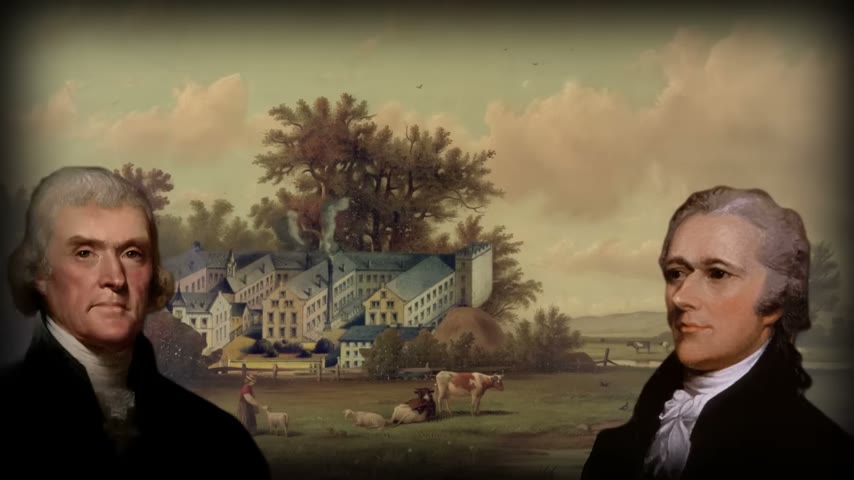
The first vision belongs to Alexander Hamilton. He had been Washington’s aide during the Revolutionary War and became the first Secretary of the Treasury. Green says he would probably have been president himself if he had not been born in the British West Indies. That is not quite right. The Constitution let anyone who was a citizen when it was adopted become president, so Hamilton was eligible; what stopped him was politics, the many enemies he made, and his death in 1804 after a duel with Aaron Burr.
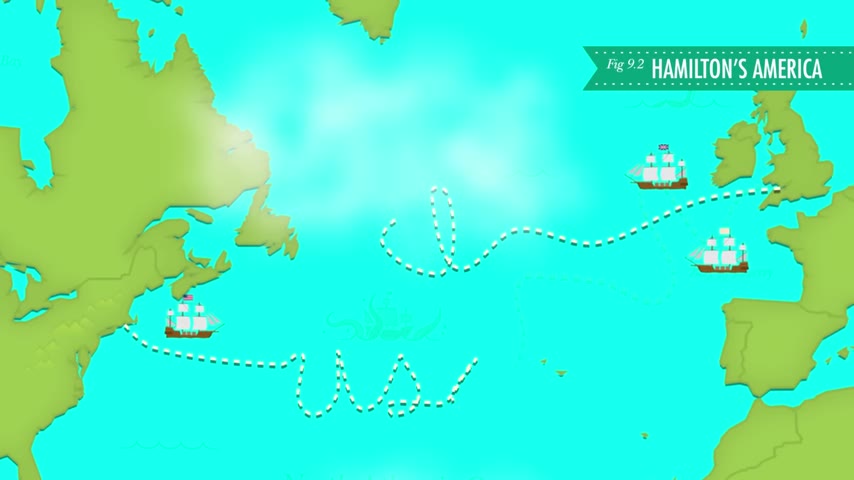
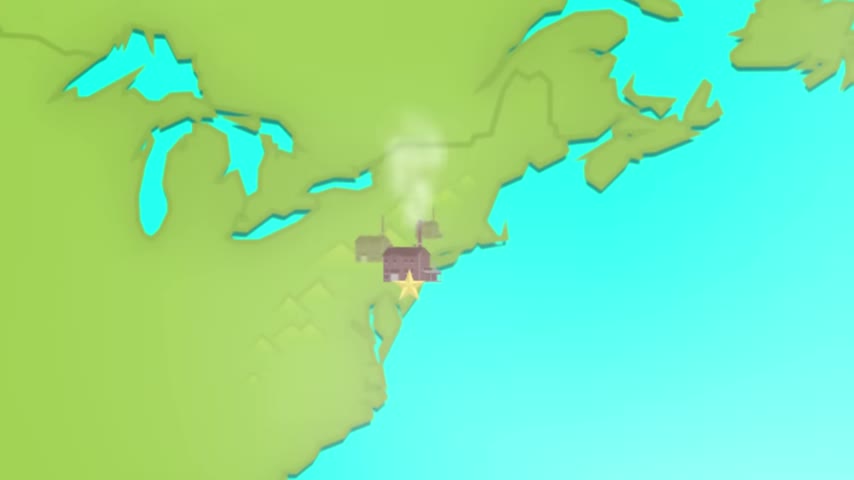
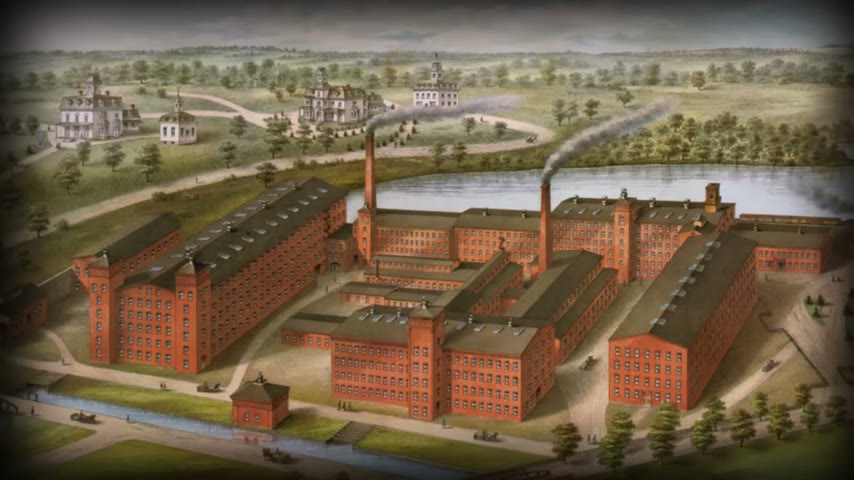
Hamilton’s plan for the country had several parts. He wanted it to be mercantile, deeply involved in world trade. He wanted it to manufacture goods, not just buy and sell them. He backed a project at Paterson, New Jersey, meant to become an American manufacturing center. Green says it failed “because New Jersey”. The company Hamilton backed did struggle in its early years, but the joke hides that Paterson later became one of the great industrial cities of the 19th century, famous for its silk mills.
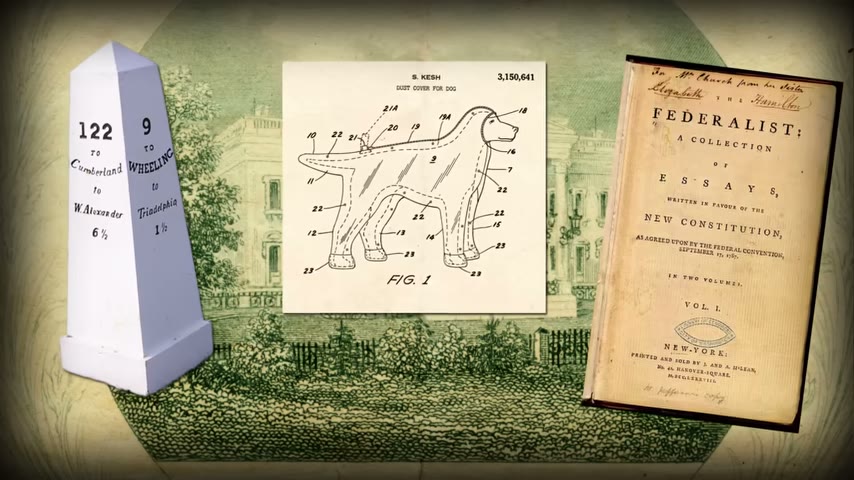
To grow industry, Hamilton thought the country needed a strong national government that could build roads and canals and protect inventors with patents. This fits with his work on the Federalist Papers: he wrote most of the 85 essays, with James Madison and John Jay writing the rest.
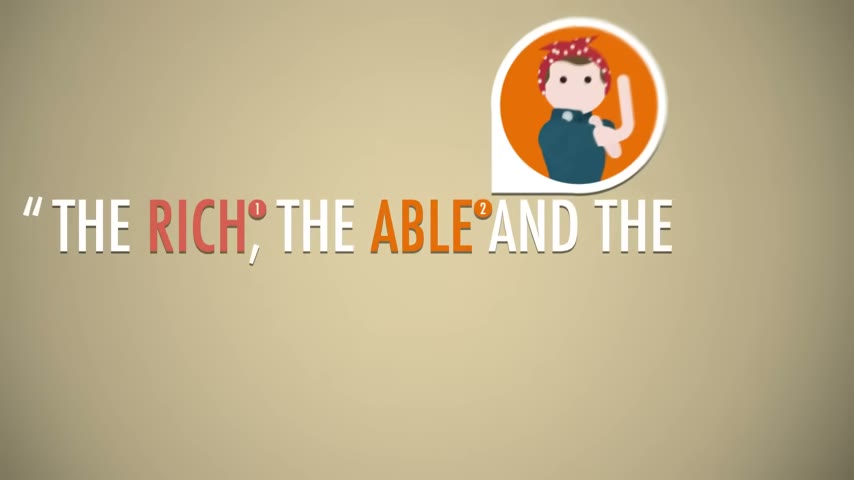
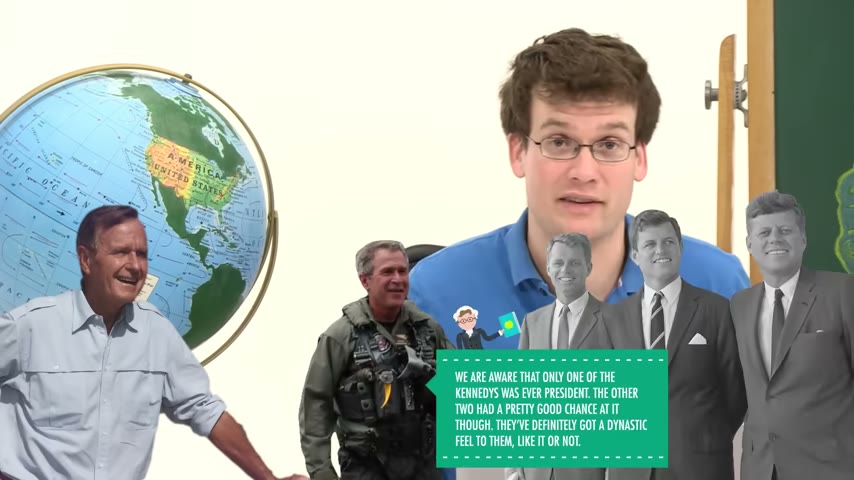
Hamilton also expected the country to be run by an elite. His side, which became the Federalist Party, was associated with the phrase “the rich, the able and the well-born”. Green jokes that if the Federalists had survived, America might have ended up with family dynasties of presidents, and then shows the Bushes and Kennedys. Finally, Hamilton wanted the US firmly tied to Great Britain, the country’s main trading partner, which fits both his love of commerce and his trust in an elite.
2:07 – 3:31 Thought Bubble: Jefferson’s America
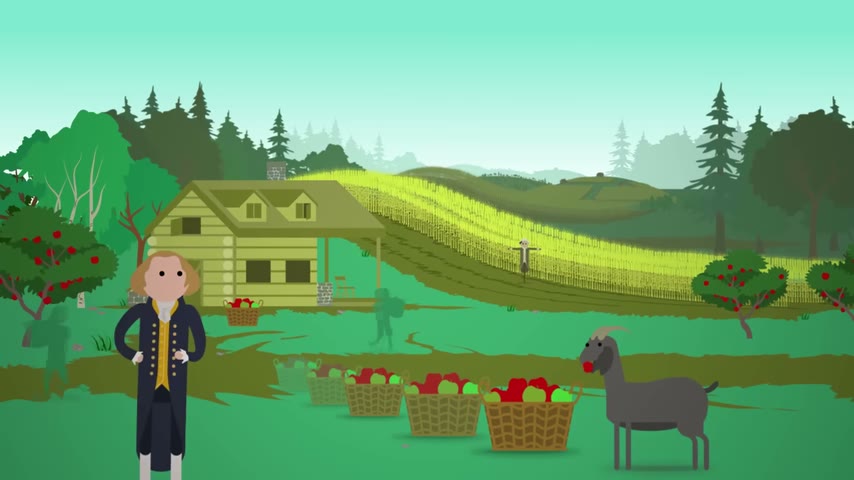
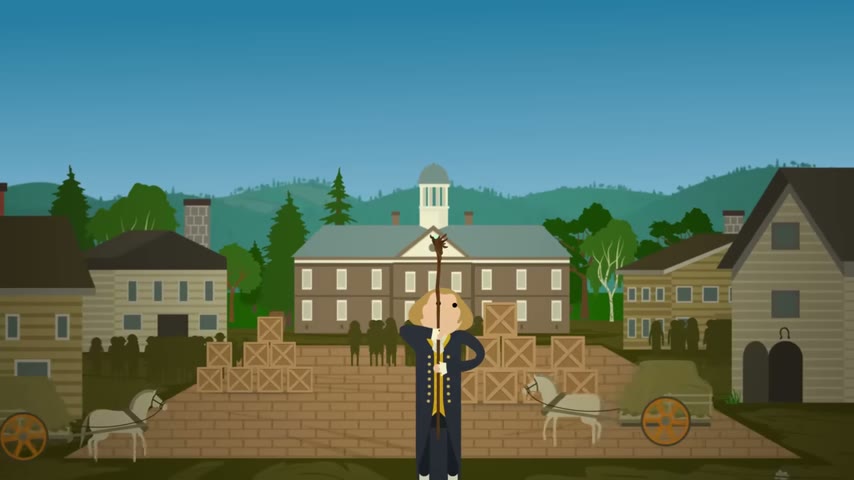
The opposing vision is linked to Thomas Jefferson. In the Thought Bubble, Jefferson’s ideal America is a land of small, independent farmers. They feed their families and sell a little surplus locally. There are no factories, and Green says no international trade either. That last part goes too far: Jefferson’s farmers were expected to export wheat and tobacco, and his party favored freer trade. What Jefferson feared was big cities, factories, debt and banks, not trade itself.
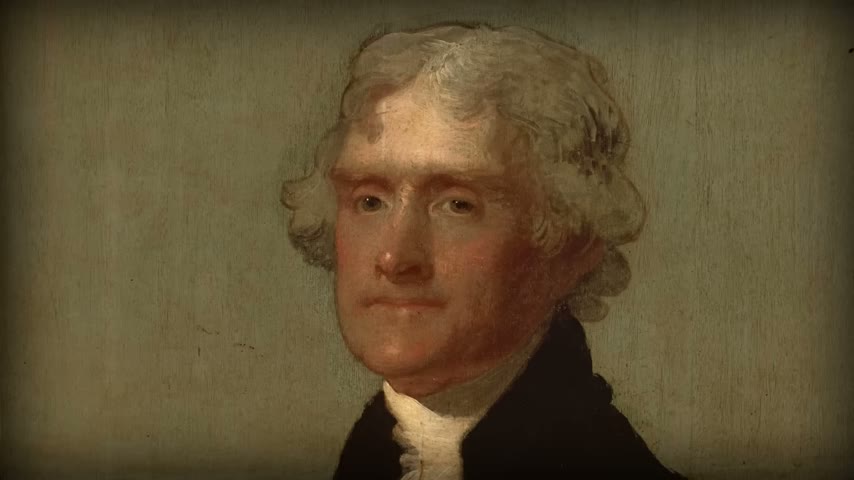
A small, local economy would need only a small, local government. So Jefferson’s sympathies lay with the Anti-Federalists, although Green notes that he did well under the new Constitution, since he became president. Jefferson called himself a democrat in the sense that he was suspicious of privilege and of power gathered in few hands, and he trusted ordinary people could largely govern themselves. For him, a powerful government and concentrated wealth were bigger threats to liberty than a majority acting badly.
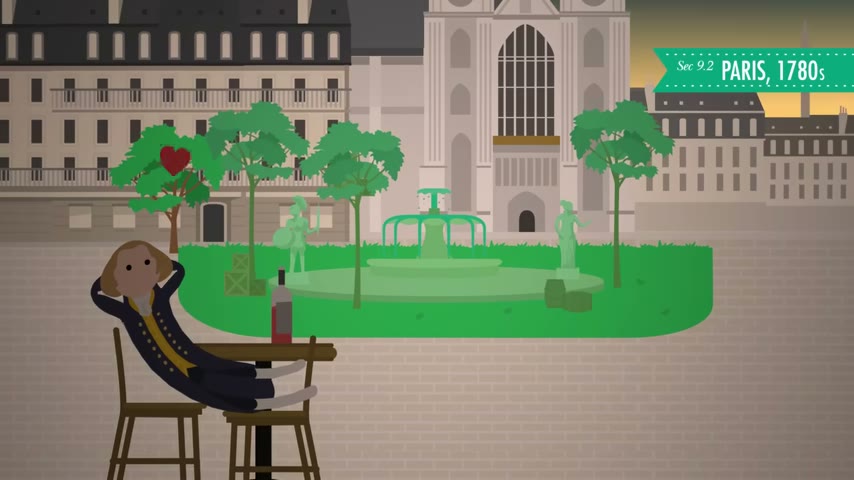
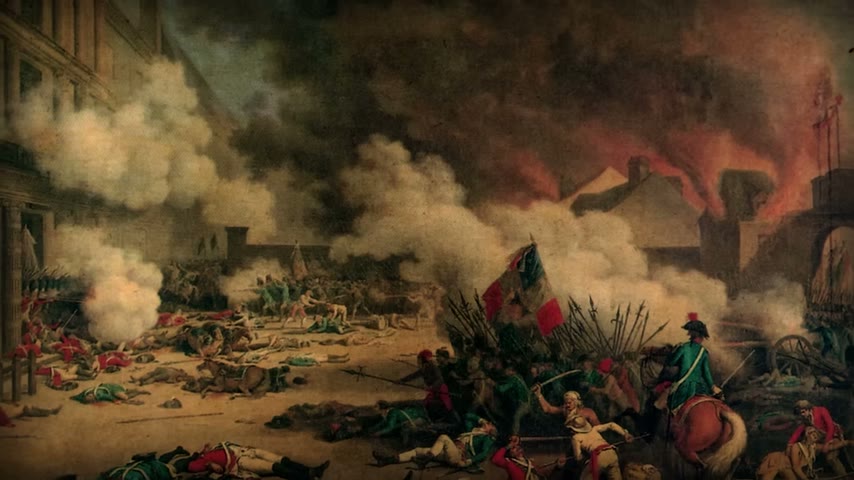
Jefferson also loved France. He had lived in Paris in the 1780s as the American minister (the episode says ambassador), France had been America’s ally in the Revolutionary War, and he welcomed the French Revolution that began in 1789. Green says he liked the way the French treated their aristocrats, “brutally”. That is a joke, but it points at something true: Jefferson kept defending the Revolution after it turned violent.
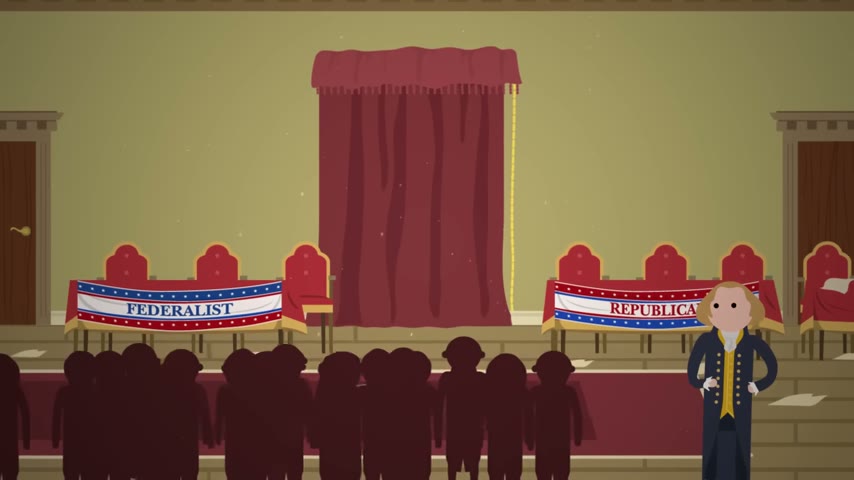
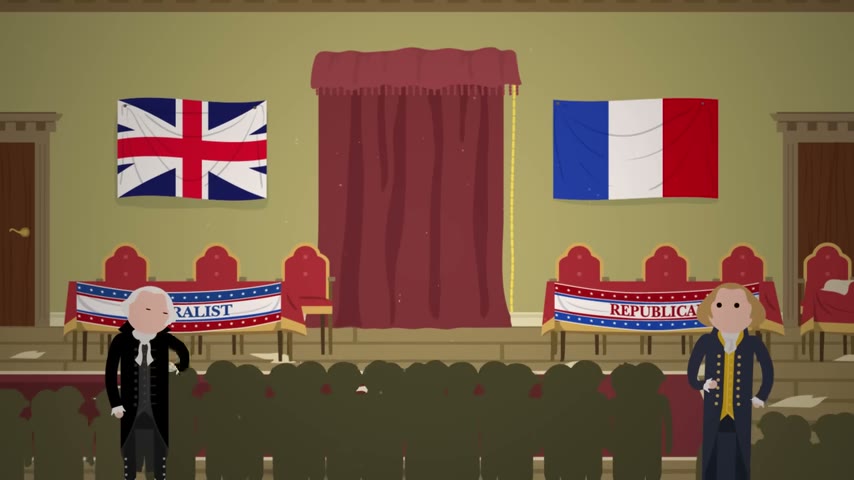
Jefferson’s supporters called themselves Republicans. Many textbooks call them Democratic-Republicans to avoid confusing them with today’s Republican Party, which was founded in 1854 and has no direct link to them; today’s Democratic Party actually traces its roots to Jefferson’s side. The Republicans preferred France just as the Federalists preferred Britain. That mattered because Britain and France fought a long series of wars between 1740 and 1815. Green says they were at war “pretty much constantly”; in fact there were gaps of peace between the wars, but from 1793 to 1815 the fighting was almost continuous, and America was caught in the middle.
3:31 – 4:36 Which side was more democratic?
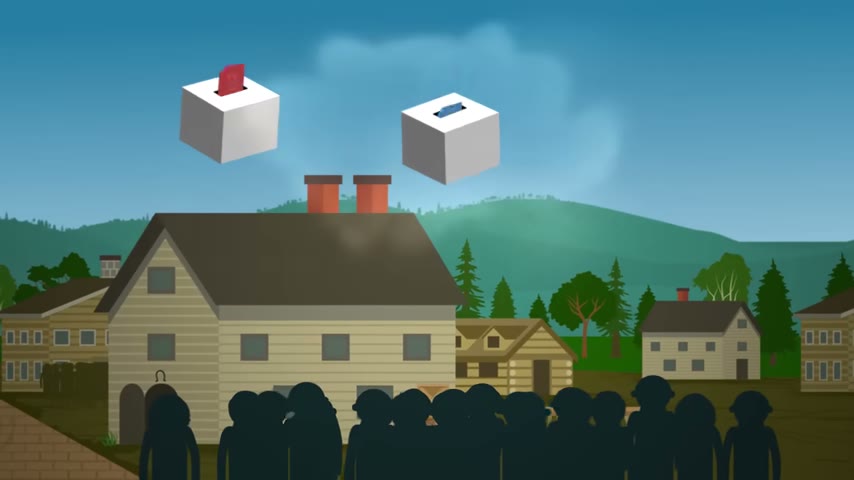
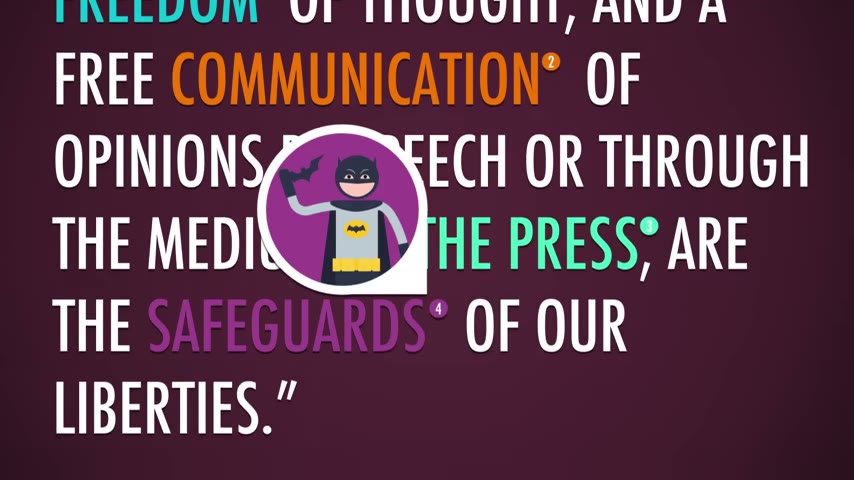
Back at the desk, Green ties the two visions to two more questions: how democratic should the country be, and how much free speech should it allow? The Republicans wanted more of both, “sort of”. During Washington’s presidency, Democratic-Republican Societies sprang up to criticize the government. Green calls them the first opposition parties; they were really local political clubs, but they did help build the Republican opposition. In 1794 the Pennsylvania society declared that free speech and a free press were the safeguards of liberty. The Federalists, in contrast, saw too much democracy and free speech as a threat.
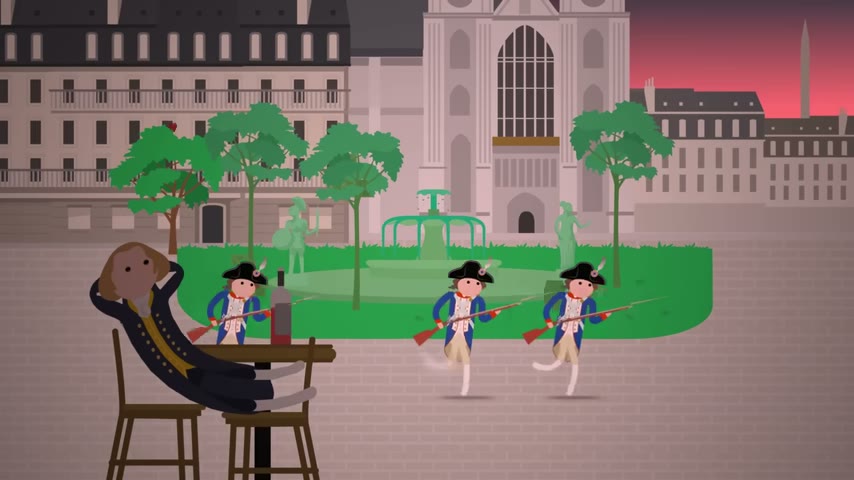
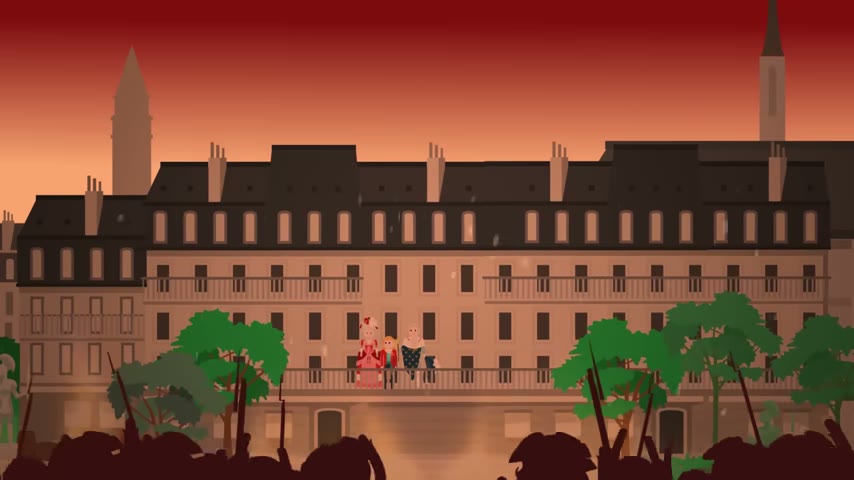
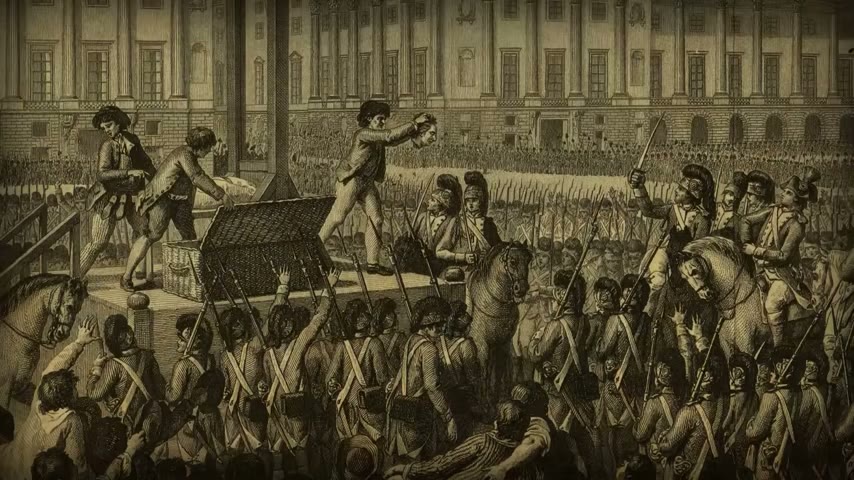
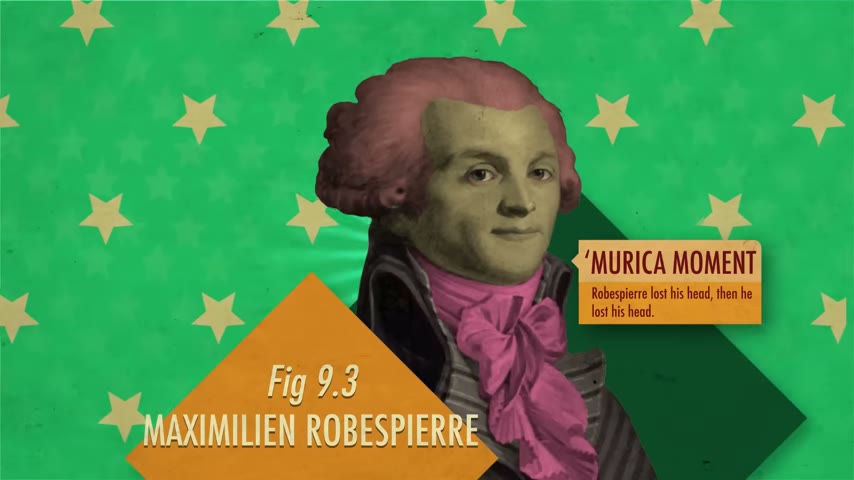
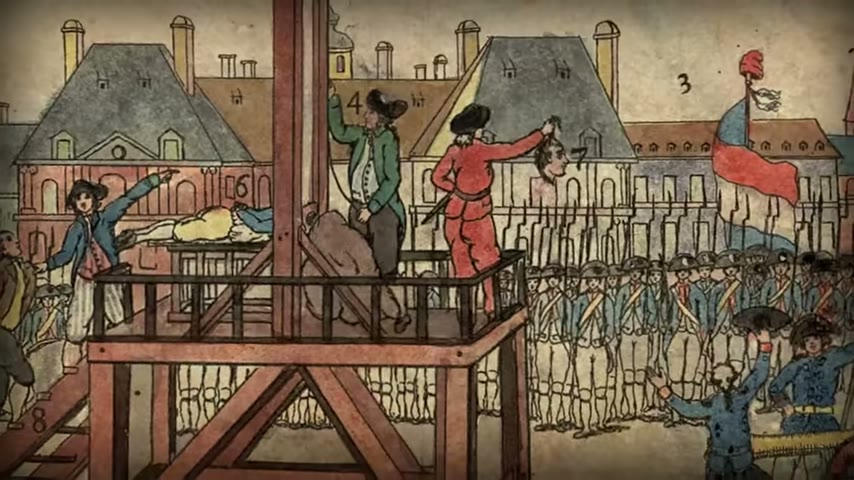
So were the Republicans the “better democrats”? Green says it is more complicated, for two reasons. First, many Republicans, Jefferson included, were slaveholders, and slavery is the opposite of democracy. Second, many kept supporting the French Revolution after 1793, when the Reign of Terror under Robespierre sent thousands to the guillotine before Robespierre himself was executed in 1794.
4:36 – 5:08 Washington’s presidency
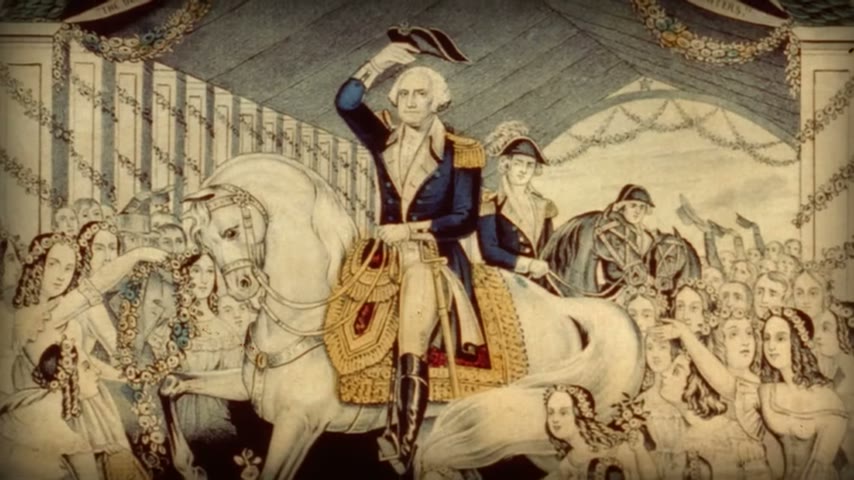
The first presidential election had no parties and no real campaign. George Washington was elected unanimously by the electoral college; Green notes that he did not run for office, he “stood” for it, which was the polite ideal of the time. His presidency mattered for the precedents he set. He served only two terms, a custom that held until Franklin Roosevelt and became law with the 22nd Amendment in 1951. He also wore civilian clothes as president even though he was a general, a sign that the military would answer to civilians.
Green adds that Washington was not the real policy brain of his administration; Hamilton was. Washington probably would not have called himself a Federalist, but he supported Hamilton’s plan for a stronger nation.
5:08 – 6:20 Hamilton’s five-point plan
Green presents Hamilton’s program as a “five-point plan”, a joke about modern politicians. Historically it came as a series of reports to Congress in 1790 and 1791, but the five points are a good summary.
- Establish the nation’s credit-worthiness. The new country had to pay its debts, most of them from the war, if anyone was to lend to it again. Hamilton proposed that the federal government assume the debts of the states.
- Create a national debt. Green notes that no politician says this today. Hamilton wanted new interest-paying bonds so that wealthy Americans who bought them would want the government to succeed.
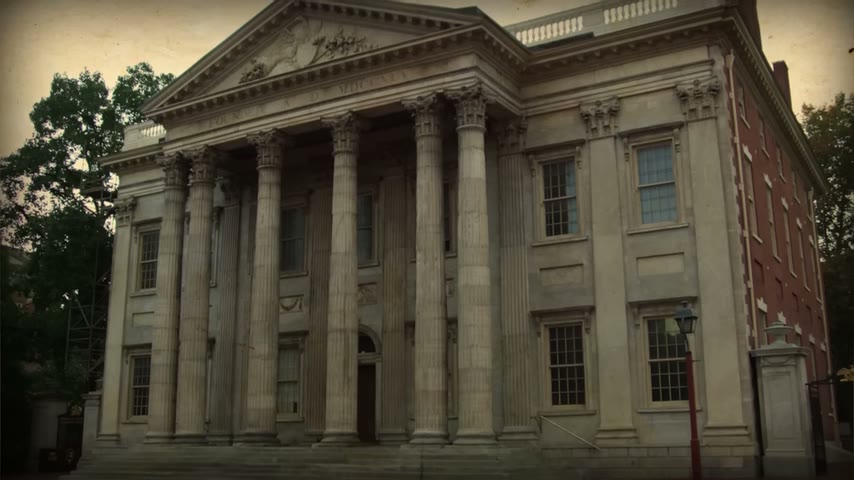
- Create a Bank of the United States. It would be privately owned and profitable for its shareholders, but it would hold government money and issue notes that circulated as currency.
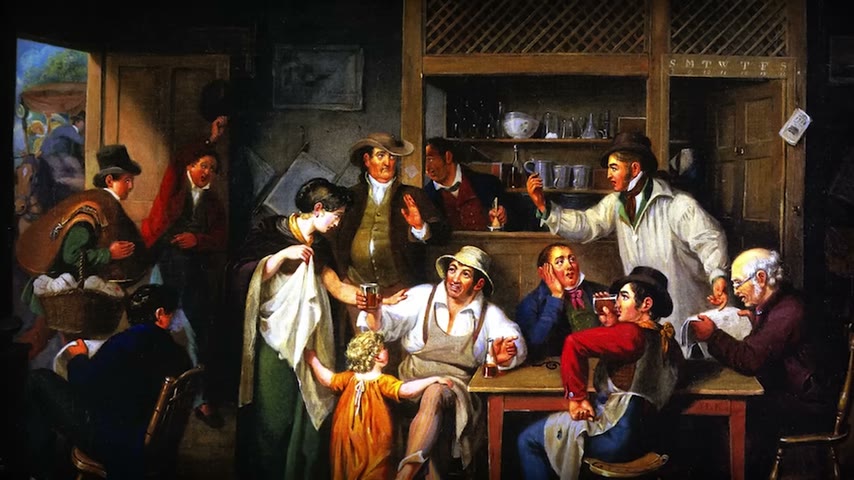
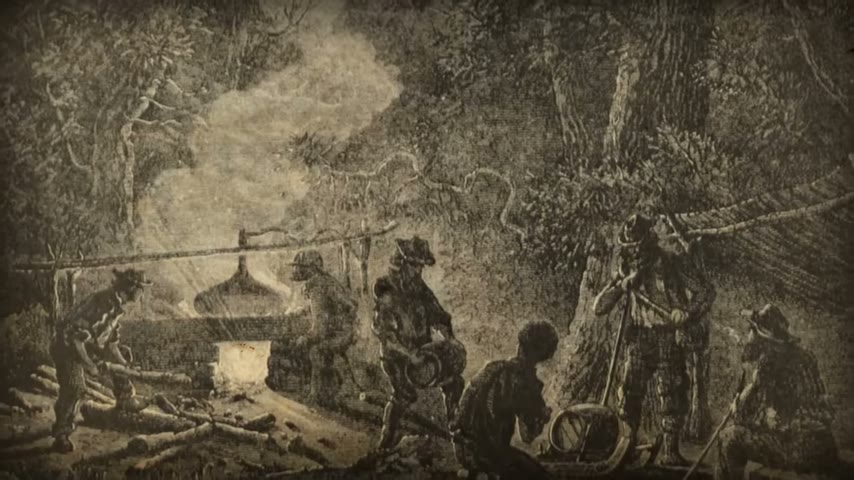
- A whiskey tax. An excise on whiskey would raise money, and it fell hardest on small farmers, for whom distilling grain into whiskey was the most profitable use of a crop.
- A tariff to encourage manufacturing. Green’s jab is at anyone who thinks the US was founded on free trade. A fair footnote: Congress did pass tariffs, but they were set mainly to raise revenue; Hamilton’s 1791 Report on Manufactures, which asked for stronger protection and subsidies for industry, was mostly ignored.
6:20 – 7:32 Strict construction, the capital deal and the Whiskey Rebellion
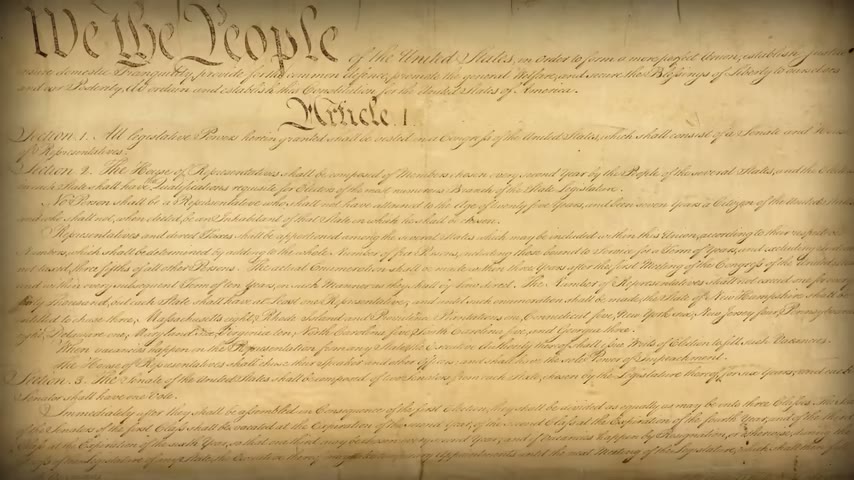
The Republicans, who wanted a farming republic with freer trade, disliked nearly all of this. They also argued that none of it was in the Constitution, and Green says they were right. Reading the Constitution so that the government can do only what the text clearly allows is called strict construction. Hamilton answered with the opposite reading, later called loose or broad construction: the Constitution’s “necessary and proper” clause gave Congress implied powers, such as creating a bank. Washington sided with Hamilton.
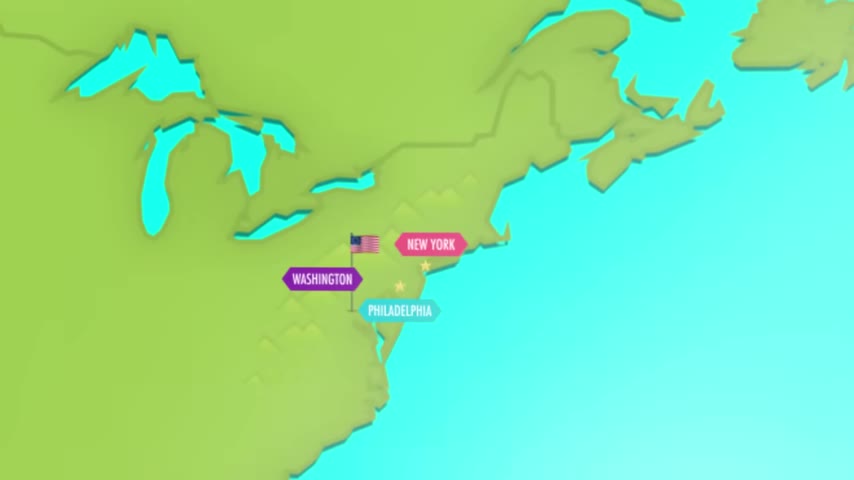
Green says the Republicans “shaved” the plan to four points in a bargain in 1790: Southern Republicans accepted points one to four in exchange for a permanent capital on the Potomac River, in the South, instead of the temporary capitals in New York and Philadelphia. This compresses the story. The Compromise of 1790, worked out by Hamilton, Jefferson and Madison, was a trade of federal assumption of state debts for the southern capital. The bank came separately in 1791, over Madison’s and Jefferson’s objections. Either way, the Hamiltonian economy won, at least for a while.
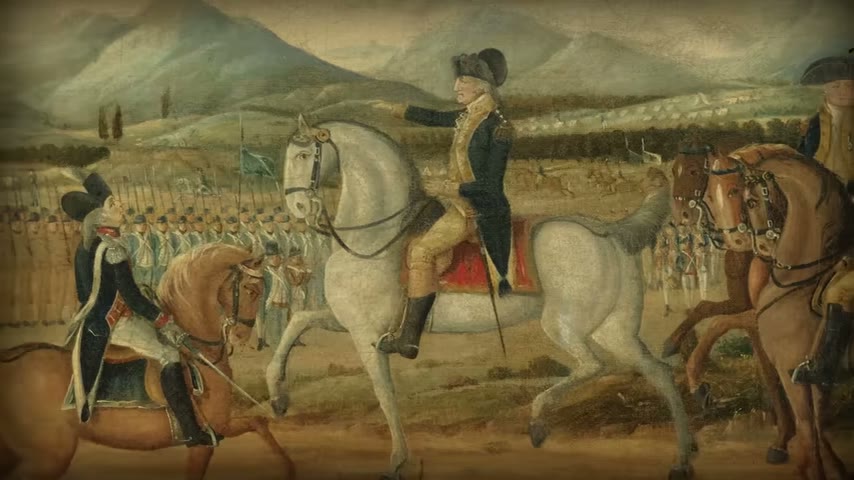
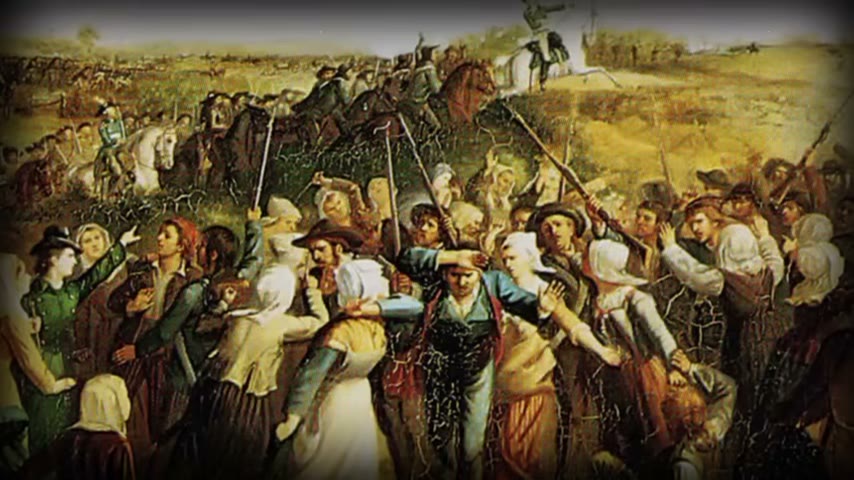
The most controversial point was the whiskey tax. Farmers turned their grain into whiskey, and whiskey into income. In 1794 farmers in western Pennsylvania took up arms against the tax. Washington led a force of about 13,000 militiamen, at least part of the way, to put down the Whiskey Rebellion. Green calls him the only sitting president to lead troops in the field, a claim usually made about this event. The rebels melted away without a battle, and the federal government had shown it could enforce its laws. America, Green adds, has taxed alcohol ever since.
7:32 – 8:37 Foreign policy: France, Britain, Genêt and Jay
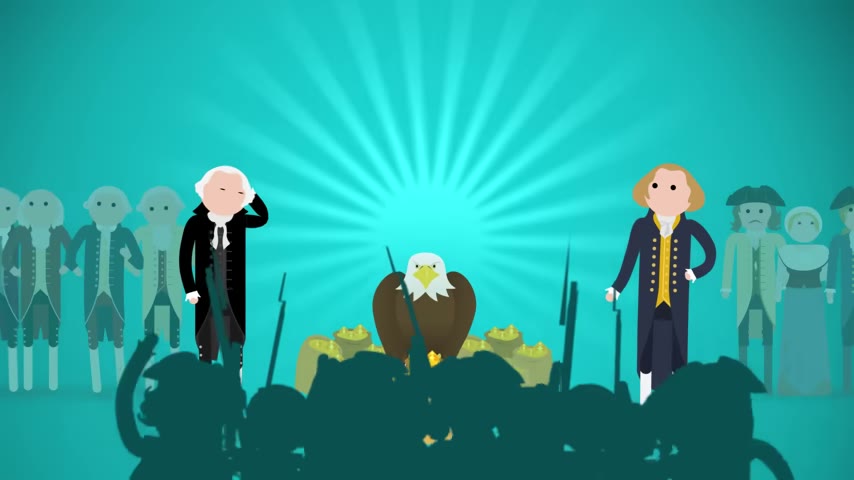
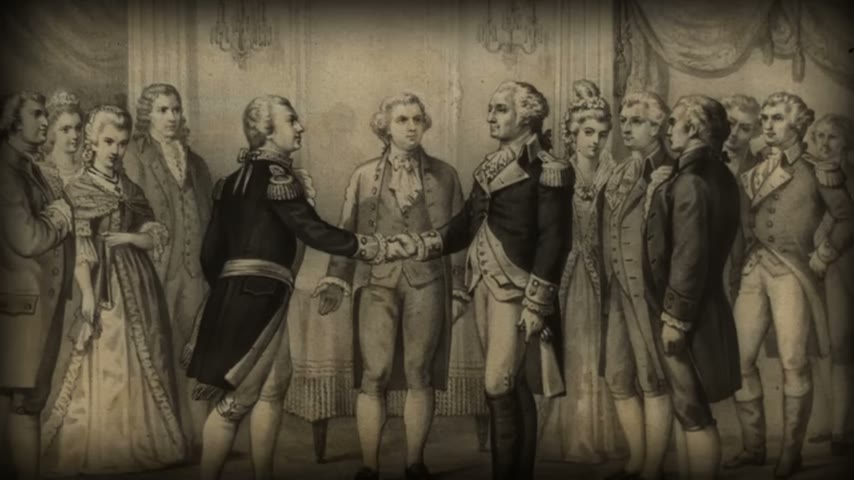
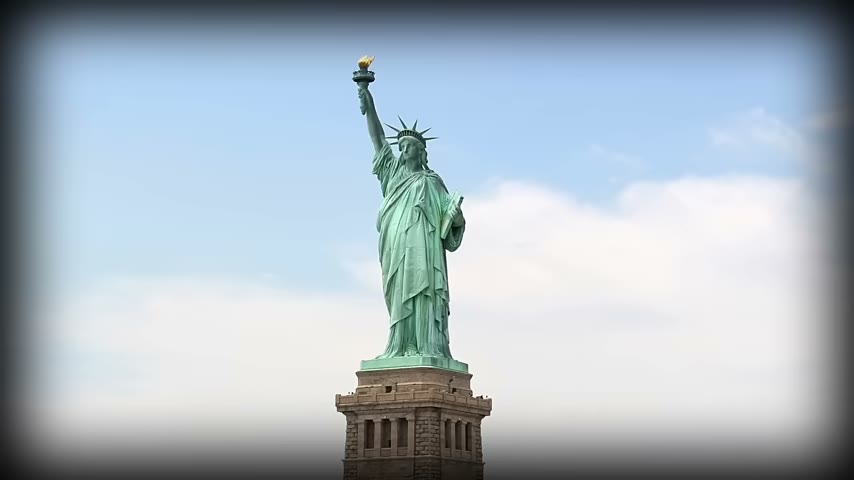
In foreign affairs, Green jokes, there was “much more agreement”, then admits he is kidding. Hamilton wanted close ties with Britain for trade. But Britain was constantly at war with France, and the US had a permanent alliance with France, signed in 1778 during the Revolution. Green lists why Americans felt they owed France: it helped win the Revolution, and, in a joke out of order, it gave the Statue of Liberty (in 1886) and the actress Marion Cotillard. The French Revolution complicated things further, because Republicans liked it and the more conservative Federalists feared it.
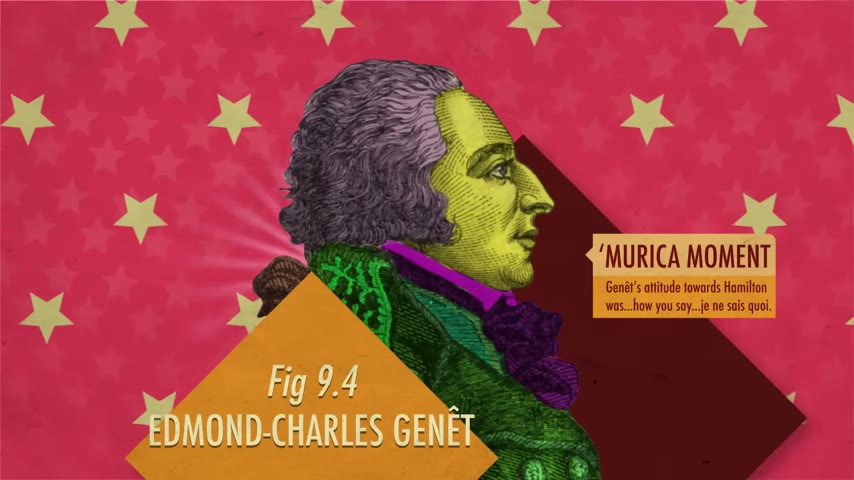
In 1793 the French envoy Edmond-Charles Genêt, “Citizen Genêt”, arrived and began hiring American ships to attack British ones. A step Green skips: Washington had just issued a Proclamation of Neutrality, and Genêt’s campaign broke it so openly that Washington’s government asked France to recall him. (Genêt stayed in America instead, since going home during the Terror was dangerous.)
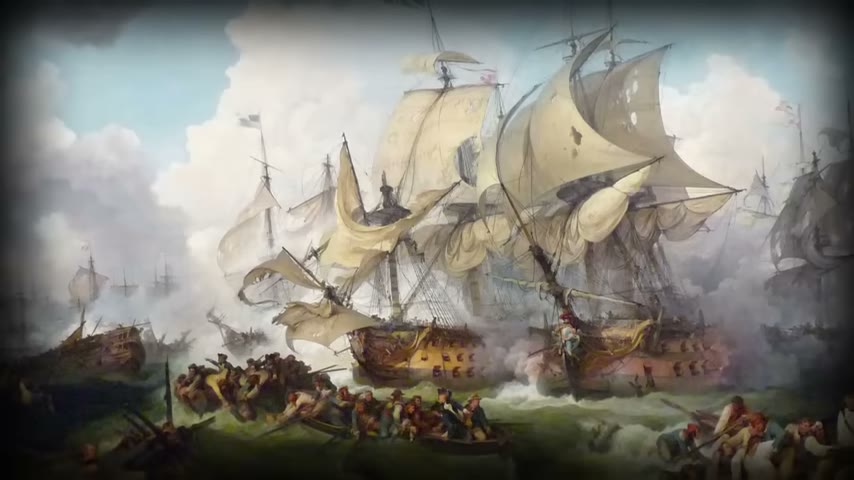
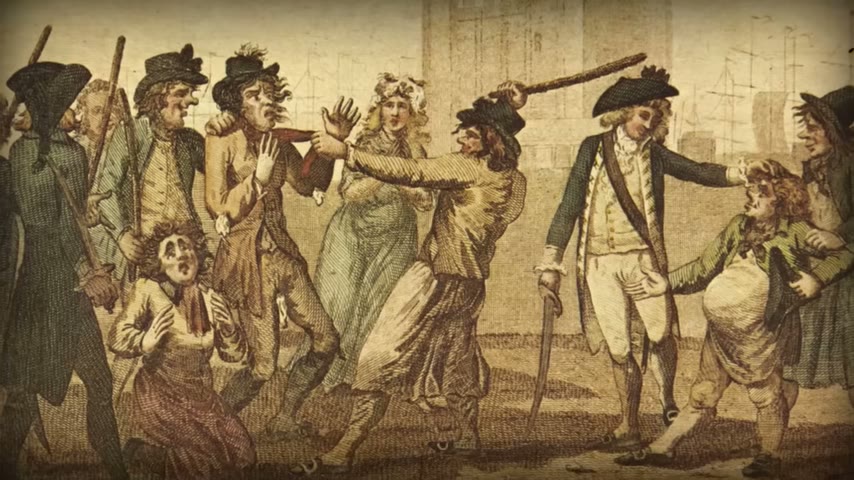
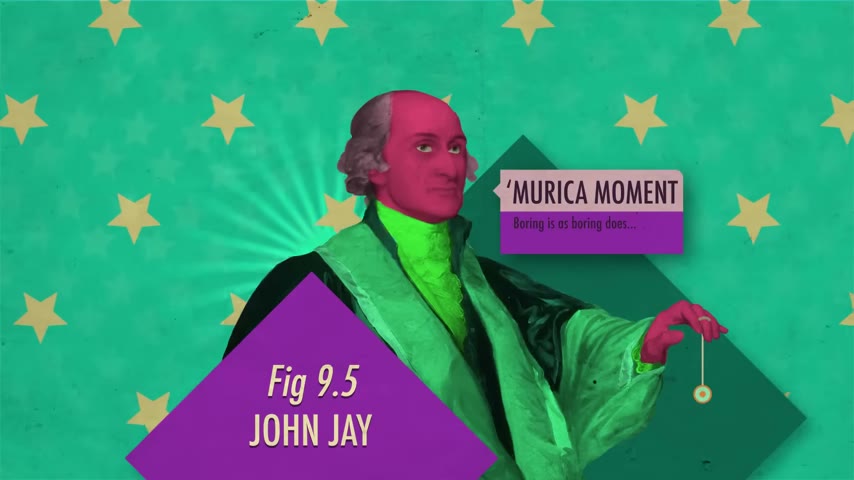
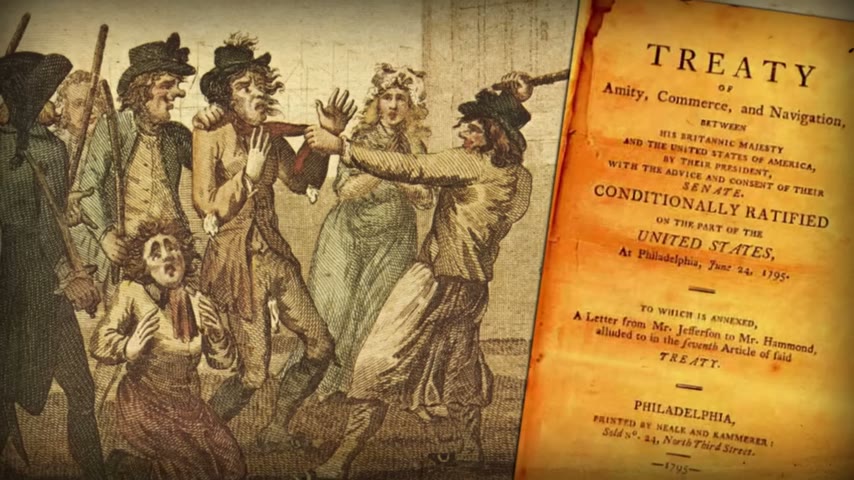
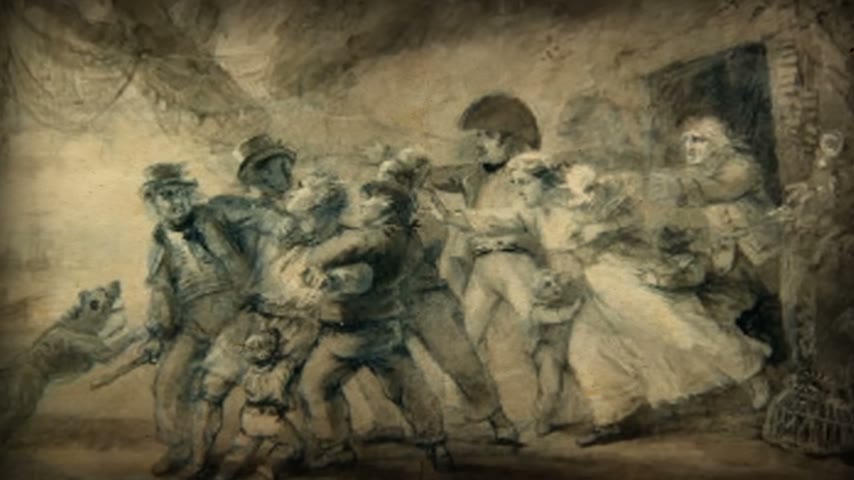
Britain responded by impressing American sailors: seizing them from American ships and forcing them to serve in the Royal Navy. Green takes a moment to explain that this has nothing to do with impressing anyone with mermaid tattoos. Washington sent John Jay to London. The resulting Jay Treaty (1794) improved trade with Britain and got British troops to leave forts in the Northwest, but it said nothing about impressment or neutral shipping rights. It was deeply unpopular, and protesters burned Jay in effigy. For the rest of his term, Washington mostly left the problem alone, which Green calls the start of another tradition: passing big foreign-policy problems to the next president. Impressment was one of the causes of the War of 1812.
8:37 – 9:20 Washington’s farewell warning
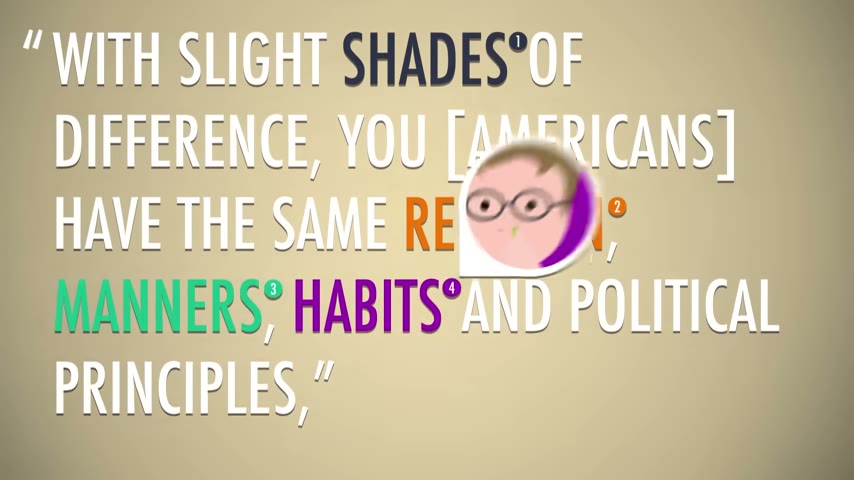
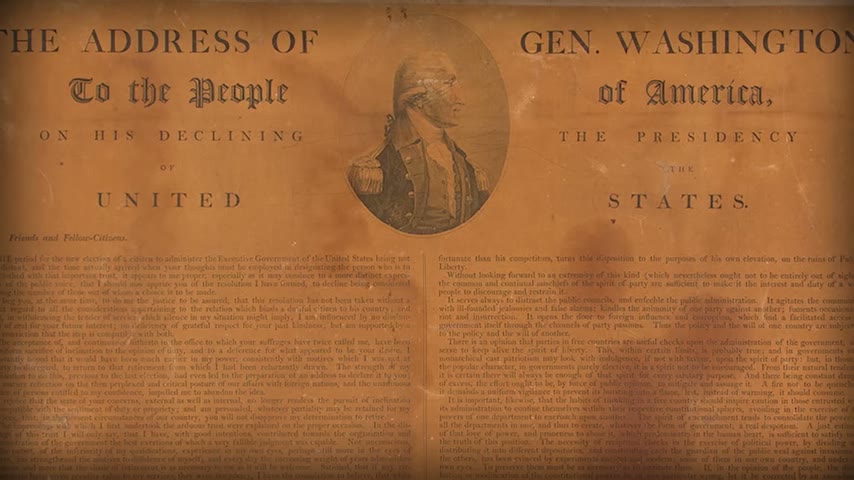
By the end of his second term, Washington was tired of politics. In his Farewell Address, he told Americans that, apart from slight differences, they shared the same religion, manners, habits and political principles, so they had no need for parties. He warned against the “spirit of party”, which he said stirred up false alarms, set one group against another, led to riots, and opened the door to foreign influence. Two footnotes: the address was published in a newspaper in 1796 rather than given as a speech, and Hamilton helped write it. It also warned against permanent foreign alliances.
Green starts to sum up the parties as elitist Federalists against freedom-loving Republicans, then gets interrupted by the Mystery Document, which is his way of saying the summary is too neat.
9:20 – 10:44 Mystery Document: an argument for women’s equality
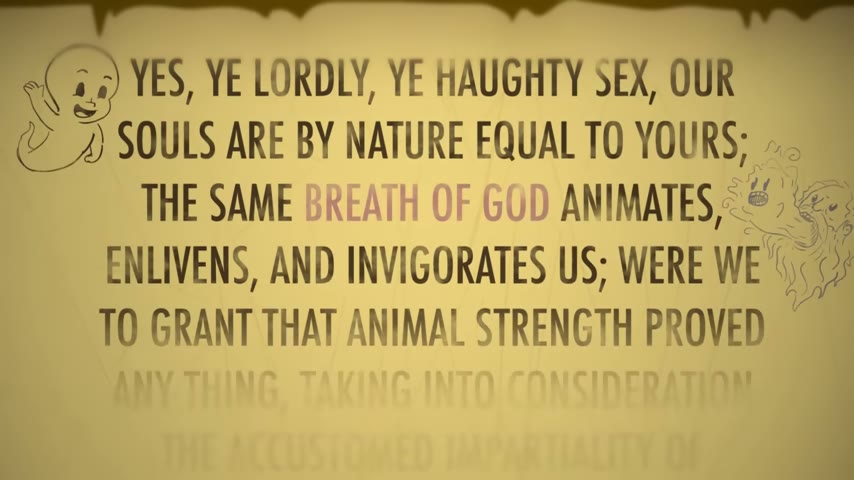
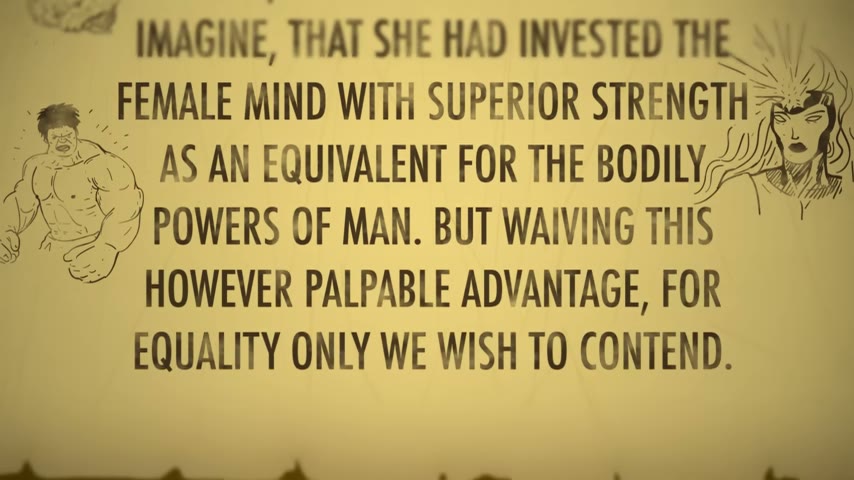
The rules: Green guesses the author, and if he is wrong he gets shocked. The document addresses men as the “lordly” and “haughty” sex and argues that women’s souls are by nature equal to men’s. It then adds a playful twist: if physical strength counted for anything, nature, being fair, would have given women stronger minds to make up for weaker bodies. But the writer waives that advantage and asks only for equality.
Green rules out Elizabeth Cady Stanton as too young (she was born in 1815) and guesses Sarah Grimké, an abolitionist and women’s rights writer of the 1830s. Wrong: the author is Judith Sargent Murray, whose essay “On the Equality of the Sexes” was published in 1790. Green’s lesson is that once ideas like liberty and equality were let loose in the Revolution, they spread to places that neither Federalist nor Republican men intended.
10:44 – 11:17 The 1796 election and the electoral college
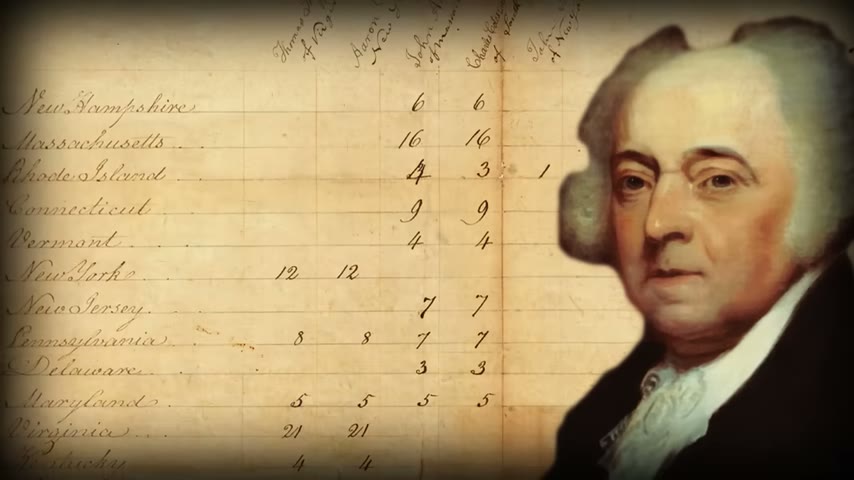
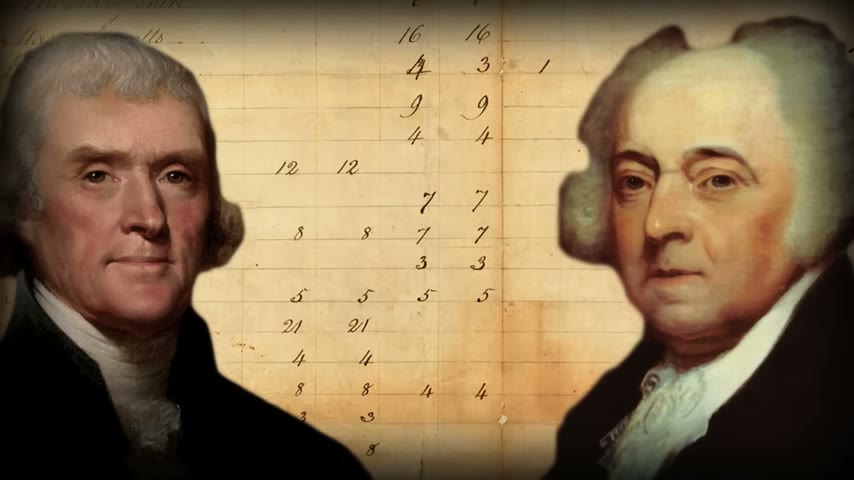
Adams’s election in 1796 exposed a flaw in the original Constitution. Each elector cast two votes, and the runner-up became vice president. In 1796 that was Jefferson, so the president and vice president came from opposing parties. The rule was changed by the 12th Amendment (1804), but only after the next election produced another mess: in 1800 Jefferson tied with his own running mate, Aaron Burr, and the House of Representatives had to pick the president.
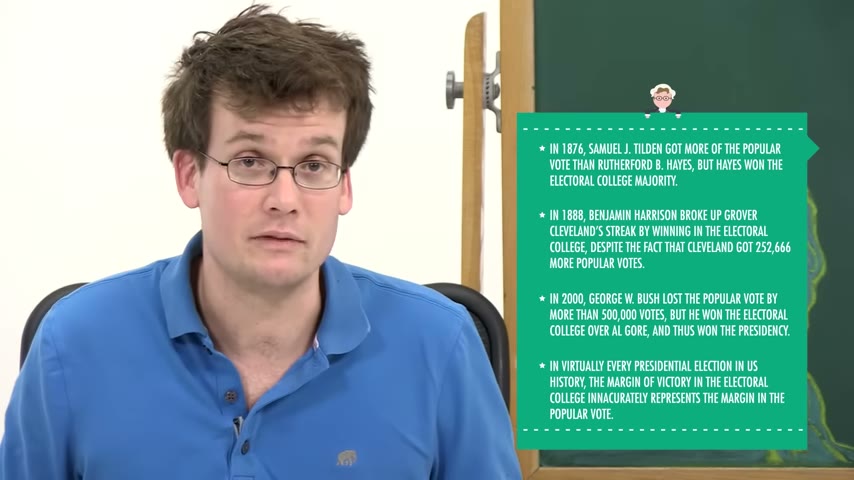
Green then adds a side note: the electoral college has distorted the popular vote, most famously in 1876, 1888 and 2000, when the winner of the popular vote lost, and in a milder way in every election, because it exaggerates the winner’s margin. An update for readers today: the same thing happened again in 2016, after this video was made.
11:17 – 12:24 The Quasi-War, the XYZ Affair and the Alien and Sedition Acts
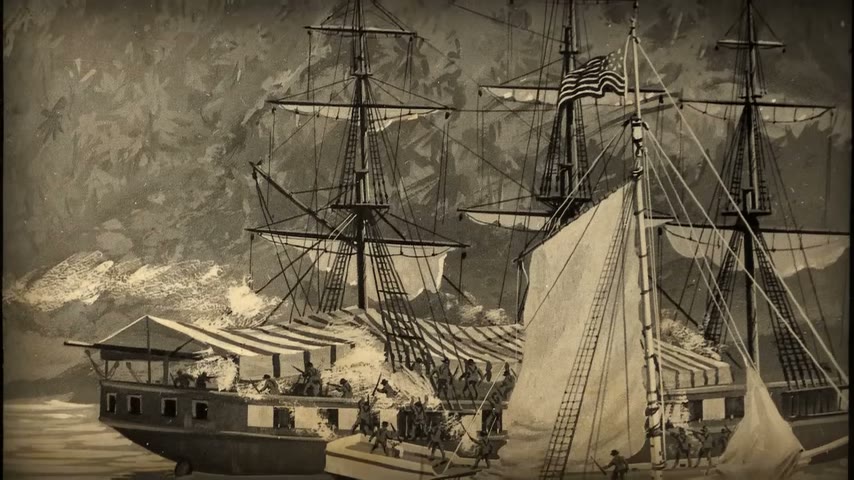
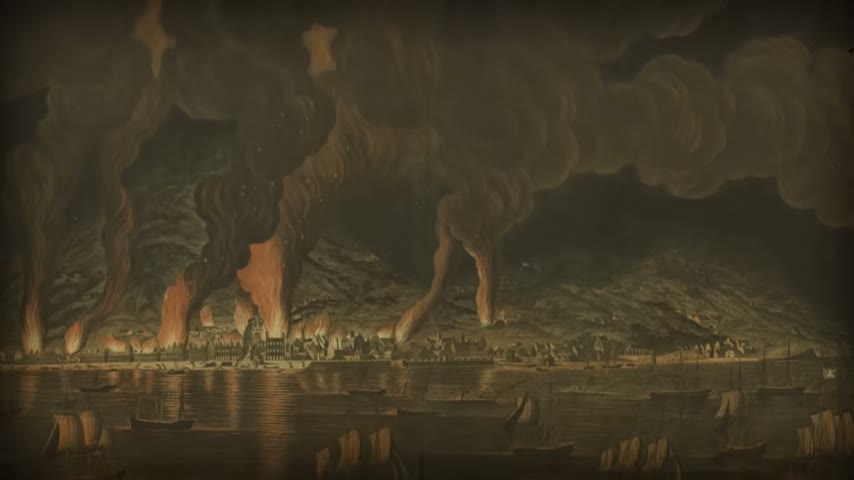
At home, Adams continued Hamilton’s policies. His presidency is remembered more for problems with France, and Green says the administration “totally overreacted”. Because the US was trying to stay on good terms with Britain, France, its supposed eternal ally, began seizing American ships, and the two countries slid into the Quasi-War, an undeclared naval war from 1798 to 1800. Americans were also nervous about the increasingly violent Revolution.
Then came the XYZ Affair (1797–98). Three French agents told American diplomats they had to pay a bribe before they could even meet the French foreign minister. Adams’s government released the diplomats’ reports with the agents’ names replaced by X, Y and Z. Public opinion swung sharply against France; Green calls the reaction “somewhat hysterical”.
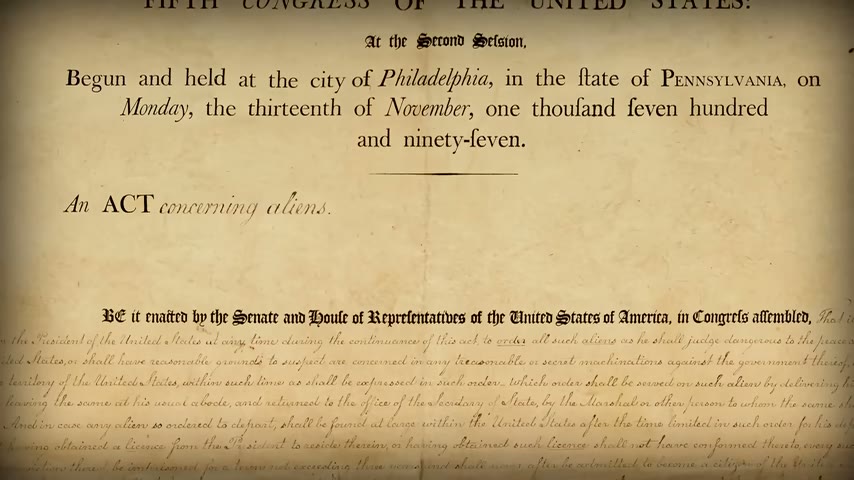
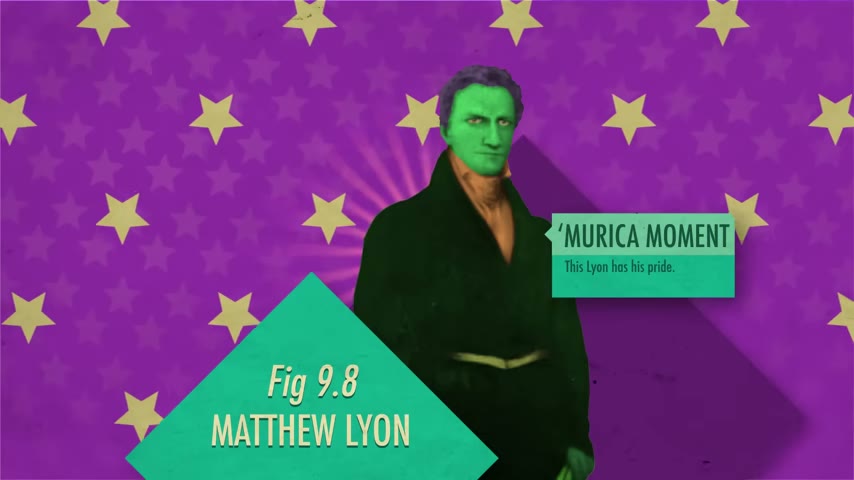
Adams used the mood to sign the Alien and Sedition Acts in 1798. The Alien laws lengthened the wait for citizenship (from five years to fourteen) and let the president deport foreigners he considered dangerous. Green says the Sedition Act made it a crime to criticize the government. More precisely, it banned “false, scandalous and malicious” writing against the government, Congress or the president, but in practice it was used against Republican newspaper editors and politicians. The best-known case was Matthew Lyon, a Vermont congressman jailed for writing that Adams was a poor president. He won re-election from his jail cell, which shows how unpopular the law was.
12:24 – 13:24 Nullification and an unsettled young democracy
The acts were so unpopular that the legislatures of Kentucky and Virginia passed resolutions against them in 1798. Two details the episode leaves out: Jefferson secretly wrote the Kentucky Resolutions, and Madison wrote Virginia’s. They argued that the acts violated Americans’ liberties and that states could judge, and even nullify, federal laws they thought unconstitutional. Green warns that this idea will return. It did, in South Carolina’s Nullification Crisis of 1832 and in the states’ rights arguments that led to the Civil War.
Green closes with some perspective. The Sedition Act expired in 1801 and Jefferson pardoned those convicted under it. The laws never led to mass arrests of people who called Adams a tyrant. They did not destroy the Federalist Party either, although no Federalist was elected president after Adams. Their importance is what they show: in the country’s first decade, even a basic right like freedom of speech was still up for grabs. Green says that is worth remembering when looking at new democracies today. And Jefferson’s victory in 1800 did not settle everything, which is where the next episode begins.
Skip list
- 0:18 – 0:26 Theme music.
- 0:43 – 1:00 “Me from the past” and the Monroe Doctrine joke poster.
- 7:47 – 7:50 The Statue of Liberty and Marion Cotillard aside.
- 10:13 – 10:36 Green’s guessing and the shock.
- 13:24 – 13:56 Credits, comments request and end card.
Key terms
- Federalists — Hamilton’s party: strong central government, commerce and manufacturing, a national bank, and closer ties to Britain.
- Democratic-Republicans (Republicans) — Jefferson’s and Madison’s party: an agrarian republic, limited government, strict construction and sympathy for France. Not the same as today’s Republican Party.
- Mercantile economy — in this episode, an economy built on overseas trade, which Hamilton wanted.
- Agrarian republic — Jefferson’s ideal of a nation of independent, landowning farmers.
- Assumption — the federal government taking over the states’ Revolutionary War debts, part of Hamilton’s plan.
- Bank of the United States — the national bank chartered in 1791, privately owned but holding government funds and issuing notes.
- Excise tax — a tax on a particular product made or sold at home, such as the 1791 tax on whiskey.
- Protective tariff — a tax on imports meant to shield home industries from foreign competition.
- Strict construction — the view that the federal government can do only what the Constitution clearly allows; its opposite is loose or broad construction.
- Compromise of 1790 — the deal that traded southern support for assumption for a permanent capital on the Potomac.
- Whiskey Rebellion (1794) — the armed protest in western Pennsylvania against the whiskey tax, put down by federal militia.
- Impressment — the British practice of seizing sailors, including Americans, and forcing them into the Royal Navy.
- Jay Treaty (1794) — the trade treaty with Britain that ignored impressment and set off fierce party conflict.
- Farewell Address (1796) — Washington’s published warning against the spirit of party and permanent foreign alliances.
- XYZ Affair — the 1797–98 scandal in which French agents demanded a bribe from American diplomats.
- Quasi-War — the undeclared naval war between the US and France, 1798–1800.
- Alien and Sedition Acts (1798) — laws that lengthened the path to citizenship, allowed deportation of foreigners, and punished criticism of the government.
- Kentucky and Virginia Resolutions (1798) — statements by two state legislatures that the Alien and Sedition Acts were unconstitutional.
- Nullification — the claim that a state can declare a federal law void within its borders.
Review questions
- Why does Green call politics, not baseball, the American national pastime, and what did the founders hope about parties?
- What were the main features of Hamilton’s vision for America, and why did he want close ties with Britain?
- What were the main features of Jefferson’s vision, and why did he sympathize with France?
- Why does Green say it is too simple to call the Republicans the “better democrats”?
- What precedents did Washington set as president?
- What were the five parts of Hamilton’s financial program, and what was each meant to achieve?
- What is the difference between strict and broad construction of the Constitution, and how did it apply to the national bank?
- What did the South get in the Compromise of 1790, and what did Hamilton get?
- Why did the whiskey tax lead to a rebellion, and what did Washington’s response show about the new government?
- How did the wars between Britain and France divide American politics in the 1790s?
- What does Judith Sargent Murray’s essay suggest about how the Revolution’s ideas spread?
- What flaw in the original electoral system did the 1796 election reveal, and how was it fixed?
- Why were the Alien and Sedition Acts passed, and why does Green think the reaction to them matters for the future?
FAQ
What were the main differences between Hamilton and Jefferson?
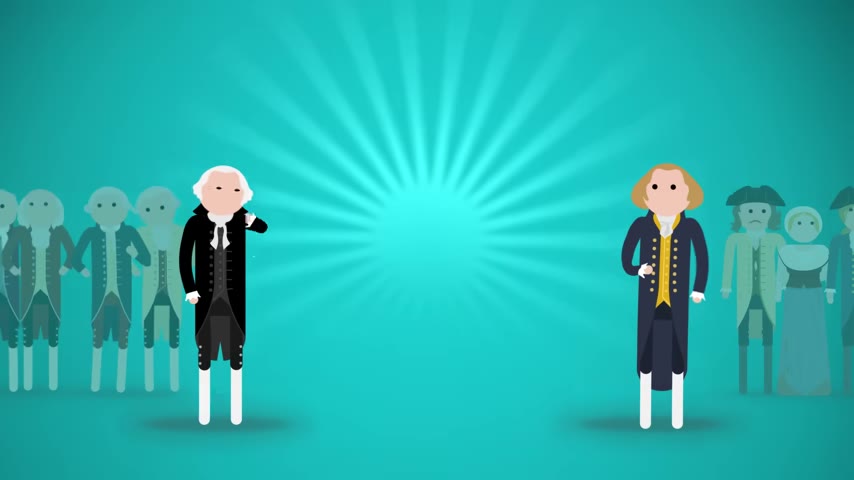
Alexander Hamilton wanted a commercial and manufacturing nation with a strong central government, a national bank, a funded national debt, protective tariffs and close ties to Britain, led by a capable elite. Thomas Jefferson wanted a republic of independent small farmers with a limited, mostly local government, distrusted banks, debt and concentrated wealth, read the Constitution strictly, and sympathized with France. Their followers became the Federalists and the Democratic-Republicans, the first two parties in the United States.
What was Hamilton's financial plan?
As the first Secretary of the Treasury, Hamilton proposed in 1790–91 that the federal government pay its war debts in full and take over (assume) the states' debts, fund that debt with interest-bearing bonds so the wealthy had a stake in the new government, charter a Bank of the United States, raise money with an excise tax on whiskey, and encourage manufacturing with tariffs. Congress passed assumption, the bank and the whiskey tax; his more ambitious plan to protect and subsidize manufacturing was largely not adopted.
What was the Whiskey Rebellion?
A protest by farmers in western Pennsylvania against the federal excise tax on whiskey passed in 1791. For frontier farmers, turning grain into whiskey was the easiest way to get a crop to market, so the tax hit them hard. In 1794 some of them attacked tax collectors. President Washington called out about 13,000 militiamen and rode with them for part of the way; the rebels scattered without a battle. The episode showed that the new federal government could enforce its laws.
What were the Alien and Sedition Acts?
Four laws passed in 1798, during the undeclared Quasi-War with France, under President John Adams. They raised the residency period for citizenship from five to fourteen years, let the president deport foreigners he judged dangerous, and made it a crime to publish false, scandalous or malicious writing against the government, Congress or the president. Critics, mostly Republicans, were prosecuted, including Congressman Matthew Lyon. Jefferson and Madison answered with the Kentucky and Virginia Resolutions, which argued that states could judge federal laws unconstitutional.
What did Washington warn against in his Farewell Address?
In his Farewell Address, published in a newspaper in September 1796 rather than delivered as a speech, Washington warned Americans against the 'spirit of party', meaning political factions, which he thought would stir up jealousy, riots and foreign meddling. He also urged the country to avoid permanent alliances with foreign nations. By then the Federalists and Republicans were already organized as rival parties.
Studying another course? Paste its YouTube or Bilibili link on the home page to request a handout — or make your own with the desktop app (coming soon).