Crash Course US History #3, The Natives and the English — notes and timestamps
Watch the video (11 min)
Watch the original video on YouTube
The full transcript isn't available yet.
The third episode of John Green’s Crash Course US History follows what it calls one of the worst relationships in American history: the one between Native peoples and English settlers in the 1600s. It runs in two halves. The first is Virginia, where Powhatan’s chiefdom at first fed and traded with the Jamestown colonists, then fought them in 1622 and 1644 as tobacco pulled settlers onto Native land. The second is New England, where Puritan ideas about land and salvation led to the Pequot War and then King Philip’s War, the most destructive conflict of the century. The final minutes explain why these violent stories belong in the main story of the United States and not in a side chapter. These notes follow the episode’s order, mark the jokes, and fix a few dates and names that the quick version gets wrong. Episodes 1 and 2 (Native America and the Spanish; Jamestown and the Puritans) are useful background.
Key takeaways
- The early relationship was useful to both sides. Powhatan helped the starving English because they were weak and because they had guns and metal goods (0:53).
- Trade was a two-way exchange, not a trick. Each side traded what it had in surplus, but the fur trade, fences and roaming livestock slowly changed Native life and caused conflict (1:36).
- The Pocahontas story is mostly not the Disney one. The “rescue” was probably a ritual, if it happened; she was kidnapped, married John Rolfe, and died in England (2:42).
- Virginia’s Native peoples fought back and lost. Opechancanough’s uprisings of 1622 and 1644 failed, and the 1622 war helped finish off the Virginia Company (3:33).
- Puritans saw Native people in two ways at once: as heathens to be saved, and as a free, attractive way of life that colonists might run away to (4:56).
- New England’s two wars were brutal. The Pequot War (1636–38) and King Philip’s War (1675–76) were fought over land and ways of life, and both ended with massacres and enslavement (5:45).
- Native Americans acted in history, not only had history done to them, and their story is part of American history, not separate from it (10:10).
Chapter notes
0:00 – 0:28 One of the worst relationships in American history
Green opens by announcing a story about a terrible relationship, then spends a few seconds on jokes about his college and high school love life before saying what he means: the relationship between Native Americans and English settlers. The joke sets the tone for the episode, which is about a partnership that both sides entered for practical reasons and that turned into decades of war.
0:28 – 1:35 Powhatan and the clueless English
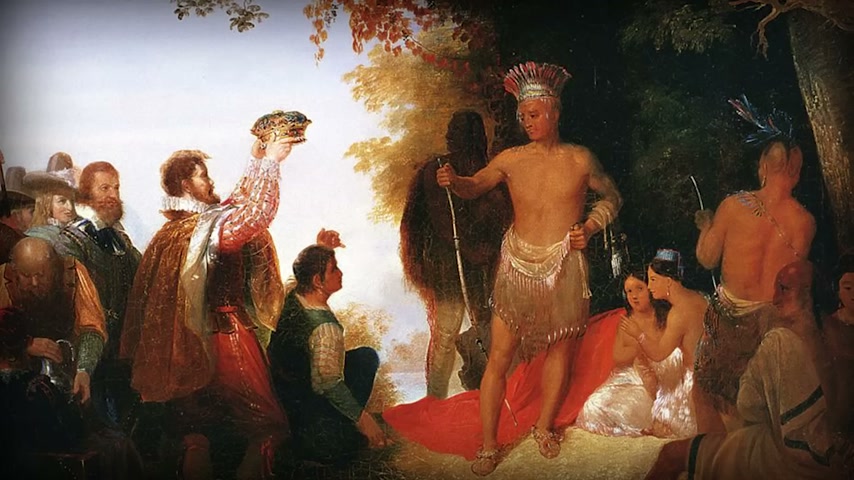
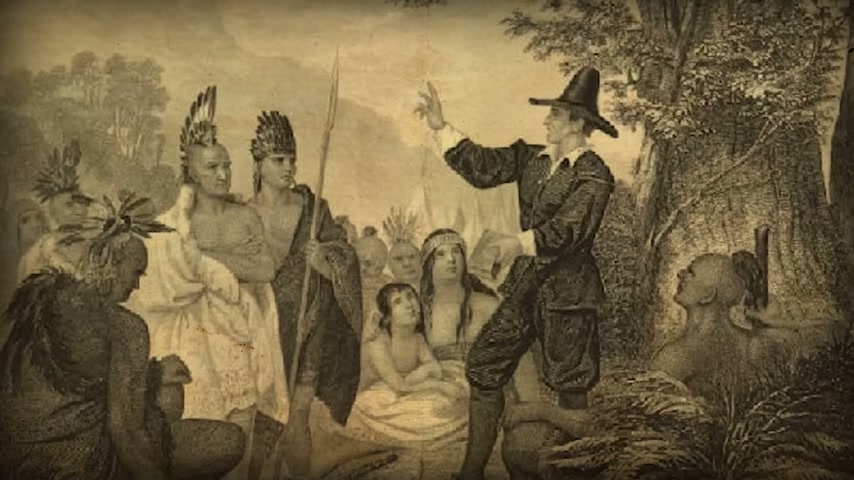
The English who reached the Chesapeake in 1607 landed in the territory of a powerful Native leader, Wahunsenacawh. The English called him Powhatan, which was really his title and the name of his home people. He led a paramount chiefdom of more than 30 Algonquian-speaking groups. Green’s line that mispronouncing names was the English “thing” is a joke, but the point behind it is real: the English rarely bothered to learn how Native people named themselves.
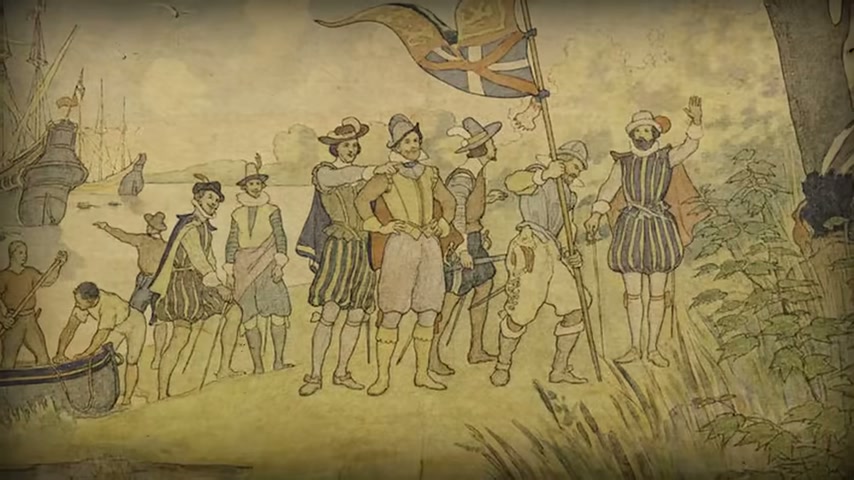
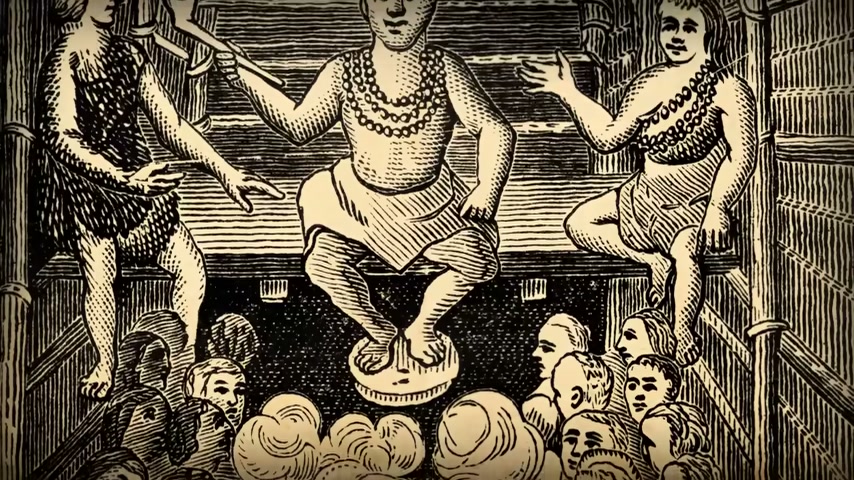
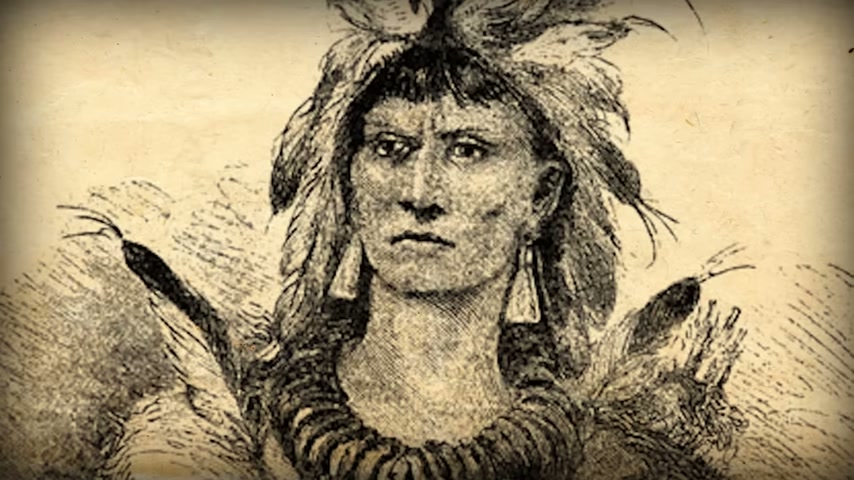
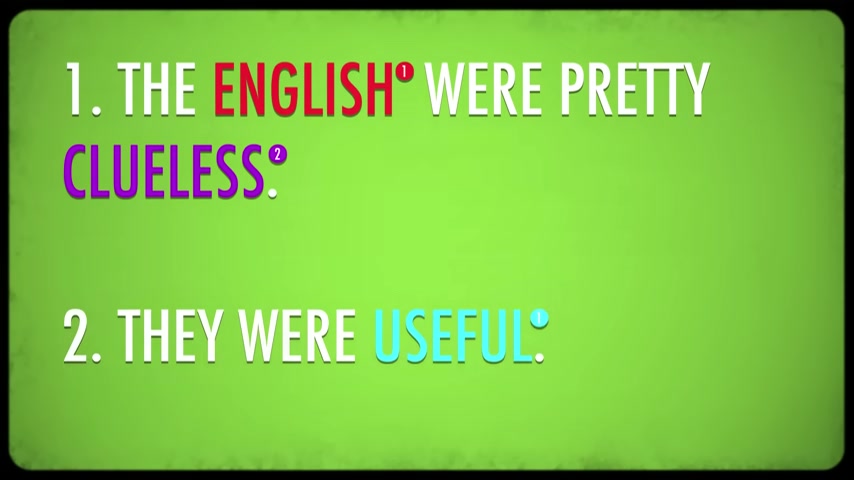
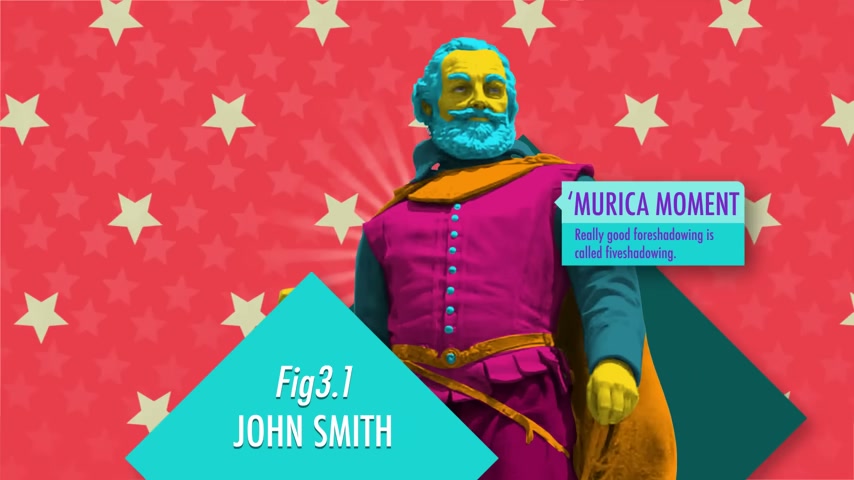
Green’s summary of Powhatan’s thinking comes in two numbered points. First, the English were hopeless at feeding themselves. Second, they had guns, which made them useful allies against Powhatan’s rivals. So he helped them, and for a while the colony’s leader John Smith even ordered the colonists to stop stealing Native food. Green flags that order as foreshadowing: the stealing would come back.
The relationship worked, Green says, because it was mutually beneficial, a rule he applies to friendships and nations alike. He adds “post-smallpox” as an aside: epidemics had already hit many coastal peoples before Jamestown. And the Virginia Company needed trade, since there was no gold or silver to send home.
1:35 – 2:42 Thought Bubble: trade and its side effects
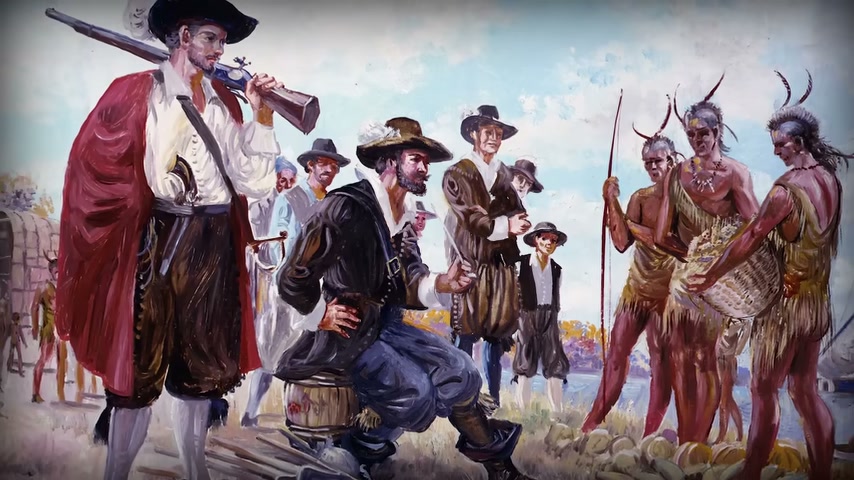
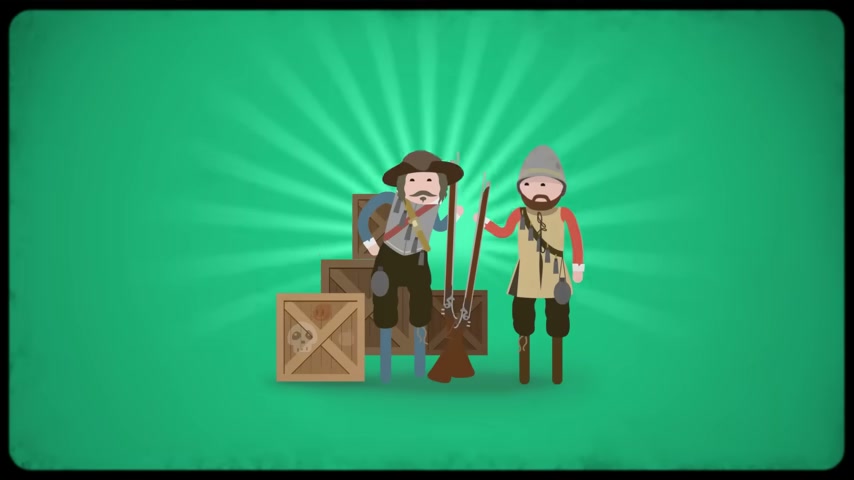
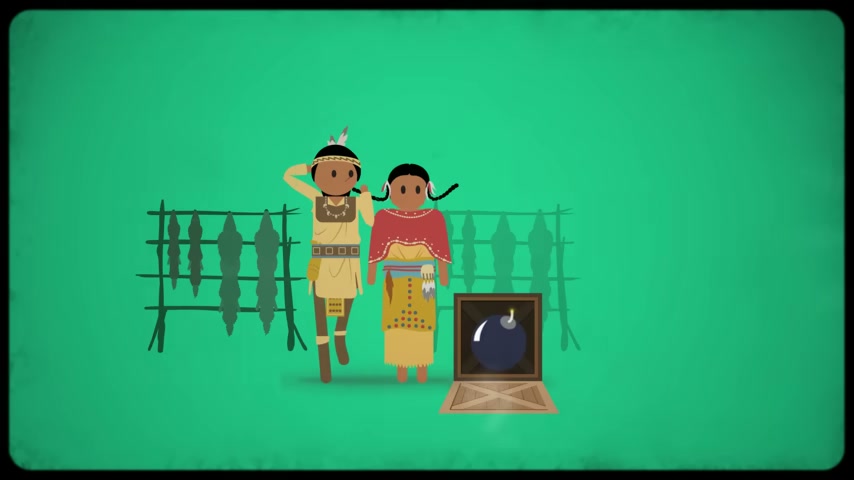
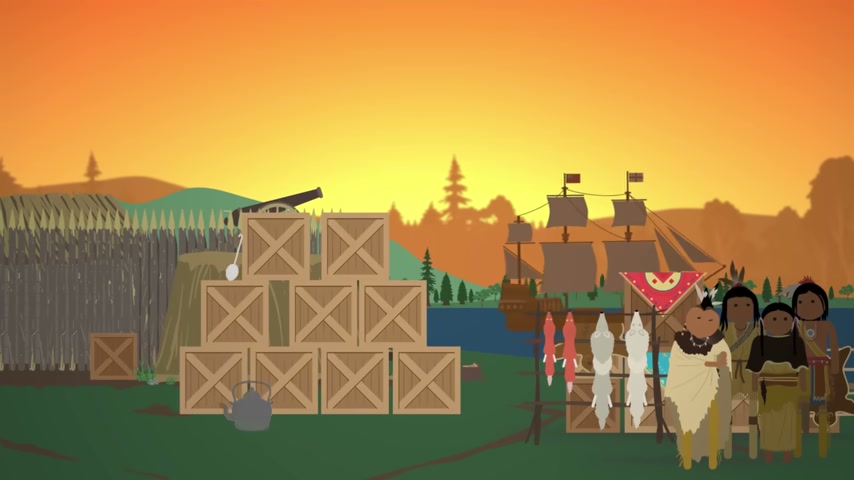
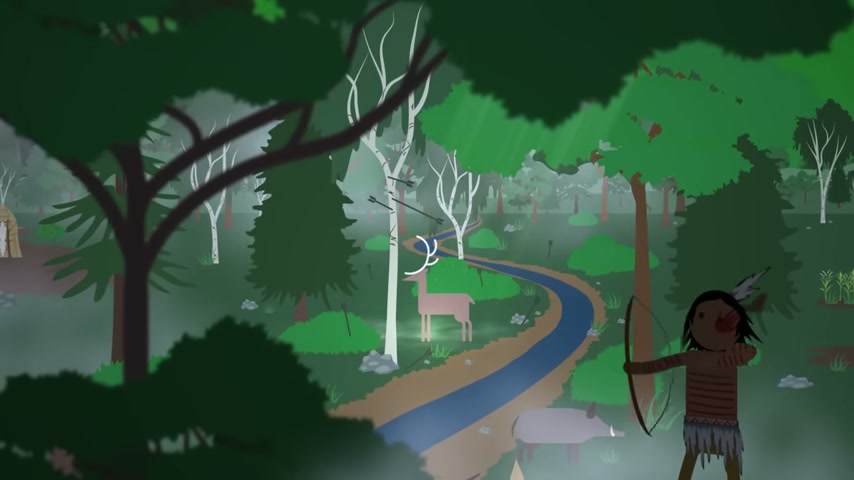
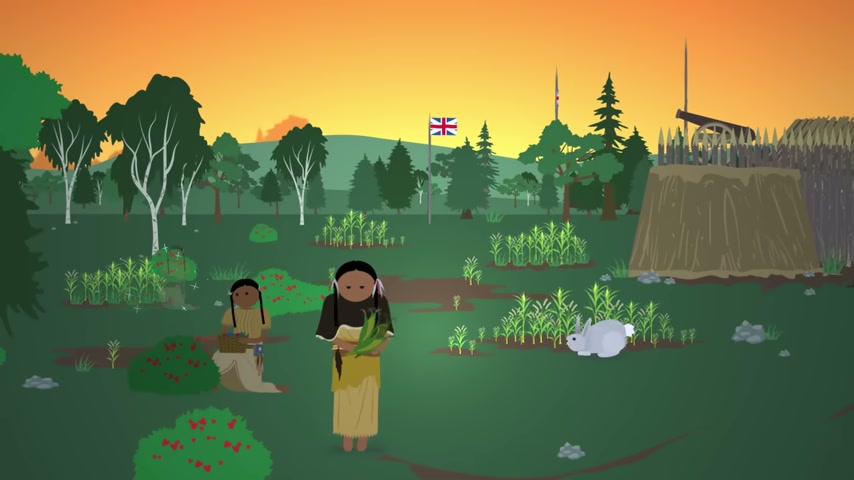
The Thought Bubble starts by correcting a common picture of trade between Europeans and Native peoples, in which clever Europeans cheat innocent “primitives”. Green calls that inaccurate. Both sides swapped what they had too much of for what they lacked. The English gave iron tools, utensils, guns and woven cloth; Native peoples gave furs and, in the early years, food, which they had plenty of.
The problems came from side effects, and there were three.
- Gender roles. To supply furs, Native men spent more time hunting and less helping with farming. In many eastern Woodland societies women did most of the farming and men hunted, so this shifted the balance of work and status.
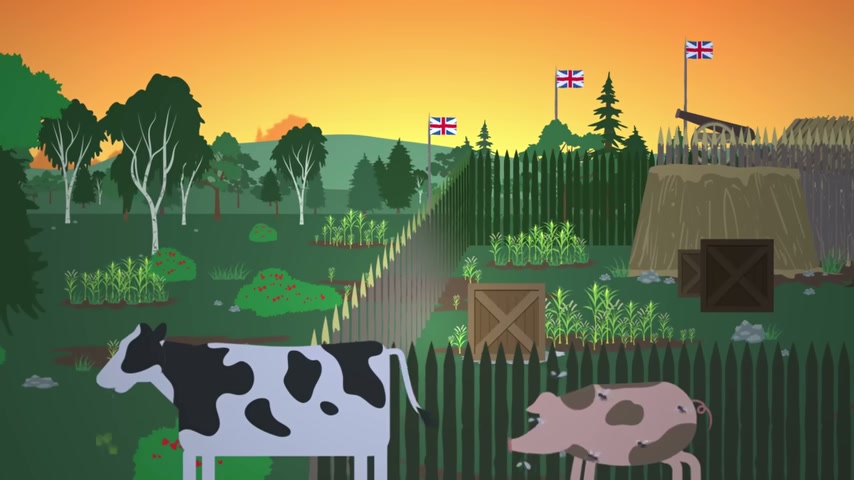
- Land. The English fenced some land and kept Native people off it. Worse, they let pigs and cattle roam free, and the animals ate Native crops in unfenced fields.
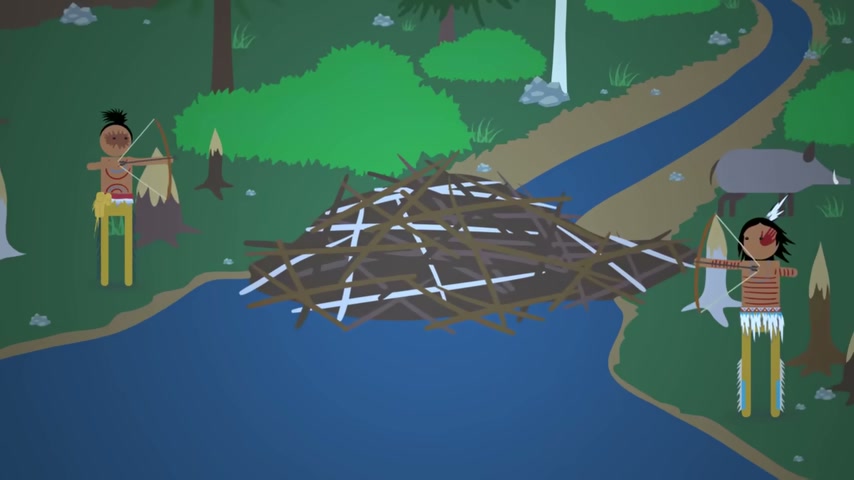
- War between tribes. As European demand for fur grew, Native groups fought each other for the best hunting grounds, and these wars now involved guns.
2:42 – 3:28 Thought Bubble: Pocahontas, John Smith and the slide to war
Green calls this a relatively calm period, and then tells the most famous story of it. John Smith was captured by Powhatan’s men in December 1607 and, by his own account, saved from execution when Powhatan’s young daughter Pocahontas threw herself over him. Green’s view is that it was probably a ritual staged by Powhatan to show his power over the English. That is one reading. A fuller note: Smith only published the rescue story in 1624, long after the fact, and some historians doubt it happened at all. Pocahontas was about 11 at the time.
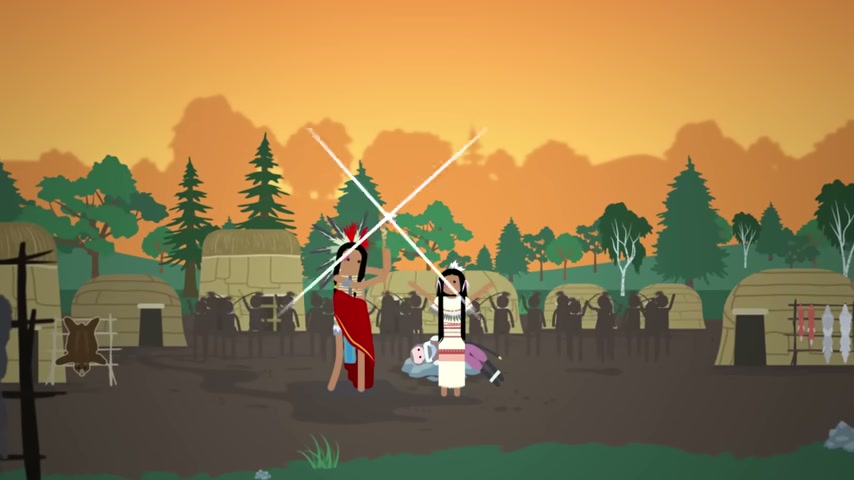
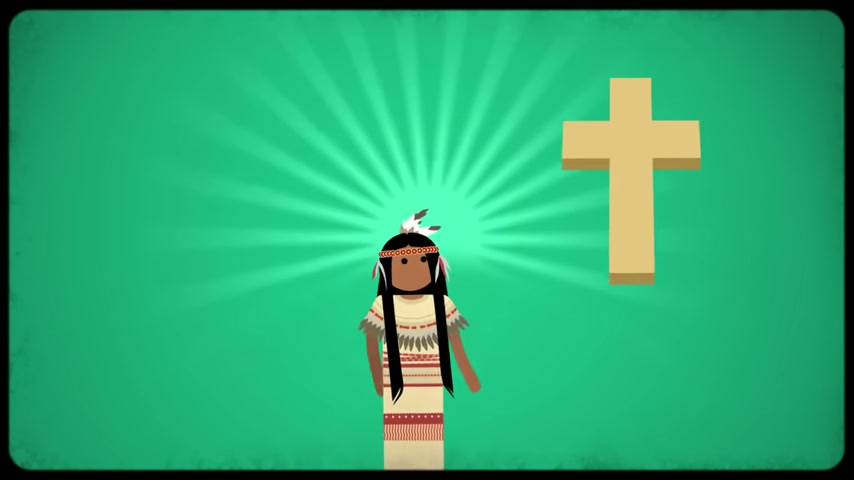
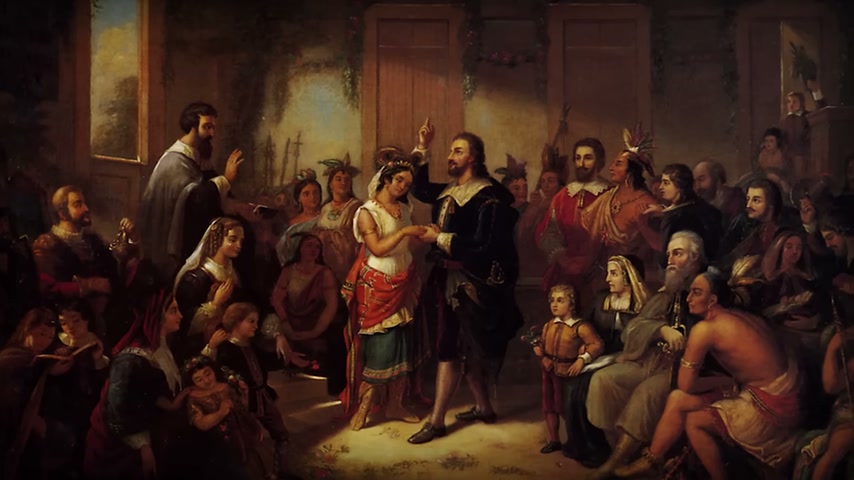
The rest of her life is less romantic. She never married Smith. In 1613 the English kidnapped her and held her for ransom. While captive she converted to Christianity, took the name Rebecca, and in 1614 married the tobacco planter John Rolfe. In 1616 she went to England, where she was presented as a model of a converted, “civilized” Native woman, and she died there in 1617 as she was about to sail home. Green’s “stupid disease” line is a running joke from episodes 1 and 2.
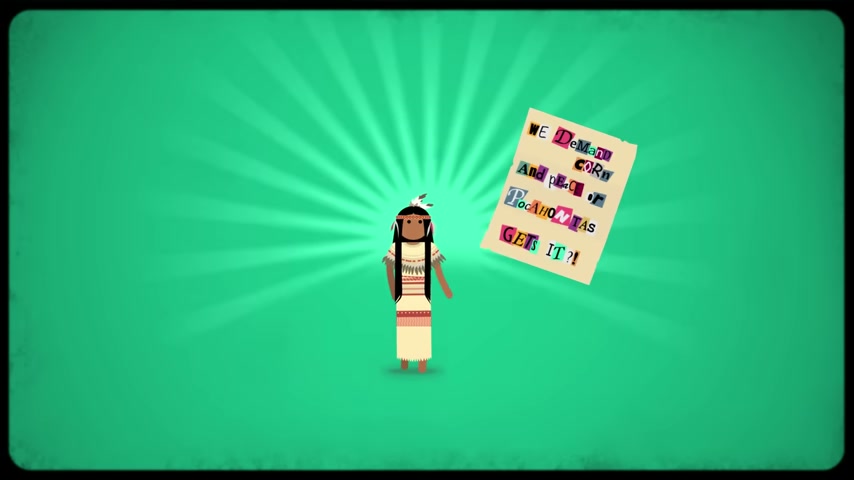
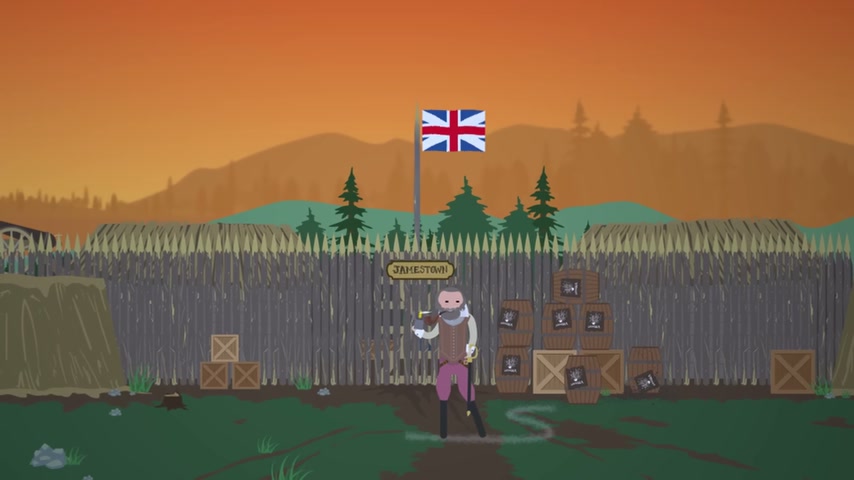
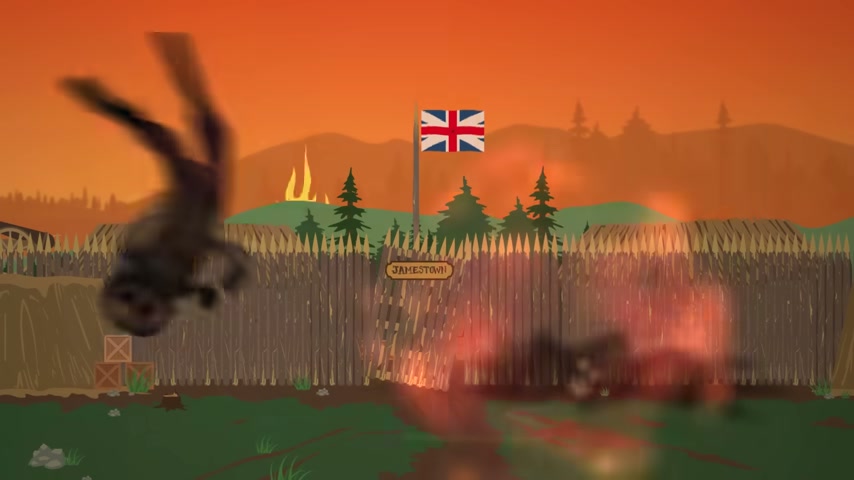
Smith matters to the story anyway. After he was badly hurt in a gunpowder accident and sailed home in 1609, relations fell apart. The English went back to taking Native crops and began killing Native people in raids and massacres. This became a war that lasted until about 1614, when Pocahontas’s marriage brought a pause.
3:28 – 4:21 1622, 1644 and the end of the Virginia Company
After the peace that followed the Rolfe marriage, the break came in 1622. Opechancanough, Powhatan’s brother and eventual successor (Powhatan died in 1618), led a coordinated surprise attack on the English settlements. By then it was obvious that the English were not just there to trade; tobacco was making them want more and more land. A detail the episode skips: the attack killed about 347 colonists, roughly a quarter of the English in Virginia.
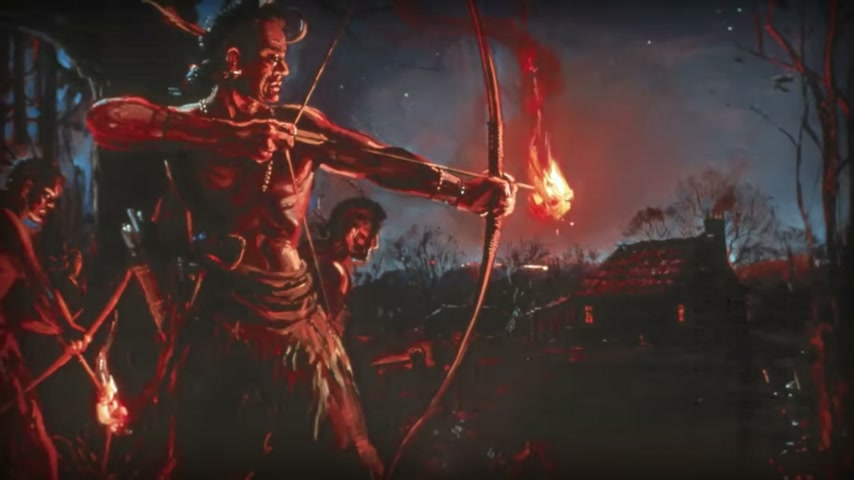
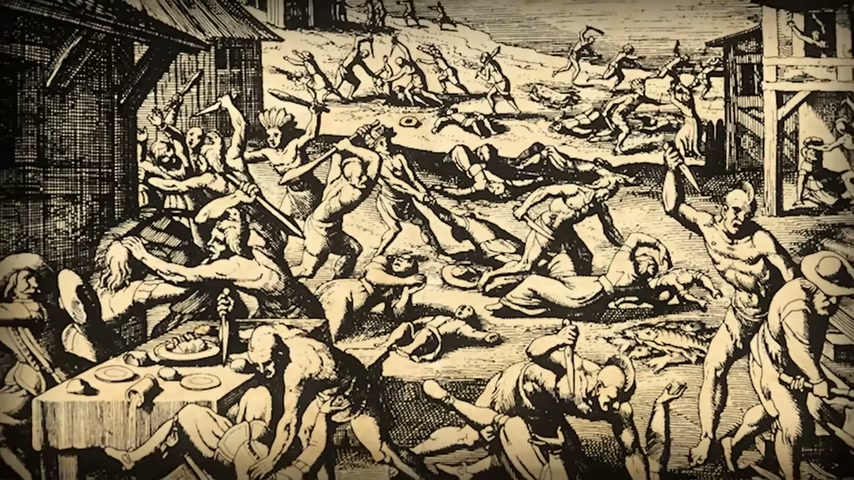
The English struck back hard, and the uprising failed. A second uprising in 1644, also under Opechancanough, failed too. One correction to Green’s wording: the treaty that ended that war came in 1646, after Opechancanough had been captured and killed. It made the roughly 2,000 remaining Powhatan people tributaries of the English and confined them to lands beyond a boundary line. Green’s “reservations in the West” is a joke about scale: “the West” here meant the western part of Virginia, not the Great Plains.
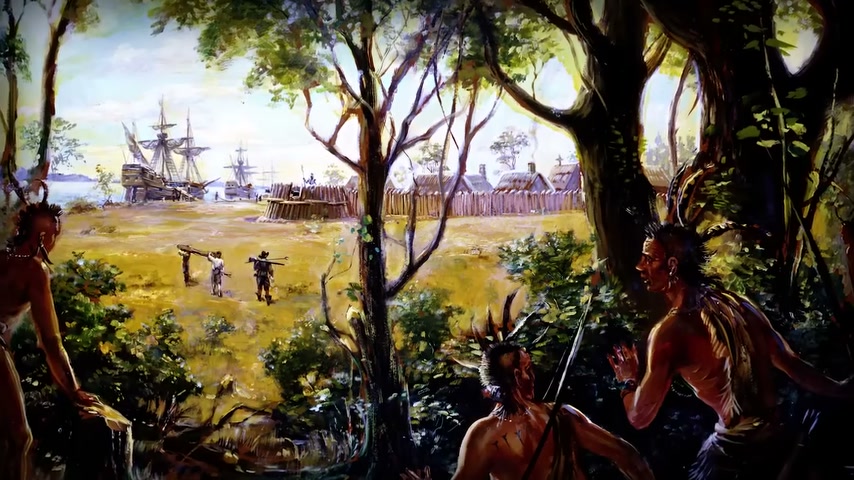
The 1622 war also finished off the Virginia Company, which never made a profit. Green says that of the 6,000 colonists it sponsored, only 1,200 were still alive “by 1644, when Virginia became a royal colony”. The date is off. The Crown took the charter away and made Virginia a royal colony in 1624, and the figure of about 1,200 survivors fits that year. His closing line that governments are better at governing than corporations is a joke, not a historical conclusion.
4:21 – 5:45 New England: land, salvation and “going native”
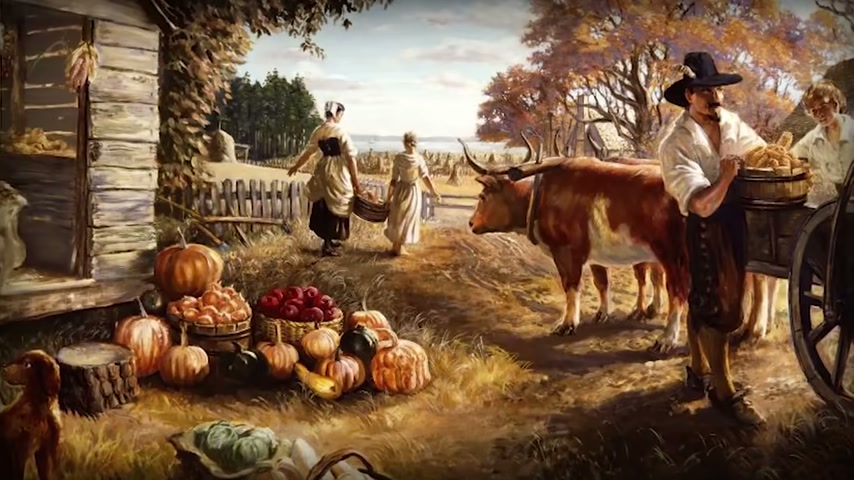
Back in New England, Green starts with sarcasm: after the first Thanksgiving came “centuries of mutually beneficial trade and generosity”. In fact the pattern looked a lot like Virginia. Some Puritans, notably Roger Williams (from episode 2), tried to deal fairly with Native people, but most settlers believed Native peoples were not “properly using the land” and so could be pushed aside. This was a common English argument: land that was not farmed and fenced in the English way was seen as empty.
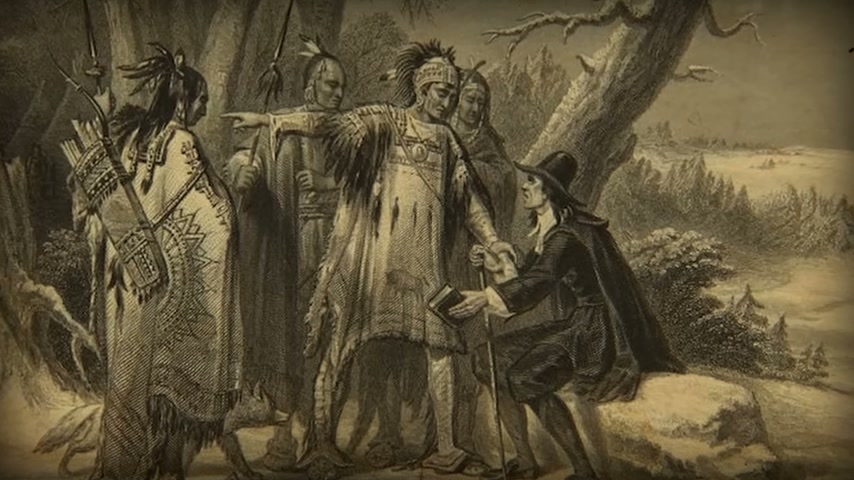
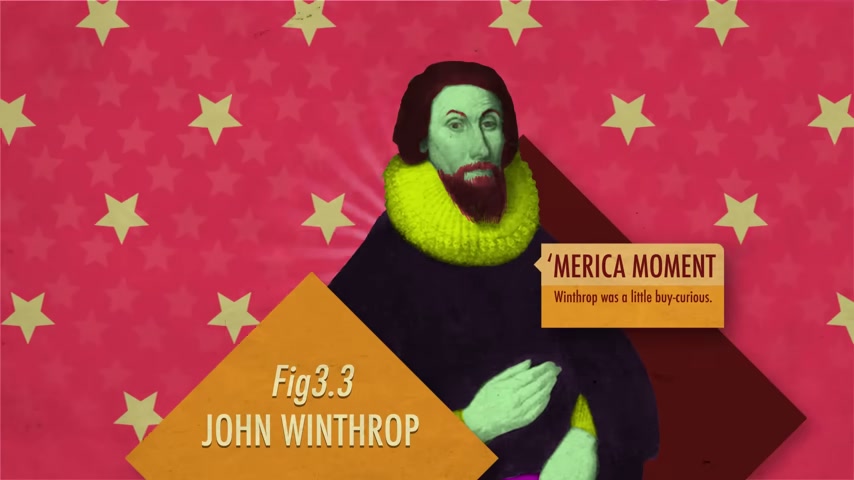
John Winthrop, the Massachusetts Bay governor from episode 2, at least saw that buying land was better than seizing it. But Puritan purchases came with conditions, and the main one was that the Native sellers had to accept English authority. Buying land was a way of gaining political control, not only property.
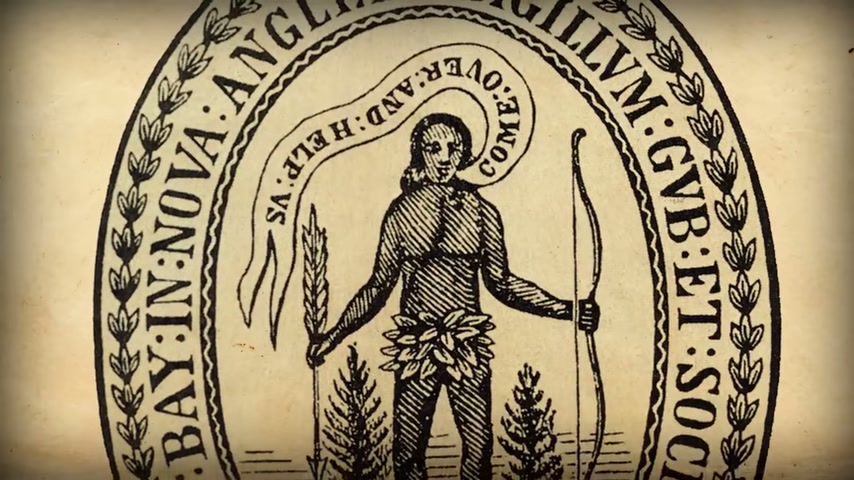
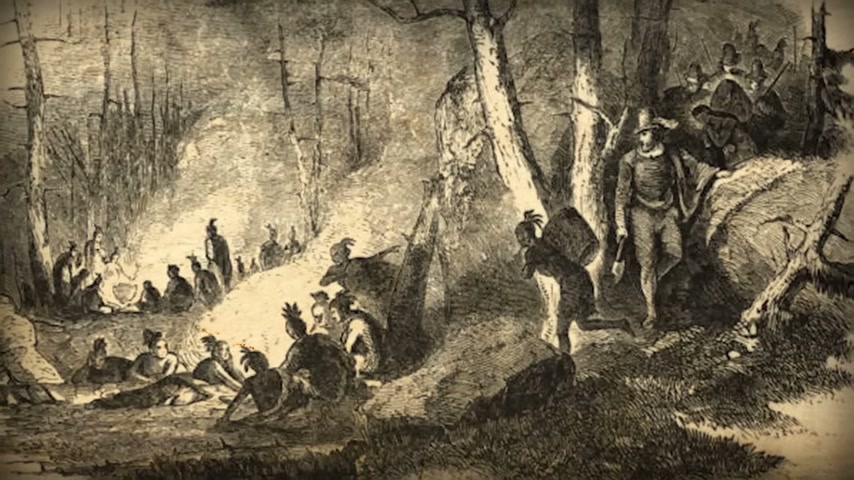
The Puritans had mixed feelings about Native people. On one side, they saw them as heathens who needed saving. The Massachusetts Bay Colony’s seal (from 1629) shows a Native man saying “Come over and help us”, a line borrowed from the Bible’s Book of Acts, where a man begs St. Paul to come and preach. On the other side, they worried that Native life, with its relative abundance and equality, especially for women, might tempt colonists to “go native”. According to the episode, in 1642 the colony punished anyone who left to live with Native people with three years of hard labor.
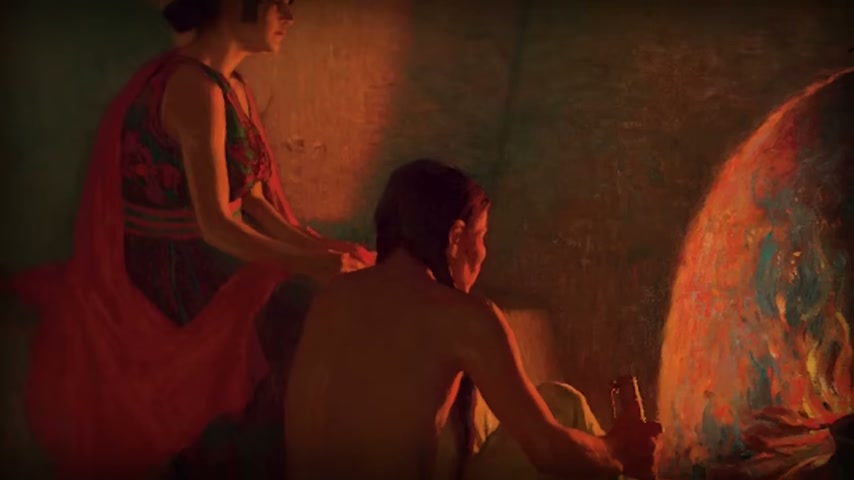
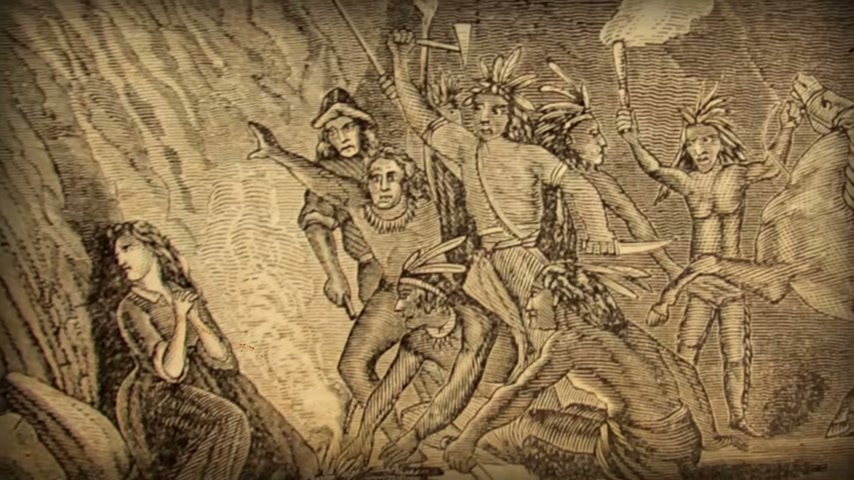
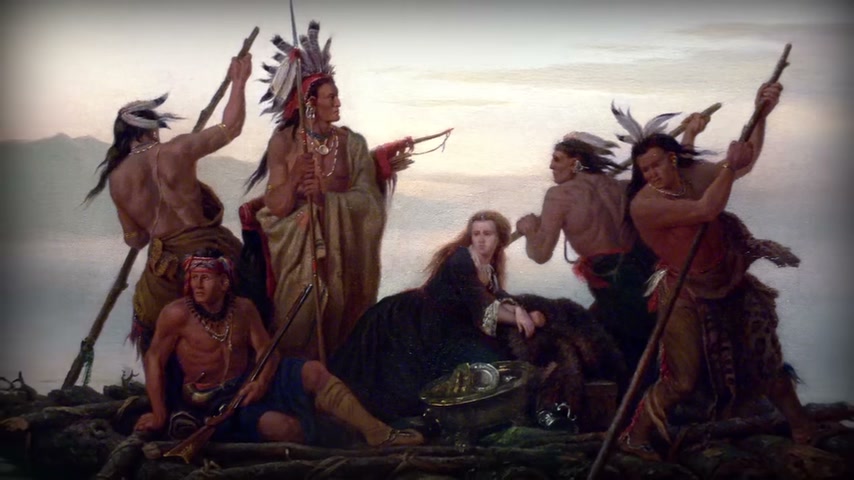
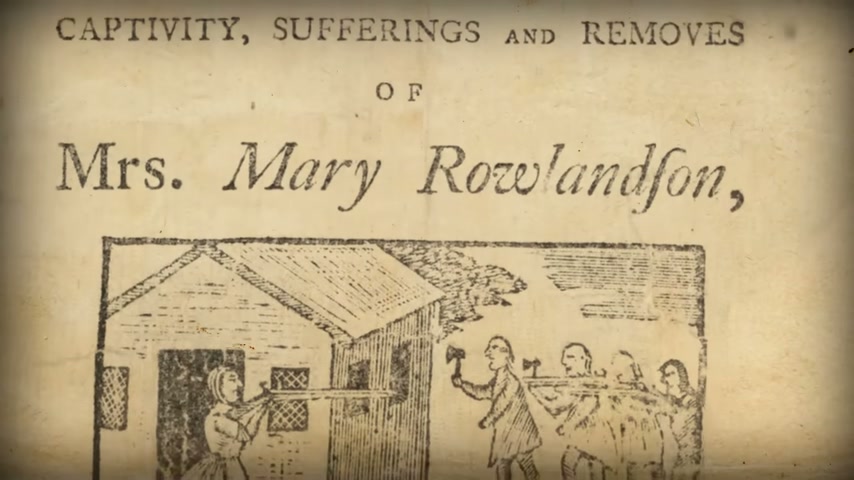
Green adds that there were also anti-Native books. Captivity narratives, in which colonists described being held by Native people and longing to return to Christian society, were very popular. The best known is Mary Rowlandson’s The Sovereignty and Goodness of God (published 1682), which also admits that her captors often treated her well. Some context: Rowlandson was captured in a raid on Lancaster, Massachusetts, during King Philip’s War in 1676 and ransomed after about 11 weeks. “Propaganda” is a strong label for her book. It is mainly a religious work that reads her suffering as a test from God, though it did spread fear of Native people.
5:45 – 6:38 The Pequot War
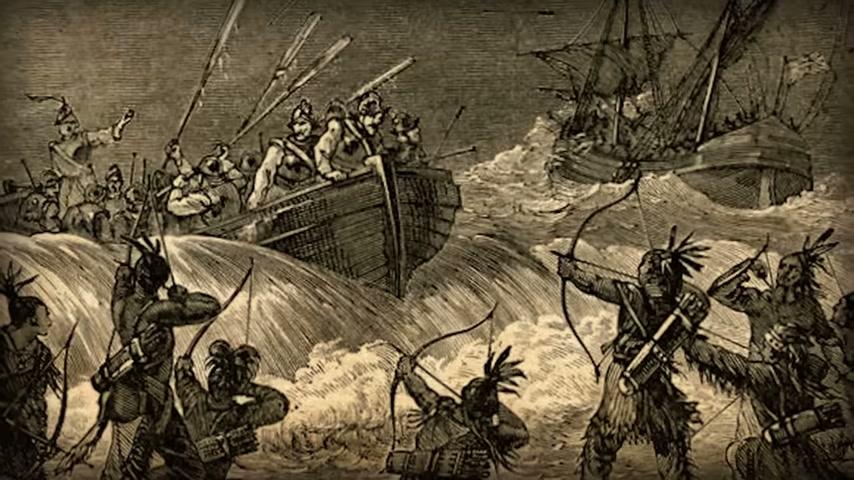
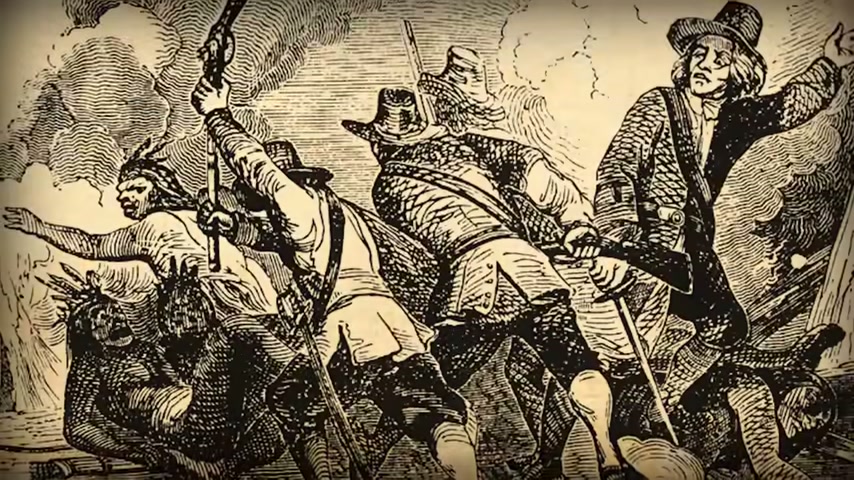
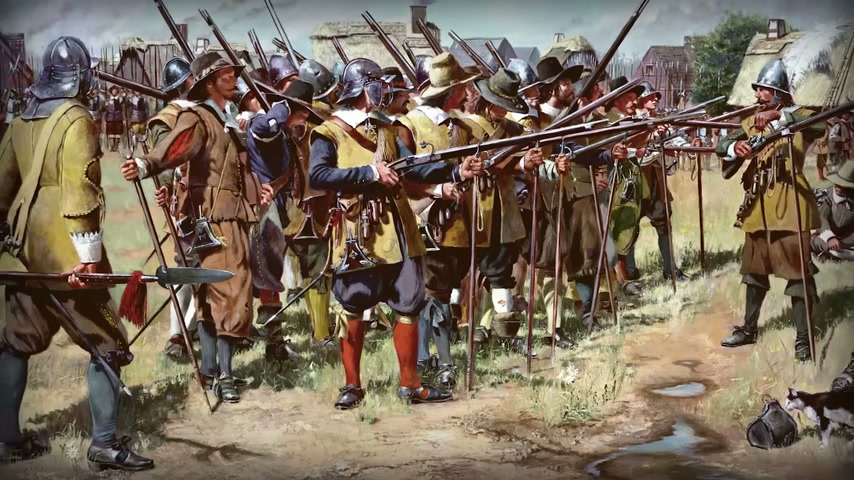
New England’s Native peoples had no single overarching leader like Powhatan, but conflict came anyway. The Pequot War began after the English blamed the Pequots for the 1636 killing of the trader John Oldham. Soldiers from Massachusetts and the new colony of Connecticut, joined by Narragansett allies who saw a chance to weaken their Pequot rivals, attacked the fortified Pequot village at Mystic in 1637. They set it on fire and killed more than 500 people, according to the episode; estimates run from about 400 to 700, mostly women, children and old people.
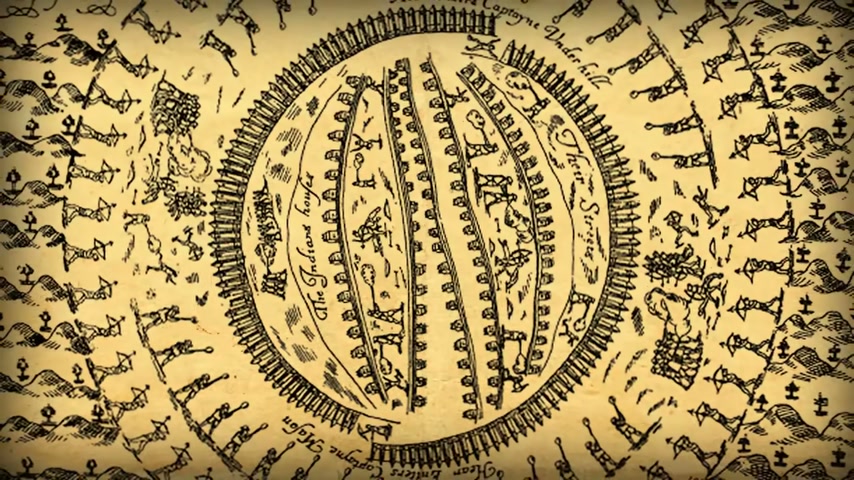
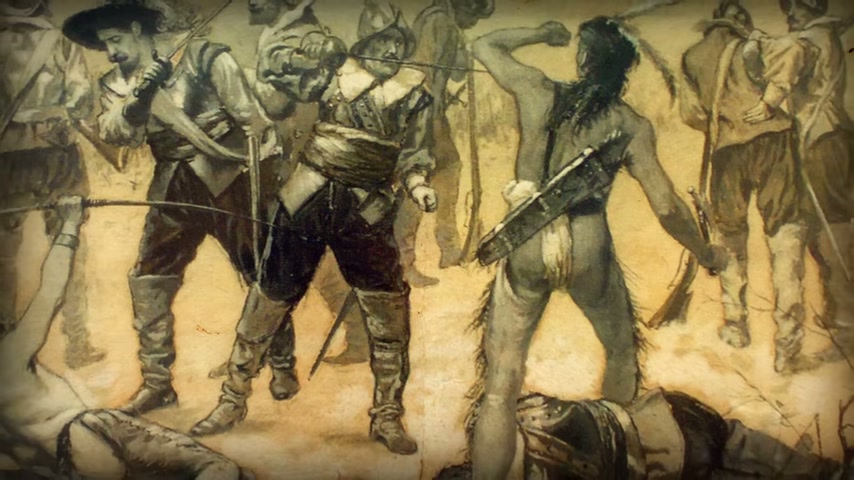
By the end almost all the Pequots had been killed or sold into slavery in the Caribbean; others were handed over to the Narragansett and Mohegan allies. The war opened the Connecticut River valley to English settlement and showed that Native peoples, outnumbered and outgunned, would struggle to resist.
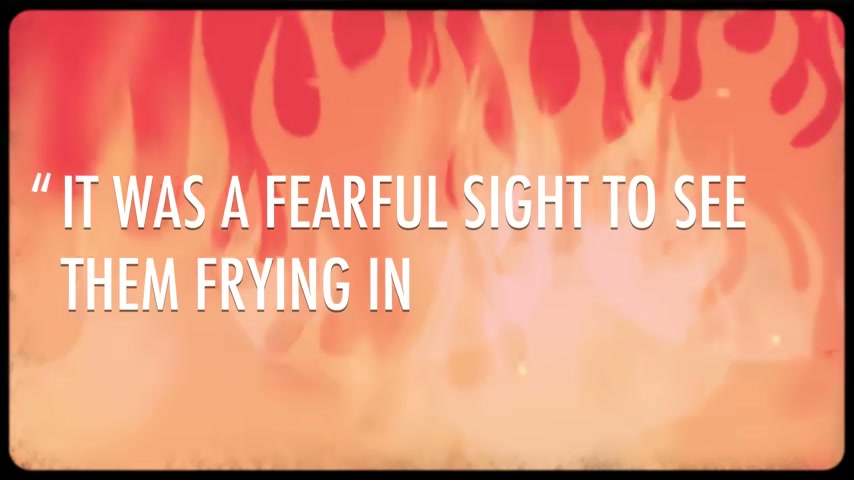
Green says the massacre shocked “even some Puritans, like William Bradford”, and quotes Bradford’s line about the victims “frying in the fire”. This needs a correction. Bradford, the governor of Plymouth, was not there, and in his history Of Plymouth Plantation the same passage goes on to call the victory a “sweet sacrifice” for which the English praised God. He was describing the horror as part of a triumph, not condemning it.
6:38 – 8:20 King Philip’s War
The biggest Native attack on New England came in 1675, in what the English called King Philip’s War. It was led by Metacom, a Wampanoag leader and the son of Massasoit, the Pilgrims’ ally in episode 2, so it is also called Metacom’s War. Green jokes that “King Philip” shows the English’s “fantastic cultural sensitivity”. That one is not fair: Metacom had taken the English name Philip himself years earlier, as his brother took the name Alexander.
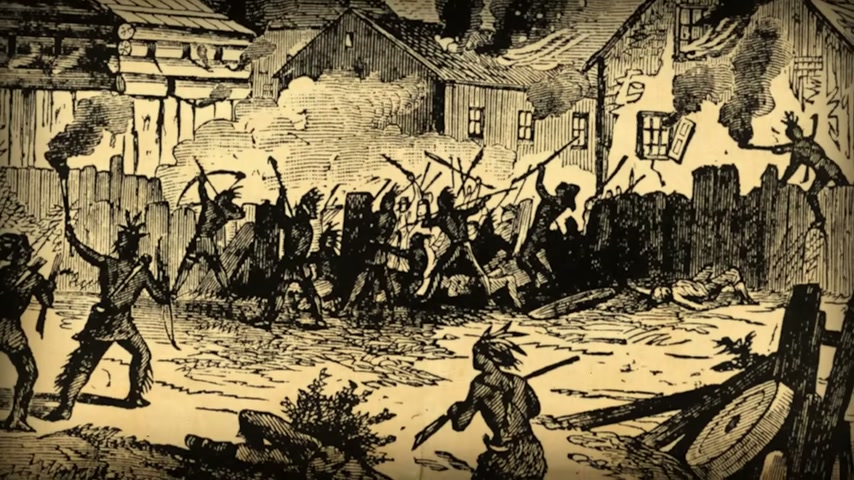
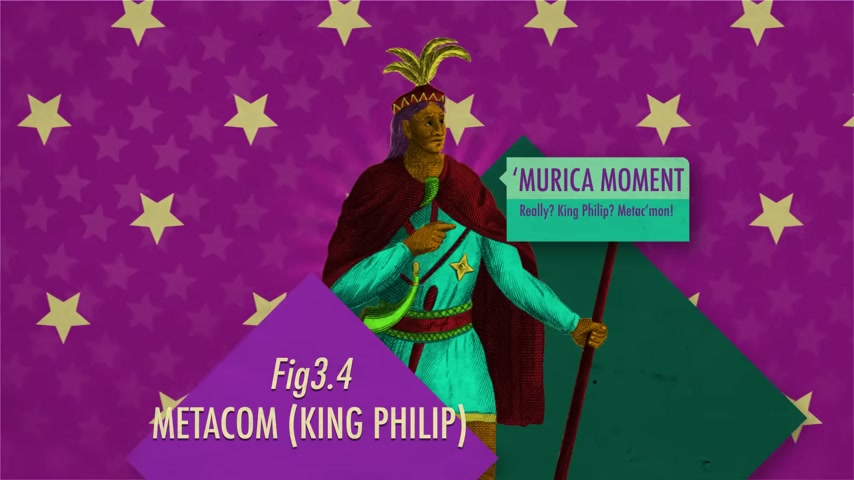
The war was brutal on both sides and nearly ended English settlement in the region. The fighting lasted about two years. The episode’s figures: Native forces attacked half of the roughly 90 English towns and destroyed 12; about 1,000 of 52,000 colonists and 3,000 of 20,000 Native people died. In proportion to population, it was one of the deadliest wars in American history.
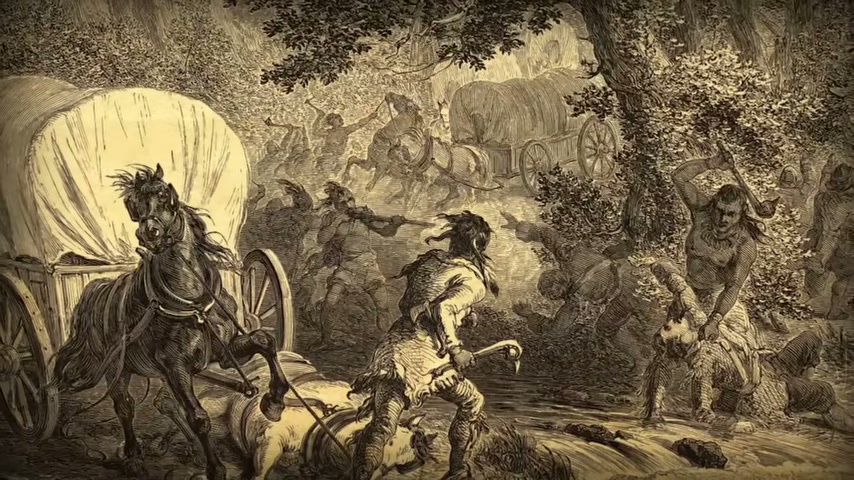
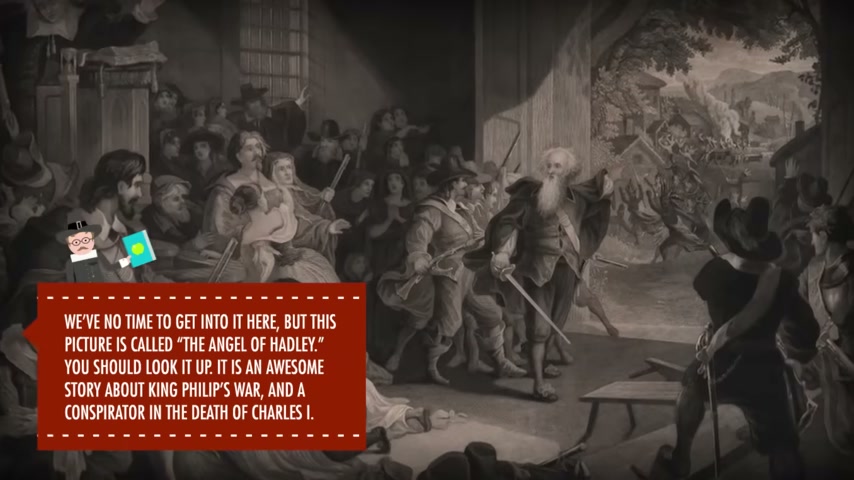
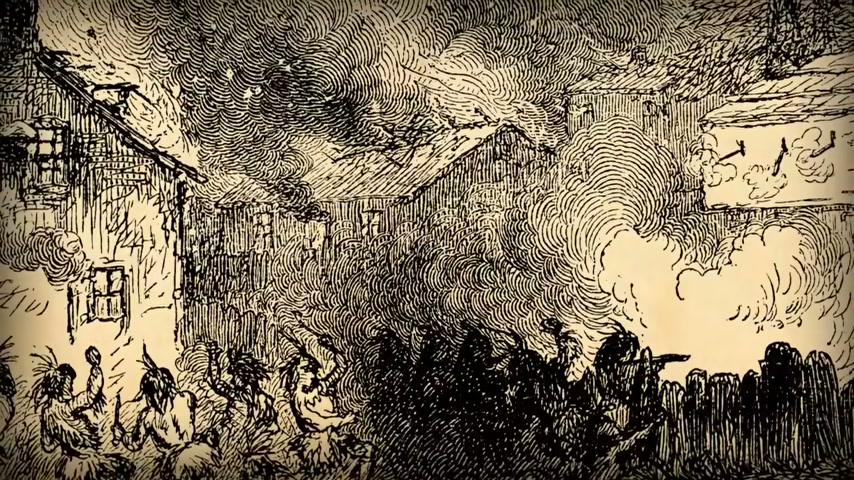
The English side was just as brutal. The Great Swamp Fight of December 1675, an English attack on a fortified Narragansett village in Rhode Island, was really a massacre in which hundreds died, including many women and children. When Metacom was killed in August 1676, the English cut off his head and displayed it on a pole at Plymouth for decades. Many captured Native people, including Metacom’s wife and son, were sold into slavery in the West Indies.
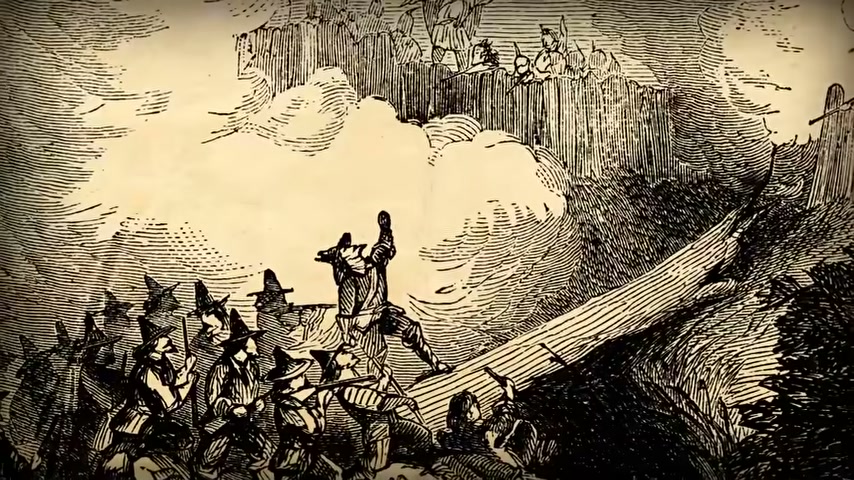
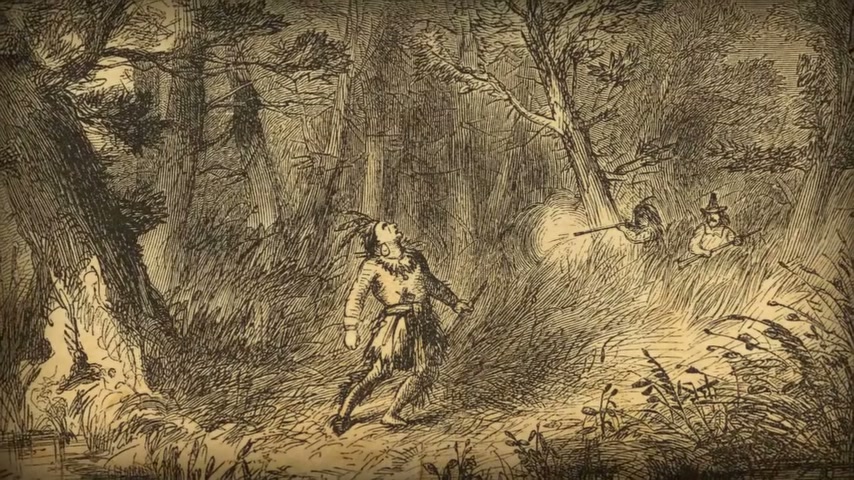
For the Native side, Green reads from Nathaniel Saltonstall, a colonist who wrote accounts of the war. Saltonstall accuses Native fighters of raping and murdering women captives and of mutilating colonists’ cows and leaving them to die. Keep in mind that this is an English writer reporting atrocity stories during the war, so it is evidence of what colonists believed as much as of what happened.
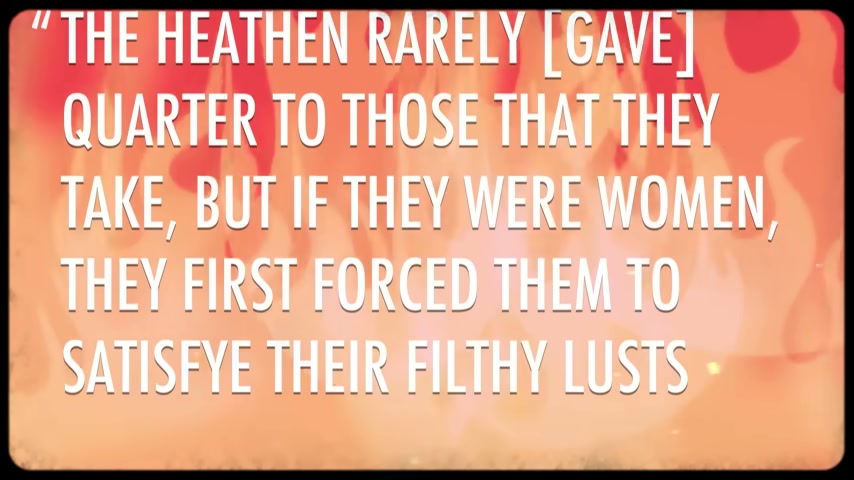
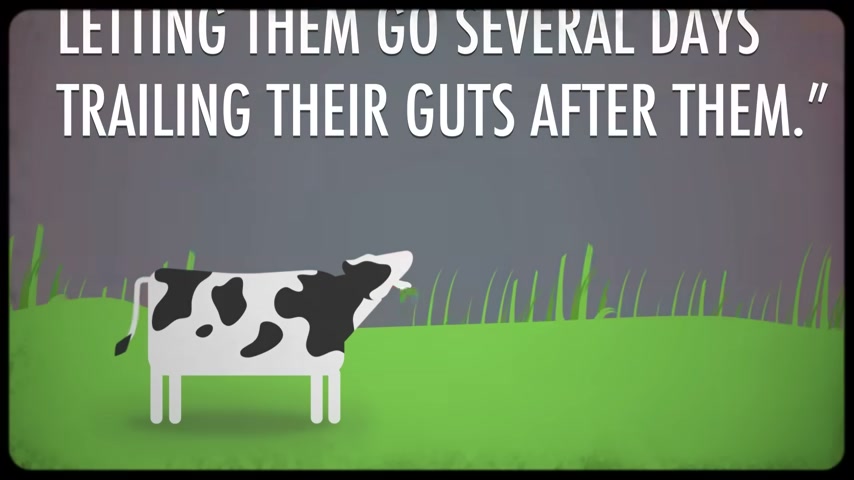
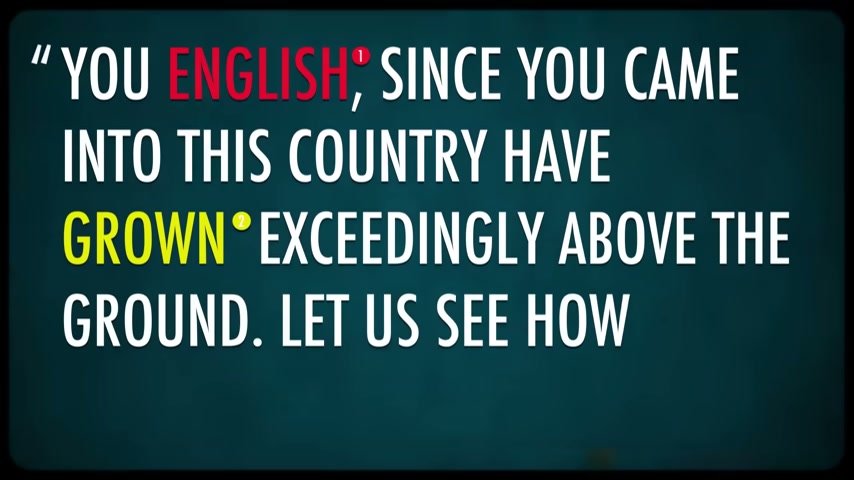
Green draws the key lesson from the livestock. Native people correctly saw colonization as a threat to their whole way of life, and that included the English animals that trampled their fields and whose grazing needs pushed the English to take more land. Some stories carry the same symbolic message. In one, Native fighters buried a dead colonist with a Bible in his body and mocked the English for having “grown” so much above ground since they arrived; now they could see how well they grew planted in it.
8:20 – 10:05 Mystery Document: a jeremiad from 1675
Green bridges to the Mystery Document by noting that the Native peoples were not the only ones who felt their way of life was threatened. The rules are the same as before: guess the author or get shocked. The text says that a righteous God has let the “barbarous heathen” rise up against the colonists, burning towns and killing people, as a punishment and a warning, so that they will examine their ways and turn back to God after a “great backsliding”.
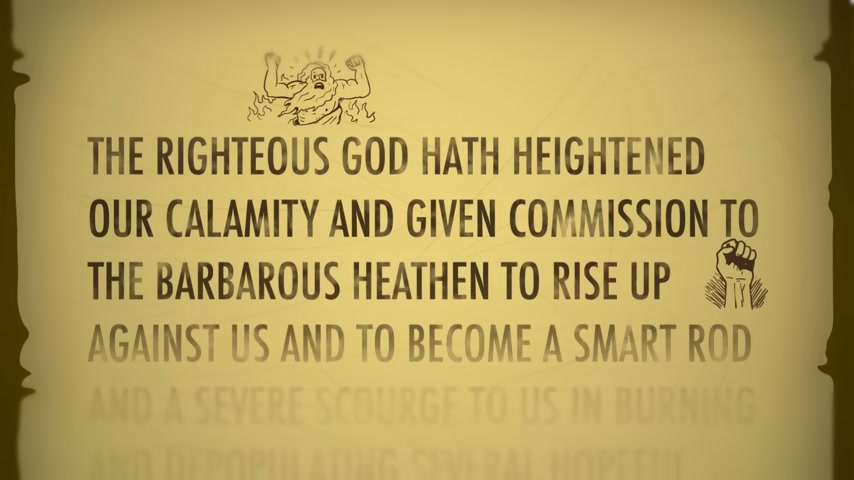
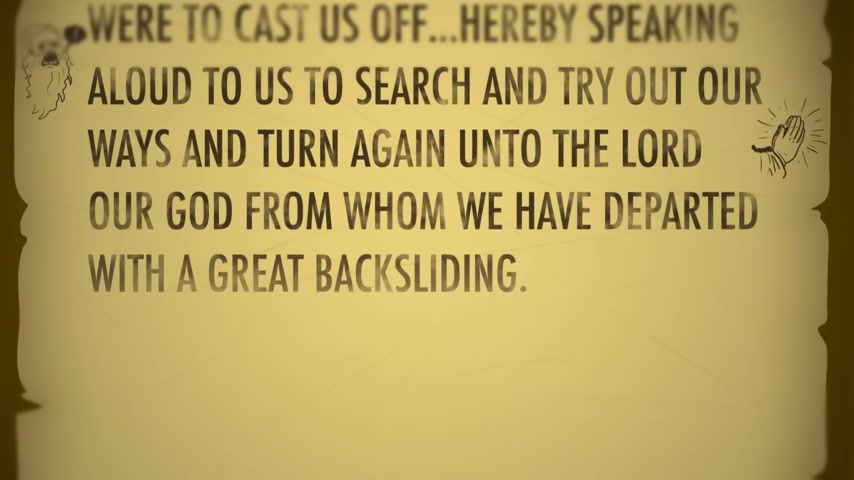
Green notices the plural “we”, the single God and the “heathens”, but cannot name an author, and gets shocked. The answer is the laws passed by the General Court of Massachusetts in 1675, the colony’s legislature, which framed the war as punishment for the colony’s sins. He protests that from now on the Mystery Document must have one human author, and is shocked again.
The lesson Green draws is the important part. The document shows how Puritans understood events: as messages from God. It also shows that within about 45 years of founding Massachusetts Bay, the Puritans already felt their mission to be a model Christian community, Winthrop’s “city upon a hill” from episode 2, had partly failed. If they had been righteous enough, God would not have sent the war. So both sides saw King Philip’s War as a fight to preserve a way of life.
10:05 – 10:53 Why tell these bloody stories?
The closing argument answers an obvious question: why spend an episode on massacres and atrocities? Green gives two reasons. First, much of what Americans learn about their history has been cleaned up to fit a flattering myth, the same theme as episode 2. Second, Native Americans have been pushed to the margins, both on the map and in the story, so that they are either forgotten or seen only as victims to pity or villains to fear. Knowing how they resisted shows that they were people who acted in history, not just people history happened to. And the history of Indigenous peoples is part of American history, not a separate subject.
Skip list
- 0:06 – 0:15 The girlfriend jokes with “Me from the past”.
- 0:19 – 0:28 Theme music.
- 9:17 – 9:25 The aside about pronouncing “scourge” and “Yahoo”.
- 9:38 – 9:49 The second shock and Green’s complaints.
- 10:53 – 11:27 Credits, the “crack historians” joke and the subscribe card.
Key terms
- Powhatan (Wahunsenacawh) — paramount chief of more than 30 Algonquian-speaking groups in the Chesapeake region; “Powhatan” was his title and the name of his people.
- Paramount chiefdom — a Native political system in which one leader ruled over many local chiefs, who paid him tribute.
- Pocahontas — Powhatan’s daughter; kidnapped by the English in 1613, married John Rolfe in 1614, died in England in 1617.
- Opechancanough — Powhatan’s brother and successor, who led the uprisings of 1622 and 1644.
- Royal colony — a colony governed directly by the Crown; Virginia became one in 1624 when the Virginia Company lost its charter.
- Captivity narrative — a popular genre of colonial writing describing life as a captive among Native people, such as Mary Rowlandson’s (1682).
- Pequot War (1636–38) — war between the Pequot and the English colonies with Native allies; included the 1637 massacre at Mystic.
- King Philip’s War (1675–76) — war between New England’s colonies and a Native coalition led by Metacom (“King Philip”); also called Metacom’s War.
- Great Swamp Fight (1675) — English attack on a fortified Narragansett village in Rhode Island that killed hundreds.
- General Court — the elected legislature of the Massachusetts Bay Colony.
- Jeremiad — a sermon or text that blames a community’s troubles on its sins and calls it to repent; named after the prophet Jeremiah.
Review questions
- Why did Powhatan decide to help the English at Jamestown at first?
- What did each side gain from trade, and why does Green reject the idea that Europeans simply tricked Native peoples?
- Name three side effects of trade and settlement that caused conflict between the English and Native peoples.
- How does the real story of Pocahontas differ from the popular version?
- Why did Opechancanough lead an uprising in 1622, and what happened to the Virginia Company afterward?
- In what two contradictory ways did the Puritans see Native Americans, and what evidence does the episode give for each?
- What did the Pequot War show about the balance of power in New England?
- Why does Green think the Native attacks on colonists’ cattle reveal something important about King Philip’s War?
- What does the 1675 Mystery Document tell us about how the Puritans understood the war and their own colony?
- What two reasons does Green give for telling these violent stories?
FAQ
Did Pocahontas really save John Smith's life?
Nobody knows. Smith was captured in December 1607, when Pocahontas was about 11, but he only told the rescue story years later, in his 1624 Generall Historie. Some historians doubt it happened at all; others, like the episode, read it as a ceremony staged by Powhatan to show his power over the English and adopt Smith as a subordinate. Pocahontas never married Smith. She was kidnapped by the English in 1613, married John Rolfe in 1614, and died in England in 1617.
Why did relations between the Powhatan and the English break down?
At first both sides gained: the English got food, and Powhatan got metal tools and guns. But the English kept coming, fenced land, let their livestock eat Native crops and took food by force. Once tobacco made Virginia profitable, settlers wanted more and more land. In 1622 Opechancanough led a surprise attack that killed about a quarter of the colonists; the English answered with years of raids, and a second uprising in 1644 also failed.
What was the Pequot War?
It was a war in 1636–38 between the Pequot people of southern New England and the English colonies of Massachusetts Bay, Plymouth and Connecticut, with Narragansett and Mohegan allies. Its best-known event is the May 1637 attack on the fortified Pequot village at Mystic, where the English burned the village and killed roughly 400 to 700 people, most of them not warriors. Survivors were killed, handed to allied tribes, or sold into slavery in the Caribbean, and the English opened the Connecticut River valley to settlement.
What was King Philip's War, and why is it called that?
It was a war in 1675–76 between the English colonies of New England and a coalition of Native peoples led by Metacom, a Wampanoag leader and the son of Massasoit, the Pilgrims' ally. The English called Metacom 'King Philip' because he had taken the English name Philip, not simply because they could not pronounce his own. In proportion to population it was one of the deadliest wars in American history. Metacom was killed in August 1676, and many captured Native people were sold into slavery.
What is the Mystery Document in Crash Course US History
It is from the preamble to laws passed by the General Court of Massachusetts in 1675, during King Philip's War. The court explains the war as God's punishment for the colonists' sins and calls on them to reform. This kind of text, which treats disaster as a sign that a community has drifted from God, is called a jeremiad. Green guessed wrong and got shocked.
Studying another course? Paste its YouTube or Bilibili link on the home page to request a handout — or make your own with the desktop app (coming soon).