Crash Course US History #4, The Quakers, the Dutch, and the Ladies — notes and timestamps
Watch the video (12 min)
Watch the original video on YouTube
The full transcript isn't available yet.
The fourth episode of John Green’s Crash Course US History tries to fit about 150 years of colonial history into 12 minutes. Green admits up front that many courses skip this period because tests rarely ask about it, and then makes the case that it is worth knowing anyway. He covers the colonies the first episodes left out (Dutch New Amsterdam, Quaker Pennsylvania, Carolina), then a string of crises in the late 1600s: Bacon’s Rebellion in Virginia, the Dominion of New England, the Glorious Revolution and the Salem witch trials. He ends with ordinary life: farms, artisans, class, and the legal position of women. The pace is fast and several dates and numbers are off by a year or a little more, so these notes follow the episode’s order and correct the slips as they come up. Episode 2 (Jamestown and the Puritans) is useful background.
Key takeaways
- Colonial America was more than Jamestown and Massachusetts. The Dutch, Quakers and Carolina planters built colonies with very different aims (0:55).
- New Amsterdam was a business first. The Dutch admitted almost anyone useful to trade, and Dutch women had more economic freedom than they would under English rule after 1664 (1:10).
- Pennsylvania was tolerant and open, but not forever. Penn’s Quaker colony offered religious freedom, cheap land and a wide vote; after Penn, the Walking Purchase cheated the Lenape out of a huge tract (2:05).
- Carolina was founded by planters from Barbados, who brought a slave society with them and enslaved Native people as well as Africans (3:31).
- Bacon’s Rebellion (1676) pushed Virginia toward slavery and the crown toward tighter control of its colonies (5:13).
- The Dominion of New England failed with James II. The Glorious Revolution brought back the assemblies but also royal governors, toleration for Protestants and property-based voting, ending the Puritan experiment (6:17).
- Ordinary life is history too. Most colonists were small farmers; class divisions were real; married women could not own property (8:01).
Chapter notes
0:00 – 0:55 Why the colonial period gets skipped
Green opens with a confession about history classes: the colonial era is often rushed or skipped because big exams ask maybe one question about it. “Me from the past” is delighted, which sets up the pitch: understanding how the country came to be is worth more than one test score. The “Libertage” montage that follows is pure satire. The line about “morally dubious dominance” over people who were doing fine without the colonists is a sarcastic reminder of the Native story from episodes 1 to 3.


0:55 – 2:05 New Amsterdam becomes New York
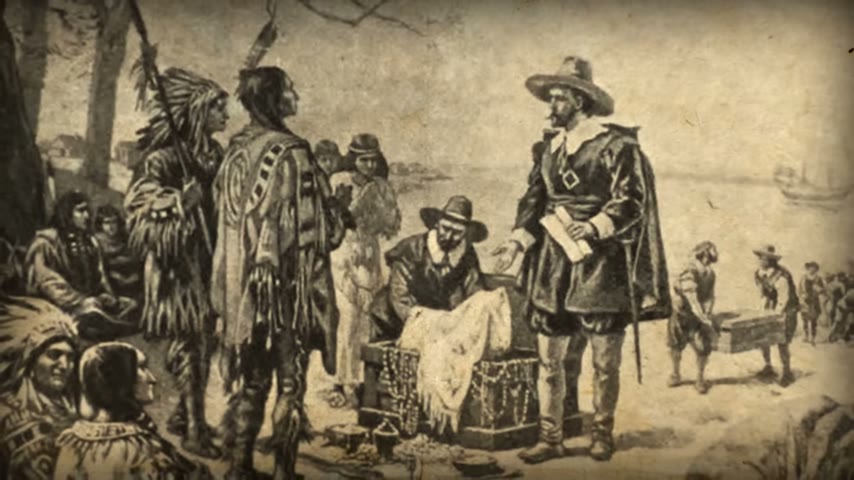
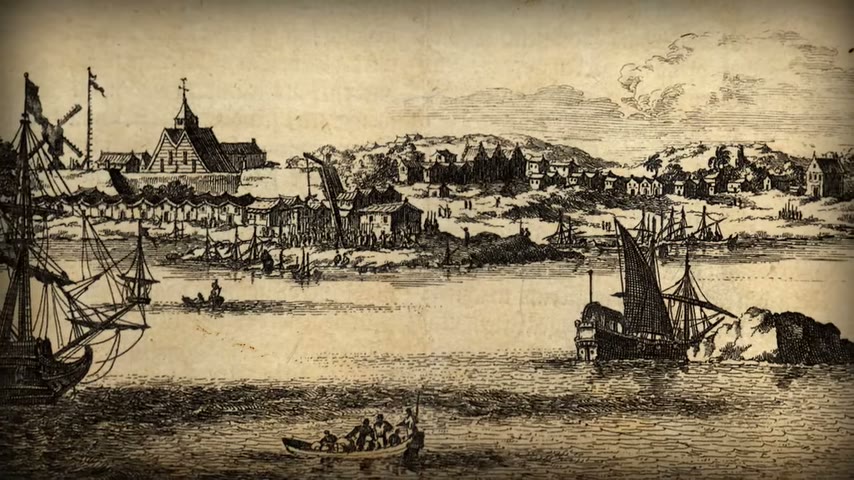
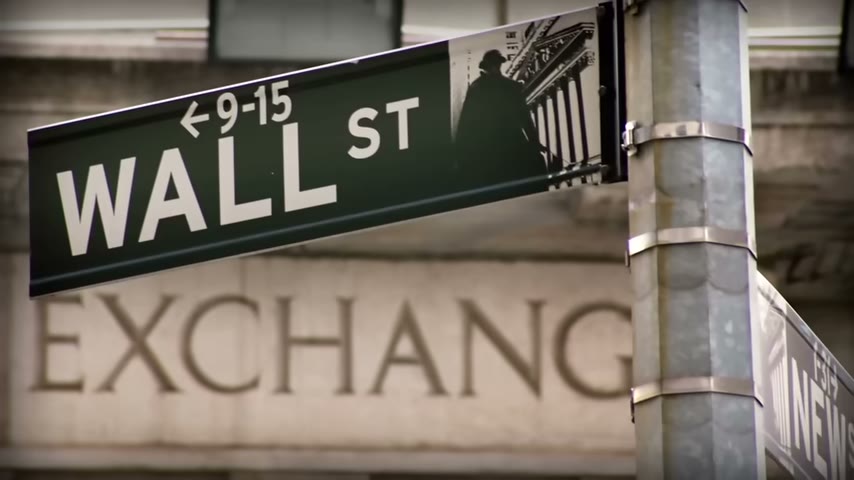
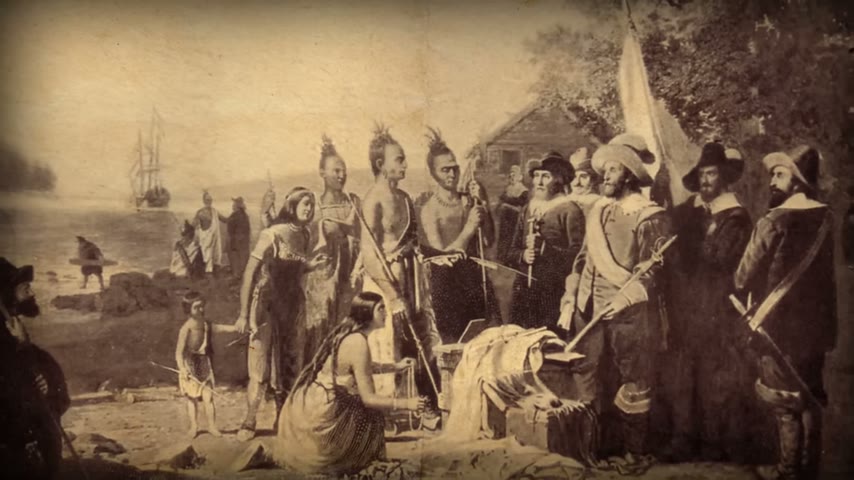
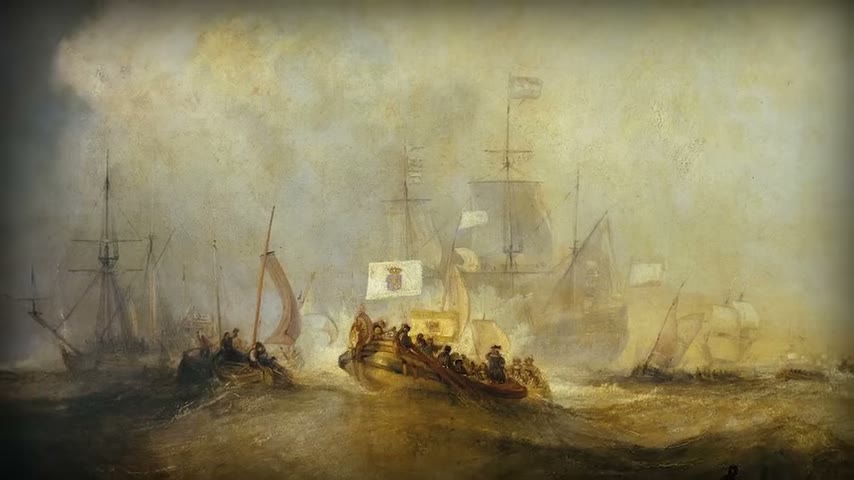
Green first pushes back on the idea that colonial America means only Jamestown and Massachusetts. The Dutch colony of New Netherland, with its port town of New Amsterdam on Manhattan, was founded by a trading company and run as a commercial venture. The famous story says the Dutch bought Manhattan from the Lenape for $24 in 1624. Green says this “isn’t quite true, but it contains a truth”, and the details are worth knowing. The purchase was made in 1626 by Peter Minuit, for trade goods valued at 60 guilders; the $24 figure is a 19th-century conversion that stuck. The Lenape probably understood the deal as sharing use of the land, not giving it up for good, which is the same clash of land ideas episode 1 described. (Green also says “New England” at one point when he means Manhattan.)
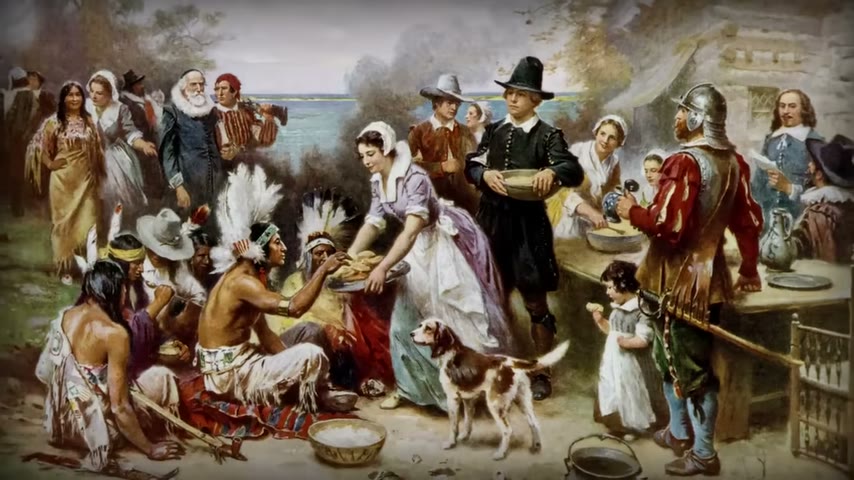
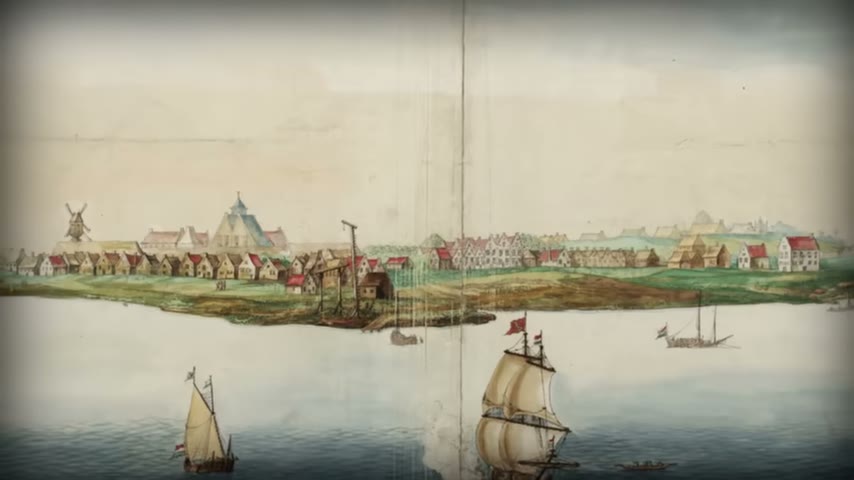
Because profit came first, the Dutch let in almost anyone who could help trade, including Jews and Quakers. That tolerance had limits. When Jewish refugees arrived in 1654, the colony’s director, Peter Stuyvesant, tried to keep them out and was overruled by the company. And the Dutch did not extend it to the Lenape and their neighbors, whom they fought and drove off in the brutal wars of the 1640s (Anne Hutchinson, from episode 2, was killed in one of them).
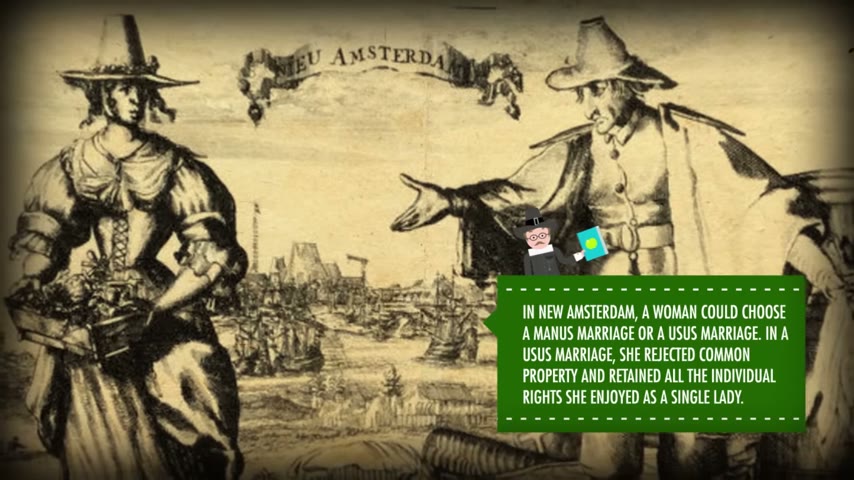
In 1664 the English took the colony without a fight: four warships sailed into the harbor and Stuyvesant surrendered. It was renamed New York after its new owner, James, Duke of York, brother of Charles II. The change was mixed. The population doubled in the next decade, but women lost the economic freedom they had under Dutch law, where they could inherit property and run businesses in their own names, and free Black residents lost many of the jobs they had been allowed to hold.
2:05 – 3:31 Pennsylvania, the “best poor man’s country”
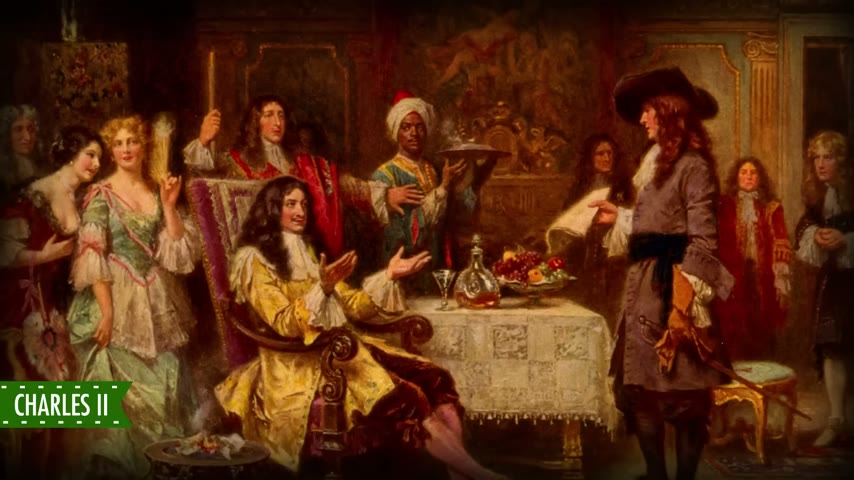
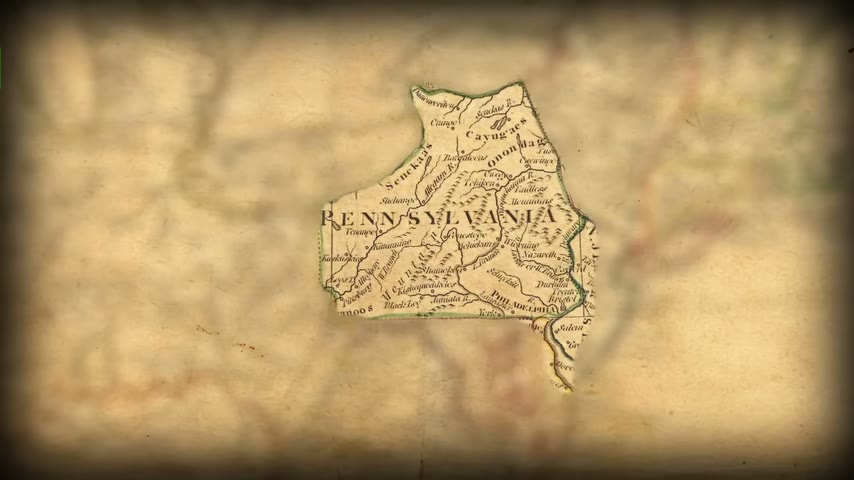
Pennsylvania did better, well enough to earn the nickname “the best poor man’s country” (Green notes the bar was low in the 1600s). Charles II granted it to William Penn in 1681, partly to settle a debt the crown owed Penn’s father. Green says the grant included today’s Pennsylvania, Delaware and New Jersey. That is not quite right. New Jersey was a separate colony, though Quakers including Penn were involved in its western half. Delaware, the “Lower Counties”, was added to Penn’s holdings in 1682 and later got its own assembly. The anti-New Jersey bit is a running joke, not history.

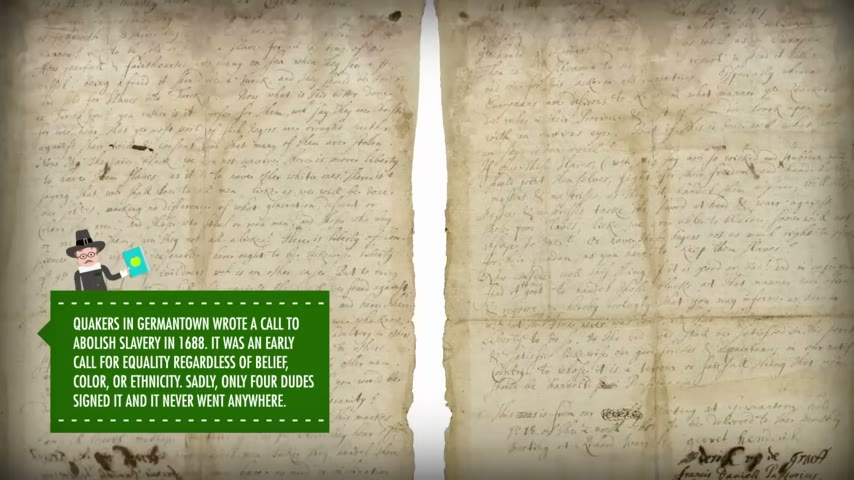
Penn was a Quaker and meant the colony as a haven for his faith. Quakers believed every person had an “inner light”, rejected formal clergy, and were pacifists, which got them persecuted in England. (The Quaker Oats man is a brand mascot with no link to the religion.) Green says Quakers were tolerant about everything except slavery, which they opposed “vehemently”. That is too generous for this period. Many early Quakers, Penn included, owned enslaved people. A few Quakers in Germantown did write one of the first protests against slavery in 1688, but, as the on-screen note admits, it went nowhere. Quakers as a body turned against slavery only in the mid-1700s.
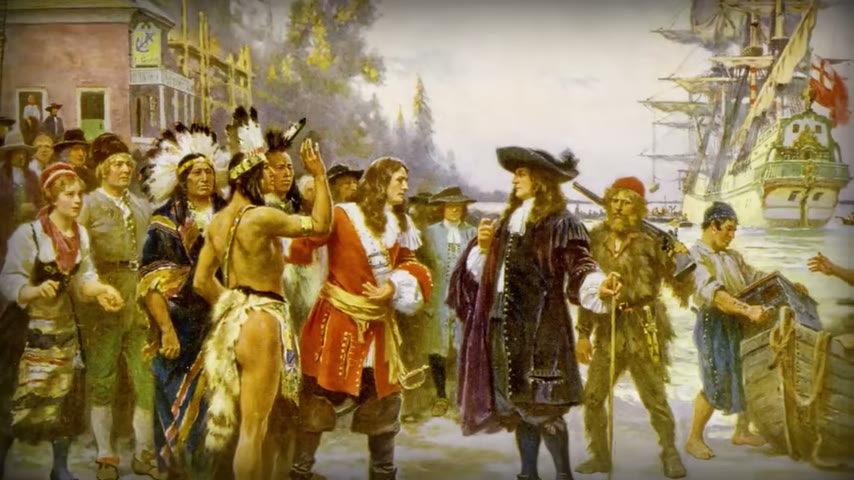
Under Penn the colony was notably tolerant in religion and, for its time, respectful toward the Lenape: Penn bought land from them rather than simply taking it. After Penn, things changed. In the Walking Purchase of 1737 the Lenape agreed to cede the land a man could walk in a day and a half (Green says 36 hours, which is the same span). The colony’s leaders, Penn’s sons and his longtime agent James Logan, hired trained runners and cleared a trail first. The result was a tract far bigger than the Lenape expected. Green’s joke that Quakers “had to resort to such tricks because they were pacifists” is irony: the men behind the deal had mostly left the Quaker faith, and the fraud was simply a fraud.
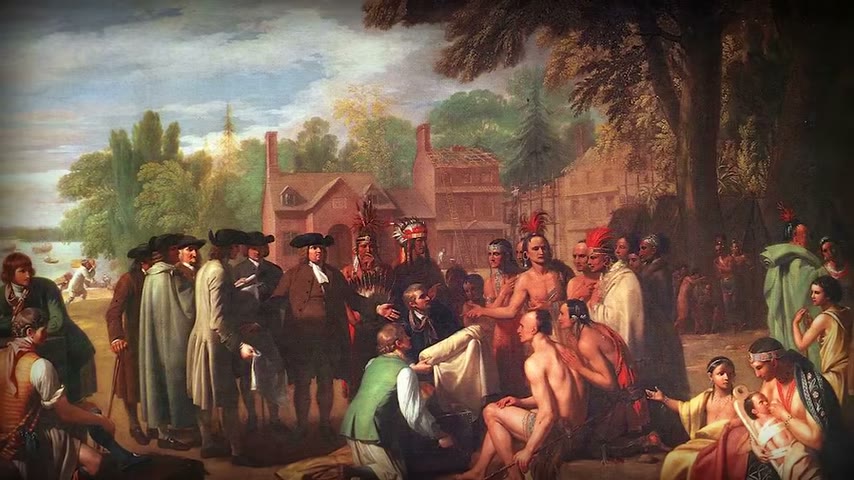
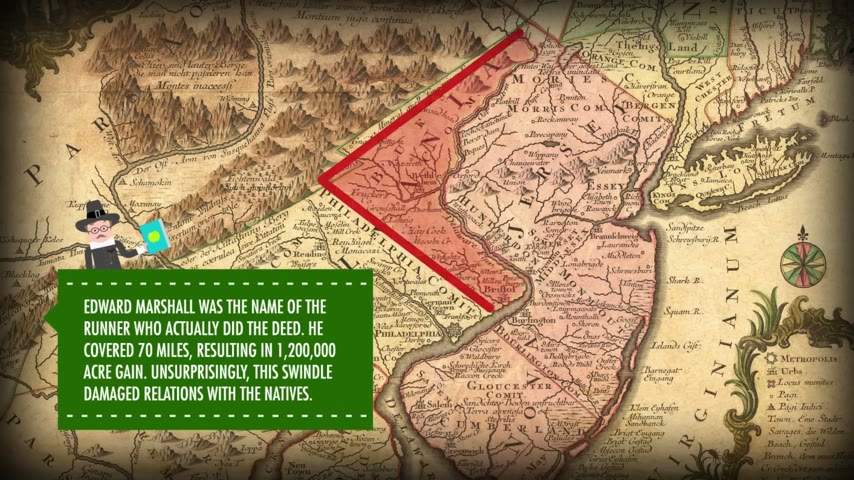
Penn’s government also banned swearing and drunkenness, so it was not a free-for-all. Still, more than half of adult men could vote, far more than in England, and the mix of religious freedom and cheap land drew many German-speaking migrants. Their descendants became the “Pennsylvania Dutch”, from Deutsch, not from the Netherlands.
3:31 – 4:06 Carolina: a colony built on slavery
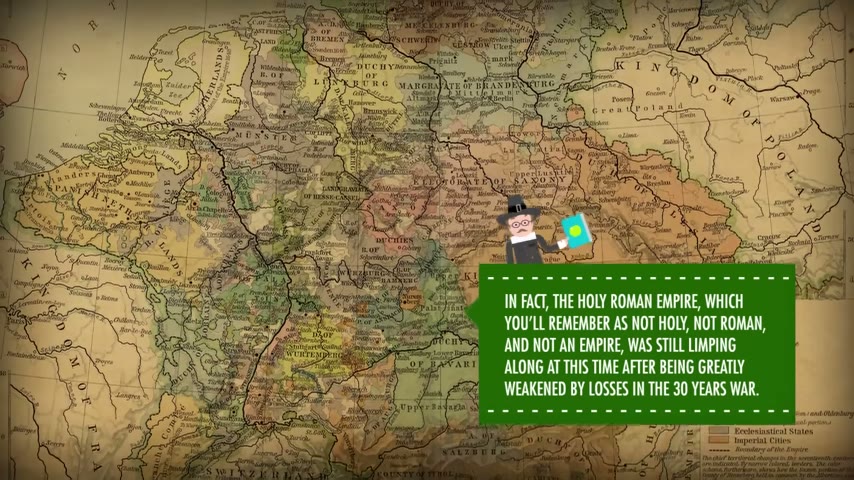
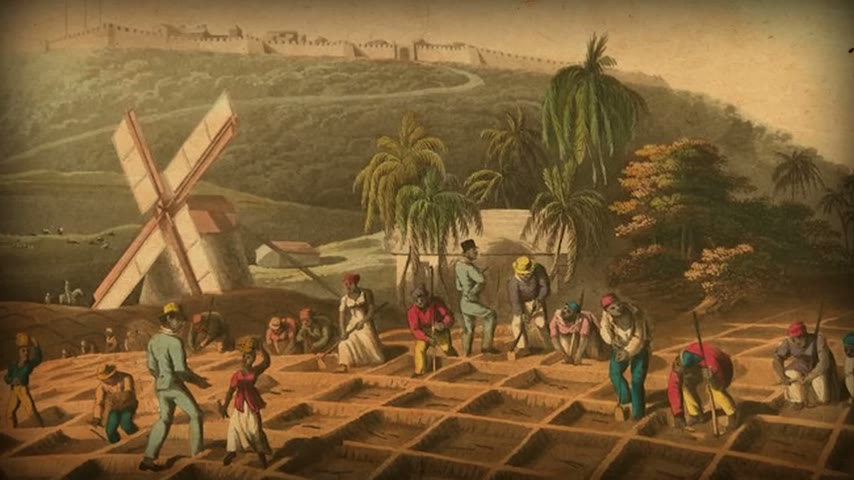
Further south, in 1663 Charles II granted a large territory to eight proprietors as a buffer against Spanish Florida. It became Carolina, later split into North and South. Many of the early South Carolina settlers came from Barbados, an English sugar island worked by enslaved Africans, and they brought its harsh slave laws and habits with them. Green’s “awesome at slavery” is bitter sarcasm, not praise.
The settlers first enslaved Native people and shipped many to the Caribbean. Green says this “didn’t work out”, but that undersells it: Carolina ran one of the largest Native slave trades in North America, with tens of thousands of captives, until the Yamasee War of 1715. Over the same years planters imported enslaved Africans in growing numbers, and by the early 1700s Black people were a majority of South Carolina’s population. Later episodes return to slavery in depth.
4:06 – 5:13 Mystery Document: the case against Berkeley
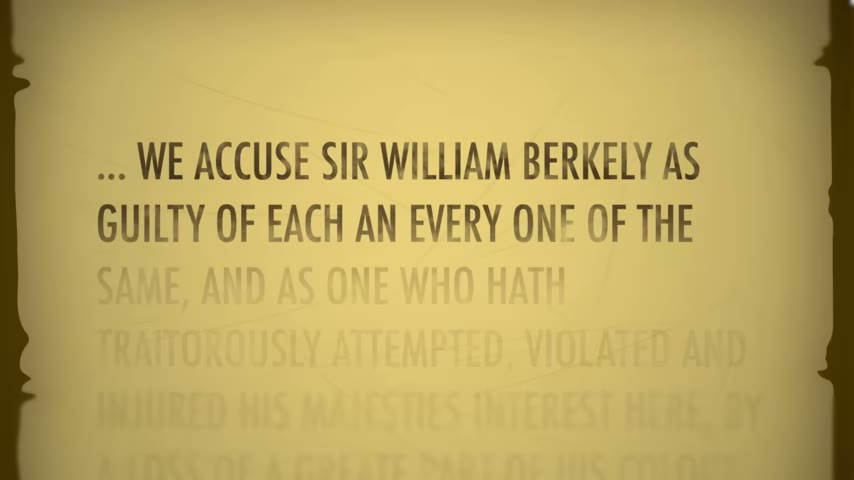
Green then turns to a series of crises in the late 1600s, interrupted by the Mystery Document. The text accuses Sir William Berkeley of betraying the king’s interests and of exposing loyal colonists to attack by “the heathen”, and it names his “wicked and pernicious” counselors. Green knows Berkeley was governor of Virginia and guesses the author from that: Nathaniel Bacon. He is right, so no shock. The passage comes from Bacon’s “Declaration of the People” of July 1676.


5:13 – 6:17 Bacon’s Rebellion
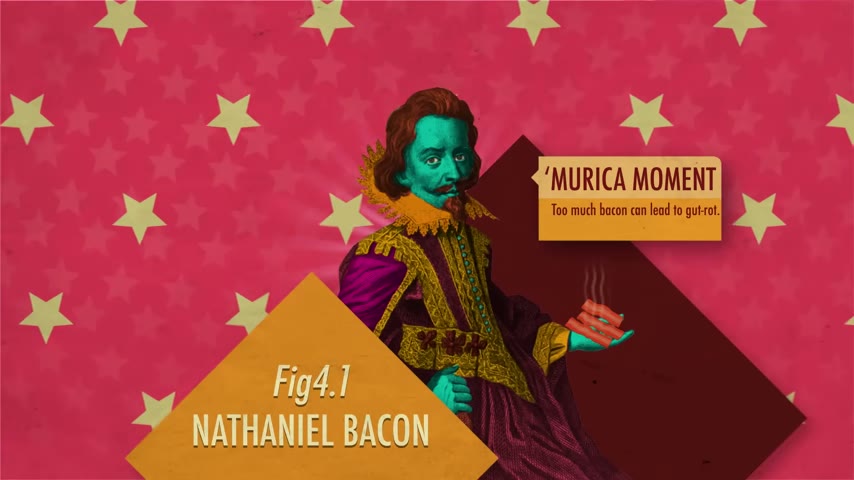
Bacon arrived in Virginia in the 1670s (the episode says 1673) and led an armed uprising against Berkeley in 1676. Green is careful about the motive: Bacon was not angry that the governor failed to protect colonists from Native peoples. He was angry that Berkeley would not let colonists attack them and take more land, because Berkeley wanted to keep peace and trade on the frontier. Berkeley had also given the best land to his favorites, the “wicked and pernicious counsellors”, leaving latecomers and freed servants with poor land or none. One detail the episode leaves out: Bacon himself was no poor farmer but a well-off newcomer who sat on the governor’s council.
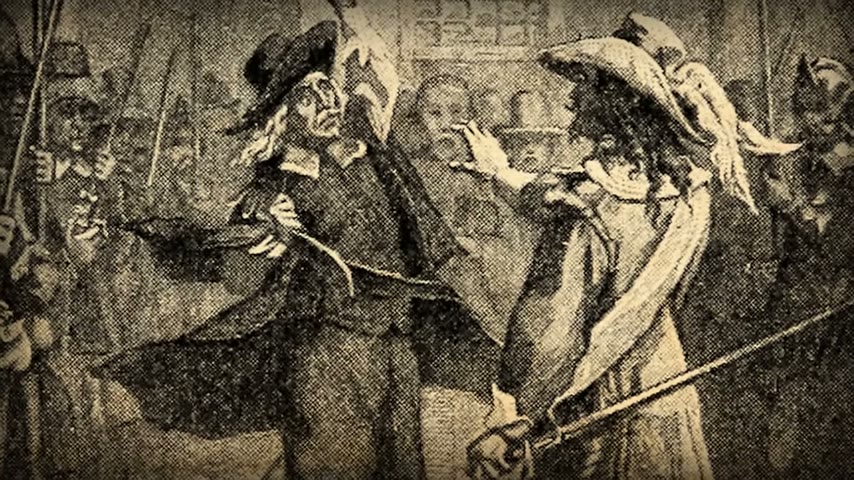

Bacon’s forces burned Jamestown, and for a time he controlled much of Virginia and plundered the estates of Berkeley’s supporters. Then he died suddenly, of dysentery (the episode’s running joke about the most common way to die in early America), and the rebellion fell apart; the English warships and troops arrived as it was ending. Berkeley hanged 23 rebels.
Green notes that the rebellion is sometimes told as poor farmers and artisans rising against a corrupt elite, and says that is only “kind of” true. Two effects matter more:
- A shift from indentured servants to enslaved Africans. Planters had seen armed former servants, and some enslaved people, fight together. Enslaved workers could be held for life and would never become free men demanding land, so planters bought more of them as the supply of servants also fell.
- More royal control. The crown decided its colonies needed closer supervision.

6:17 – 7:27 The Dominion of New England and the Glorious Revolution
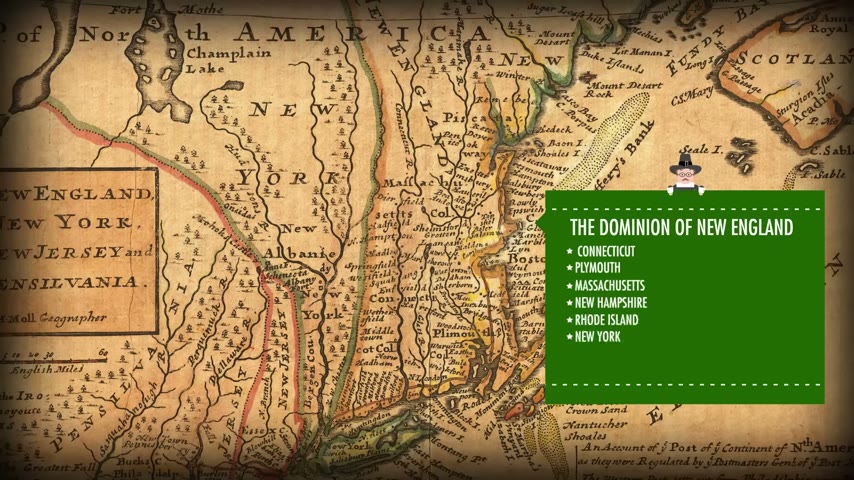
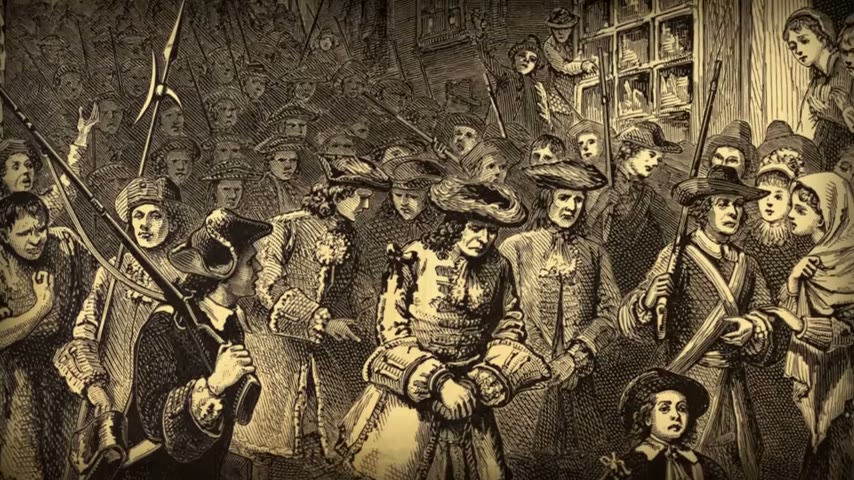
In 1686 King James II tried the boldest version of that control. He merged the New England colonies into one large Dominion of New England, adding New York and East and West Jersey in 1688. Its governor, Edmund Andros, who had earlier governed New York, appointed his own officials and raised taxes without consulting any elected assembly. For colonists used to running their own affairs, this felt close to dictatorship.
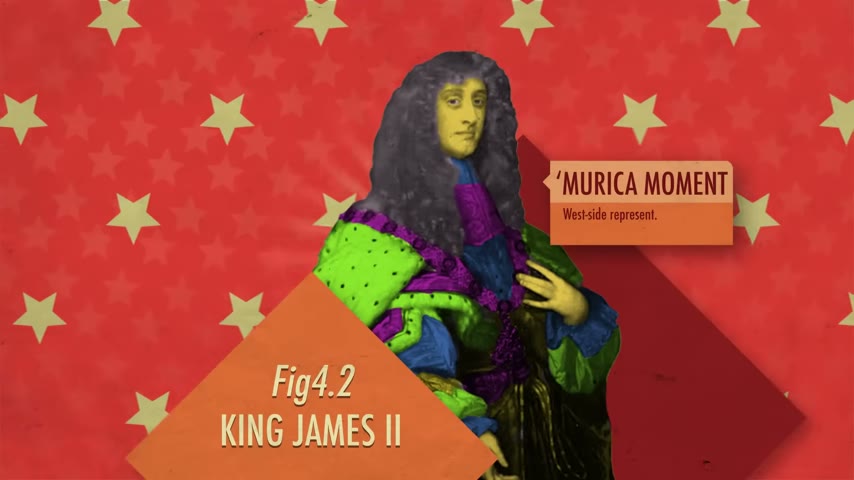
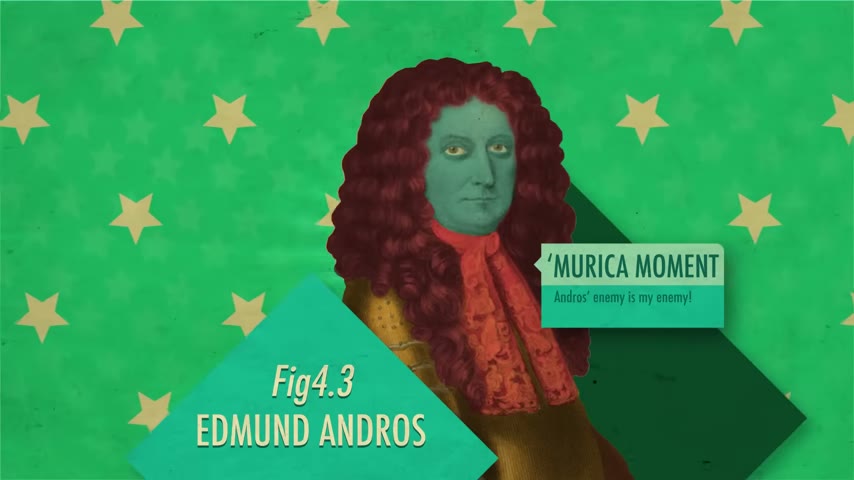
Then events in England reversed everything. In the Glorious Revolution of 1688, James II was pushed off the throne and replaced by his Protestant daughter Mary and her Dutch husband, William of Orange, who ruled together as William III and Mary II. Green calls them a new royal family “from Holland”; strictly, only William was Dutch. The news set off uprisings in the colonies. In Boston, colonists jailed Andros in April 1689 and the Dominion collapsed.
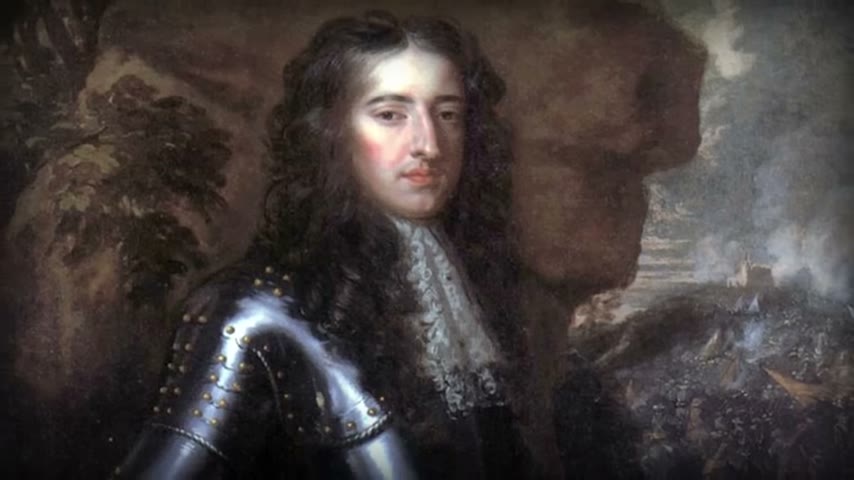
The new monarchs did not give the colonies back their old independence, though. England’s Toleration Act allowed all Protestants to worship freely. Green dates it 1690; it was passed in 1689, and it reached Massachusetts through the colony’s new charter of 1691. It still excluded Catholics as well as Jews. For Massachusetts the new charter ended what Green calls the “Puritan experiment”: voting now depended on owning property, not on church membership, and the governor was appointed by the crown instead of chosen inside the colony.

7:27 – 8:01 The Salem witch trials
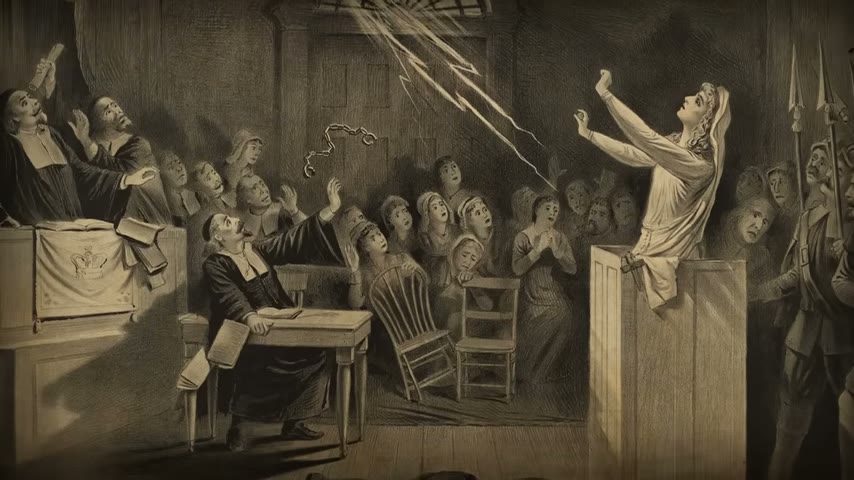
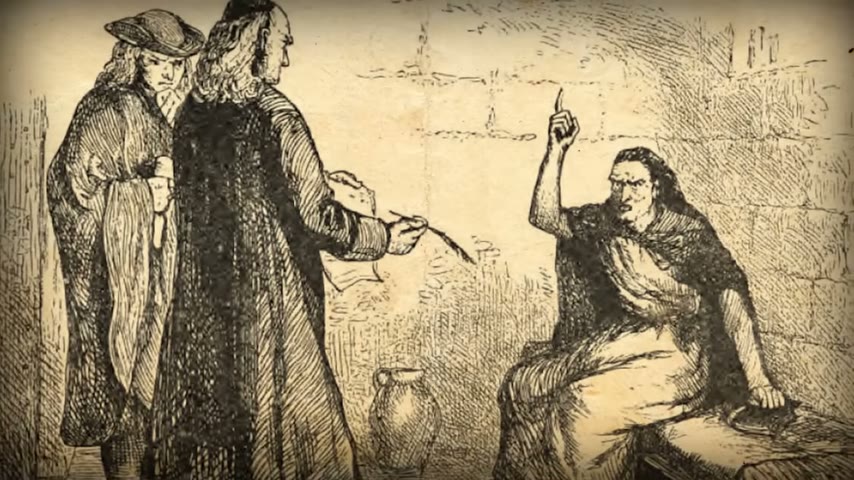
This is the setting for the Salem witch trials. Green avoids picking one interpretation, since historians argue over many, and offers context instead. Massachusetts had just lost its charter and its religious mission; it would now have to treat even Quakers as near equals. In that atmosphere it is not surprising that colonists looked for scapegoats, or that male leaders tried to reassert control over women, who were most of the accused.
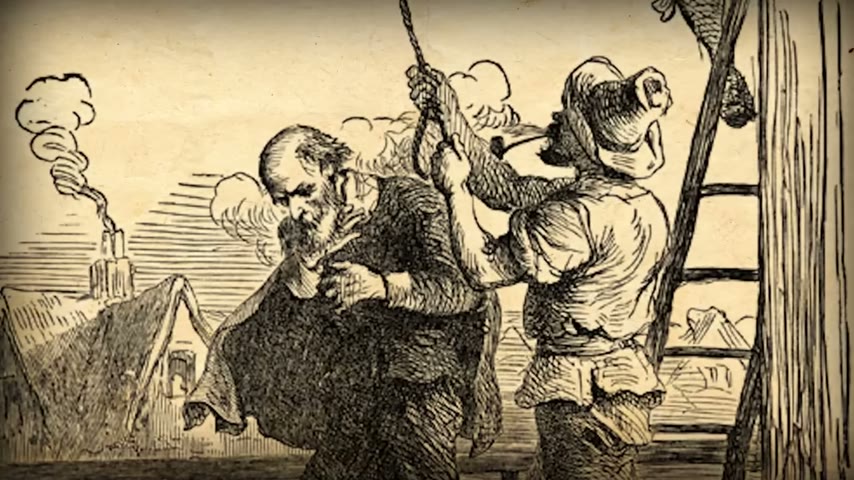
Two numbers need fixing. The trials took place in 1692, not 1691. And the episode’s “fourteen” deaths counts only the women. In all, twenty people were executed: fourteen women and five men were hanged, and Giles Corey was pressed to death with stones for refusing to plead. Several others died in jail. About 150 people were accused.

8:01 – 9:05 Thought Bubble: the colonial economy
The Thought Bubble covers economics. Most colonists were farmers, and most farms were small, unlike the huge sugar plantations of the Caribbean. New England had few tropical diseases and, after the wars and epidemics, fewer and fewer Native people, so its population grew very fast. Families ran out of land to divide, and younger sons increasingly had to make their way in the growing port towns.
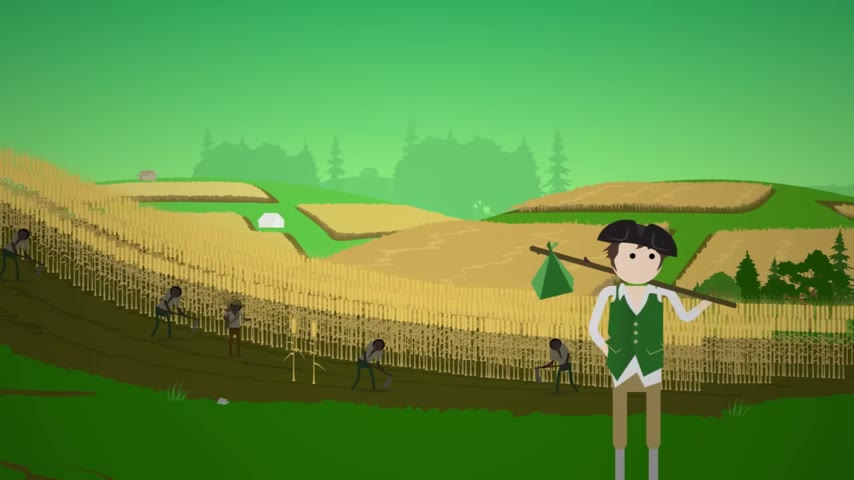
Green flags an idea that later episodes build on: in early America, owning a small farm and being free were closely tied together. A man who owned his land depended on no one. His “amber waves of grain” line borrows from the much later song “America the Beautiful”.

The South looked different. The caption track skips a line here, but the animation shows a Southern planter with enslaved workers, and Green’s comment is that these planters were richer than any other colonial elite. His teaser, whether they were rich enough to dominate the Constitutional Convention, is a hook for later episodes.
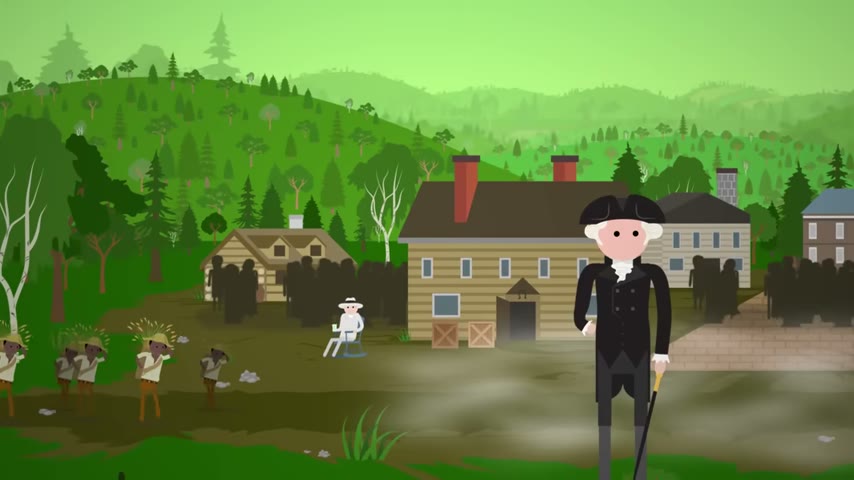
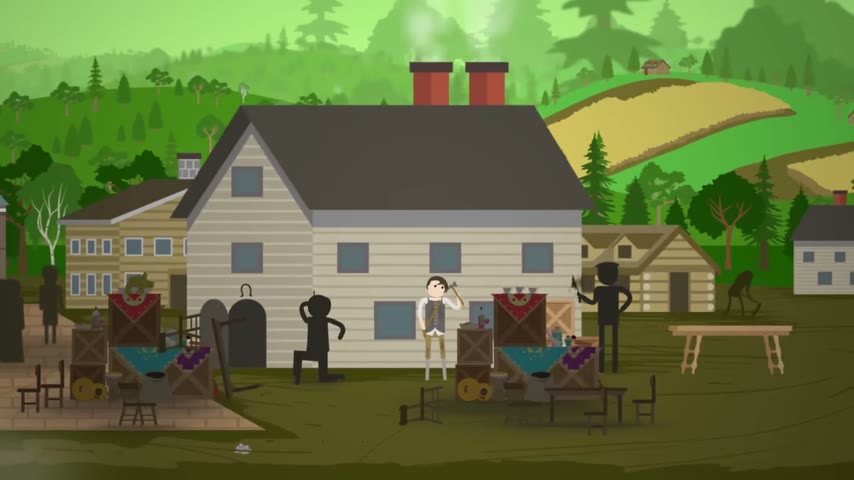
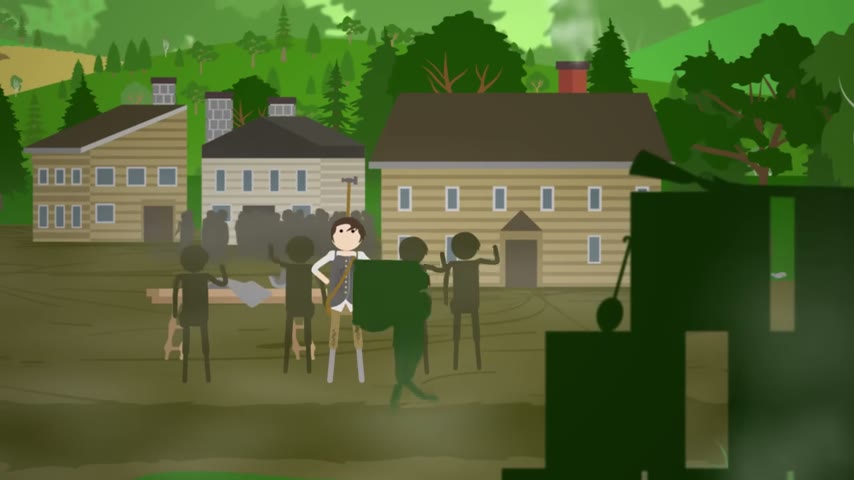
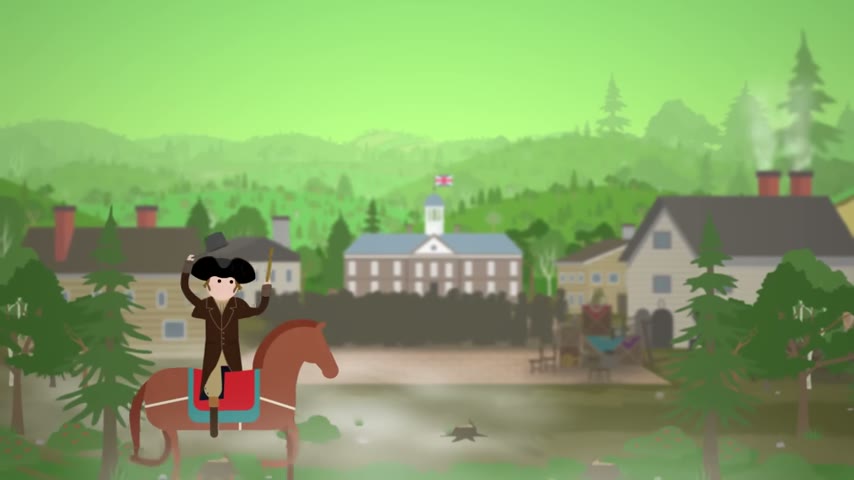
Not everyone farmed. Artisans were a growing group. British policy discouraged colonial manufacturing, with laws limiting colonial exports of goods such as woolens, hats and iron products, so that the colonies would buy British goods. But a growing population meant a steady local market, especially for clothing and metalwork. Paul Revere, the hero of the 1775 midnight ride, was a silversmith.
9:05 – 9:48 Colonial society: rich and poor
Americans like to think of themselves as classless (“pun intended” because the audience is in school classes), but the colonies had a ruling elite that worked to keep its place, especially in the South. Green’s example is George Washington, whose father and grandfather served as justices of the peace, an important local office. That made Washington part of the Virginia gentry, though not its richest layer; his marriage to the wealthy widow Martha Custis later raised his standing a great deal.
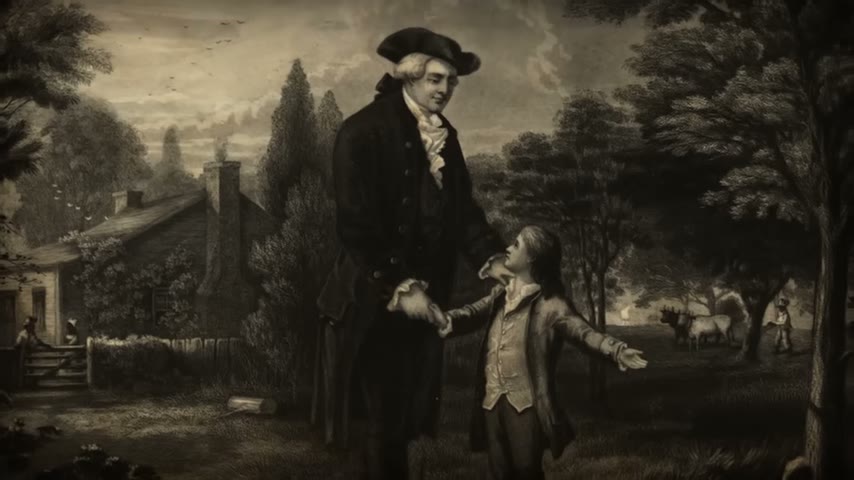
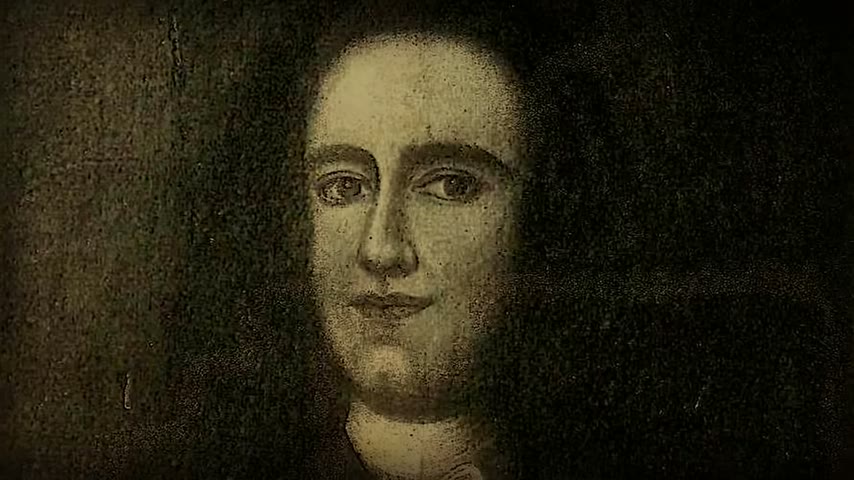
At the bottom was a growing number of poor people. Even so, it was better to be poor in the colonies than in England or most of Europe: there was plenty of food and some chance of land one day. That is why people kept signing indentures to come.
9:48 – 10:34 Women’s lives
That chance of land applied to men. Under English law, a married woman generally could not own property; her legal identity was folded into her husband’s (the rule called coverture). Husbands usually left land to sons and household goods to daughters, so almost all landowners were men. In the earliest years, when every pair of hands was needed, women had a larger economic role, but they were still expected to be wives and mothers first. Over time male dominance was written into law and practice, and women’s work was mostly confined to the home. For poorer women that meant hard, repetitive labor.
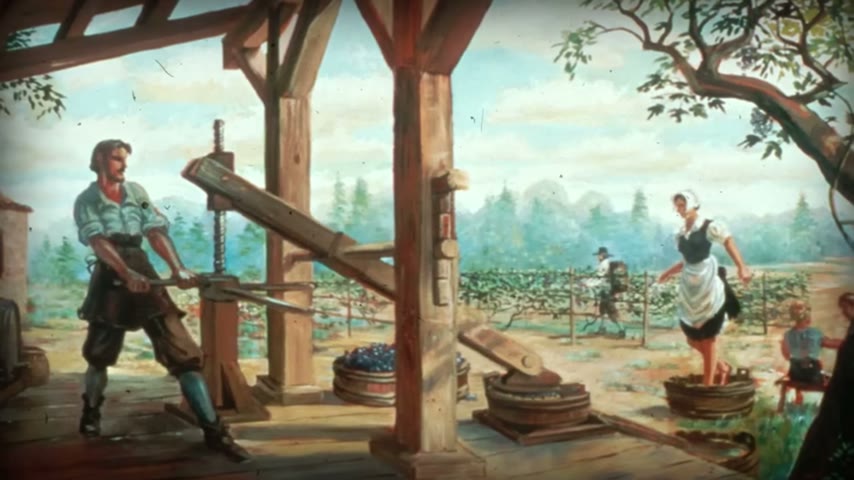
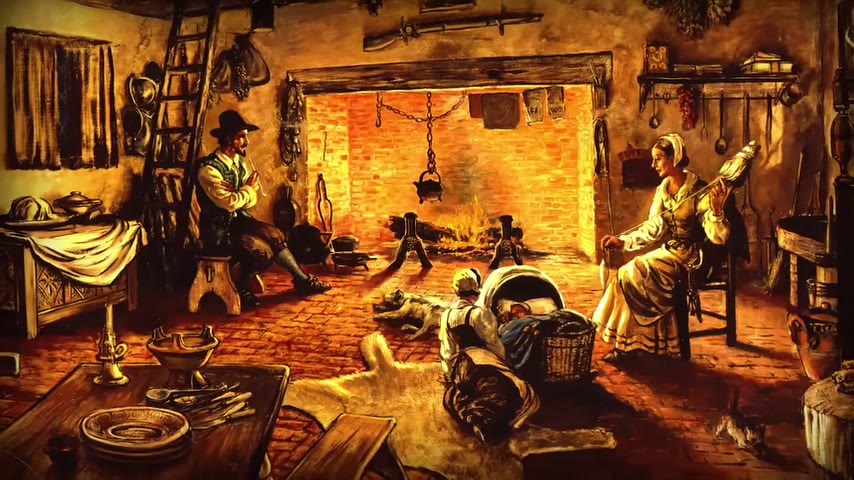
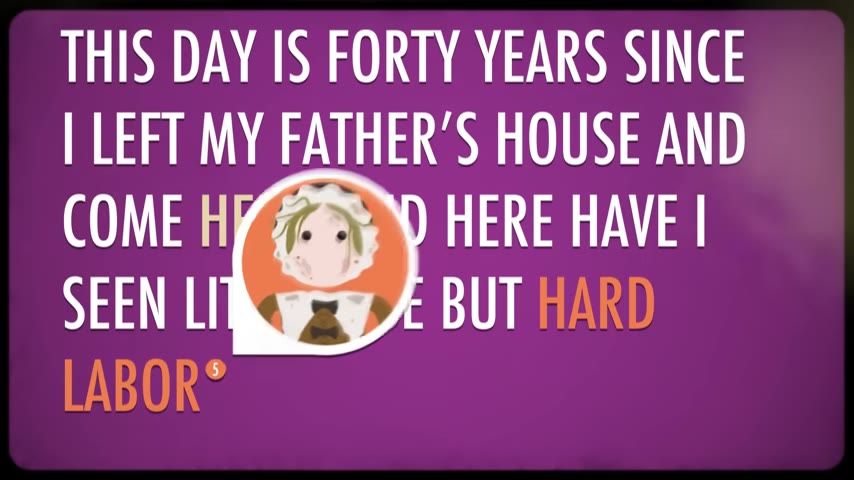
Green’s evidence is the 1769 diary of Mary Cooper, who wrote that after forty years in her husband’s home she was worn out and had seen little but hard labor and sorrow. One sentence from an ordinary farm wife does more than a paragraph of statistics, which is a useful point about primary sources.
10:34 – 10:58 History beyond kings and rebels
Green ends on that diary because it shows that history is more than kings like James II and rebels like Bacon. Courses and exams focus on famous men, but most of the past is ordinary people trying to look after their families and survive. The colonial era gets skipped for lacking big drama, he says, but small dramas are everywhere in it. Next week, the American Revolution and the return of “great men and dramatic events”.

Skip list
- 0:09 – 0:32 “Me from the past” and the notes for Jessica Alvarez.
- 0:32 – 0:55 The “Libertage” montage and theme music.
- 1:18 – 1:28 The joke about the show’s writer being the last person in Manhattan not working for a bank.
- 5:33 – 5:38 The “serious beef” bacon pun.
- 6:46 – 6:53 “Crash Course: John is Bored History”.
- 10:58 – 11:38 Credits and sign-off.
Key terms
- New Netherland / New Amsterdam — the Dutch colony on the Hudson and its trading town on Manhattan, taken by England in 1664 and renamed New York.
- Proprietary colony — a colony granted to one person or a small group, such as Pennsylvania (William Penn) and Carolina (eight proprietors).
- Quakers (Society of Friends) — a Protestant group that believed in an “inner light” in every person, rejected formal clergy and practiced pacifism.
- “Best poor man’s country” — a period nickname for Pennsylvania, where ordinary migrants could get land and religious freedom.
- Walking Purchase (1737) — a land deal in which Pennsylvania used trained runners to claim about 1.2 million acres from the Lenape.
- Bacon’s Rebellion (1676) — Nathaniel Bacon’s armed uprising against Virginia’s governor, William Berkeley, over frontier land and Native policy.
- Dominion of New England (1686–1689) — James II’s merger of the northern colonies under one royal governor, Edmund Andros, without elected assemblies.
- Glorious Revolution (1688) — the overthrow of James II in favor of William III and Mary II.
- Toleration Act (1689) — the English law allowing Protestant dissenters to worship freely; the episode dates it 1690.
- Salem witch trials (1692) — the Massachusetts trials in which about 150 people were accused of witchcraft and 20 were executed.
- Artisan — a skilled craft worker such as a silversmith, tailor or carpenter.
- Coverture — the legal rule that folded a married woman’s legal identity and property into her husband’s.
Review questions
- In what ways was New Amsterdam’s tolerance driven by business, and where did it stop?
- What did women and free Black residents lose when New Amsterdam became New York?
- What made Pennsylvania attractive to migrants, and how did the Walking Purchase change relations with the Lenape?
- How accurate is the claim that early Quakers strongly opposed slavery?
- Why did Carolina’s ties to Barbados matter for the kind of society it became?
- What clues does Green use to identify the author of the Mystery Document?
- Why did Bacon rebel, and what were the two biggest effects of the rebellion?
- What was the Dominion of New England, and why did it collapse?
- How did the Glorious Revolution and the new Massachusetts charter end the “Puritan experiment”?
- What context does Green give for the Salem witch trials?
- Why were small farms and freedom so closely linked in early America?
- What does Mary Cooper’s diary tell us about women’s lives that a list of laws cannot?
FAQ
What was Bacon's Rebellion and why does it matter?
Bacon's Rebellion was an armed uprising in Virginia in 1676, led by Nathaniel Bacon against Governor William Berkeley. Bacon's followers wanted to attack Native peoples and take more of their land, and they resented the governor's favored circle, who held the best land already. They burned Jamestown before Bacon died of dysentery and the revolt fell apart. The episode names two lasting effects: Virginia planters turned from indentured servants to enslaved Africans, and the English crown tried to control its colonies more tightly.
What was the Walking Purchase?
It was a land deal of 1737 in which the Lenape agreed to give Pennsylvania as much land as a man could walk in a day and a half. The colony's leaders hired trained runners and cleared a path in advance. The fastest, Edward Marshall, covered about 70 miles, so the colony gained roughly 1.2 million acres, far more than the Lenape expected. It is a standard example of how relations with Native peoples soured after William Penn's time.
What was the Dominion of New England?
It was King James II's attempt, from 1686, to merge the New England colonies, and later New York and the Jerseys, into one large colony under a royal governor, Edmund Andros. Andros ruled without the elected assemblies and raised taxes on his own authority. When James II lost his throne in the Glorious Revolution of 1688, Boston colonists jailed Andros and the Dominion collapsed.
How many people were executed in the Salem witch trials?
Twenty people were executed in 1692: fourteen women and five men were hanged, and one man, Giles Corey, was pressed to death with heavy stones for refusing to enter a plea. Several more died in jail. The episode's figure of fourteen counts only the women. Around 150 people were accused.
Why is the episode called "The Quakers, the Dutch, and the Ladies"?
The title names three groups the usual Jamestown-and-Plymouth story leaves out: the Dutch who founded New Amsterdam, the Quakers who founded Pennsylvania, and colonial women, whose legal and working lives close the episode. Between them it also covers Carolina, Bacon's Rebellion, the Dominion of New England and Salem.
Studying another course? Paste its YouTube or Bilibili link on the home page to request a handout — or make your own with the desktop app (coming soon).