Crash Course US History #8, The Constitution and Federalism — notes and timestamps
Watch the video (13 min)
Watch the original video on YouTube
The full transcript isn't available yet.
Episode 8 of John Green’s Crash Course US History covers the years right after the Revolution, when the new country had to work out how to govern itself. In 13 minutes it moves from the first national government, the Articles of Confederation, through the crisis of Shays’ Rebellion, to the 1787 convention in Philadelphia that wrote the Constitution, and on to the ratification fight between Federalists and Anti-Federalists. Green’s thread is that the framers feared two kinds of tyranny at once: an overbearing government and, in their eyes, too much democracy. These notes follow the episode in order, explain each compromise in plain terms, mark the jokes, and correct a few dates and shortcuts. Episode 7 (the American Revolution) is useful background.
Key takeaways
- The Constitution was the second national government, not the first. The Articles of Confederation came before it and set up only a loose “league of friendship” among the states (0:39).
- The Articles failed mainly because Congress could not tax. It could make war and treaties but had to ask the states for money, and changing the Articles needed every state to agree (1:34).
- The Articles government still did two big things: it won the war, and the Northwest Ordinance of 1787 set out how new states would be formed north of the Ohio River, with slavery banned there (2:10).
- Shays’ Rebellion pushed elites toward a stronger government. Debt, taxes and foreclosures led Massachusetts farmers to close the courts in 1786–87 (3:12).
- The Constitution is a bundle of compromises: large states against small (the Great Compromise) and free states against slave states (the three-fifths and fugitive slave clauses) (6:14).
- Two guards against government tyranny: separation of powers with checks and balances, and federalism, which splits power between the nation and the states (8:00).
- Two guards against “too much democracy”: senators chosen by state legislatures, and a president chosen by the Electoral College (8:47).
- Ratification was a real fight. The Federalist Papers argued for a strong national government; the Anti-Federalists’ fear of a distant, elite-run government never fully went away (9:45).
Chapter notes
0:00 – 0:39 Did the world copy the US Constitution?
Green opens with a mock-patriotic claim that the whole world envies and copies the American form of government. His producer, Stan, corrects him off camera, and the joke becomes the question of the episode: why did most other countries not adopt the American system? The answer comes in pieces later on: the Electoral College, the Senate’s design and the deliberate limits on democracy are unusual, and few later constitutions copied them exactly.
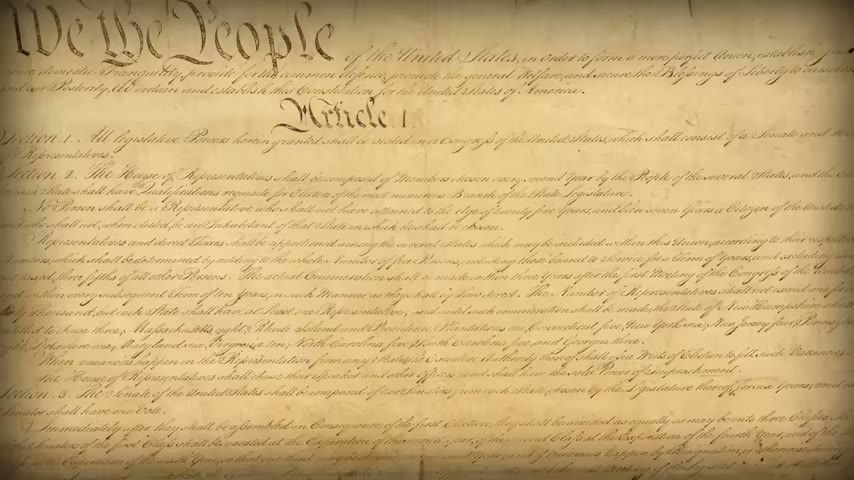
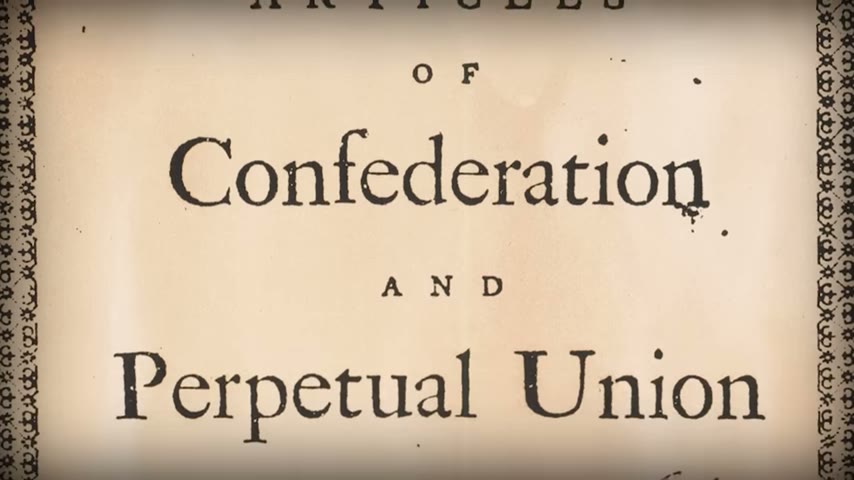
0:39 – 2:10 The Articles of Confederation: a weak government by design
Before the Constitution, the states were joined by the Articles of Confederation, the first national framework, adopted by the Continental Congress. Green calls it simply bad. What it set up:
- One body only. A single-house Congress of state delegations, with one vote per state whatever its size.
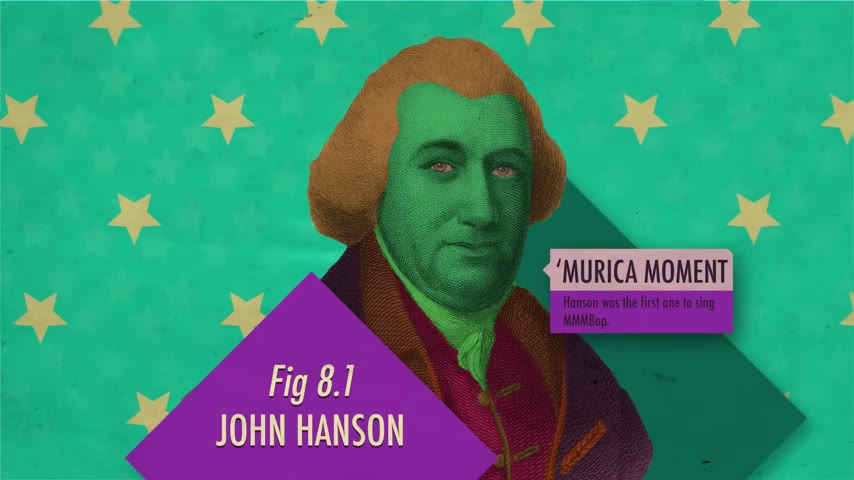
- No executive and no national courts. John Hanson, often called the “first president”, was only the presiding officer of Congress, not a head of government.
- High thresholds. Major decisions needed 9 of the 13 states, a two-thirds supermajority. Green says any decision; strictly, the 9-state rule applied to big questions such as war, treaties, coining money and borrowing, while routine business needed a simple majority. Even so, getting nine states to agree was hard.
- Limited powers. Congress could declare war, run foreign affairs, make treaties and coin money, but it could not collect taxes. It had to request money from the states, which often did not pay.
- Almost impossible to amend. Changes needed all 13 states, so the Articles were never amended.
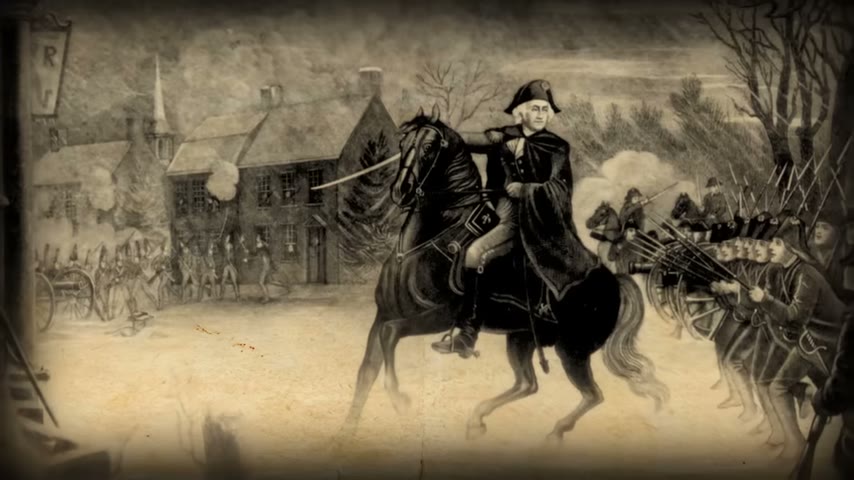
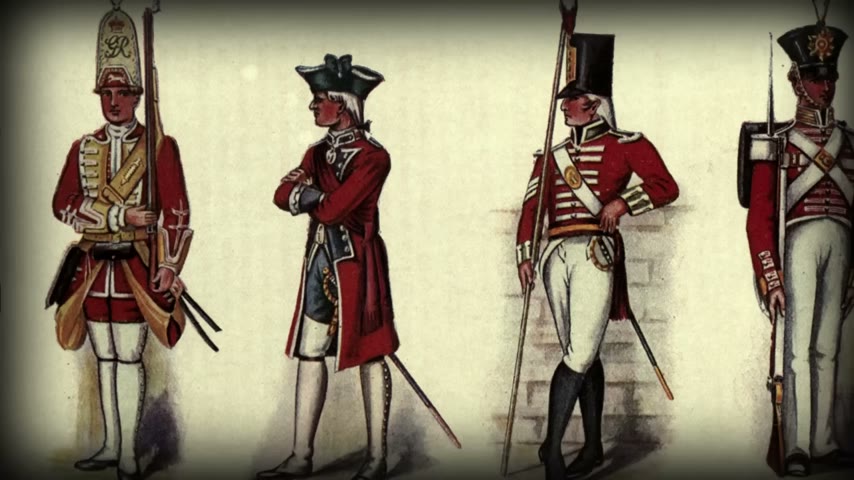
Why so weak? Americans had just fought a war against a government that taxed them without consent and quartered soldiers in their homes. A strong central power looked like the danger, not the solution.
A date correction: Green says the Articles “only lasted 10 years”. The Articles were drafted in 1777 but not ratified by all states until 1781 (Maryland was last), and they were replaced when the new government began in 1789. So they were formally in force for about eight years. Likewise, the “first presidential election” he dates to 1788 was held from December 1788 to January 1789.

2:10 – 3:12 What the Articles government did get done
Green gives the Articles credit for two things.
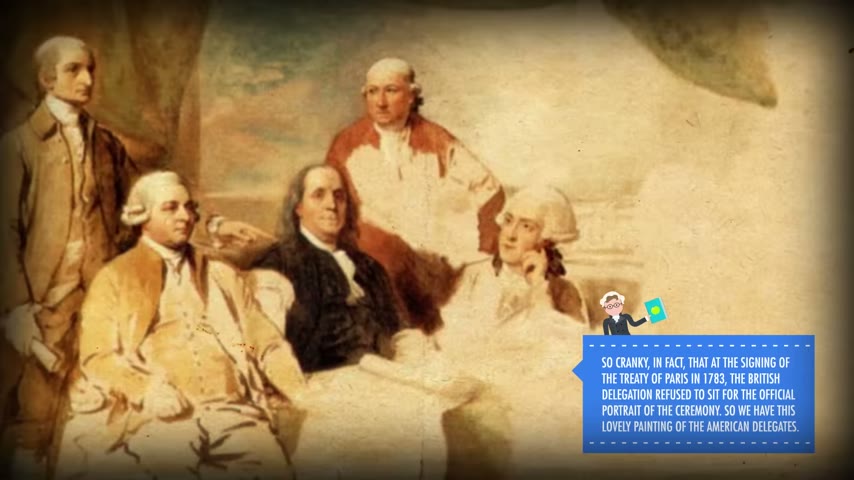
First, the Confederation government won the war, ending with the Treaty of Paris in 1783. Green adds that independence was hardly a victory for enslaved people or Native Americans, a point the rest of the chapter bears out.
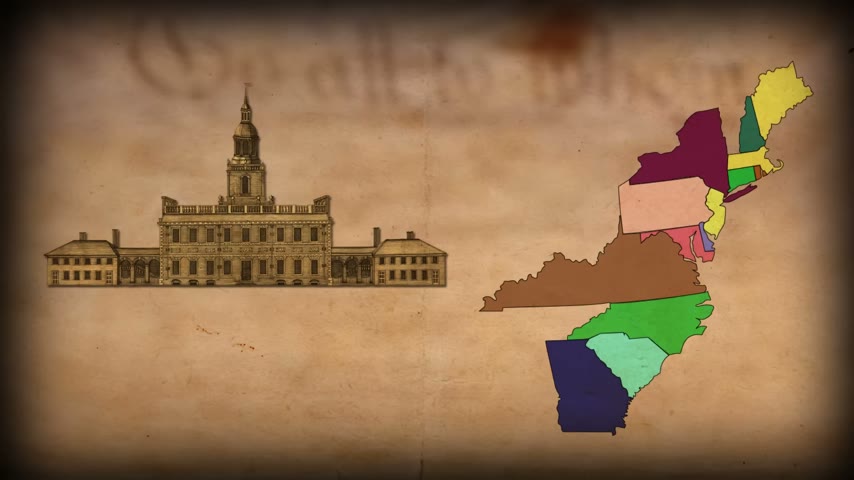
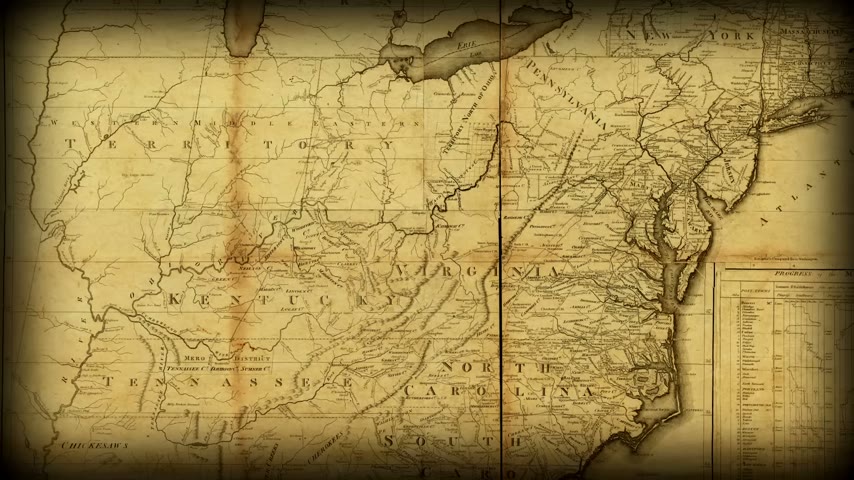
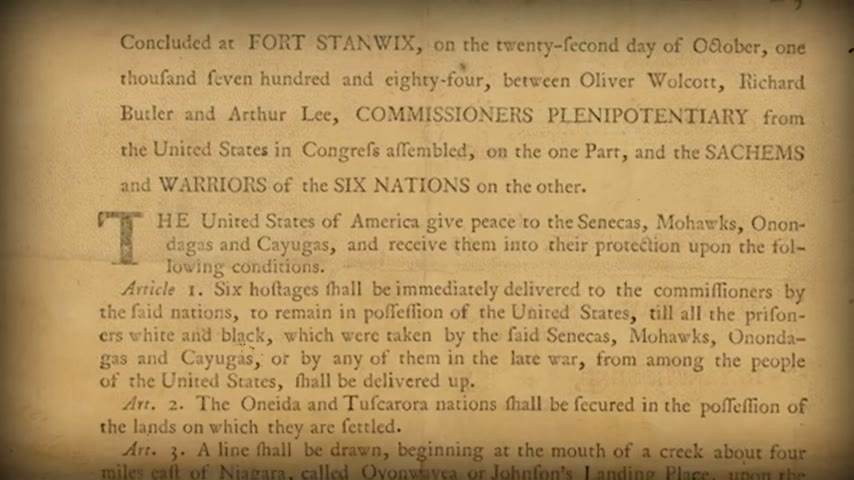
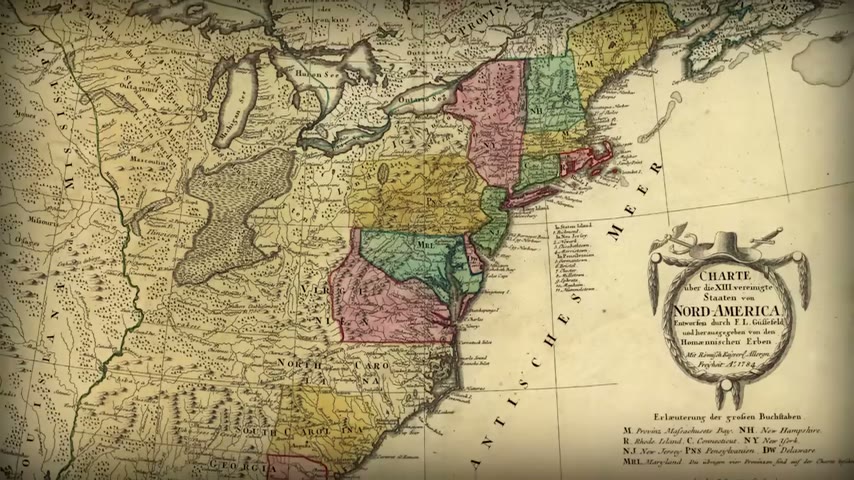
Second, it made rules for the lands west of the Appalachians and north of the Ohio River, then called the Northwest because it lay north and west of the settled states. That land was home to Native nations, so the first step was treaties. At Fort Stanwix (1784) and Fort McIntosh (1785), Native leaders gave up claims north of the Ohio under heavy pressure. Green compares this with the Athenians’ line to the Melians in Thucydides, roughly “the strong do what they can and the weak suffer what they must”: these treaties were imposed far more than negotiated.
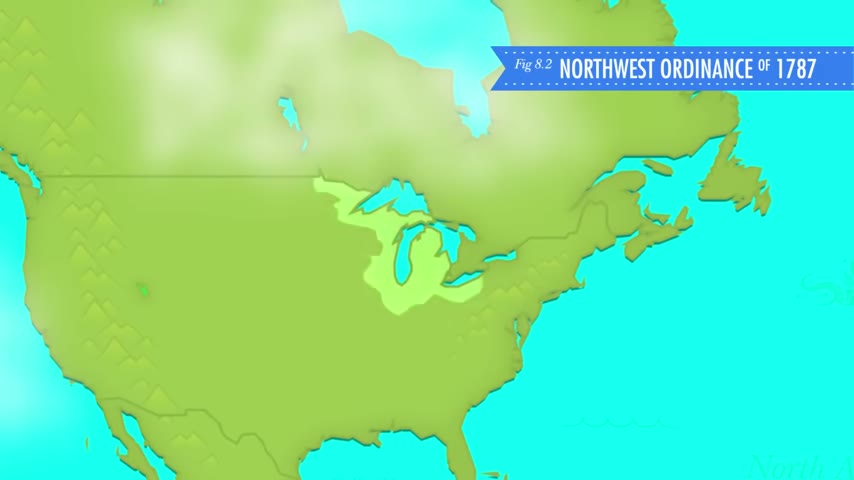
The Northwest Ordinance of 1787 was the Articles government’s biggest achievement. It laid out how the territory would be governed and how it would become three to five new states, admitted as equals of the original thirteen (they became Ohio, Indiana, Illinois, Michigan and Wisconsin). Two features matter:
- It said Native peoples’ land should not be taken without their consent and that they should be treated in “good faith”, an admission that their claims were real, though the promise was broken again and again.
- It banned slavery in the territory. Green uses his “foreshadowing filter” here, because the line between free and slave states becomes the central conflict of the next 70 years.

3:12 – 4:24 Debt, tariffs and Shays’ Rebellion
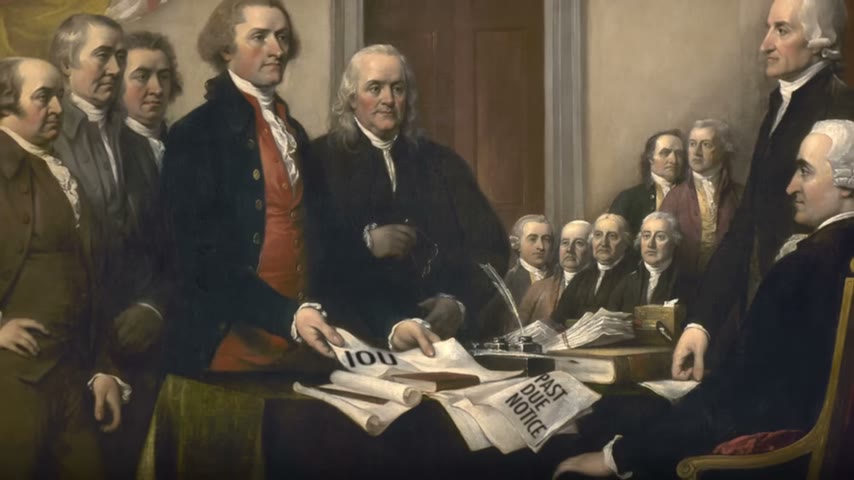
For Green the Articles had one fatal flaw: no power to tax. Both Congress and the states owed huge sums from the war. Their main hope for revenue was tariffs (taxes on imports), but Congress could not set them, so each state did its own, which made foreign trade chaotic. Britain, still sore about losing, also kept American ships out of its markets.
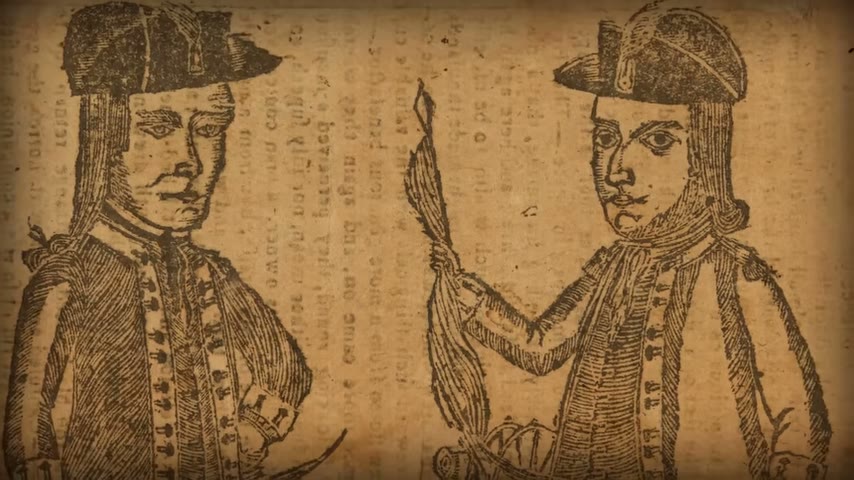
The pressure fell on ordinary people. In western Massachusetts, the state raised taxes to pay its debts, and courts began seizing the farms of indebted farmers. In 1786–87, armed farmers closed the courts to stop the foreclosures. This was Shays’ Rebellion, named for Daniel Shays, a Revolutionary War veteran and indebted farmer. The state militia (an army largely paid for by Boston merchants) put it down early in 1787, and Congress could do nothing to help.
Reactions split:
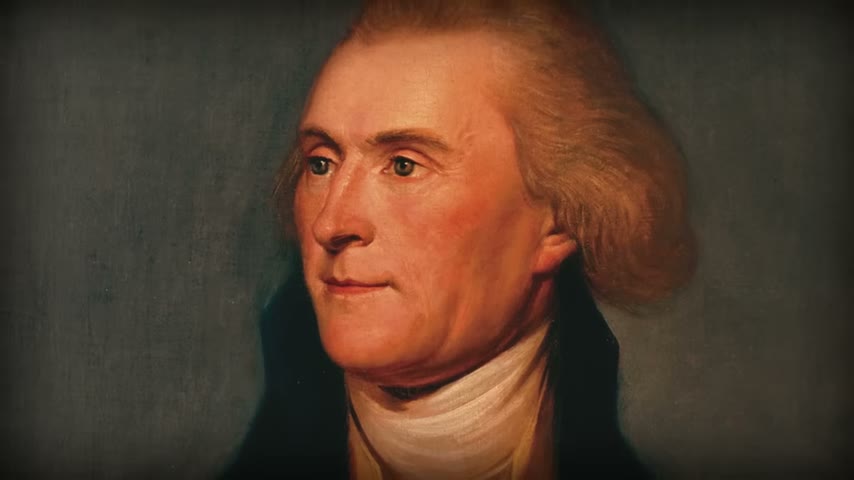
- Thomas Jefferson, then in Paris as the US minister to France, was relaxed about it. His famous lines that “a little rebellion” is a good thing and that the tree of liberty must be refreshed with blood come from two separate 1787 letters, not one speech. Green notes this is easy to say when you are not the one bleeding.
- Most elites were alarmed. To them it showed that too much democracy among poor debtors could threaten property. People who held government bonds also feared they would never be repaid without a government that could tax.
Green’s summary: when the rich think something must be done, something usually is.

4:24 – 6:14 Thought Bubble: from Annapolis to Philadelphia
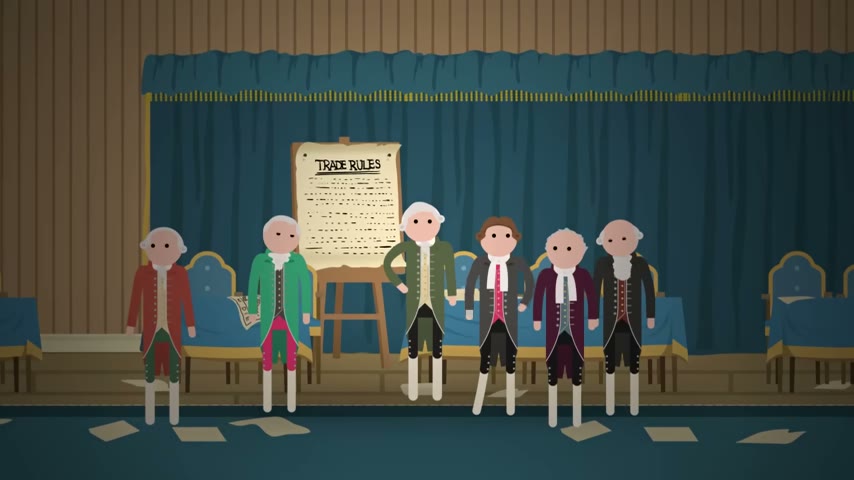
- Annapolis, 1786. A meeting called to improve trade rules among the states drew so few delegates that it could do nothing except call for another meeting. Green says six states attended; the usual count is five, since some states named delegates who did not arrive in time. The plan was to meet in Philadelphia the next year to “revise” the Articles.
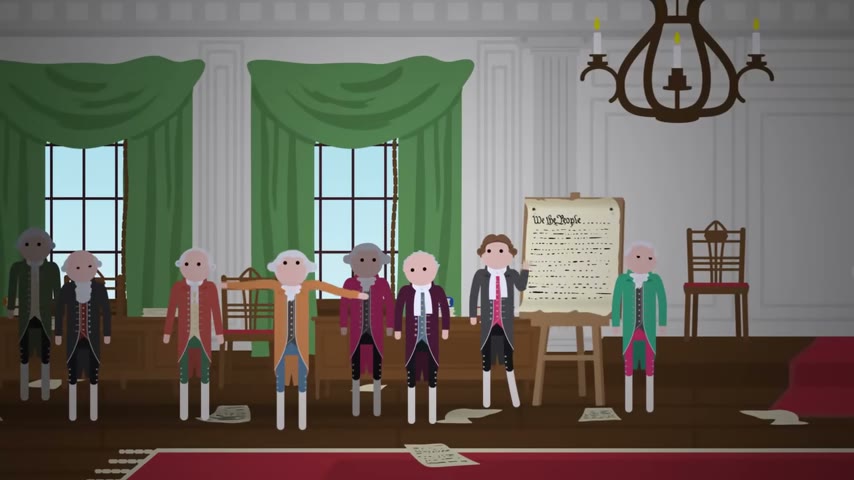
- Philadelphia, 1787. The delegates took “revise” loosely. Instead of patching the Articles, they wrote a new Constitution, which, with amendments, is still in force.
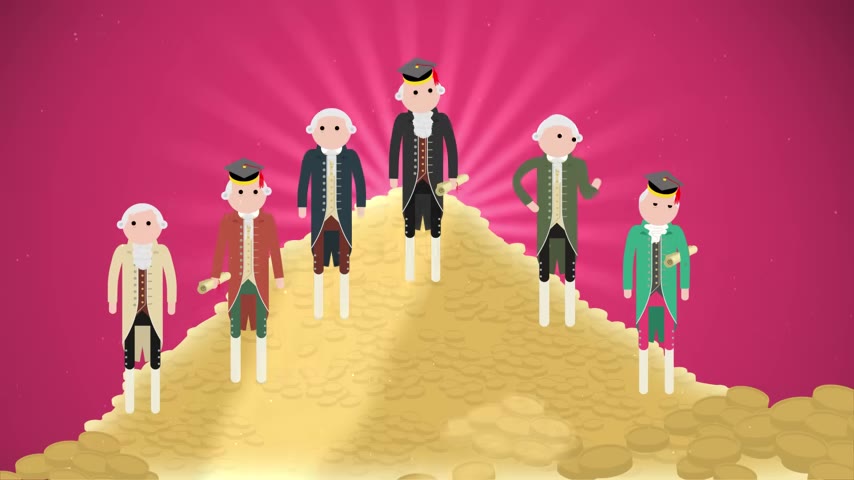
- Who they were. Fifty-five delegates attended (Rhode Island sent none). Green stresses they were not demigods, but they were unusual for their time: most were wealthy, more than half had been to college when almost no one had, and about 40% had served in the war. All wanted a stronger national government.
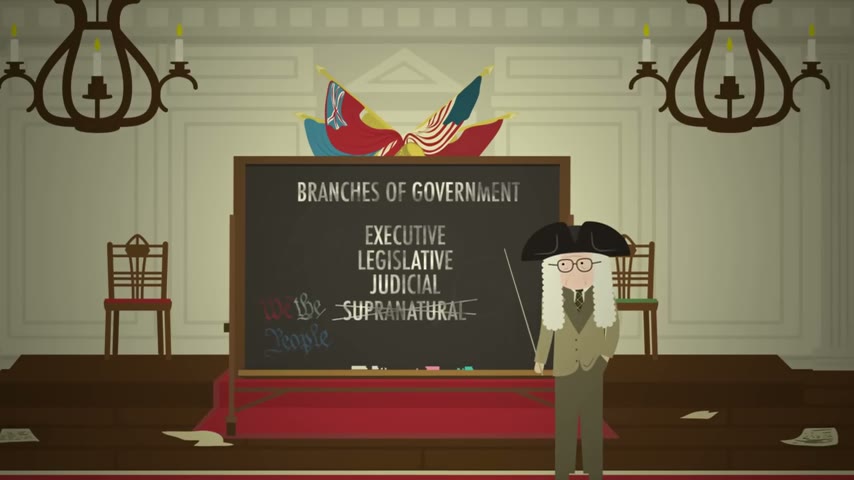
- What they agreed on: three branches (executive, legislative, judicial), and a republic, government by elected representatives rather than direct democracy.
- Where they disagreed. Alexander Hamilton, the strongest champion of central power, proposed that the president and senators serve for life (strictly, “during good behaviour”). It went nowhere, because the delegates wanted to guard against two tyrannies: tyranny by the government and tyranny by the people.
- The Electoral College is Green’s example of the second guard. Americans still do not vote for the president directly; electors do. The figure of 538 electors dates from 1964, after the District of Columbia was given electors; the number grows with the House.
Green’s jab that American leaders never export American-style elections is a fair point about the Electoral College, which few democracies copied.


6:14 – 7:12 Large states against small states: the Great Compromise
The first big fight at the convention was over representation.
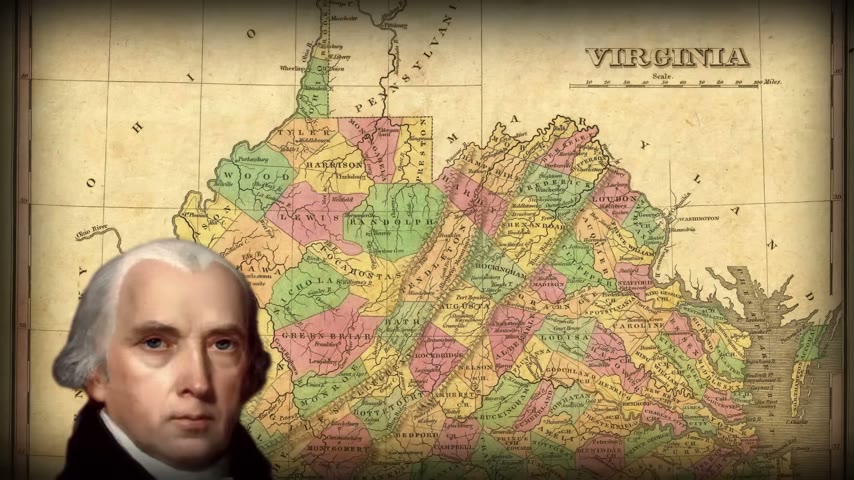
- Virginia Plan (backed by large states, mainly James Madison’s design): a two-house legislature, with seats in both houses based on population.
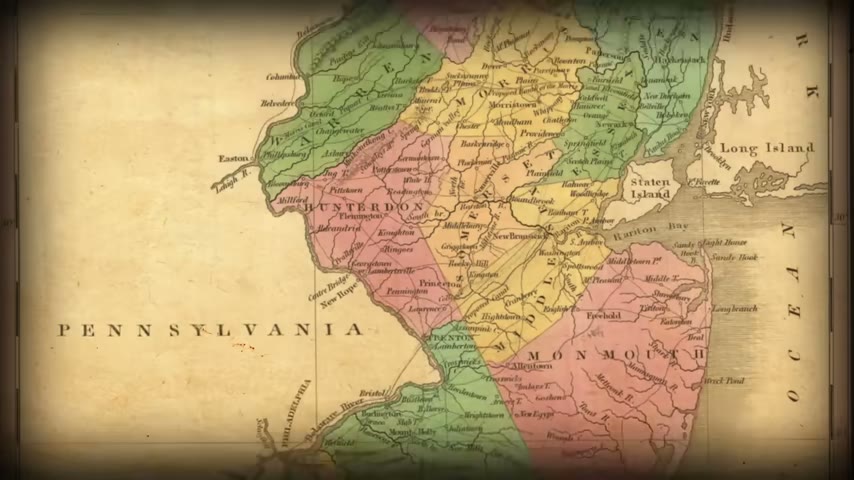
- New Jersey Plan (backed by small states, presented by William Paterson): a single house with one equal vote per state, much like the Articles. Green’s sneers at New Jersey are a running gag, not analysis.
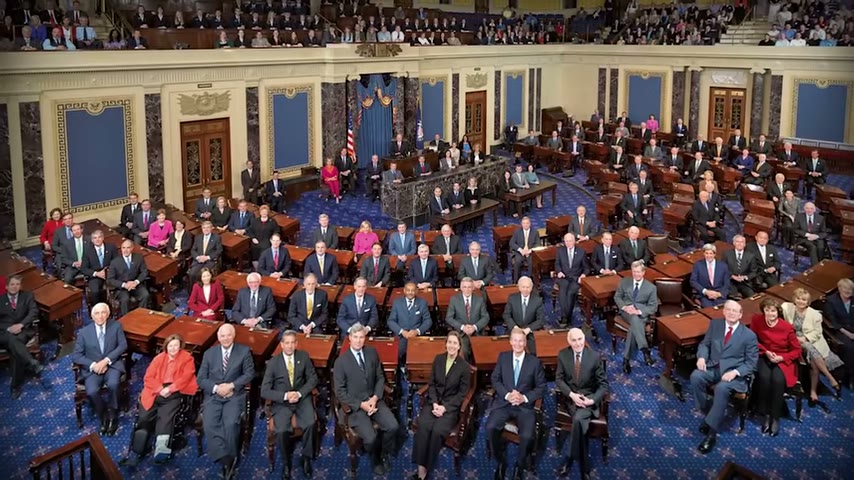
- Great (Connecticut) Compromise, brokered by Roger Sherman of Connecticut: two houses. The House of Representatives is based on population, with two-year terms; the Senate has two members per state, with six-year terms, and a third of the Senate is elected every two years.
The House was meant to respond quickly to voters; the Senate was meant to be slower and steadier. Green’s quip that the Senate was designed “to never pass anything” is a joke about modern gridlock, but it does point at the real intent: the Senate was built to cool and delay.


7:12 – 8:00 Slavery in the Constitution
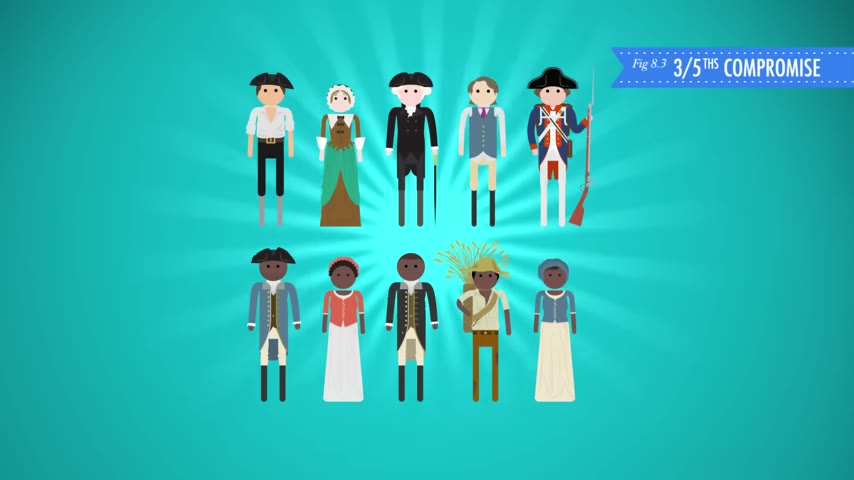
Counting by population raised a second question: who counts? Slaveholding states wanted enslaved people counted, to gain seats, even though they could not vote and were treated as property. States with few enslaved people objected. Green is blunt that the objection was about power, not equality; nearly all the delegates held racist views.
- Three-fifths compromise. A state’s population for House seats (and for direct taxes) was its free population plus three-fifths of “all other persons”. The text avoids the word “slave”. Green says it is “still in the Constitution”; the words remain in the original text, but the Fourteenth Amendment (1868) replaced the rule.
- Fugitive slave clause. People who escaped from slavery had to be returned, even from a state that had banned slavery. Free states were in effect required to help enforce slavery inside their own borders, a conflict that erupted in the 1850s. The Thirteenth Amendment (1865), which abolished slavery, made the clause void.
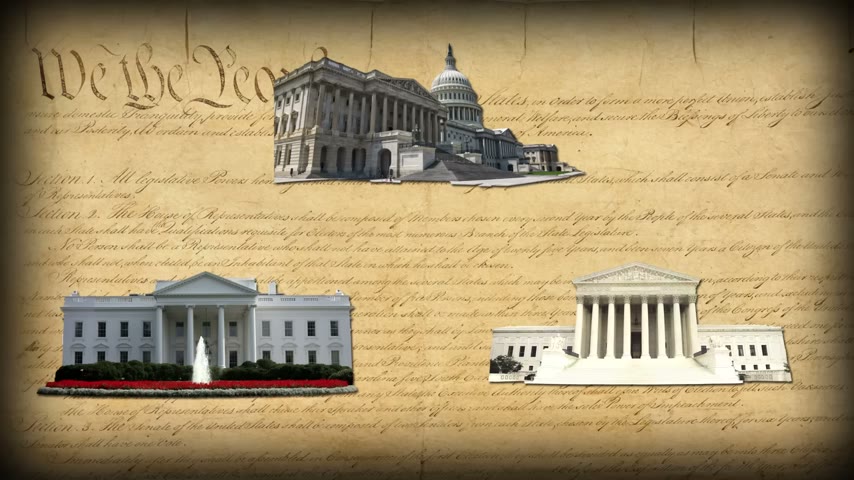
8:00 – 8:47 Separation of powers, checks and balances and federalism
Leaving slavery aside, as Green says with some irony, the framers really did fear tyranny. They used two principles against it.
- Separation of powers with checks and balances. Power is split among the legislative, executive and judicial branches, and each can restrain the others. Congress passes laws; the president can veto them; Congress can override a veto with two-thirds of each house; courts can strike laws down.
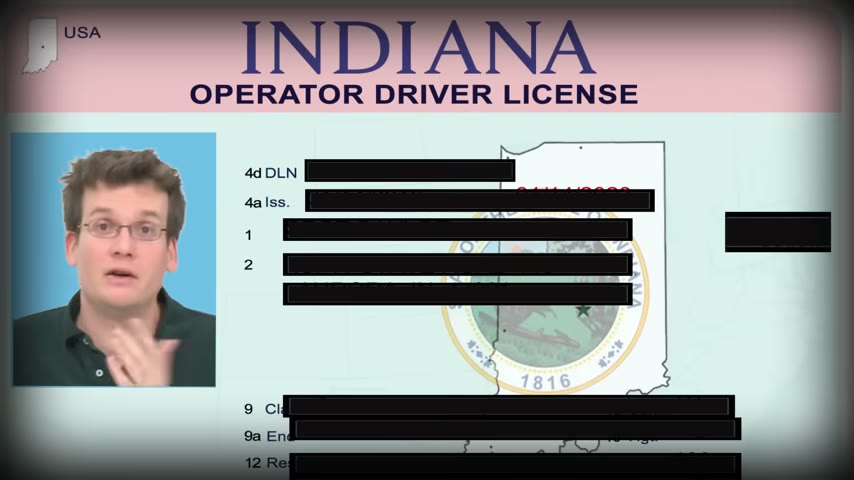
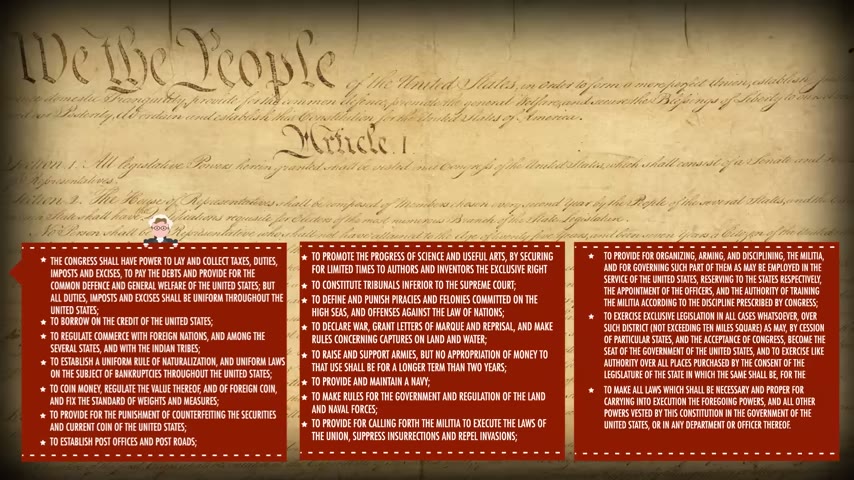
- Federalism. Authority is shared between the national government and the states. Green is a citizen of both the United States and Indiana. The national government is supposed to keep to its enumerated powers, the list in Article I, Section 8, while most other matters, especially health, safety and morals (often called “police powers”), stay with the states. The Tenth Amendment (1791) later made the point explicit.
On the courts, Green says judges gave themselves the power to void laws and that you will not find it in the Constitution. That is fair as far as it goes: judicial review is not spelled out in the text. But it was not invented from nothing. Hamilton argued for it in Federalist No. 78, and the Supreme Court claimed it in Marbury v. Madison (1803) under Chief Justice John Marshall.

8:47 – 9:31 Guarding against “too much democracy”
The framers, mostly wealthy, also worried that poor and indebted voters might elect leaders who would cancel debts or redistribute property, the fear Shays’ Rebellion had sharpened. Two features of the Constitution hedged against that.
- The Senate was not elected by the people. Senators were chosen by the states, in practice by state legislatures, on the theory that they would be leading, more reliable citizens. Green mocks that theory with a list of later senators’ scandals. Direct election of senators came only with the Seventeenth Amendment in 1913.
- The Electoral College. Electors were expected to be educated men of property who would choose more wisely than the general public. Green notes that it can elect a president who lost the national popular vote, which has happened several times, including in 2000, and says that is partly the point. A note: the Constitution let each state decide how to choose its electors, and many state legislatures originally picked them directly.

9:31 – 10:15 Ratification and the Federalist Papers
Green ends the convention story with praise: the Constitution has lasted remarkably well. Nation-states are fairly recent in world history, and the US Constitution is the oldest written national constitution still in use.
It still had to be approved. The Constitution would take effect once 9 of the 13 states ratified it in special state conventions. New Hampshire became the ninth in June 1788, and the key large states, Virginia and New York, followed that summer. North Carolina (1789) and Rhode Island (1790) held out until the new government was already running.
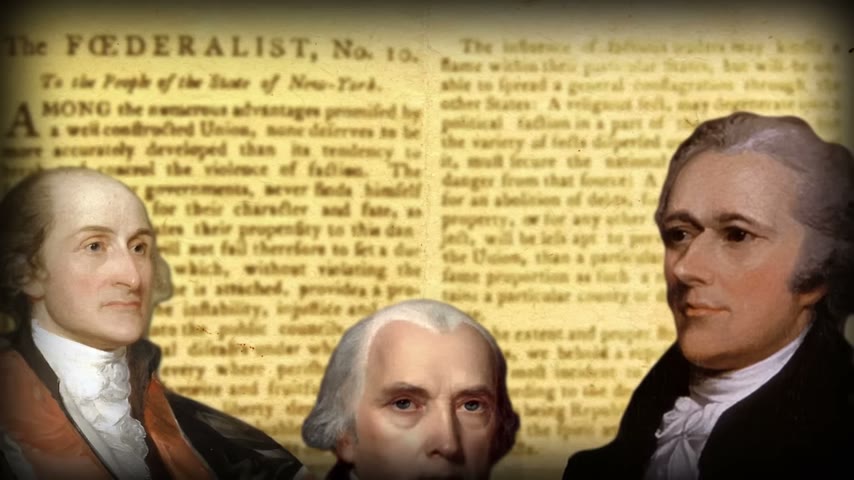
To win over the New York convention in particular, Alexander Hamilton, James Madison and John Jay wrote 85 essays for newspapers in 1787–88, signed with the pen name “Publius”. Collected as The Federalist (the Federalist Papers), they argue that a strong national government is necessary and need not threaten liberty. Hamilton wrote 51 of them, Madison 29 and Jay 5.

10:15 – 11:31 Mystery Document: Federalist No. 29 on the militia
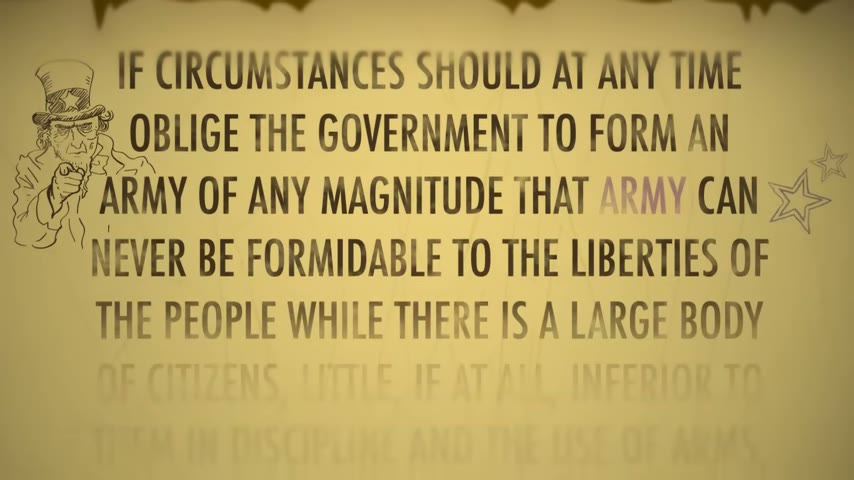
The Mystery Document is a passage arguing that an army can never threaten the people’s liberty as long as there is a large body of armed, trained citizens ready to defend their rights, and that such a citizen militia is the best substitute for, and protection against, a standing army. Green guesses correctly: it is from the Federalist Papers, by Alexander Hamilton. It is No. 29, on the militia.
Green then rants about the Second Amendment, joking that if its purpose was for citizens to match the government’s army, it would now cover drones and suitcase nukes. Some things to sort out:
- Timing. Federalist No. 29 (January 1788) was written before the Second Amendment existed. Hamilton was defending the new Congress’s power to organize and discipline state militias, not explaining an amendment. The Bill of Rights, including the Second Amendment, was drafted by Madison in 1789 and ratified in 1791.
- The rant is opinion. What the Second Amendment protects is still argued over. In District of Columbia v. Heller (2008), the Supreme Court held that it protects an individual right to keep a handgun at home for self-defense, while allowing some regulation.
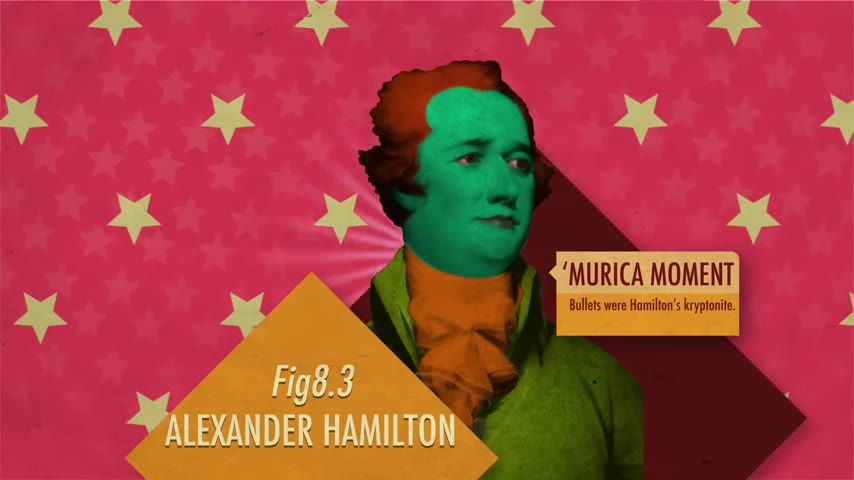
- The Hamilton jokes. The “gunshot” punchline refers to his death in a duel with Aaron Burr in 1804.



11:31 – 12:29 The Anti-Federalists, and a vague starting point
Green asks us not to ignore the losers. The Anti-Federalists opposed ratification, and some of their ideas still shape American politics.
- Who they were. Mostly small farmers and ordinary people less tied to commerce, in contrast to the wealthier Federalists. They saw little need for a government that would promote trade and protect creditors.
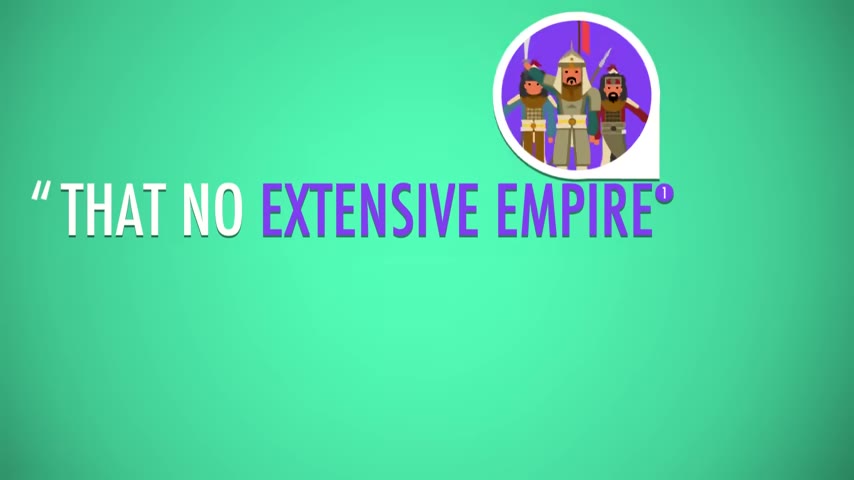
- What they feared. A strong central government dominated by the rich. Writers such as James Winthrop of Massachusetts (writing as “Agrippa”) argued that a large union would act like an empire and that no extensive empire can be governed on republican principles. They pointed to Britain and, further back, Rome.
- Their alternative. Smaller, closer governments, meaning the states, would be more responsive and better at protecting rights.
The Federalists won, but the Anti-Federalists left two marks. Several states ratified only on the understanding that a bill of rights would be added, which became the first ten amendments in 1791. And the argument over how big the national government should be never ended. (Madison’s famous answer to the “too big to be a republic” argument, in Federalist No. 10, was that a large republic with many competing interests would make it harder for any one faction to take over.)
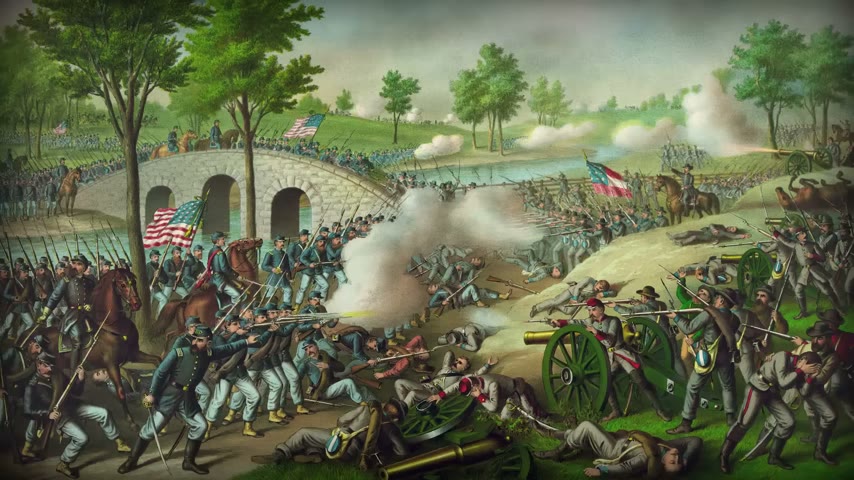
Green’s closing point: the Constitution was a starting point, short and often vague, and its details would be worked out in politics and, eventually, on the battlefield.
Skip list
- 0:13 – 0:34 Stan’s correction, the “Libertage” gag and the theme music.
- 6:06 – 6:14 The Canada aside with the Thought Bubble.
- 11:20 – 11:31 The Hamilton gunshot jokes.
- 12:29 – 13:03 Credits and the next-episode card.
Key terms
- Articles of Confederation — the first national framework of government (ratified 1781), a loose union with a one-house Congress, one vote per state and no power to tax.
- Northwest Ordinance (1787) — the law setting up the territory north of the Ohio River, with a path to statehood for three to five states and a ban on slavery.
- Shays’ Rebellion (1786–87) — an uprising of indebted Massachusetts farmers who closed courts to stop foreclosures.
- Annapolis Convention (1786) — a poorly attended meeting on trade that called for the Philadelphia convention.
- Constitutional Convention (1787) — the meeting in Philadelphia that replaced the Articles with the Constitution.
- Republic — a government run by elected representatives rather than by citizens voting directly on laws.
- Virginia Plan / New Jersey Plan — rival proposals for representation by population (large states) or one vote per state (small states).
- Great (Connecticut) Compromise — Roger Sherman’s solution: a House based on population and a Senate with two members per state.
- Three-fifths compromise — counting three-fifths of the enslaved population when apportioning House seats and direct taxes.
- Fugitive slave clause — the requirement that people escaping slavery be returned to their enslavers.
- Separation of powers — dividing government among legislative, executive and judicial branches.
- Checks and balances — the ways each branch can limit the others, such as the veto and judicial review.
- Judicial review — courts’ power to strike down laws that conflict with the Constitution, established in Marbury v. Madison (1803).
- Federalism — the sharing of power between the national government and the states.
- Enumerated powers — the powers the Constitution lists for Congress, mainly in Article I, Section 8.
- Electoral College — the body of electors, chosen by each state, that formally elects the president.
- Ratification — formal approval; the Constitution needed nine state conventions.
- Federalist Papers — 85 essays by Hamilton, Madison and Jay, signed “Publius”, urging ratification.
- Anti-Federalists — opponents of ratification who feared a strong, distant national government.
Review questions
- Why did Americans in the 1770s and 1780s want a weak central government?
- What could Congress do under the Articles of Confederation, and what could it not do?
- Why was the lack of a power to tax such a serious problem for the Articles government?
- What did the Northwest Ordinance establish, and why does Green “foreshadow” its ban on slavery?
- What caused Shays’ Rebellion, and why did it alarm so many political and economic leaders?
- How were the Virginia Plan and the New Jersey Plan different, and how did the Great Compromise combine them?
- How did the three-fifths compromise and the fugitive slave clause protect slavery?
- What two kinds of tyranny did the framers want to prevent, and which features of the Constitution guard against each?
- Explain separation of powers and federalism in your own words, with one example of each.
- What were the main arguments of the Federalists and the Anti-Federalists during ratification?
FAQ
Why did the Articles of Confederation fail?
The Articles created a deliberately weak central government: a one-house Congress in which each state had one vote, with no president and no national courts. Its biggest flaw was that Congress could not tax. It had to ask the states for money and could not set tariffs, so it could not pay the war debt or manage trade. Major decisions needed 9 of the 13 states and amendments needed all 13, so the system could not fix itself. Shays' Rebellion in Massachusetts (1786–87) convinced many leaders that it had to be replaced.
What was the Great Compromise?
It was the deal, brokered by Roger Sherman of Connecticut, that settled the fight between large and small states at the 1787 Constitutional Convention. Large states backed the Virginia Plan (representation by population in both houses); small states backed the New Jersey Plan (one vote per state, as under the Articles). The compromise created a House of Representatives based on population, with two-year terms, and a Senate with two members per state, with six-year terms.
What was the three-fifths compromise?
It was the rule that, when a state's population was counted for seats in the House, the free population was counted in full plus three-fifths of 'all other persons', meaning enslaved people. The Constitution never uses the word 'slave'. The clause gave slaveholding states extra seats and electoral votes for people who could not vote. It was replaced after the Civil War by the Fourteenth Amendment (1868).
What is federalism?
Federalism means that power is divided between a national government and the state governments, and citizens belong to both. The national government is meant to be limited to the powers the Constitution lists, such as taxing, regulating trade between states and with other nations, coining money and declaring war. Most everyday matters, such as health, safety and policing, are left to the states.
Who were the Federalists and the Anti-Federalists?
Federalists supported ratifying the Constitution and a stronger national government; Alexander Hamilton, James Madison and John Jay made their case in the 85 essays of the Federalist Papers. Anti-Federalists opposed it. They tended to be small farmers and local leaders who feared that a large, distant government run by the wealthy would threaten liberty, and they argued that only smaller, state-level governments could stay truly republican. They lost the ratification fight but won a major concession: the Bill of Rights, ratified in 1791.
Studying another course? Paste its YouTube or Bilibili link on the home page to request a handout — or make your own with the desktop app (coming soon).