Sapolsky Human Behavioral Biology, Lecture 6: Behavioral Genetics I — notes and timestamps
Watch the video (99 min)
Watch the original video on YouTube
Lecture 6 opens the third “bucket” of Robert Sapolsky’s Stanford course: behavior genetics, the field that infers genetic influence on behavior from how traits are shared among relatives, rather than from evolutionary models or from DNA sequences. Most of the 99 minutes is a stress test. Sapolsky takes each classic method in turn (family resemblance, identical versus fraternal twins, sex differences, adoption studies, twins reared apart) and exposes the environmental assumption hidden inside it. The second half argues that environment does not begin at birth: prenatal hormones, nutrition and even learning shape adults, and several routes pass traits down generations without any change in DNA. It follows Lecture 5, on how small changes in regulatory DNA can produce large evolutionary jumps. For the full series, see the course index.
Key takeaways
- Every classic method depends on an “equal environments” assumption, and each one breaks (7:29). Identical twins are treated more alike than fraternal twins, and boys and girls are handled differently within minutes of birth.
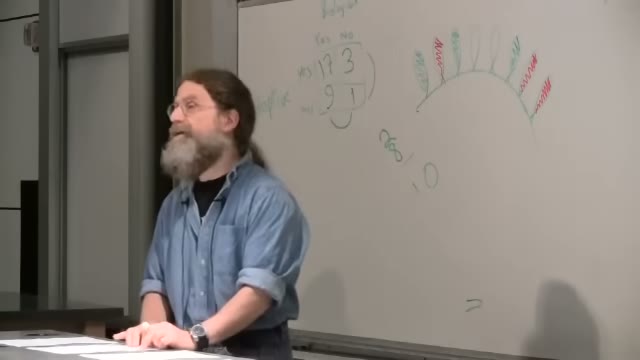
- Kety’s Danish adoption study was the landmark case for genes in schizophrenia (28:56): about 9% risk with a biological parent who had it versus 1% at baseline, and about 17% with both a biological and an adoptive parent, more than the two risks added together.
- Adoption is not a clean experiment (34:40). Delays before adoption, shared prenatal life, paternity errors and deliberate matching of children to adoptive families all leak environment into the “genetic” number.
- Twins reared apart give the field’s best figures, roughly 50% heritability for IQ, extraversion and aggression (40:28), but placements were again nonrandom and samples are small.
- Environment starts before birth (46:46). Prenatal stress hormones, famine and maternal anxiety produce traits that look genetic to anyone who starts measuring at birth.
- Some inheritance is not genetic at all: a stressed mother, a famine-programmed metabolism or a rat’s mothering style can carry into grandchildren (53:00, 1:01:22, 1:34:57).
- Even real genetic effects are often indirect (1:22:24): genes for height or feather color can show up as “heritable” extraversion or social rank.
Chapter notes
0:17 – 4:24 A third way to ask whether behavior is genetic
Sapolsky recaps the first two approaches. Sociobiology and evolutionary psychology built predictions about social behavior from selection rules. Molecular genetics then answered the critics’ “show me the gene” with the DNA mechanics of evolution, including how a single change in a transcription factor or splicing enzyme can support punctuated equilibrium.
Behavior genetics works differently. Its researchers neither model evolution nor hunt for mutations; they compare how often relatives with different amounts of shared genes also share a trait. Depending on your view, that is a powerful way to detect genetic influence or, as Sapolsky’s cartoon about finding “the gene” for a phone-call habit jokes (3:22), a field prone to deterministic overreach. The goal throughout is modest: not “determined by genes” but “has a genetic component.”
4:24 – 9:02 From “runs in families” to identical vs fraternal twins
The methods escalate in sophistication:
- Universality. A trait found in every member of a species was once taken as instinct. That works for some fly behaviors and little else.
- Runs in families. Genes run in families, but so does environment.
- Graded relatedness. If a trait is more common the closer the relatives, infer genes. The problem: closer relatives also share more environment, so the two signals rise together (6:58).
- Twins (7:29). Identical (monozygotic) twins share all their genes, fraternal (dizygotic) twins about half. If both kinds grow up in the same environment, extra similarity in identical pairs should reflect genes. The first patch is to compare only same-sex fraternal pairs, since mixed-sex pairs obviously differ.
Our note: each step tries to hold environment constant while varying shared genes. That logic is fine; the lecture’s point is that the “environment held constant” part is almost never true.
9:02 – 14:15 Why twins don’t share an equal environment
The same-environment assumption fails twice over (10:35):
- Fraternal twins are treated more differently than identical twins, so greater similarity in identical twins could reflect more shared environment as well as more shared genes.
- Identical twins don’t always share the same prenatal world (11:38). If the embryo splits in the first five days, each twin gets its own placenta (dichorionic). If it splits between days 5 and 10, they share one placenta (monochorionic) and more of their blood supply. That sounds trivial, yet monochorionic identical twins have more similar IQs than dichorionic ones. After the break he adds that about two thirds of identical twins are monochorionic (46:14).
Marmosets, which routinely bear twins with an unusual shared circulation, have been studied for this reason.
14:15 – 22:06 Sex differences and the “math gene” study
Another supposed natural experiment: boys and girls get different genes but, the argument goes, the same environment. Sapolsky shows how fast that collapses. Newborn boys move their limbs more than girls at one hour old, which looks genetic, but mothers already hold and face baby girls and boys differently from the first interaction (15:49).
His main case is Benbow and Stanley’s study from the Johns Hopkins gifted-youth program (16:22). (He starts to say IQ, then corrects himself: it was math.) Among about 40,000 junior-high students taking the math SAT, boys scored higher on average and outnumbered girls about 13 to 1 at the top (18:28). Because students that age all take the same math classes, the authors argued the gap reflected biology, and the popular press turned that into a “math gene.”
Sapolsky calls the paper’s reasoning ludicrous (21:03). Studies show that from first grade boys are called on more often, praised more for the same correct answer, and later steered toward elective math by counselors. If environments differ an hour after birth, they certainly differ at 13. He promises to return to this study later.
22:06 – 31:31 Adoption studies and Kety’s schizophrenia matrix
Adoption reverses the twin logic: same household, different genes (22:38). Does an adoptee resemble the biological parents or the adoptive ones? Animal researchers have long done the equivalent by cross-fostering litters between mothers.
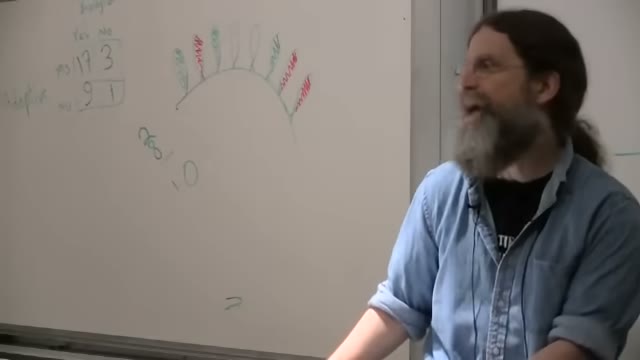
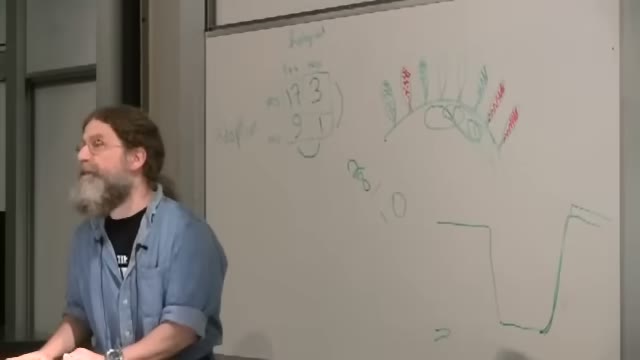
The landmark human version came from Seymour Kety in the late 1960s and early 1970s (24:12), at a time when a genetic component to schizophrenia was considered unlikely. Denmark’s meticulous records let his team find every adoptee who developed schizophrenia and trace both sets of parents, and the same psychiatrists interviewed everyone to keep diagnoses consistent. The results (27:21):
| Biological parent with schizophrenia? | Adoptive parent with schizophrenia? | Rate in adoptees |
|---|---|---|
| No | No | about 1% (population baseline) |
| No | Yes | about 3% |
| Yes | No | about 9% |
| Yes | Yes | about 17% |
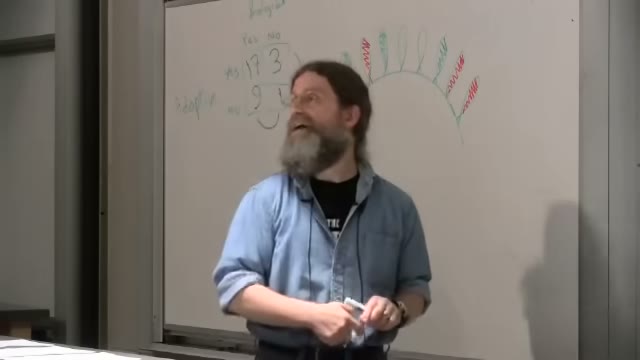
The 9% figure (28:56) became the field’s clearest evidence for heritability of a psychiatric disorder. The last cell is the interesting one (29:59): adding the two separate increases (+2 and +8 points) predicts roughly 10%, but the observed rate is about 17%. Risks that multiply instead of add are an early hint of gene–environment interaction. The design was then copied for depression, alcoholism, criminality and IQ.
31:31 – 36:47 Four problems with adoption studies
- Adoption is never at the moment of birth (32:03). Even a few days with the biological family is unmeasured shared environment.
- Prenatal environment (32:35). The field’s fix was to compare resemblance to the biological mother with resemblance to the biological father (33:37): both contribute equal genes, so any extra resemblance to the mother was credited to the womb. Sapolsky later takes this fix apart.
- Paternity uncertainty (34:07). The man listed as the father often isn’t, at higher rates than most people assume.
- Nonrandom placement (34:40). As the Princeton psychologist Leon Kamin stressed, agencies try to match children to similar adoptive families, so adoptees share more than chance with their adoptive parents, including traits with genetic influence.
36:47 – 42:02 Twins separated at birth
The most coveted design: identical genes, different households (37:19). Tom Bouchard at the University of Minnesota built a career and a registry of such pairs reunited as adults, eventually a couple of hundred sets. Early coverage fixated on odd coincidences (shared pet names, identical toilet habits), which Sapolsky lampoons with an invented pair raised in wildly different worlds.
The durable findings are about 50% heritability for IQ, for position on the introversion–extraversion scale, and for aggression (40:28). Kamin’s critique applies again: separated twins tended to land in similar homes. The refined design compares identical twins reared apart with fraternal twins reared apart, so placement bias cancels out (41:30), but such pairs are rare and samples tiny.
42:02 – 46:14 Traits that appear without learning
A last classic argument: behavior that appears with no chance to learn it must be genetic. Babies everywhere start social smiling at about the same age with the same muscles, and fetuses smile in the third trimester. Congenitally blind babies, who have never seen a smile, follow the same timeline, and congenitally deaf babies start babbling on schedule (43:36). Sapolsky accepts these as near-universal motor patterns but flags the gap that drives the rest of the lecture: someone who starts observing a second after birth will misread prenatal effects as genetic (44:09). After the break he briefly notes that behavior geneticists knew the sex-difference method was limited.
46:14 – 54:03 Environment before birth: hormones and stress
All the methods so far assume environment starts at birth (46:46). A fetus shares its mother’s blood, so what she experiences reaches it.
- Intrauterine position (47:50). Fred vom Saal at the University of Missouri used the fact that rat fetuses lie in a row and share blood most with their neighbors. A female flanked by brothers reaches puberty later than one flanked by sisters, and her estrogen declines differently later in life.
- Maternal age (48:53). In humans, children of very young and very old mothers reach puberty later than those of mid-age mothers, apparently because of differing estrogen levels during pregnancy.
- Prenatal stress (50:27). Rats exposed to their mother’s glucocorticoids (stress hormones) grow up with smaller brains, thinner cortex, poorer learning, more anxiety and more cognitive decline in old age.
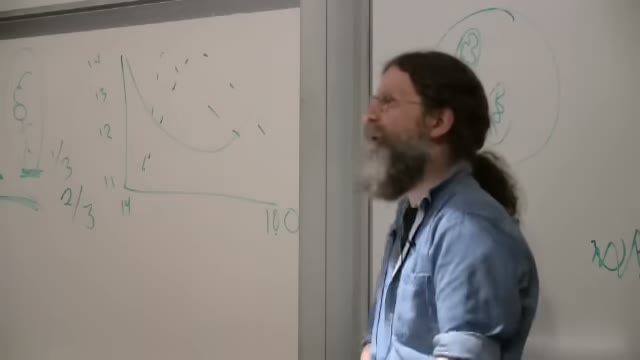
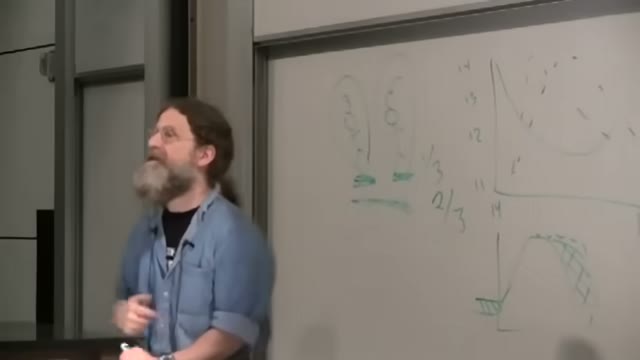
The mechanism makes it multigenerational (51:29). One brain region hit especially hard normally helps switch off the stress response. (He deliberately doesn’t name it; it is covered later in the course.) With that brake weakened, the animal secretes more glucocorticoids for life. When a prenatally stressed female becomes pregnant, her own fetus is bathed in extra stress hormone and the cycle repeats (52:30). First described in the early 1960s, the effect was traced four or five generations before fading. Sapolsky calls this non-Mendelian inheritance: a trait passed down with no genetic basis at all.
54:03 – 1:02:27 The Dutch Hunger Winter and the thrifty phenotype
Nutrients cross the placenta too. In the winter of 1944 the occupying Nazis diverted the Netherlands’ food to Germany, and a normal diet dropped abruptly to near starvation for about three months before liberation (54:35).
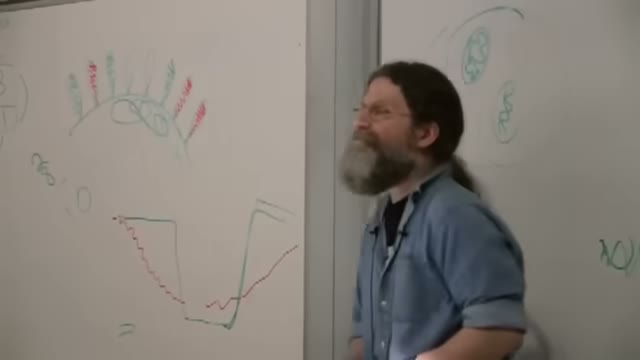
Fetuses in late gestation then “learned,” in Sapolsky’s deliberately metaphorical sense, that food was scarce. They underwent metabolic programming toward a thrifty phenotype (56:40): a pancreas that releases insulin at the faintest rise in blood nutrients so everything gets stored, and kidneys that cling to salt. Returned to a normal Western diet for life, those adults showed dramatically higher rates of obesity, hypertension, diabetes and metabolic syndrome (he cites a 19-fold increase, 57:43). Timing mattered: first-trimester fetuses and newborns were unaffected; the window was the second to third trimester.
The finding launched the field now called fetal origins of adult disease (59:18). A useful contrast: besieged Stalingrad suffered years of starvation but no comparable effect, because food returned slowly rather than as a sudden step (1:00:19). And it carries forward: a Hunger Winter woman’s thrifty metabolism pulls extra nutrients from her blood during pregnancy, leaving her fetus a milder version of the same deprivation (1:01:22). The mechanism, he previews, is epigenetic changes in insulin-related genes.
1:02:27 – 1:09:15 More prenatal channels: diet, learning, and an embryo-transfer study
- Phytoestrogens (1:02:27). Higher fetal exposure to plant-derived estrogens from the mother’s diet brings a small but consistent rise in estrogen-dependent breast cancer risk decades later.
- Prenatal learning in rats (1:03:29). Fetuses swallow amniotic fluid. Inject a sweetened flavor for several days and, after birth, the pups prefer that flavor.
- Prenatal learning in humans (1:05:01). Pregnant women read The Cat in the Hat aloud repeatedly in the last trimester, or a control text matched for rhythm and word length. Measured by sucking rate, newborns preferred the Dr. Seuss. Fathers reading at the belly had no effect: only the mother’s voice resonates enough.
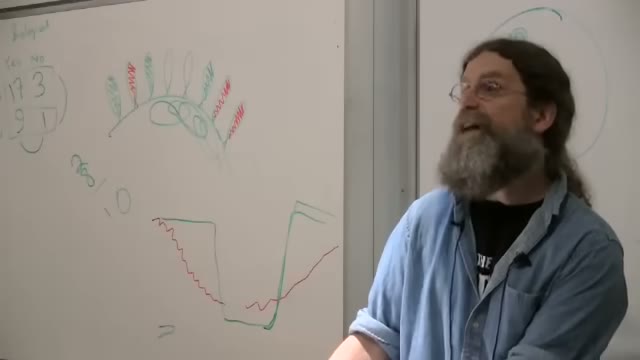
- Moving fetuses between mothers (1:07:09). Darlene Francis at Berkeley took rodent strains bred for high and low anxiety, an apparently textbook genetic trait, and surgically transferred embryos early in development. Offspring of the high-anxiety strain gestated in a low-anxiety mother grew up low-anxiety (1:08:12). The “genetic” trait was prenatal.
1:09:15 – 1:20:52 Why mothers and fathers don’t contribute equally
Back to the field’s fix for prenatal effects: extra resemblance to the biological mother, compared with the father, is credited to the womb because each parent supplies equal genes (1:09:15). Sapolsky lists four reasons the inputs aren’t equal:
- Paternity uncertainty again.
- Mitochondrial DNA (1:10:50). Mitochondria carry their own genes, a relic of Lynn Margulis’s endosymbiosis idea that they were once free-living organisms. Eggs have mitochondria; sperm deliver little but DNA (1:12:58). So all mitochondrial genes come from the mother, which is also what lets geneticists trace a “Mitochondrial Eve.”
- Imprinted genes (1:14:02), from earlier lectures, behave differently depending on which parent they came from.
- The egg’s cytoplasm (1:14:33). Every transcription factor present at fertilization is the mother’s.
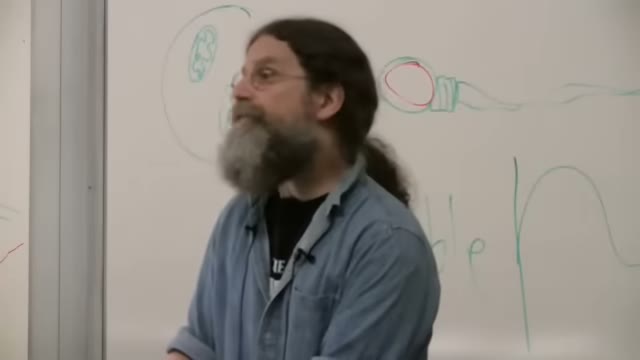
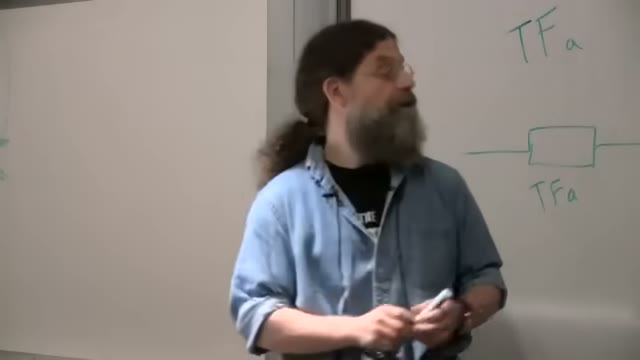
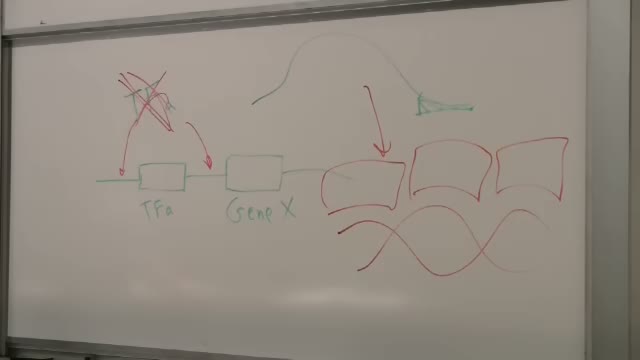
The fourth point gets a thought experiment (1:16:06). Suppose transcription factor A switches on gene X and also switches on its own gene, a positive feedback loop. If an environmental toxin knocks A out in an egg, the loop never starts, X is never expressed, and the eggs that individual later makes lack A too. The silence passes down indefinitely, whatever version of gene X is inherited. That is an acquired trait being inherited, the idea Lamarck was mocked for (and that, under Lysenko, became a disaster in Soviet science) (1:18:15).
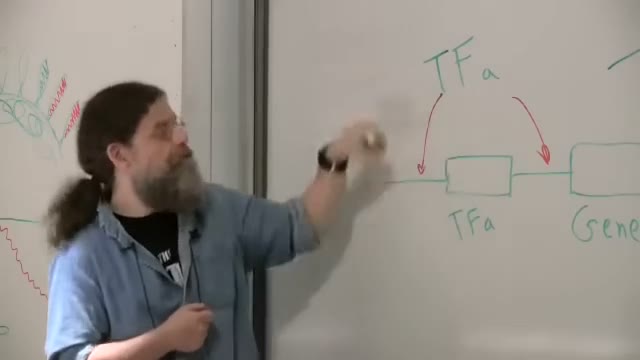
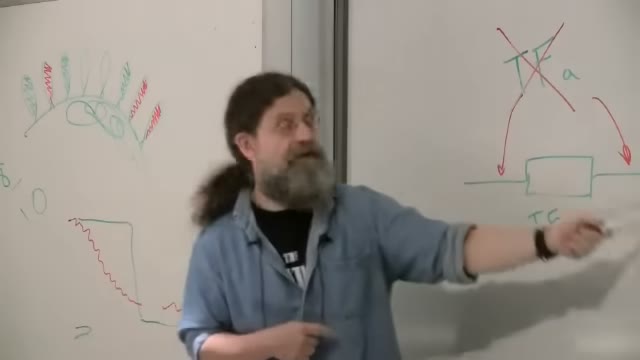
Our note: the mother-versus-father comparison only isolates prenatal environment if genetic contributions are equal. Mitochondria, imprinting and egg cytoplasm each tilt the balance toward the mother, so the subtraction can’t cleanly separate womb from genes.
1:20:52 – 1:29:44 Indirect genetic effects
Some genetic influences survive every critique. But Judith Rich Harris, in The Nurture Assumption, pointed out that a heritable trait can work through an intermediate (1:21:22). Four examples:
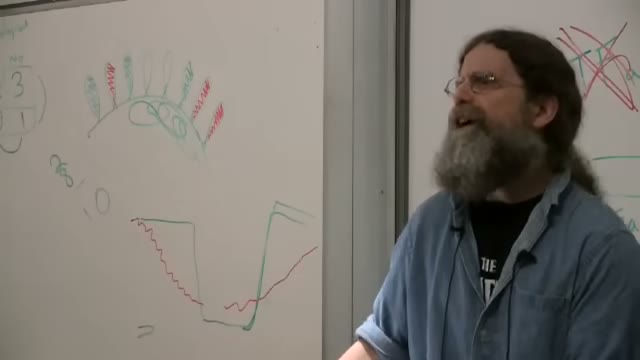
- Extraversion (1:22:24). Height and appearance are highly heritable; taller, more attractive children are treated better; children treated better become more outgoing. Studies since suggest most of extraversion’s heritability runs through such physical traits.
- Rank in birds (1:23:59). Apparently inherited social rank in some poultry species turns out to be inherited feather color and iridescence, which draws pecking from flockmates.
- Chicks pecking for grubs (1:25:03). What’s inherited is an urge to peck at their own toes; misses land on grubs and the chicks learn. Chicks fitted with tiny galoshes, so they can’t peck their toes, never develop the “innate” skill.
- Political party (1:26:05). He cites about 70% heritability of party affiliation. The likely intermediate is tolerance for ambiguity, a stable personality difference between conservatives and progressives that shows even in children’s heart-rate responses to ambiguous stimuli (1:27:08). A proposed link to Kohlberg’s stages of moral development has not held up.
- Aggression in rodents (1:28:11). Strains bred for high aggression turn out to have lower pain thresholds: things hurt more, and they react.
1:29:44 – 1:37:04 Epigenetics and inherited mothering style
Epigenetic changes, which alter whether transcription factors can reach a gene without touching its sequence, can produce the same multigenerational effect as the knocked-out transcription factor, and they explain the Dutch Hunger Winter findings (1:30:15).
The showcase is Michael Meaney’s work at McGill (1:30:46). An old finding, traced to Seymour Levine at Stanford around 1960: pick up a newborn rat for 3 minutes a day and it grows into an adult with a bigger brain, better learning and lower stress hormones; take it away for an hour and a half a day and it ends up with a smaller brain and a shorter life (1:31:18). Meaney’s steps:
- The handling works through the mother (1:32:50). A pup returned after 3 minutes gets a burst of licking and attention; one returned after 90 minutes gets ignored.
- Natural variation in licking and grooming produces the same range of outcomes (1:33:53).
- It is multigenerational (1:34:57). Heavily licked daughters become heavy lickers, all after birth.
- The mechanism is epigenetic (1:35:27). Mothering changes transcription-factor access to genes for stress-hormone, estrogen and other receptors.
- It is partly reversible (1:36:01). A pup moved from a neglectful to an attentive mother mid-infancy shifts its epigenetic pattern.
Without these experiments, mothering style would look like a genetic trait. How licking translates into an epigenetic change is still being worked out.
1:37:04 – 1:38:36 Wrap-up
Sapolsky sums up: family, adoption, twin and separated-twin methods all share flaws; prenatal environment is the biggest blind spot; the mother-versus-father fix runs into unequal inheritance and Lamarckian routes; and early-life effects can echo across generations. The next lecture turns to finding the actual genes and to gene–environment interactions, which he says make the last two hours largely irrelevant.
Our note: read this lecture as a catalogue of confounds, not a denial that genes matter. Sapolsky accepts real genetic influences; the target is the inference from “shared by relatives” to “caused by genes.”
Skip list
- 0:00 – 0:48 Apology for the missed Friday class and the “next bucket” opener.
- 9:33 – 10:35 Show of hands for twins and the armadillo joke.
- 38:53 – 39:57 The invented reunited-twins anecdote; the point is that early press focused on trivial coincidences.
- 44:42 – 46:14 Break and housekeeping. Worth a glance only if you use the course’s extended notes: he says a word in the behavior genetics notes reads “unable” where it should read “able” (45:43).
- 1:06:36 – 1:07:09 A student question about the Cat in the Hat children, answered with a joke.
- 1:38:06 – end Stanford outro.
Glossary
- Behavior genetics — the field that infers genetic influence on behavior by comparing trait-sharing among individuals with different degrees of genetic relatedness.
- Monozygotic / dizygotic twins — identical twins from one fertilized egg (all genes shared) versus fraternal twins from two eggs (about half shared).
- Monochorionic / dichorionic — identical twins sharing one placenta (split on days 5–10) versus each having their own (split in the first five days).
- Equal environments assumption — the premise that compared groups (twin types, sexes, adoptive siblings) experience the same environment, so differences must be genetic.
- Cross-fostering — swapping newborn animals between mothers to separate genetic from rearing effects; the animal version of an adoption study.
- Nonrandom (selective) placement — adoption agencies’ matching of children to similar families, which inflates resemblance to adoptive parents.
- Heritability — the share of variation in a trait linked to genetic differences; Sapolsky flags that he will dissect the term later.
- Glucocorticoids — stress hormones; prenatal exposure has lifelong and even multigenerational effects in rats.
- Metabolic programming / thrifty phenotype — a fetus adjusting its metabolism to the nutrition it senses, producing a calorie- and salt-hoarding body after prenatal famine.
- Fetal origins of adult disease — the research field linking prenatal conditions to adult illnesses such as diabetes and hypertension.
- Non-Mendelian inheritance — traits transmitted across generations by routes other than inherited DNA sequence.
- Mitochondrial DNA — genes carried in mitochondria, inherited only from the mother.
- Lamarckian inheritance — passing on a trait acquired during life; the egg transcription-factor loop and epigenetics provide real versions of it.
- Indirect genetic effect — a gene influencing behavior through an intermediate trait, such as height shaping how a child is treated.
- Epigenetic change — a durable change in whether a gene can be accessed and expressed, with no change to its sequence.
- Licking and grooming — the measure of rat mothering style in Meaney’s studies, which shapes offspring stress biology and their own later mothering.
FAQ
Why does Sapolsky say identical-vs-fraternal twin studies can overstate genetic influence?
The method assumes both kinds of twins share their environment equally, so any extra similarity in identical twins must come from genes. In practice identical twins are treated far more alike than fraternal twins, and even identical twins can differ before birth, for example in whether they shared one placenta or had two. Extra similarity can therefore come from shared environment as well as shared genes.
What did Seymour Kety's Danish adoption study find about schizophrenia?
Using Denmark's adoption records, Kety's team found about a 1% rate of schizophrenia in adoptees with no family history, about 3% when only an adoptive parent had it, and about 9% when only a biological parent had it. Adoptees with both a biological and an adoptive parent with schizophrenia had about 17%, more than the two risks added together. It became the landmark evidence for a genetic component to a psychiatric disorder.
What is the Dutch Hunger Winter effect?
In the winter of 1944 the occupying Nazis cut off food to the Netherlands for about three months. People who were late-gestation fetuses then were metabolically programmed for scarcity, with a pancreas and kidneys tuned to hoard calories and salt. As adults on a normal diet they had much higher rates of obesity, hypertension, diabetes and metabolic syndrome, and the effect showed up again, in milder form, in their own children.
What is an indirect genetic effect?
It is a case where a trait really is heritable, but the gene acts on something else that then shapes the behavior. Sapolsky's main example comes from Judith Rich Harris: much of the heritability of extraversion runs through inherited height and appearance, because people who are treated better as children tend to become more outgoing.
How does Michael Meaney's rat research show inheritance without genes?
Meaney showed that rat pups licked and groomed heavily by their mothers grow into calmer, healthier adults, and that daughters raised this way become heavy lickers and groomers themselves. The mothering style changes epigenetic marks on genes for stress-hormone and other hormone receptors, so the trait passes down generations without any change in DNA, and it can partly be reversed by moving a pup to a more attentive mother.
Studying another course? Paste its YouTube or Bilibili link on the home page to request a handout — or make your own with the desktop app (coming soon).