Harvard Positive Psychology 1504 (Tal Ben-Shahar): lecture guide and study notes
The course grew out of a personal question. Ben-Shahar was doing well at everything as a Harvard sophomore and still unhappy, so he switched from computer science to philosophy and psychology to find out why
Psychology has studied what goes wrong far more than what goes right: about 21 articles on anger, anxiety and depression for every one on joy, happiness or life satisfaction
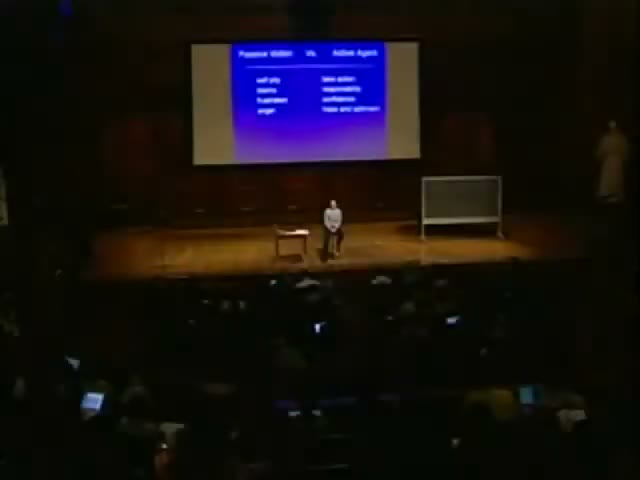
Questions shape what you see. Asking "what works, and why do some people succeed?" finds things that asking "what is wrong?" misses. Marva Collins is his model

People underestimate what one person can change because they underestimate exponential growth. A smile or a favour passed on to three people, who each pass it on to three more, reaches huge numbers within a few steps (5:38, 15:15).

Feeling good needs little defence, but it also pays off: Barbara Fredrickson's broaden-and-build theory says positive emotions widen thinking and build resources over time
Watch the video
Watch the original video on YouTube
Positive Psychology (Harvard PSY 1504) is the course Tal Ben-Shahar taught at Harvard in the mid-2000s; its 2006 run, with about 850 students, made it the university’s largest class at the time. It asks how people can become happier, and draws on research by Martin Seligman, Ellen Langer, Sonja Lyubomirsky and others, mixed with stories, class exercises and weekly habits.
Harvard has not published the lectures on an official channel. The recording that circulates on YouTube is a re-upload of a later run, which internal references date to around 2008. We link to one complete re-upload with English captions (channel); it is not affiliated with Harvard or with Ben-Shahar, and neither are we. Our notes are written in our own words, with timestamps back to each video, and they flag the places where his account of a study differs from what was published.
Lectures
So far we cover the first five lectures, which explain why the field exists and set out the five premises the rest of the course rests on.
| # | Video | Length | What you learn | Our notes |
|---|---|---|---|---|
| 1 | What Is Positive Psychology? | 77 min | Why Ben-Shahar teaches the course, positive psychology as a bridge from the ivory tower to Main Street, its roots in humanistic psychology, and information versus transformation. | Lecture 1 notes |
| 2 | Why Study Positive Psychology? | 74 min | The 21-to-1 research ratio, resilience in at-risk children, salutogenesis, “questions create reality”, and Marva Collins as a role model. | Lecture 2 notes |
| 3 | Is Happiness Random? | 83 min | Why removing misery does not create happiness, the first two premises (be a practical idealist; change is possible), twin research, and the Cambridge-Somerville Youth Study. | Lecture 3 notes |
| 4 | The Power of One and the Permission to Be Human | 76 min | Exponential change from one person, why tenure and lottery wins lift happiness only briefly, Sowell’s two visions, and accepting painful emotions. Ends with a guided meditation. | Lecture 4 notes |
| 5 | Self-Fulfilling Beliefs and the Power of the Situation | 79 min | Why pursuing happiness is not selfish (broaden-and-build), beliefs as self-fulfilling prophecies (Bannister, Pygmalion), and how situations shape behaviour (Milgram, Zimbardo, Langer, Bargh). | Lecture 5 notes |
The re-uploaded titles do not always match the lectures: the uploader calls lectures 4 and 5 “A positive environment changes people” and “The power of environment”. We title our notes by what each lecture actually covers.
The five premises
Lectures 3 to 5 set out the premises Ben-Shahar says the whole course rests on. In our words:
| Premise | What it means | Where |
|---|---|---|
| 1. Build bridges, not specialisms | Connect disciplines, and research with everyday life: be a practical idealist, because good intentions are not enough. | Lecture 3 |
| 2. Change is possible | Happiness is partly heritable but not fixed; study the people who change, not only the average. | Lecture 3 |
| 3. Internal factors mainly decide happiness | External events such as tenure, money or a lottery win move happiness for a while, then people return toward their usual level. | Lecture 4 |
| 4. Work with human nature, not against it | Drawing on Thomas Sowell’s “constrained vision”: accept painful emotions as part of being human (“permission to be human”) while still changing behaviour and thoughts. | Lecture 4 |
| 5. Happiness is the highest end | Most people do treat it as their ultimate goal, and it ought to be; pursuing it is not selfish. | Lecture 5 |
How to use these notes
- Watch in order. The course is cumulative: lectures 1 and 2 argue for the field, lectures 3 to 5 lay the premises, and later lectures apply them to goals, relationships and self-esteem.
- Do the “Try this” sections. Ben-Shahar’s point is transformation rather than information, and each of our pages turns his exercises and suggested habits into a short list.
- Check the studies. He tells research as stories. Where the published study is smaller, older or more cautious than his version (for example the lottery and tenure studies, the Pygmalion study, or Bargh’s priming research), our notes say so.
FAQ
How many lectures are in Tal Ben-Shahar's Harvard Positive Psychology course?
The recorded course that circulates on YouTube has 23 lectures of roughly 75 minutes each. This guide currently covers lectures 1 to 5, which set out why the field exists and the five premises the rest of the course builds on.
Is this the famous 2006 Harvard happiness course?
It is the same course, PSY 1504, which became Harvard's largest class in its 2006 run with about 850 students. The recording on YouTube appears to be from a later run, around 2008: in the first lectures Ben-Shahar refers to events that date it to early 2008.
Is there an official Harvard version of the videos?
Not that we could find. Harvard has not published the course on its own YouTube channel. The videos people watch are re-uploads by individual channels; we link to one complete set with English captions and note that it is unofficial.
Do I need a psychology background?
No. Ben-Shahar teaches it as an introduction and spends much of each lecture on stories, class exercises and practical habits. Where he cites a study, our notes say who ran it and, where his telling differs from the published result, what the study actually found.
Studying another course? Paste its YouTube or Bilibili link on the home page to request a handout — or make your own with the desktop app (coming soon).