Harvard Positive Psychology Lecture 1, What Is Positive Psychology? — notes and timestamps
Watch the video (77 min)
Watch the original video on YouTube
The full transcript isn't available yet.
This is the opening lecture of Tal Ben-Shahar’s Harvard course Psychology 1504, Positive Psychology, the class that became famous as Harvard’s “happiness course”. It is mostly a pitch and a map: why he teaches the class, what positive psychology is for, where the field came from, and the attitude he wants students to bring. There is little hard research in this first session, so the notes below spend more time on the framing ideas, flag where his quick stories need a qualifier, and mark the jokes. The course index lists the five lectures covered so far; the next one is Lecture 2, Why Study Positive Psychology?.
A note on the video: the copy embedded here is a re-upload of the lecture recording by a YouTube channel called “anonymous anonymous”, not an official Harvard channel, and the picture is only 240p. The course is usually described as the spring 2006 run, but details in this lecture (Philip Stone’s death “two years ago”, the 850-student year described as the previous run) suggest the recording is from the following run, around early 2008. This page is not affiliated with Harvard University or Tal Ben-Shahar.
Key takeaways
- The course grew out of a personal question. Ben-Shahar was doing well at everything as a Harvard sophomore and still unhappy, so he switched from computer science to philosophy and psychology to find out why (0:59).
- Positive psychology’s mandate is a bridge between the ivory tower and Main Street: the rigor of academic research joined to the accessibility of self-help (10:36).
- The class runs on two levels, academic and applied. Every reading and paper comes with the question “how do I apply this to my life?” (11:11).
- The field has a family tree: humanistic psychology (Maslow, Rogers, Horney, Antonovsky) as grandparents, Martin Seligman’s 1998 launch as the formal start (22:18).
- Transformation matters more than information. The same event can drain or energize you depending on how you read it (31:17).
- There is no “wow”. Most of what works is common sense that is not commonly applied; the job is to make it more common (39:58).
- Ask “how can I become happier?”, not “am I happy?” Happiness is a continuum and a lifelong pursuit (54:03).
- The real test is what you do differently, borrowed from Peter Drucker’s Monday phone call (1:06:23).
Chapter notes
0:00 – 7:10 Why Ben-Shahar teaches this class
Ben-Shahar opens with his own story. He arrived at Harvard in 1992, and halfway through his sophomore year he noticed that everything was going well, including grades, varsity squash and social life, yet he was unhappy. That gap between circumstances and feelings is the thread of the whole course. He changed his concentration to philosophy and psychology and found what would later be called positive psychology.
He then gives the class’s history: a seminar of eight students in 2002 (six after two dropped), over 300 the next time, then 850, which made it the largest course at Harvard. The media attention that followed produced the lecture’s running joke. Interviewer after interviewer told him they had expected him to be “different”: more outgoing, less shy, and finally “taller”. His point behind the joke is serious: people assumed the class was popular because of a charismatic messenger, when the explanation lay in the message.
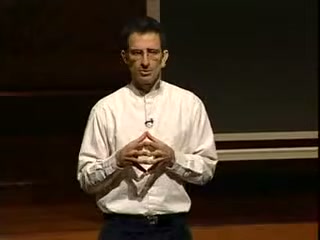
It is worth noticing that the story is also a small lesson in introversion. He presents himself as nervous in interviews and not naturally cheerful, which undercuts the stereotype that a happiness teacher must be permanently upbeat. That theme returns later in the course as “permission to be human”.
7:10 – 12:25 Bridging the ivory tower and Main Street
To support the “message, not messenger” claim, he points to positive psychology classes on more than 200 US campuses, often the largest on campus, and to growing interest from companies, schools and governments. Why? His answer is that it “works”, which is a strong claim this early, before any evidence has been shown.
The core of the chapter is a contrast. The self-help movement is accessible and attractive but tends to overpromise and underdeliver (“five things you need to know to be happy”). Academia has rigor and data that has been “analyzed, reanalyzed and meta-analyzed”, but almost no one reads it. His estimate that the average journal article is read by seven people, “including the author’s mother”, is a joke and not a statistic. Positive psychology’s mandate, as he describes it, is to join the two.
From that mandate comes the format: the course is taught on two levels. At the academic level there are studies, papers and exams like any psychology course. At the applied level each idea comes with the question of how to use it in your own life, relationships and community. He says he picked material only if it was both rigorous and applicable, which is a useful filter to keep in mind when judging the later lectures.
12:25 – 22:18 Housekeeping, active notes and “time-ins”
After a few logistics (he says this is the last time he will teach the course at Harvard; questions go to him or the teaching fellows; slides are posted before class and videos a day or two after), he asks for active rather than passive note-taking. Instead of copying slides, write down what strikes you, what you want to try, or what you want to tell someone. He gives two reasons: the class is meant to change lives, and engaged students remember more.
He then introduces time-ins, a minute or two of silence once or twice a lecture to reflect, sometimes on a guiding question. He jokes that students will wonder whether this is what they pay tuition for, then claims it may be the most important thing they take from the course.

The evidence he gives is a study by David Foster and Matthew Wilson of MIT, neuroscientists who recorded activity in the hippocampus, the brain region that stores memories of places, of rats running a track. During quiet rest after a run, the rats’ brains replayed the sequence of places, and the researchers suggest such replay may be a general mechanism of learning and memory. Ben-Shahar’s retelling, in which rats that rested “learned far more” than rats that ran the maze over and over, goes further than the study’s actual finding, which was about replay in the brain rather than a direct test of which rats learned better. The “margarita” line is a joke.
He adds two literary supports. Parker Palmer, an American writer on education, argues in The Courage to Teach that silence is part of teaching. Robert Pirsig’s Lila, the follow-up to Zen and the Art of Motorcycle Maintenance, contrasts a Native American comfort with long silences with a European-American need to fill every gap. Ben-Shahar calls Lila an anthropological study; it is really a philosophical novel, so treat the cultural contrast as an illustration rather than evidence.
22:18 – 31:17 The family tree of positive psychology
This is the most useful chapter for anyone studying the field. Ben-Shahar places positive psychology as the “grandchild” of humanistic psychology, which called itself the third force:
| Force | Main figures he names | What humanistic psychology objected to |
|---|---|---|
| 1. Behaviorism | B. F. Skinner, John B. Watson, Edward Thorndike | People treated as a box of behaviors, pushed around by rewards and punishments “like a billiard ball” |
| 2. Psychoanalysis | Sigmund Freud, Carl Jung, Alfred Adler | People explained mainly by unconscious drives, defenses and neurosis |
| 3. Humanistic psychology | Abraham Maslow, Carl Rogers, Rollo May | Its own weakness: rich ideas, but too little rigorous method |
Humanistic psychology put well-being, love, peak experiences and self-actualization on the agenda, but it lacked methodological rigor, had little impact on academia and partly drifted into the New Age movement. That weakness is exactly what positive psychology claims to fix.
He then names the “grandparents”:
- Abraham Maslow, the humanistic psychologist best known for the hierarchy of needs, taught at nearby Brandeis and was president of the American Psychological Association. In 1954 he wrote a chapter titled “Toward a Positive Psychology”, calling for research on goodness, kindness and optimism.
- Karen Horney, a psychoanalyst who broke with Freud, argued that therapy should also attend to what is healthy in people.
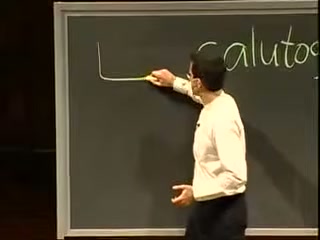
- Aaron Antonovsky, a medical sociologist, coined salutogenesis, the study of the origins of health rather than of disease. Ben-Shahar writes it on the board, the first and only word written in this lecture.

The “parents” follow. Martin Seligman, the psychologist known for learned helplessness and later optimism research, used his 1998 presidency of the American Psychological Association to make psychology more accessible and to launch a positive psychology focused on strengths, resilience and well-being, not only on depression and anxiety. Ben-Shahar adds two Harvard figures: Ellen Langer, the social psychologist known for her research on mindfulness, whom he says he will cite more than anyone; and Philip Stone, the psychologist who taught one of the first positive psychology classes at Harvard in 1999 with Ben-Shahar as his teaching fellow and later handed the course over to him. Langer and Stone were his thesis advisers (the captions mishear this as “physicist advisors”).
31:17 – 42:55 Information versus transformation
This is the lecture’s central idea and the one to remember. Ben-Shahar draws a container on the board: the mind. Information is pouring content into it; most education stops there. Transformation is changing the shape of the container itself (“trans” plus “form”), a distinction he credits to Robert Kegan, a developmental psychologist at Harvard’s Graduate School of Education.

His examples make the idea concrete. An athlete aiming for a medal finishes eighth: one reading (“I failed”) drains energy, another (“what did I learn?”) adds it, though the facts are identical. Some people with everything are miserable and some with very little celebrate life. His own undergraduate unhappiness fits the same pattern. The line he promises to repeat all semester is that happiness depends more on our state of mind than on our status or bank account.

He frames the course’s method as uncovering rather than covering. The image is the story of Michelangelo saying he simply chipped away the marble that was not David; the anecdote is widely repeated but has no reliable source, so it is best read as a parable. The “excess stone” includes fear of failure, crippling perfectionism and guilt about success. Quotes from Thoreau (the soul grows “by subtraction”) and Lao Tzu (wisdom drops something every day) make the same point: knowledge is about information, wisdom about transformation.
The chapter ends with a candid admission. Asked by a journalist for positive psychology’s “wow factor”, he concluded there is none: gratitude, exercise, relationships and simplifying are things people already know. The aim, borrowing Voltaire’s line that common sense is not that common, is to make common sense more common, especially in practice. He hopes students will end the semester saying “thank you for reminding me”, not “thank you for teaching me”. He also previews the ABC of change (affect, behavior, cognition), which gets its own week later.
42:55 – 54:03 A humanistic class built on questions
He justifies the need for transformation with rising rates of depression and anxiety worldwide, a claim developed in Lecture 2, and quotes the poet Archibald MacLeish, a former Harvard professor, on the false belief that information alone will change the world. Two long readings from Maslow set the course’s humanistic aim: education should help a person become “fully human”, the best they can be. He jokes that this predates the US Army’s “Be all you can be” slogan, and adds that he means transformation partly literally, since brain research shows the brain keeps changing through life (neuroplasticity).

The second half is about questions. The course will not give answers about the good life; it will try to ask better questions, because questions shape what we look for. He cites Peter Drucker, the management writer, on how the most common source of management mistakes is looking for the right answer instead of the right question, and Neil Postman, the media critic, on children entering school as question marks and leaving as periods. He is careful to say this is not relativism; some questions have definite answers.

The evidence for curiosity is a long-term study by John Kotter of Harvard Business School (the captions say “John Carter”), who followed a Harvard MBA class for 20 years. In Ben-Shahar’s account, IQ and background did not separate the extraordinarily successful from the merely successful. Two things did: they believed in themselves, and they never stopped asking questions. This is a single study of a highly selected group, reported second-hand, so take it as an illustration rather than a law of success.
54:03 – 1:06:23 Happier, not happy: what the course is and isn’t
The guiding “question of questions” is how we can help ourselves and others become happier. He refuses to answer whether he is happy, because happiness is not a binary state; he is happier than fifteen years ago and hopes to be happier fifteen years from now. The same move applies to self-esteem: ask how to build healthy self-esteem, not whether you “have” it.

He then sets out what the course is not:
- Not a survey of the field. For that he recommends textbooks by Shane Lopez and Chris Peterson and the large Handbook of Positive Psychology, which you can “use in self-defense”, a joke about its size.
- Eclectic. He draws on clinical, cognitive and social psychology, organizational behavior and education, wherever something seems to help people become happier.
- Not cross-cultural. His training is Western, though he draws on Eastern thought. He recounts a meeting of Western psychologists including Paul Ekman and Richard Davidson with the Dalai Lama, as written up by Daniel Goleman, where the Dalai Lama said too much emphasis on cultural differences hides the larger similarities.
Instead, students will study themselves, through weekly response papers, sections and the final project. Carl Rogers’s line that “what is most personal is most general” and a C. S. Lewis passage about ourselves being the one thing we know from the inside support the idea. He admits self-study has biases, which is why it is paired with research. He closes the section by promising “rigorous fun” and by quoting a line attributed to Oliver Wendell Holmes about valuing the simplicity “on the other side of complexity”: the course’s ideas are simple, but not simplistic.
1:06:23 – 1:09:35 Drucker’s Monday call: the effort of change
The closing story is about Peter Drucker in old age, receiving leaders at his home for weekend consultations. He told them not to call on Monday to say how wonderful the weekend was, but to say what they were doing differently. Ben-Shahar asks the same of his students: the measure of the course is behavioral change, not enjoyment. A whole week of the course will be about change itself, because most individual and organizational change fails unless behavior changes along with thoughts and feelings.

He notes that response papers are graded pass/fail, and that for some students they will be the hardest papers they write at Harvard, because honest reflection and change take courage.
1:09:35 – 1:17:04 Teaching staff, the student survey and the syllabus
He welcomes Extension School students watching from home and introduces the head teaching fellows, Deb Levy for the Extension School and Shawn Achor (spelled “Sean” in the captions) for the college class. Achor, who later wrote the popular book The Happiness Advantage, takes the microphone.

Achor’s survey answers the obvious question of why Harvard students would need a happiness class. His other statistics, about club presidencies and the average number of romantic partners, are played for laughs, as is his remark that a new third came because Ben-Shahar appeared on Jon Stewart’s Daily Show. He also explains that sectioning will be done online.

Ben-Shahar describes the syllabus as integrated: vertically, because topics return in a spiral (an idea from next week comes back in later lectures), and horizontally, because lectures, mandatory sections, response papers, readings and the final project reinforce each other. The final project is a presentation written out as a paper; you do not deliver it in class, but you try it on a couple of friends, because “the best way to learn is to teach”.

Try this
The first lecture sets no formal assignment, but it asks students to adopt several habits from day one. In practical form:
- Take active notes. While watching the rest of the course, skip copying slides. Mark only what surprises you, what you want to try, and who you want to tell.
- Run your own time-in. After each lecture or chapter, stop for one or two minutes of silence and ask what, if anything, you will use.
- Reframe one recent setback. Pick a result that disappointed you and write two readings of it: the deflating one and the “what did I learn?” one. Notice which leaves you with more energy.
- Swap “am I happy?” for “how can I become happier?” Write down one small, concrete answer to the second question this week.
- Make your own Monday call. At the end of the week, write one line on what you are doing differently because of the lecture, not whether you liked it.
Skip list
- 12:25 – 15:27 Course logistics: email, posting of slides and videos.
- 1:09:35 – 1:10:05 Welcome to Extension School students.
- 1:11:51 – 1:13:28 Achor’s joke statistics and section sign-up details; the useful survey result is summarised above.
- 1:16:00 – 1:17:04 Closing questions and goodbye.
Key terms
- Positive psychology — the scientific study of what helps people and communities flourish, launched as a named field by Martin Seligman in 1998.
- Ivory tower to Main Street — Ben-Shahar’s shorthand for the field’s mandate: academic rigor made accessible.
- Humanistic psychology (“third force”) — the movement of Maslow, Rogers and May that reacted against behaviorism and psychoanalysis by stressing human potential.
- Salutogenesis — Aaron Antonovsky’s term for studying the origins of health rather than of disease.
- Information vs. transformation — adding content to the mind versus changing how the mind interprets and focuses.
- Time-in — a short silence in class for reflection.
- Active note-taking — recording reactions, intentions and ideas to share, rather than transcribing.
- Uncovering — the course’s method: removing barriers (fear of failure, perfectionism) rather than adding knowledge.
- The question of questions — “how can we help ourselves and others become happier?”
- Self-actualization — Maslow’s term for becoming the fullest version of oneself.
FAQ
What is positive psychology, according to Tal Ben-Shahar's first lecture?
He defines it less by topic than by mission: to bring the rigor of academic research on well-being to ordinary people, building a bridge between the ivory tower and Main Street. Self-help is accessible but often thin; academic journals are solid but barely read. Positive psychology tries to keep the science and make it usable.
What is the difference between information and transformation in the lecture?
Information is adding content to a container, the mind. Transformation is changing the shape of the container itself: how you interpret and focus on what happens to you. His example is finishing eighth when you aimed for the top three. The facts are the same, but one reading drains you and the other energizes you.
Who are the founders of positive psychology mentioned in Lecture 1?
Martin Seligman, who launched the field as president of the American Psychological Association in 1998, is called its father. Ben-Shahar names Abraham Maslow, Karen Horney and Aaron Antonovsky as grandparents, and the Harvard psychologists Ellen Langer and Philip Stone as other parents of the field.
What are "time-ins" in Tal Ben-Shahar's class?
They are a minute or two of silence during a lecture, once or twice a session, when students stop and reflect on what they just heard, sometimes with a guiding question. He backs the idea with an MIT study on rats that replay a maze in their brains while resting, and with Parker Palmer's writing on silence in teaching.
Why does Ben-Shahar say "happier" instead of "happy"?
Because he treats happiness as a continuum, not a yes-or-no state. Asking whether you are happy has no clear answer; asking how you can become happier does. He describes himself as happier than he was fifteen years earlier and hoping to be happier still.
Is this the official Harvard recording?
It is a recording of Ben-Shahar's Harvard lecture, but the YouTube copy embedded here is a re-upload by an unofficial channel, not a Harvard upload. Harvard has not published the course on an official channel.
Studying another course? Paste its YouTube or Bilibili link on the home page to request a handout — or make your own with the desktop app (coming soon).